



The manner in which Hyundai configured its Kona range here is intriguing. Since its launch in late October 2018, the eye-catching Kona has been available in only two models. What is really interesting, however, is the mix of engines and transmissions available between the two models.
Related: First Drive Impression - Kona adds youthful appeal to Hyundai’s SUV range
If it’s a turbo, it’s a manual - if it’s a non-turbo, it’s an automatic
The decision to offer the 3-cylinder one-litre turbo model only as a manual, and the two-litre non-turbo only in automatic form, is an interesting one from Hyundai. In a sense, Hyundai are saying to its clientele that if you like driving, you should go for the feisty little turbo and engage with manual gear-shifting: if ease-of-operation and un-flustered driving is your bag, then you should opt for the 2,0-litre manual.
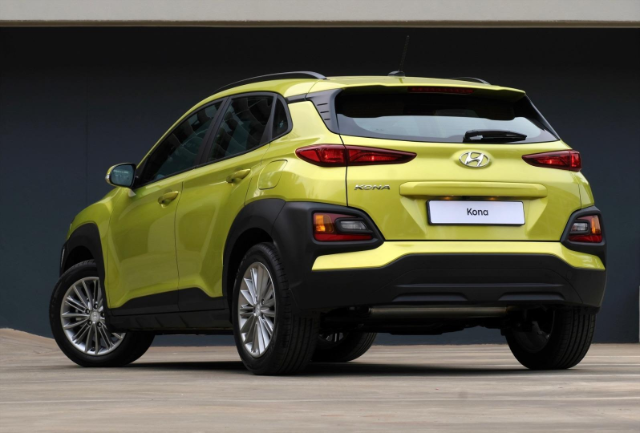
Performance differences.
The 1.0T Executive 6-speed manual is rated with a 12.0-second 0-100 km/h time and a 181 km/h top speed. Claimed consumption (and Hyundai’s figures these days are very realistic) is 6.8 litres/100.
The 2.0 Executive 6-speed weighs in with a claimed 0-100 km/h time of 10.0 seconds and a top speed of 194 km/h. The claimed fuel consumption is 7.2 l/100km, although we reckon with the automatic the “real-life” figures would probably be closer to 8.5 l/100km. excepting on long, open-road trips.

Pricing is very similar
The pricing structure of the Hyundai Kona line-up is also very interesting. At launch, the Kona1.0T Executive was offered at R359 900 while the 2.0T Executive – the trim levels are exactly the same – cost just R20 000 more at R379 900. That means you get 22 kW and an automatic transmission for just R20 000. Those kind of spec differences would easily have warranted an extra R40 000 or so, not so long ago, and it just shows how emphasis on engine size and power outputs has shifted to other considerations in the modern era.
Sadly those launch prices have been eclipsed 15 months later by the rand-dollar exchange rate. Back in October 2018, a dollar would have cost you R14.76, now in early July 2020, each dollar is worth R17.16.Along with so many other manufacturers Hyundai has been forced to introduce hefty price increases of late.
As of July 2020, the Hyundai Kona 1.0T Executive sells for R406 500 and the Kona 2.0T Executive costs R427 900. Those price increases are.in fact lower than the 16 % fall-off in the value of the rand since October 2018, so Hyundai has done well to contain them. Such are the realities faced by motor manufacturers and new-car buyers in our current economic climate!

Which Kona model will retain its resale value best?
Given the trends so far in new Kona sales, the 1.0T Executive 6-speed manual has definitely proven to be the more popular model. Its zesty feel has grabbed the attention of Kona buyers more than the 2.0 Executive 6-Speed Automatic. This is somewhat surprising given that the 2.0 Automatic is actually quite a bit quicker on acceleration. But somehow it doesn’t “feel” as sporty as the 1.0T.
The Kona has only been on the market for just over 18 months (given the extraordinary sales situation posed by the lockdown since late March) and thus sales of used Konas are still relatively in their infancy. Nevertheless, AutoTrader currently lists 34 New and Used Hyundai Kona examples for sale. Of these listings, the 1.0T Manual and 2.0 Automatic models seem to be split fairly evenly, and the small differences in prices asked for the two models would seem to reflect Hyundai’s small difference in the initial cost.
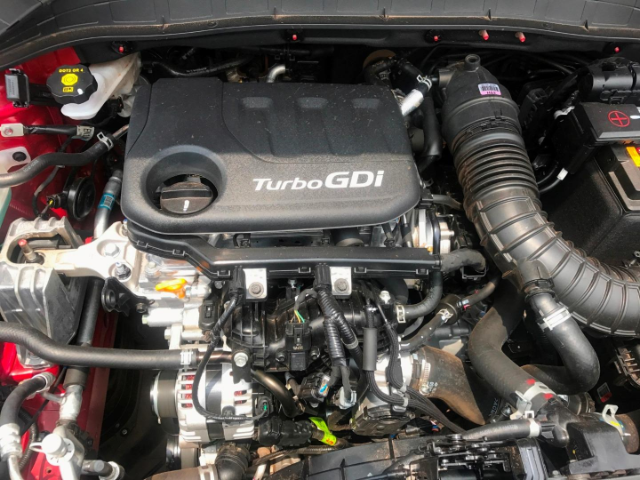
So it’s the 1.0T Executive, by a small margin.
In the long term, the 1.0T Executive may retain slightly more value than the automatic. It normally follows that the more popular a car is on the new-sales floor, the easier it is to sell it when it comes to trade-in time. But in this class of cross over vehicle there will always be buyers keen on an automatic, so selling-on one of the 2,0-litre models at a good price should prove to be no problem.