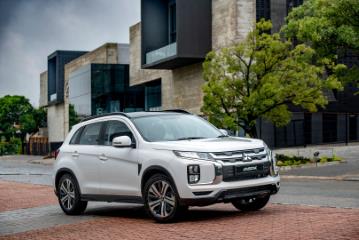
Mitsubishi ASX vs Peugeot 2008 vs Hyundai Kona: which compact crossover is the best value for money?
Can a decade-old car compete with much newer opponents on an equal footing, especially when the newcomers represent the state of their respective manufacturers’ arts? We took a close look at the ageing Mitsubishi ASX, by comparing its value proposition with two much younger alternatives.



There’s no end in sight for the Mitsubishi ASX any time soon: it may be really elderly in car years, but frequent tech- and appearance updates has ensured that its value proposition has only grown stronger over a decade-long production run. But its competition is becoming ever more compelling, and newer challengers from around the globe are muscling-in on the ASX’s territory. We decided to pitch the Peugeot 2008 and Hyundai Kona against the similarly-priced ASX manual to see which one offers the best value for money in 2021.
Related: Shop for new and used Mitsubishi ASX cars for sale here.

Facts and figures:
First, let’s look at the key numbers:
|
Mitsubishi ASX 2.0 Manual |
Peugeot 2008 1.2T 96 kW Allure |
Hyundai Kona 1.0T Executive |
|
|
Engine size (cyl/size) |
4-cyl, 2.0-litre petrol |
3-cyl, 1.2-litre turbopetrol |
3-cyl, 1.0-litre turbopetrol |
|
Power/Torque |
110 kW/197 Nm |
96 kW/230 Nm |
88 kW/175 Nm |
|
Kerb Weight |
1 375 kg |
1 225 kg |
1 233 kg |
|
Length (mm) |
4 295 |
4 300 |
4 165 |
|
Airbag count |
7 |
6 |
6 |
|
Load Volume |
406 litres |
434 litres |
361 |
|
Top Speed (km/h) * |
194 |
198 |
181 |
|
0 – 100 km/h * |
9.6 seconds |
9.1 seconds |
12.0 seconds |
|
Ave Consumption * |
7.5 ℓ/100 km |
6.5 ℓ/100 km |
6.8 ℓ/100 km |
|
Warranty |
3 yr/100 000 km |
5 yr/100 000 km |
5 yr/150 000 km (car); 7 yr/200 000 km (drivetrain) |
|
Price |
R 419 995 |
R 429 900 |
R 423 600 |
* Manufacturer's official claimed figures.
Pricing was accurate at the time of writing and includes VAT and carbon tax, but may change without prior notice.
Analysis
Power, performance, and drivetrains
The two newer contenders subscribe to the current doctrine of downsized, turbocharged engines, while the Mitsubishi still believes that there’s no replacement for displacement – and this shows in their respective claimed output figures. The ASX has the highest power output of this trio, with 110 kW arriving at 6 000 r/min, but its torque output is only middling in this company, because its 197 Nm is only available at 4 200 r/min.

This means that the ASX needs to be worked hard to deliver its performance, instead of riding the wave of turbo torque on offer in the other two. But in spite of the highest kerb weight here, the 5-speed manual ASX still manages to run the performance leader close in a straight line, with a 0 – 100 km/h sprint in a claimed 9.6 seconds and a top speed of 194 km/h.
But the torquiest, lightest car here inevitably walks away with the overall performance honours: the 1.2-litre turbo Peugeot 2008 has a 6-speed automatic gearbox, yet it is claimed to dash to 100 km/h half a second quicker than the Mitsubishi, and runs on to a top speed that’s 4 km/h higher than that of the ASX. The difference lies in their torque curves, where the boosted 2008 delivers a muscular 230 Nm from 1 750 r/min, which will be even more pronounced at power-sapping Gauteng altitude (where the Mitsubishi will lose about 18% of its quoted outputs, while the turbo Peugeot and Hyundai will lose almost nothing).

Third place in the performance comparison has to go to the Hyundai Kona, which uses a 1.0-litre turbo 3-cylinder in a comparatively mild state of tune. 85 kW and 172 Nm are competitive numbers for an engine of this size, but it is completely over-matched by these two opponents. As a result, it’s the slowest car here, with a 0 – 100 km/h sprint in a claimed 12.0 seconds and a maximum speed of 181 km/h.
Related: Shop for new and used Peugeot 2008 cars for sale here.
Economy
Seeing as the Peugeot 2008 weighs the least and features the torquiest engine in this group, it also wins on fuel efficiency here. In fact, its claimed average consumption of 6.5 ℓ/100 km betters even the smaller Kona’s, which registers a still-respectable official average of 6.8 ℓ/100 km.

This is perhaps the area where the Mitsubishi ASX shows its age the most, because it’s claimed to use 7.5 ℓ/100 km on average. This would have been a pretty decent average in 2011 (when it first appeared here), but it’s quite far off the pace of its newer opponents. This gap is only expected to grow at Gauteng altitudes, where the ASX will need to be worked even harder to deliver its performance, while the 2008 and Kona will still enjoy boost-optimised efficiency at lower revs.
Practicality

A large part of these vehicles’ appeal lies in their practical attributes, which has traditionally been an ASX strong suit. However, it’s now meeting very serious competition in the Peugeot, which manages to offer a larger luggage compartment (440 litres against 406 litres) and similar interior space. The (physically smaller) Hyundai Kona suffers here, with the smallest boot in this group by far (there’s only 361 litres available behind the rear seats) and the least cabin space, especially for the rear seats.
Folding down the rear seats extends the Peugeot’s supremacy, because its maximum cargo volume of 1 467 litres eclipses (ha!) the ASX’s 1 206 litres by a comfortable margin. Hyundai SA doesn’t quote a maximum cargo volume for the Kona, but given its smaller size and handicapped boot space, it’s equally unlikely to match the others with its seats folded.

Related: Shop for new and used Hyundai Kona cars for sale here.
Equipment and safety
All three cars are equipped in line with today’s expectations of cars in this class, but the Mitsubishi nonetheless has a significant edge on comfort features. Its standard kit list includes electric adjustment for the driver’s seat, heated front seats, leather upholstery, and a gigantic (but non-opening) panoramic sunroof, none of which are even available as options on the other two contenders (in this trim level).

The Peugeot scores second place here, because it features LED headlights (like the Mitsubishi, but unlike the Hyundai), keyless entry with pushbutton start (also found in the ASX) and auto-on headlamps and wipers (like the ASX, while the Kona only has automatic headlamp control). All in all, the Peugeot 2008 Allure has enough standard equipment to settle in a comfortable second place in this department.
Don’t think that the Hyundai Kona is barren inside, mind you, as it has a number of nice features in common with the other cars. There’s a colour touchscreen infotainment system with smartphone mirroring and USB/Bluetooth compatibility, remote central locking, electric windows all round, heated- and electrically adjustable rear-view mirrors, rear parking sensors and a rear-view camera. In short, the Kona has everything you’d expect in this price bracket, but can’t quite match either of the others’ spec lists.

Basic safety features are solid across the board, with ABS and EBD, stability control, at least 6 airbags, and rear ISOFIX child seat mounts included on them all. The Mitsubishi ASX and Hyundai Kona both scored 5 stars in Euro NCAP crash testing, although the ASX’s score was attained in 2011, and the Kona’s score dates from 2017. The test protocol has been updated since then, so we’re not quite sure whether they will still rate as highly in today’s tests, however.
The Peugeot 2008 only scored 4 stars in 2019, but its individual score sheet closely matches those of the other two (and beats them in some instances), giving rise to an educated guess that it should be fully competitive with these opponents in the real world. As far as safety equipment differences go, the ASX and Kona make do without many of today’s electronic add-ons (such as automatic emergency braking) found in the Peugeot, but the ASX has an extra (driver’s knee) airbag in compensation.

In the end, we’d put the ASX and 2008 in joint first place for safety, simply because they both feature excellent LED headlamps as standard, while the ASX’s extra airbag offsets the Peugeot’s driver aids. The Hyundai scores a close third place here, because it missed out on the LED headlamps, airbag surfeit, and available driver aid packages to elevate it above the others.
Aftersales support
When we’re discussing aftersales support, it’s almost inevitable that a Hyundai will end up at the top of the list. It has by far the best warranty in this group, with the vehicle itself covered for 5 years or 150 000 km, while the drivetrain is covered for 7 years or 200 000 km.

The Kona also has a service plan for 5 years or 100 000 km thrown into the deal, making for a winning overall package. The Peugeot 2008’s warranty comes close, however, and provides peace of mind for 5 years or 100 000 km, but its service plan only runs for 3 years or 60 000 km.

The Mitsubishi ASX offers a different mix in its aftersales package, with a warranty that only runs for 3 years or 100 000 km, but its service plan is competitive with that of the Hyundai at 5 years or 90 000 km. For this reason, and thanks to Mitsubishi’s solid reputation for durability, the ASX slots into second place in this department and relegates the Peugeot to a close third place.

Verdict

With less than R 10 000 between the priciest car (Peugeot 2008) and the least-expensive one (Mitsubishi ASX), and with very closely-matched attributes, any one of this trio offers great value for money. However, it is the Hyundai Kona which drops off the radar first: it is the slowest, least-practical and most modestly-equipped car here, and its standard lighting technology is a decade behind the other two. That excellent warranty and service plan compensates to some extent, but isn’t quite enough to earn the Kona a higher accolade than third place in this company.

Choosing between the ASX and the 2008 is much more difficult, because they’re so closely-matched in most respects. The Peugeot shines with its claimed fuel efficiency, practicality, and (relative) performance, but it is also a fair bit more expensive than the Mitsubishi, while offering a lower feature- and airbag count. It narrowly slots into second place here, but if it had a better service plan or a lower price, it could have grabbed an overall value victory. That's why there are two lower-trim 2008s in the price list - value shoppers should seriously consider them, instead of the high-trim Allure.

But the old-stager ASX still prevails: it has a nicely-balanced aftersales package, better standard equipment, and doesn’t trail the Peugeot by far in any respect. But the mere fact that it offers so much more standard kit than the French car, and at a tidy discount, hands it our value for money crown. It looks pretty ancient by now, but the Mitsubishi ASX’s blend of strong attributes ensures that it still makes a compelling value statement, even after all these years.