
Mahindra XUV500 vs Haval H6 C vs Mitsubishi ASX: here's our winner.
Even though small SUVs are growing in popularity, some buyers need a bit more space or stronger performance. Usually, meeting these requirements needs a substantial budget, but there are some gems hidden in the price lists to appeal to value-conscious buyers as well. We compare Mahindra’s old favourite to the equally elderly Mitsubishi ASX and Haval’s top-trim H6 C.




Budget SUVs face off
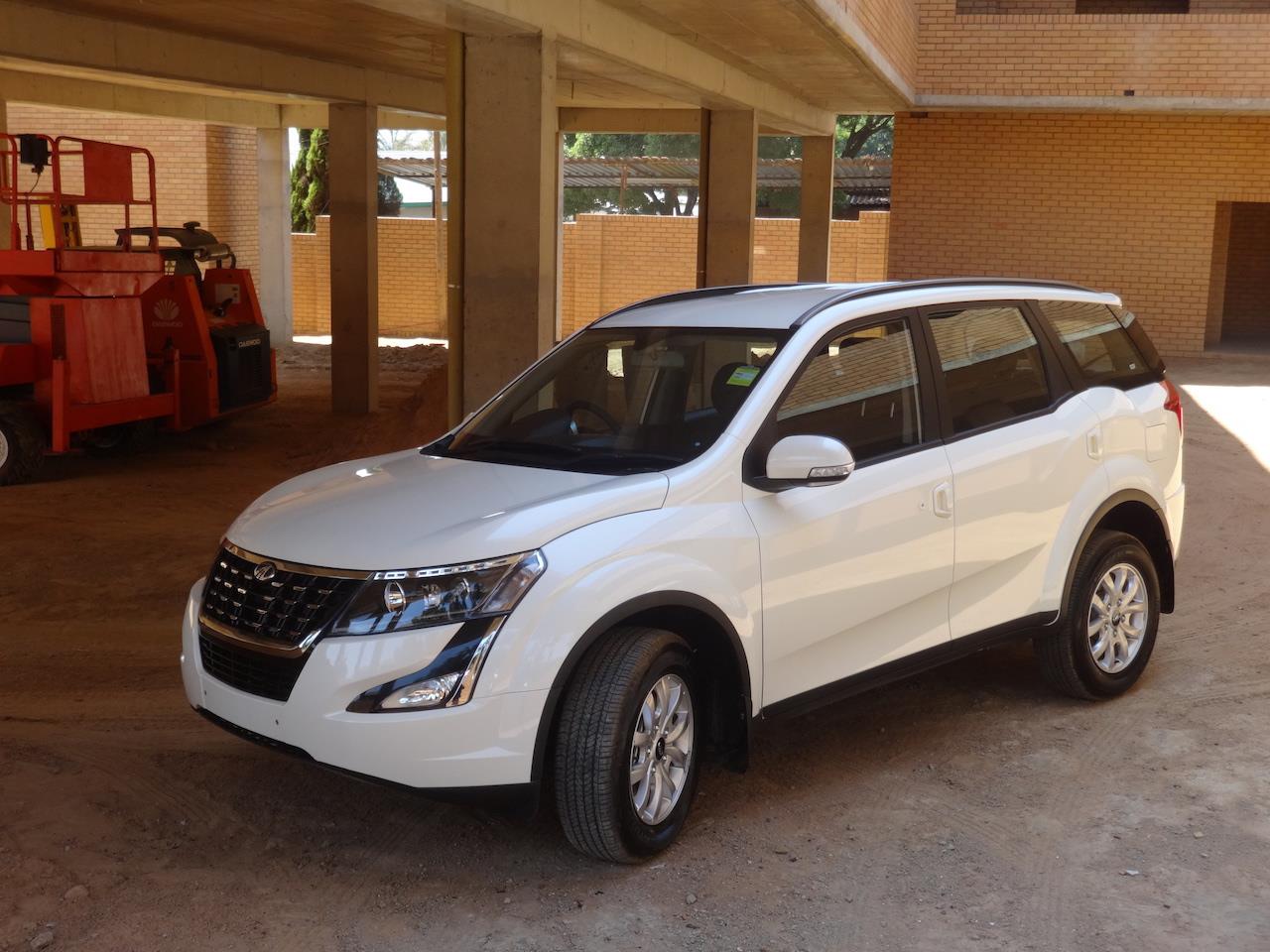
The Mahindra XUV500 marked the Indian brand’s first serious foray into the family SUV/soft-roader arena, and has built a solid reputation in the market since its international launch in 2011. Yes, its styling is unusual, but it has been toned-down somewhat due to some effective facelifts in the intervening years.
What really drew buyers right from the outset was the XUV500’s value proposition. Hidden under the rather plasticky trimmings was a fairly potent yet frugal engine, mated to a 7-seater vehicle with most of the modern conveniences and decent driving characteristics – all at a relative bargain price. But 9 years in the market is a long time, so how does the XUV500 shape up when viewed from today’s perspective? Let’s see if it would be a logical choice when subjected to back-to-back scrutiny with two similarly-priced alternatives.
Mahindra XUV500 2.2CRDe W8

Seeing as these vehicles are intended for use as family cars, we decided on a certain minimum safety specification: standard equipment on all three contenders had to include at least 6 airbags and stability control. The least-expensive XUV500 to offer this combination of features is the higher-mid-level W8 trim, which still manages to slip in below the R 400 000 barrier in manual form.
Engine, performance and consumption
Under the bonnet is a 2.2-litre, 4-cylinder turbodiesel engine, mated to either a manual- or automatic 6-speed gearbox. The automatic is pretty good to drive, but carries a price premium of R 30 000 over the manual derivative, which would push it over our budget limit. No matter, though, because the manual XUV500 is a low-effort car, so the clutch take-up is smooth and the gear selection is fairly light and positive.
Related: Want an XUV500 but prefer an automatic gearbox? Have a look here!
It helps that there’s a decent amount of steam available in the engine room, with 103 kW and 330 Nm on tap, good for a 0 – 100 km/h sprint in about 12.5 seconds (Mahindra SA doesn’t quote official figures for this vehicle, so test data from international-market XUV500s was used in this comparison). It eventually runs out of puff around the 175 km/h mark, but offers enough grunt for safe overtaking and is quite happy to sit at the speed limit all day long.
Fuel consumption is reasonable as well, with a claimed average thirst of 6.5 ℓ/100 km. Mixed-cycle use on real roads can yield figures around 8.0 ℓ/100 km when driven with moderation, which isn’t bad for a large-ish vehicle like this. Freeway cruising can see that number drop to the low-7 ℓ/100 km bracket, by staying in higher gears to take advantage of the engine's wide torque spread.
Standard equipment

This is a big selling point for the Mahindra XUV500, thanks to a spec sheet that drips with features – especially in the W8 variant. Leather trim for both steering wheel and the seats, cruise control, a colour touchscreen infotainment system, dual-zone climate control, navigation, a rear-view camera, and rear parking sensors all stand out on the equipment list, and makes for a surprisingly well-trimmed car for its price point.
Related: Top 4 Mahindra XUV500 features that stand out from the competition.
Safety
As mentioned, the XUV500 W8 has 6 airbags and stability control as standard (the cheaper W4 and W6 derivatives only offer two airbags), allied to ABS and auto-on xenon headlights with turn illumination in W8 trim. Crash safety is also well up to spec, with the XUV500 scoring 4 stars in Australian NCAP testing (according to “Euro” protocols). In short, it’s about as safe as you can get in this size- and price range.
Practicality
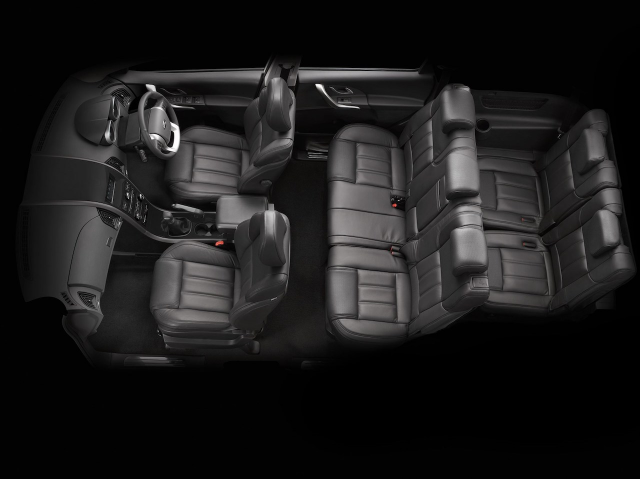
The XUV500 is the only car in this comparison with seating capacity for 7 people. It’s actually surprisingly spacious across all seating rows, although the driver’s seat could do with more rearward adjustment for tall drivers. If the rearmost seats are in use, the available luggage space is a pitiful 93 litres, so carrying a full complement of high-school children will entail them sitting with their bookcases on their laps.
Related: The 6 least-expensive new 7-seaters on the market.
Far better to see the XUV500 as a 5-seater with decent luggage space, then. With the third row folded away, the spacious second row remains, but the luggage volume grows to 475 litres. It’s still nice to know that extra passengers can be accommodated over short-to-medium distances if need be, though.
Price and value proposition

By now, you will have noticed that the term “value” comes up often when talking about the Mahindra XUV500. This is its most obvious strong suit: with a manual gearbox, even the well-equipped XUV500 W8 has a list price of only R 392 999, which includes a warranty for 5 years or 150 000 km, along with a service plan for 5 years or 100 000 km. That represents a staggering collection of standard toys, space, versatility, peace-of-mind and safety credentials for the money. It’s also one of the least-expensive 7-seaters on our market, a factor which undoubtedly plays a significant part in this model’s sustained popularity.
The competition
Haval H6 C Luxury

Haval approaches value slightly differently, with the H6 C offering an even more comprehensive specification sheet and much higher performance in exchange for quite a lot of space and a thirstier engine. This model is only available with 5 seats, but even so, its luggage space measures a minimum of 247 litres – but that would be with the reclining rear seat backs set as flat they could go. Set the rear seats to provide a more natural posture, and this number should rise above the 300-litre mark – better, but still not great.
But the H6 C has another trick up its sleeve: a 2.0-litre turbopetrol engine with 140 kW and 310 Nm. As with the Mahindra, the power is sent to the front wheels through a 6-speed gearbox in manual- or automatic flavours. We’re again highlighting the manual variant, because the automatic would edge over our budget cap.
Related: We reviewed a Haval H6 C manual, and liked almost everything about it.
Performance is quite brisk, with a claimed 0 – 100 km/h sprint in 9.0 seconds and a top speed of 190 km/h, but this unfortunately exacts a toll on fuel efficiency. The officially claimed fuel consumption of 9.7 ℓ/100 km is scary enough, but real-world driving reveals low-to-mid-11 ℓ/100 km figures in mixed-cycle conditions and with a very conservative driver.
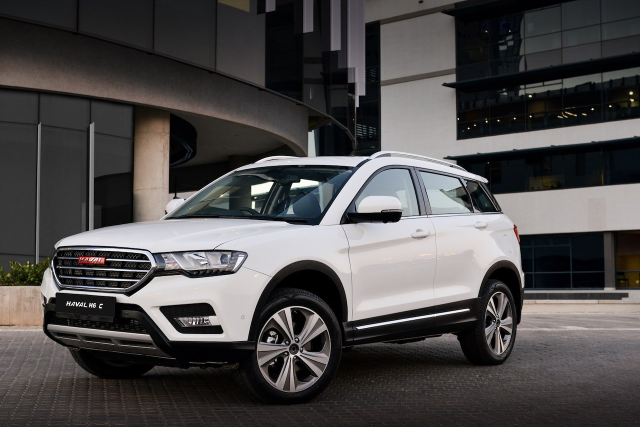
The compensation comes in the form of a long, long list of standard features. In addition to the XUV500’s already-impressive specifications, the Haval H6 C Luxury adds a panoramic sunroof, keyless entry with push-button start, and electric front seat adjustment. Standard safety equipment also adds a little bit to the Mahindra’s list, with front parking sensors and 5-star China NCAP crash test rating. Included in the purchase price is a warranty for 5 years or 100 000 km and a service plan for 5 years or 60 000 km.
Related: We compared the value proposition of the Haval H6 C with two respected opponents.
Given its very well-equipped cabin, good build quality and relatively potent performance, the Haval H6 C Luxury offers a very strong value proposition at R 384 900. Its downsides amount to limited practicality and a disturbing fuel thirst, both of which are rather unfortunate for a budget-minded family vehicle with so many other positive attributes. Still, it’s just about the best-looking and most luxurious SUV/crossover around for the money, and merits consideration by buyers with a taste for caviar but a budget for pilchards.
Mitsubishi ASX 2.0

While under review recently, the Mitsubishi ASX impressed us by offering a very capable package at an imminently reasonable price – and all that in spite of being rather elderly. While not a particularly memorable car, the only serious criticism we could level at our test unit was the constantly variable transmission (CVT), which didn’t really enjoy working behind a naturally-aspirated 2.0-litre petrol engine.
Fortunately, there’s a slick-shifting 6-speed manual variant on offer as well, with the same set of strengths and a nice R 20 000 saving thrown into the bargain.
Related: Our review of the Mitsubishi ASX found very little to criticise, apart from the CVT.
Output figures aren’t spectacular, with a modest power peak of 110 kW and the least torque in this trio at 196 Nm. This isn’t really a train smash, though, because the ASX weighs a substantial 370 kg less than the Haval and 465 kg less than the XUV500, which serves to even out the performance on tap. As a result, the 0 – 100 km/h sprint happens in a claimed 9.6 seconds, and the top speed levels out at 194 km/h.
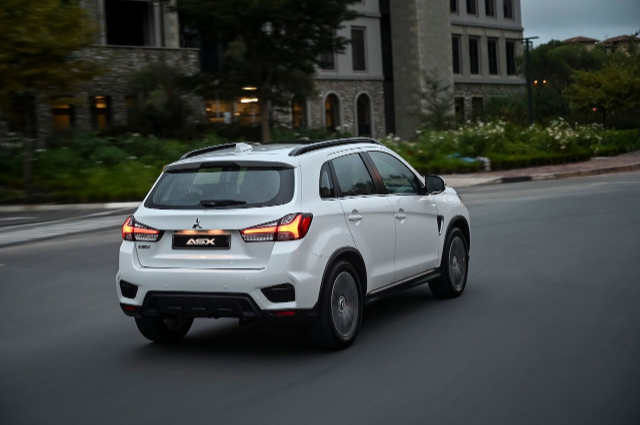
Its comparatively light weight also helps the ASX to register reasonable fuel consumption figures, with a claimed average of 7.5 ℓ/100 km. Mixed-cycle driving should see low-8 ℓ/100 km average figures, and drop to the low-7 ℓ/100 km range in moderate cruising conditions.
Related: Top 3 things you need to know about the Mitsubishi ASX.
Even though the ASX is notably smaller than the other two opponents, the practicality penalty is less significant than you might imagine. There’s more cabin space than in the Haval (especially in front), even if the Mitsubishi can’t quite match the (much larger) Mahindra’s cavernous passenger compartment. Luggage space is good enough for a middling finish at 406 litres, which isn’t too far off from that of the XUV500 in 5-seater mode, and miles ahead of the H6 C.
Safety credentials are the best of this trio, with a 5-star Euro-NCAP crash test rating, LED headlights as standard, an extra airbag, and ISOFIX rear child seat anchors added to a similar basic safety package as the other two. Standard equipment largely mirrors that of the Haval H6 C, only losing out on the passenger seat’s electric adjustment and the front parking sensors.
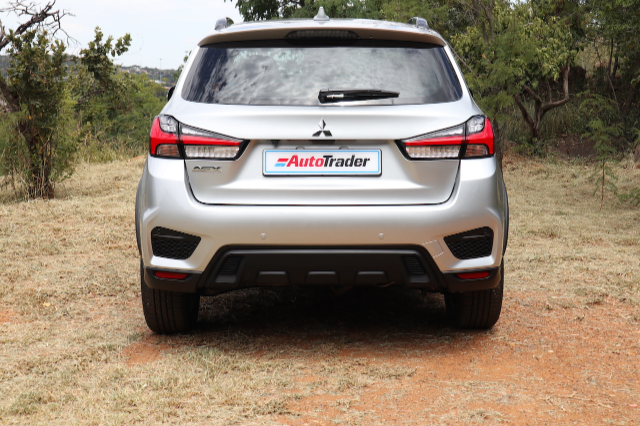
Looking through its specifications shows the ASX to be fully competitive against these opponents, which is frankly amazing for a decade-old design with a very low base price of R 379 995. Included in that pricetag is a warranty for 3 years or 100 000 km and a service plan for 5 years or 90 000 km. It might be rather elderly behind its flashy new front end, but the ASX definitely has what it takes to appeal to sensible buyers – no wonder it’s still one of Mitsubishi’s strongest sellers!
Related: The Mitsubishi ASX won a previous comparison against two formidable mainstream opponents.
Let’s recap the important numbers:
|
|
Mahindra XUV500 2.2CRDe W8 |
Haval H6 C 2.0T Luxury |
Mitsubishi ASX 2.0 |
|
Engine (cyl/size) |
4-cylinder, 2.2-litre turbodiesel |
4-cylinder, 2.0-litre turbopetrol |
4-cylinder, 2.0-litre petrol |
|
Power/Torque |
103 kW/330 Nm |
140 kW/310 Nm |
110 kW/196 Nm |
|
Transmission |
6-speed manual |
6-speed manual |
6-speed manual |
|
Kerb Weight |
1 840 kg |
1 745 kg |
1 375 kg |
|
Length (mm) |
4 585 |
4 549 |
4 295 |
|
Airbag count |
6 |
6 |
7 |
|
Load Volume |
475 litres* |
247 litres |
406 litres |
|
0-100 km/h |
12.5 seconds (est) |
9.0-seconds** |
9.6-seconds** |
|
Top Speed |
175 km/h (est) |
190 km/h** |
194 km/h** |
|
Ave Consumption |
6.5 ℓ/100 km |
9.7 ℓ/100 km** |
7.5 ℓ/100 km** |
|
Warranty |
5 yr/150 000 km |
5 yr/100 000 km |
3 yr/100 000 km |
|
Base Price |
R 392 999 |
R 384 900 |
R 379 995 |
* In 5-seater mode
** Manufacturer's official claimed figures.
Verdict
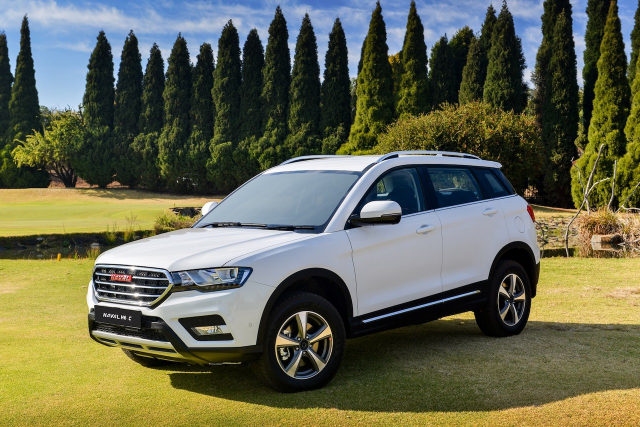
These three cars go about their jobs in very different ways, but the Haval is the least successful in its mandate of performing family duties. Let down by its compromised practicality and significant fuel thirst, it should mainly appeal to those who want a bit more grunt in the engine room and as many bells and whistles as possible. Seen in that light, the Haval H6 C 2.0T has significant appeal, but lacks the wider spread of abilities on offer by the other two contenders. The H6 C makes rather more sense lower down the model range, where the entry-level City trim starts at only R 334 900, to offer stunning value for money.
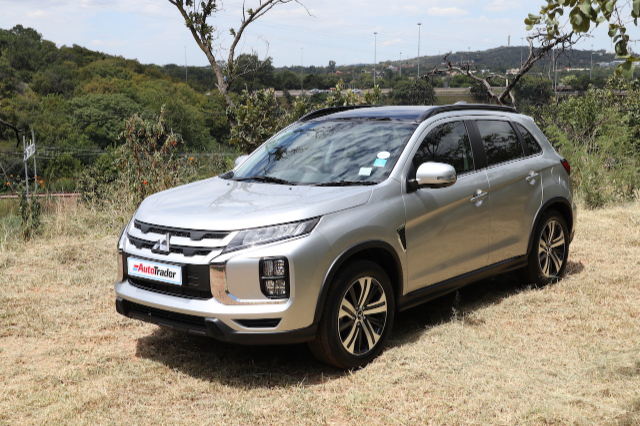
Choosing between the Mitsubishi and the Mahindra isn’t quite as clear-cut, because they each have strong suits that will appeal to different buyer’s needs. However, they’re both eminently suitable for family duty, and the Mitsubishi ASX’s broad talent spread makes it a compelling choice in its own right. It has to settle for second place here, though, because the Mahindra does many family-oriented things more successfully – even if the margin is narrow in most places.

In the end, Mahindra XUV 500 has to walk away with the honours in this comparison, because it does almost everything the other two can do, but uses less fuel and offers far greater space and versatility. Yes, it’s the slowest in this group, but it’s unlikely that family car buyers in this price class really care about all-out sprinting abilities – the XUV500’s wave of turbo torque will instead make towing and load-lugging less painful. That it comes with the best service plan and a proven reputation just sweetens this high-value deal even more.
*Pricing was accurate at the time of writing, but may change without prior notice.
Recommended Next:
Shop for new and used Mahindra XUV500 cars for sale here.
Shop for new and used Haval H6 C cars for sale here.
Shop for new and used Mitsubishi ASX cars for sale here.