Lexus RX vs Porsche Cayenne vs Jaguar F-Pace: Here’s our winner
Hybrid and electric vehicles are arriving in South Africa at unprecedented rates. But how does the hybrid Lexus RX 450h compare against the Jaguar F-Pace 400e and the Porsche Cayenne? We take a look at the highlights and find our winner.


Rewind a few years and the parking lots were full of luxury executive sedans. The SUV was few and far between and most were somewhat agricultural. Now though it’s a different story, now the SUV is the dominating force. From entry-level compact to luxurious and even high-performance, the SUV reigns supreme. However, as the times are forever changing many SUVs are now ditching their large, petrol hungry motors for more economical and even hybrid powertrains.
This article looks at the Lexus RX 450h, as well as the Jaguar F-Pace 400e while also focusing on the entry-level Porsche Cayenne. Both the Lexus and the Jaguar make do with hybrid powertrains, however, the Porsche features a conventional motor yet slots into the middle based on price. Is it worth going green, or should we give the performance SUV one last chance?

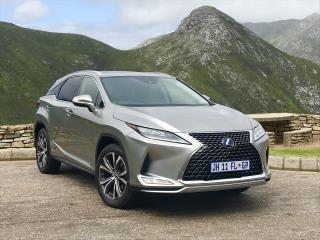
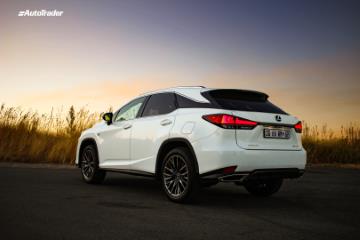
Lexus RX450h SE
Lexus is the luxury arm of Toyota and will become obvious quickly once you sample one of their products. Lexus builds some of the most refined cars on sale today and their SUVs are no exception. The RX model, now in its fourth generation has been designed to compete with the likes of the BMW X5, Mercedes-Benz GLE and Audi Q7 and in doing so, also puts it in competition with the Porsche Cayenne and Jaguar F-Pace.
The Lexus is, however, quite different from the European built SUVs. While many of those focus on sheer performance the Lexus aims to blend a heightened sense of luxury and serenity with adequate performance and, in this case with the hybrid model, efficiency as well. The RX 450h features the same naturally aspirated 3.5-litre V6 engine found in the RX 350, but it is now paired with powerful electric motors and an electronically-controlled CVT transmission.

The combination results in 230 kW, of which 193 kW is generated by the petrol engine, 123 kW by the front electric motor and 50 kW by the all-wheel-drive electric motor. This equates to a 0-100 km/h sprint time of 7.7 seconds and ultra-low emissions, rated at 131 g/km. Lexus claims that the average fuel consumption figure is around 5.7L / 100 km.
The new RX also provides seamless smartphone connectivity via Apple CarPlay and Android Auto, however, the touchpad controller for the infotainment system is a bit difficult to use if you are used to a touchscreen configuration. Other standard comforts, convenience and tech features range from steering-wheel-mounted paddle shifts, ambient lighting, wireless charger as well as a 15-speaker Mark Levinson sound system. The hybrid models also get a heads-up display.
Jaguar F-Pace 400e AWD S
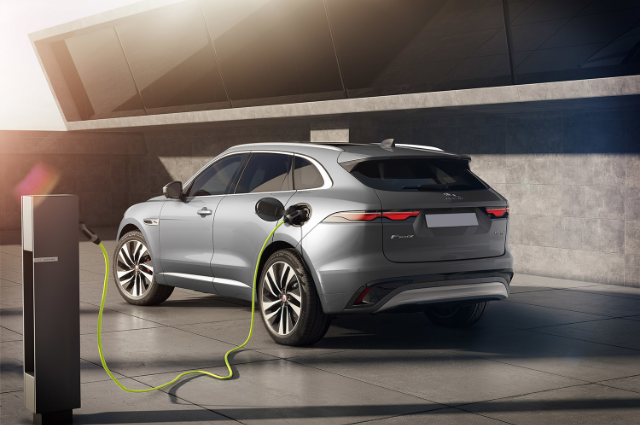
The Jaguar F-Pace is undoubtedly an important model for Jaguar. Since its introduction, the F-Pace has become a popular sighting on our roads, and rightfully so. The latest model makes use of a host of new technology as well as refreshed styling. While it remains a sporty offering, the 400e as seen here aims to blend performance and efficiency. Much like the Lexus, it too is a hybrid but unlike the somewhat outdated naturally aspirated motor of the Lexus, the British offering makes use of a more modern unit.
The new 2.0-litre, 4-cylinder, plug-in hybrid, petrol-electric combination produces 297 kW and 640 Nm of torque. The advanced electric motor is powered by a 17.1 kWh lithium-ion battery and helps reduce the CO2 emissions to only 49 g/km and a claimed average fuel consumption figure of 2.4L / 100 km. When fully charged, the new P400e is capable of up to 53-kilometres of all-electric driving.
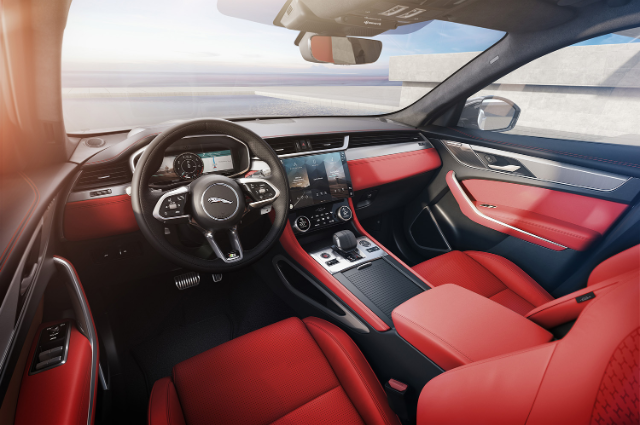
The 32 kW DC fast-charging capability allows for a 0-80 per cent charge in 30 minutes while a standard 7 kW wall box can provide a charge of 0-80 per cent in as little as one hour 40 minutes. The new Jaguar F-Pace combines its efficient performance with an all-new interior featuring crafted, luxurious materials as well as the latest connected technologies. A highlight is the improved infotainment system which now comes in the form of an all-new centrally-mounted 11.4-inch touchscreen, also capable of Apple CarPlay and Android Auto connectivity.

Porsche Cayenne
When the Cayenne made its debut in the early 2000s, Porsche purists were slow to embrace it, however, a trend that would change dramatically over its lifetime. It has become one of the most popular Porsche products, in fact, one of the most popular SUVs on sale today. The Cayenne blends premium German luxury with German performance, but how do the entry-level Cayenne stack up against the new, more eco-friendly SUVs?
For starters, you won’t find a hybrid system under the skin of the base model, instead, you get a turbocharged 3.0-litre V6 that develops 250 kW and 450 Nm of torque. While the Cayenne remains the most performance orientated out of the three, Porsche engineers have developed the car to be more economical and efficient with the average fuel consumption rated at 9.2L / 100 km, yet still a far cry from the other two. One of the ways in which Porsche achieves this figure is by making use of a new and improved 8-speed Tiptronic gearbox.

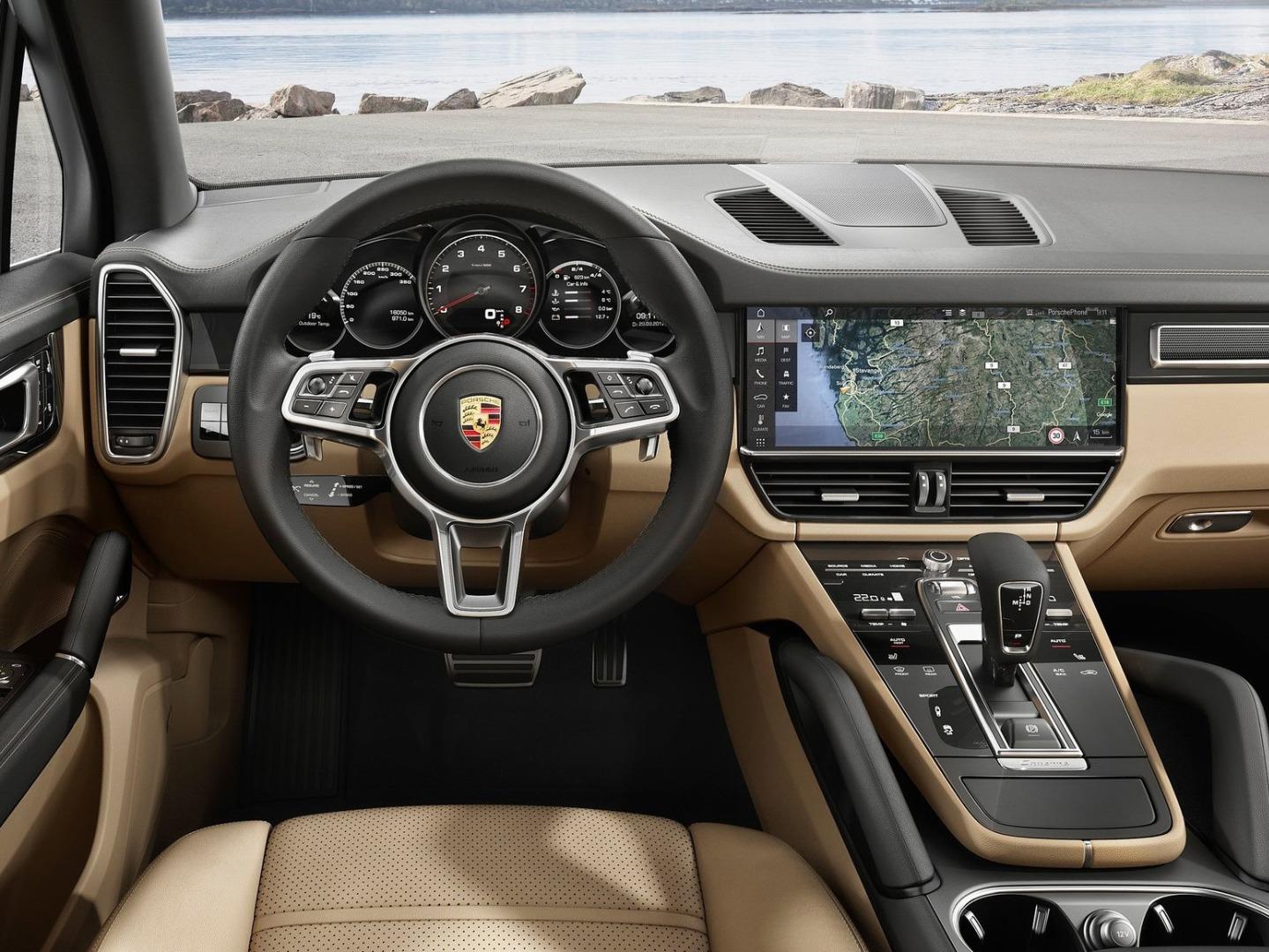
The interior remains a precisely crafted affair with every stitch on the leather perfectly placed. The quality of materials used is enough to rival that of the Lexus and the Jaguar. A highlight feature on the Cayenne is the Porsche Advanced Cockpit as well as the centre console with Direct Touch Control and the new 12.3-inch touch display installed with the Porsche Communication Management (PCM) system which acts as the driver's interface to all vehicle functions.
Conclusion
Each of the SUVs in this list has its own unique charm. The Lexus offers luxury and refinement yet unlike the Jaguar won’t cover as much ground on electric capacity alone, and it cannot be charged via external current. It uses regenerative energy to fill the battery and although this system shines in traffic conditions, its capabilities are limited.
The Porsche Cayenne offers luxury and performance, a performance which can be managed by you, the driver. Thanks to various driving modes one is able to achieve reasonable fuel efficiency without a compromise on performance. However, even with its lightweight construction and impressive powertrain, the Cayenne lacks behind the Jaguar in terms of performance.

At the time of writing this article, the Jaguar is the most expensive out of the three costing R 1 610 100, nearly R 160 000 more than the Porsche Cayenne and close to R 186 000 more than the Lexus. But in return, the Jaguar offer the most powerful engine combination of the three, not to mention the most frugal while standard equipment and premium finishes are plentiful, thus for us, the Jaguar is our winner.