Lexus ES vs Alfa Romeo Giulia vs Audi A4: which executive sedan is the best value for money?
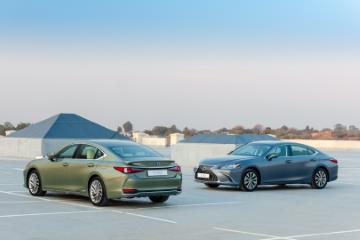
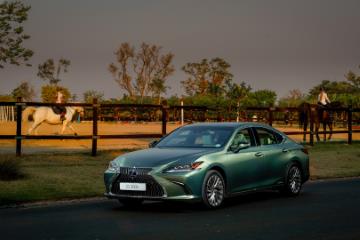
Executive saloons may not be as popular as they used to be in the days before the SUV-pocalypse, but some manufacturers nonetheless still cater for this shrinking market segment. Lexus fields a particularly appealing offering, with the incredibly spacious, comfortable and well-appointed ES series. We decided to compare the Lexus ES to the Alfa Romeo Giulia and Audi A4, to see which one of these plush sedans offers the best value for money.



The compact executive sedan fights back
The Lexus ES has, since it first arrived in South Africa in 2014, earned its reputation as a spacious and luxurious sedan that carries a comparatively low-budget pricetag. This market positioning remained unchanged with the latest-generation ES, which landed on local shores towards the end of 2018 (with a mild update in 2020). It goes up against some very capable opponents, though, especially from premium-brand manufacturers with a longer history in this segment than the (current) entry-level Lexus sedan.
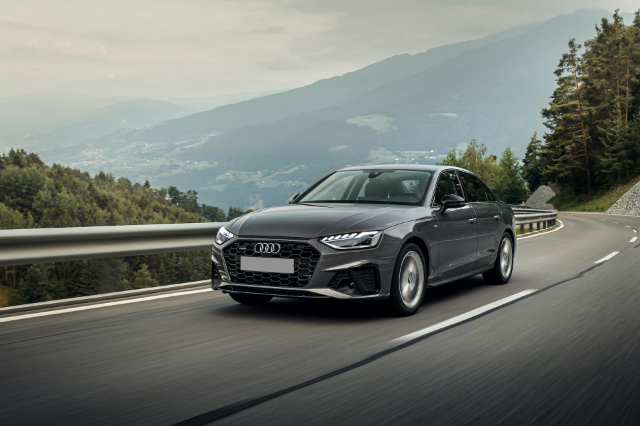
How well does the latest Lexus ES compare to these opponents? We decided to focus on one of the ES’s strongest suits – value for money – and found two alternative executive sedans with roughly similar pricetags to do battle with the Lexus. Does the big Japanese cruiser still offer the best value for money in its segment, or did Alfa Romeo’s Giulia and the latest Audi A4 succeed in denting the ES’s appeal?
Related: Shop for new and used Alfa Romeo Giulia cars for sale here.
Facts and figures:
First, let’s look at the key numbers:
|
Lexus ES 250 EX |
Alfa Romeo Giulia 2.0T Super |
Audi A4 40TFSI |
|
|
Engine size (cyl/size) |
4-cyl, 2.5-litre petrol |
4-cyl, 2.0-litre turbopetrol |
4-cyl, 2.0-litre turbopetrol |
|
Power/Torque |
152 kW/243 Nm |
147 kW/330 Nm |
140 kW/320 Nm |
|
Kerb Weight |
1 680 kg |
1 429 kg |
1 485 kg |
|
Length (mm) |
4 975 |
4 643 |
4 762 |
|
Airbag count |
10 |
6 |
6 |
|
Load Volume |
420 litres |
480 litres |
460 |
|
Top Speed (km/h) * |
210 |
235 |
241 |
|
0 – 100 km/h * |
9.1 seconds |
6.6 seconds |
7.3 seconds |
|
Ave Consumption * |
6.6 ℓ/100 km |
5.9 ℓ/100 km |
6.3 ℓ/100 km |
|
Warranty |
7 yr/105 000 km |
3 yr/100 000 km |
1 yr/Unlimited km |
|
Price |
R 676 300 |
R 690 557 |
R 705 900 |
* Manufacturer's official claimed figures.
Pricing was accurate at the time of writing, but may change without prior notice.
Analysis
Power, performance, and drivetrains
Right from the outset, it must be noted that the two European contenders take a distinctly different approach to our Japanese benchmark, by employing turbocharged 2.0-litre, 4-cylinder petrol engines for an optimised blend of performance and economy. That is where the similarities between the Audi A4 and the Alfa Romeo Giulia end, though: the Audi is still front-wheel driven (like the Lexus), while the Alfa chases classic rear-wheel drive dynamics instead.
On paper, the Lexus ES 250 has the most power in this group, courtesy of an engine that’s optimised for combustion efficiency rather than big output figures. While it loses out on torque in comparison to the others, due to the absence of any forced induction, it partially compensates with a 25% larger displacement, variable valve timing, and a very high compression ratio. It is mated to an 8-speed automatic gearbox that prioritises smooth progress over snappy shifts, which does exact a toll on the available acceleration.
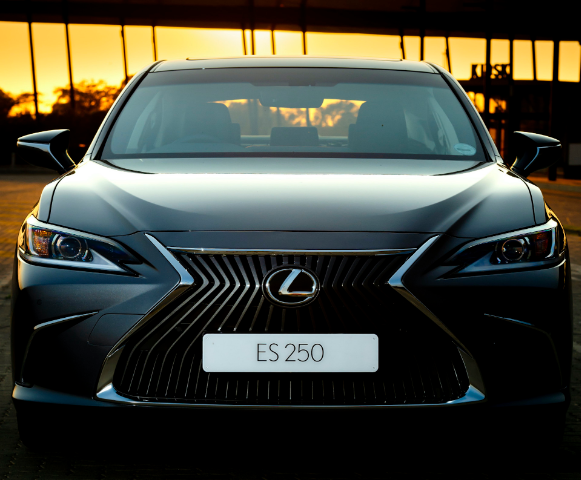
The big four-cylinder's peak values of 152 kW and 243 Nm are respectable, but, combined with the biggest and heaviest body in this group, it produces the most leisurely performance: the top speed is claimed to max out at 210 km/h, and it takes a smidge over 9 seconds to get from a standstill to 100 km/h. These numbers are probably good enough for those drivers who appreciate smoothness of operation more than straight-line speed, but they are nonetheless below par in this company, netting the Lexus ES 250 a third place for this criterion.
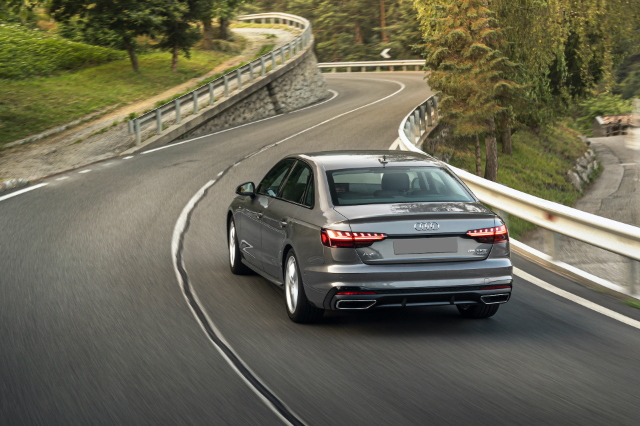
Second place in the performance stakes goes to the Audi A4 40TFSI. While it’s nowhere near as big and heavy as the Lexus, it still has the lowest power output of this trio (but almost as much power and torque as the Alfa Romeo). 140 kW and 320 Nm, sent to the front wheels via a 7-speed dual-clutch automatic, is good for a 0 – 100 km/h dash in a claimed 7.3 seconds (almost 2 seconds quicker than the Lexus) and a top speed of 241 km/h.
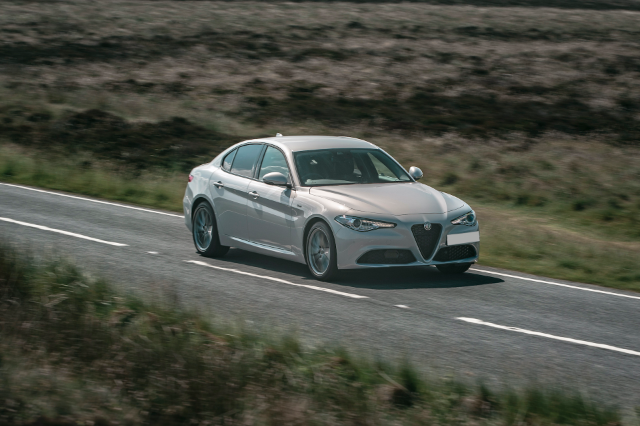
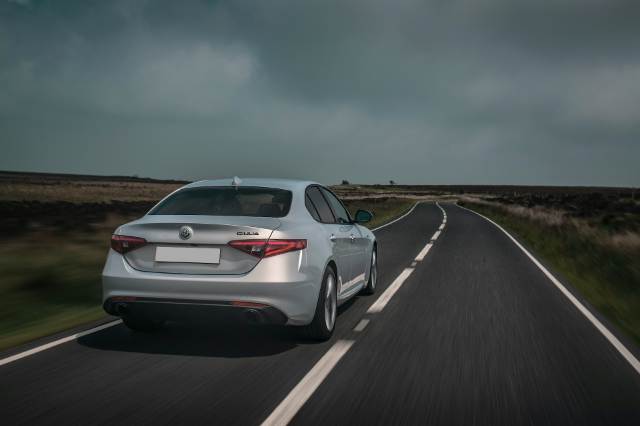
But, as was the way of all great classic Alfa Romeos, today’s Giulia will blitz its opponents in a drag race, needing only a claimed 6.6 seconds to reach 100 km/h from standstill. For this, we could thank the engine’s staunch torque output of 330 Nm (the most in this group), the second-highest power rating of 147 kW, RWD traction, a sharp-shifting ZF 8-speed automatic gearbox, and the lightest body weight. It’s slightly down (by 6 km/h) on the Audi’s claimed top speed, however, but the difference is largely academic.
Related: Shop for new and used Lexus ES cars for sale here.
Economy
Lightweight construction, turbo torque, and efficient drivetrains sees the European contenders take the top two positions in the economy stakes as well. The Alfa Romeo Giulia not only posts the best performance figures of this trio, but it’s also said to need the least petrol to do so. While its claimed average consumption of 5.9 ℓ/100 km is unlikely in real-world driving, it’s still a bit better than the Audi A4 40TFSI’s claimed average of 6.3 ℓ/100 km, but both of them should be capable of approaching those figures in the hands of a conservative driver on open roads.
Seen in the context of its (much) heavier build, the Lexus ES 250’s claimed average of 6.6 ℓ/100 km is actually more than respectable, albeit just as unlikely to be achieved in the real world as the other two’s figures. But, with that said, it’s still claimed to drink the most of these three contenders, which relegates it to third place in this department as well.

Practicality
The Lexus ES makes some headway in the practicality stakes, purely because it’s unashamedly focused on offering the most cabin space it could muster. It’s truly cavernous inside, and will easily seat five 6-foot-plus adults in comfort. Head-, knee-, elbow- and shoulder room are all abundant, making the Lexus an exceptionally comfortable companion for cross-country trips.
There’s a bit of a downside behind the rear seating area, mind you. While the Lexus can carry a respectable 420 litres in its luggage compartment, both challengers eclipse it in this department. That’s a tad disappointing, considering that the Lexus ES is 332 mm longer overall than the shortest car here – especially when that car (the Alfa) also has the biggest boot of this trio at 480 litres.
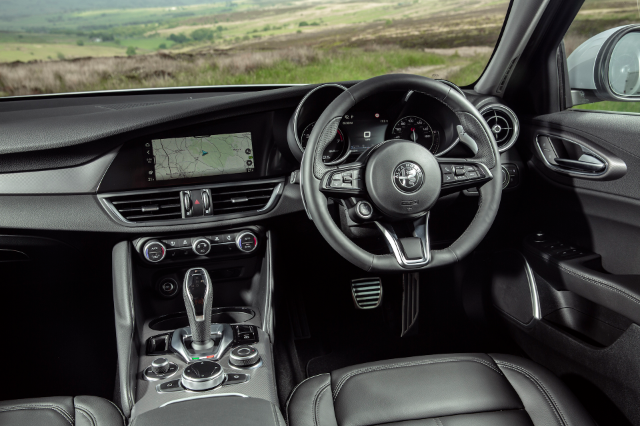
The Alfa isn’t anywhere near as spacious in the rear seating area as the Lexus, although it does have more rear leg- and headroom than the Audi can offer. In exchange, the A4 has the second-largest boot here, and approaches the Giulia on rear passenger space while being roomier in front.
Deciding on a winner in this department depends on the buyer’s priorities: if the aim is primarily to carry a group of large people, there’s only one good choice – the Lexus ES. If the passengers are of normal size but have a lot of luggage, the Alfa Romeo Giulia takes the crown. Call it a draw for first place between the Lexus and the Alfa, then, with the Audi slotting into still-admirable third place.
Related: Shop for new and used Audi A4 cars for sale here.
Equipment and safety
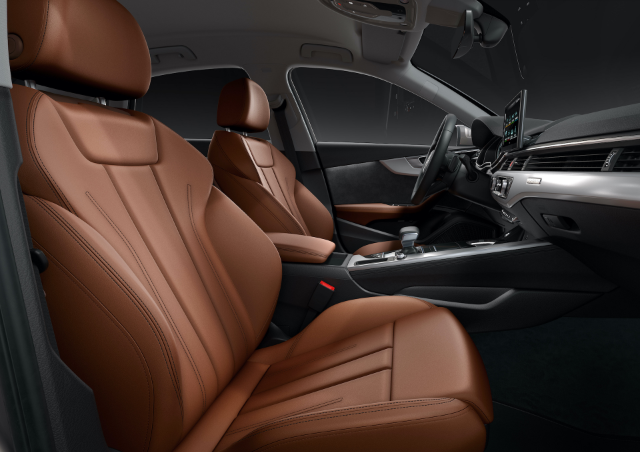
This is an immediate win for the Lexus ES (even in lower-level “EX” trim, the only one offered for the ES 250), because it’s overflowing with standard features – things that would likely cost a buyer extra with either of the other contenders. We’re talking about both comfort- and safety equipment here, mind you: electric adjustment for heated front seats, a sunroof, blind spot monitoring and a rear-view camera are included in the base Lexus ES package, but all reside on the other two’s option sheets. That’s right: you have to pay extra for a rear-view camera in the two European cars – something that you’d get in a high-trim Suzuki Swift for a less than a third of the money...
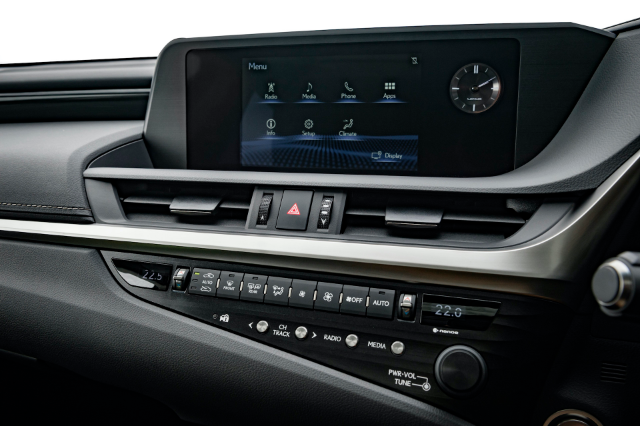
Fortunately, the Audi and Alfa aren’t exactly barren inside, even if they don’t approach the Lexus’s standard kit list. Most of the modern conveniences are present in all of them, including dual-zone climate control and high-level audio systems with high-res colour central display screens, but the Alfa Romeo is the only one to feature adaptive cruise control in the base spec.
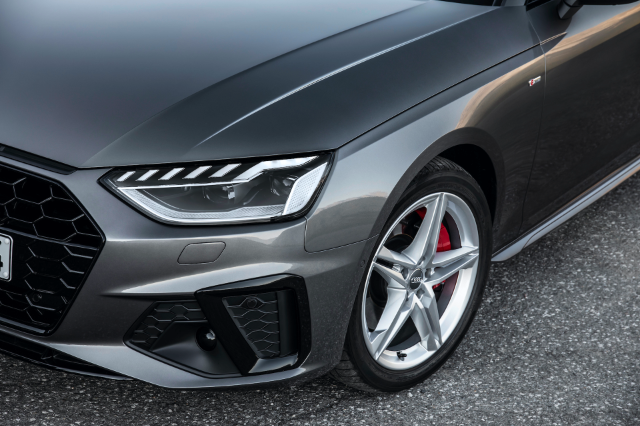
That’s very nice and all, but it doesn’t compensate for the one omission that drops the Alfa Romeo to third place in this department: it uses old-fashioned halogen headlamps as standard, with xenons being the upgrade option. In the company of cars that both feature LED headlights as standard, with adaptive matrix LEDs as the A4’s upgrade option, that just doesn’t cut the mustard anymore.
Safety turns into another other automatic win for the Lexus: not only does it have more standard safety features than the other two, but it also trounces them on airbag count. Occupants are cushioned by no fewer than 10 airbags, as opposed to the 6 on offer in the two Europeans. Fortunately, they all have 5-star Euro NCAP crash test ratings, with a complete alphabet soup of driver aids and ISOFIX rear child seat anchors. The Lexus grabs a comfortable first place here, with the Alfa Romeo and Audi in a tie for a respectable second place.
Aftersales support
Lexus has an extremely strong aftersales package, with a warranty and a maintenance plan that both run for 7 years or 105 000 km, and neither of the others can match it. The Audi’s warranty is active for one year with no mileage limit, and its maintenance plan runs for 5 years or 100 000 km, so first owners can enjoy a few years of peace of mind.
The Alfa grabs a surprise second place here, because its cover is rather more extensive than the Audi’s: the warranty runs for 3 years or 100 000 km, and the maintenance plan for 6 years or 100 000 km. That speaks of Alfa Romeo’s considerable faith in the quality of their product, especially now that the software glitches which affected some early-build cars have been resolved. Once again, great news for first owners!

Verdict
It’s beautiful to behold and fantastic to drive, and it comes with a great aftersales package, strong performance and good fuel economy. It’s a proper RWD sports sedan with some genuine Alfa Romeo flavour, and for the Alfisti and other keen drivers, that will be enough. Were it not for the fact that the Giulia comes with decades-old lighting technology, it may even have beaten the more-expensive Audi to second place. Unfortunately, we take a dim view of archaic headlights in 2021, so the otherwise-sparkling Alfa Romeo Giulia Super has to settle for third position in this company.

Separating the Lexus and the Audi is a bit trickier. They’re both plush, comfortable and very well-made, and share many other good attributes as well. The Audi will appeal to those who prefer to have some acceleration in reserve and enjoy spirited driving a bit more, but the Lexus’s unashamed focus on comfort will make a hassled executive’s commute a lot less stressful - exactly where cars of this nature are most frequently used.

The Lexus has to take first place in this value comparison for a multitude of other reasons as well. It’s the least-expensive car here, with the smoothest ride quality, quietest and most spacious cabin, and the longest standard feature list. Cap all of that with excellent safety credentials and the best aftersales support, and the ES 250’s performance- and dynamic deficiencies and smaller boot can easily be forgiven.