
New vs used Lexus ES: What are the top 4 differences?
With the latest-generation Lexus ES having been around for a good two years now, both the previous generation and nearly-new current-generation examples have depreciated enough to offer extremely compelling used-car value. We compare the current (new) model to the previous (used) one to highlight the top four differences between them.



Bargain-priced luxury
After a complete redesign in 2018, the Lexus ES has been essentially unchanged since then. The range was expanded slightly through the addition of a more-basic hybrid derivative in early 2020, but that’s the extent of the updates so far. Competing in a shrinking market segment, the ES also shows pretty steep initial depreciation, dropping around 25% of its new-car value in the first year, according to the listings currently on AutoTrader.
But, as much as a nearly-new current-generation Lexus ES offers great value for money (a spacious, well-appointed and luxurious sedan for less than half a million Rand? Yes, please!), the previous-generation has largely similar attributes at an even greater discount.

Consider this: you can get a 2016/2017-model Lexus ES 250 with moderate mileage for R 300 000 or less. There will still be some warranty and maintenance plan left at that age, as well – Lexus has an excellent aftersales package, which will run for least another 3 years and maybe around 40 000 km. And let’s not forget Lexus’s well-earned reputation for longevity, either – such a used ES will keep going for many more years. That’s an incredible value proposition: a large luxury car, complete with post-purchase peace of mind, for the price of a new supermini.
So what would you gain by considering a new (or a used current-generation) Lexus ES instead of a previous-generation one? Sure, the newer car is better than its predecessor by every metric, but is it really worth almost twice as much? Let’s compare the two generations to highlight the four most important differences between them, then you can decide which purchase option would suit you best.
Related: Used car value shootout - Lexus ES vs Honda Accord vs Mazda6.

1. Extensive restyling, for better or for worse
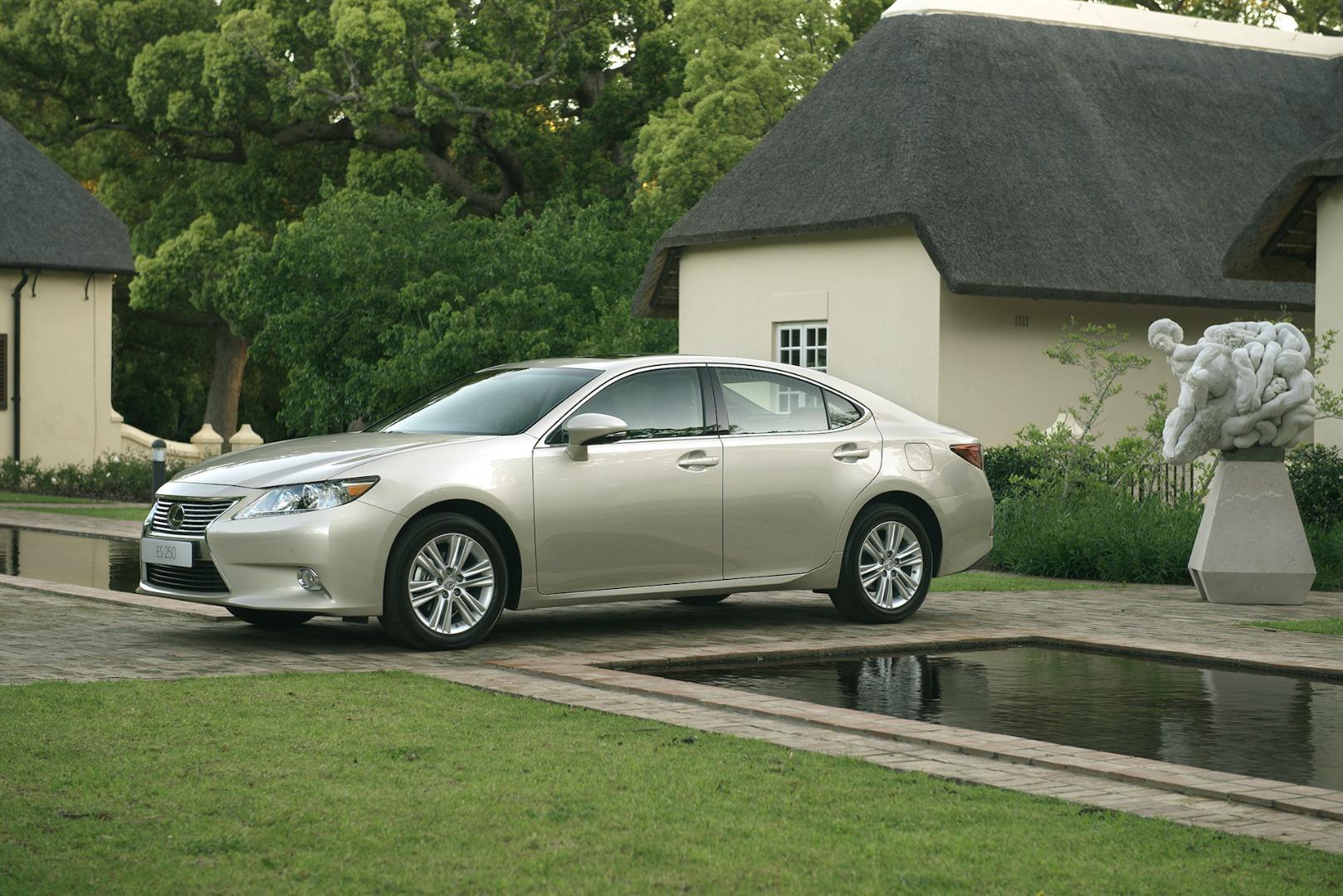
When the “XV60” generation Lexus ES (the sixth overall, but the first to make it to local shores) arrived here at the end of 2013, it was the most conservatively-styled model in the Lexus range. It wore a “Spindle Grille” like its siblings, but the rest was all restrained and subdued. That got a mild shake-up in 2015, when a mid-life facelift left the lamp clusters more angular and added some creases to the bumpers and bonnet, although the cabin section was left largely untouched.
The latest ES (codenamed “XZ10”) arrived with more of the same, but this time, those styling cues have all been exaggerated. There are more ridges and creases all round, a pointier front (and a shorter and higher rear) end, and a semi-fastback profile. The resultant change in proportions endows the new Lexus ES with a sportier stance, and gives it a lot more presence on the road.

If you want to make a statement when you arrive somewhere, get the newer one – it’s better at that sort of thing. But if you don’t mind fading into the scenery (or even prefer some inoffensive anonymity), the previous-generation would be the obvious choice between the two.
Related: Get more details about the second-generation Lexus ES range in this launch report.
2. Increased cabin space
One of the old models’ strongest suits was its extremely generous cabin space. From the time of its arrival until its replacement, it offered class-leading interior acreage, with ample room for 5 occupants and their luggage. This was as a result of a long wheelbase and space-efficient front-wheel drive packaging – not the best combination for sporty handling, but very effective in squeezing the most use out of every millimetre of the enclosed volume.

But too much of a good thing is merely a starting point for the engineers at Lexus, so the new-generation car offers even more interior space, for the same reasons as before. It's stretched in wheelbase, length and width; which, along with the elongated roofline, gives enough room to allow the most luxurious (SE) trim to offer electrically-reclining rear seatbacks as standard.
That alone almost justifies the price premium for a newer ES, but then you’d have to get a hybrid – the normal ES 250 doesn’t offer this gadget, since it only comes in base EX trim. Nonetheless, the oodles of room all round, combined with luxurious trimmings, makes for a premium transport experience. Nobody in any Lexus ES, new or old, will feel short-changed on space or comfort, so choosing between the old- and new-generation car will depend on just how much room you really need.
Related: The top 3 things you need to know about the Lexus ES.

3. New-generation drivetrains
Both generations of Lexus ES offered a naturally-aspirated 2.5-litre 4-cylinder petrol engine as the range entry point, but the new car has an equally new-generation powertrain. Designed with optimised thermal efficiency in mind, the new engine is claimed to produce more power while using less fuel.
The XV60’s base engine produced 135 kW and 235 Nm, sent to the front wheels through a 6-speed torque converter autobox. It was entirely fit for purpose, but was never at risk of raising your heart rate - a tradition that continues with the latest generation. The new engine does feature a flatter torque curve, and ups the outputs somewhat to 152 kW and 243 Nm, but it yet again is unlikely set many pulses racing.

The big decider comes with the newer car’s 8-speed automatic gearbox. While the older car’s slushbox was decently smooth in operation, it was a bit dim-witted in its programming and consequently not much fun to use. The new car’s 8-speed unit is considerably sharper of response, and with its wider gear ratio spread, enables both quicker take-offs and lower revs in cruising conditions.
Combined with the wider powerband, this livens up the driving experience no end, and makes the new-generation ES 250 EX feel considerably perkier on-road than the bland performance figures would suggest (0 – 100 km/h in 9.1 seconds). The fact that the latest Lexus ES is claimed to use less fuel finishes off a nice all-round upgrade from the older car, and goes some way towards justifying the new one’s higher pricetag.
Related: If you’re interested in a Lexus ES 300h (Hybrid), this review will bring you up to speed.

4. New platform leads to a nicer overall experience
Lexus has had a good run with developing nice-to-drive sedans and SUVs recently, and the new ES is no exception. It’s not the kind of car that encourages aggressive, point-and-shoot driving, but it will reluctantly pick up its skirt and dance through the curves if you ask it really nicely.
Yes, yes, we know: it’s not as involving to drive as a smaller, pricier (RWD) sports saloon, but it hides surprisingly capable (if remote-controlled) handling dynamics underneath that comfort-biased veneer. In this respect, the new-generation Lexus ES is another major improvement over the older one, which was a bit of a soggy pudding when driven in anger.

That’s perfectly understandable, given its strong slant towards uncompromised comfort, but the new one handles much more crisply and rides just as smoothly (or maybe even better). Further development in noise- and vibration control also reduces noise intrusion into the new car’s cabin, making for an even more comfortable experience.
Related: What is covered by the Lexus ES manufacturer’s warranty?
Recommended Next:
Shop for new and used current-generation Lexus ES cars for sale here.
Shop for used previous-generation Lexus ES cars for sale here.