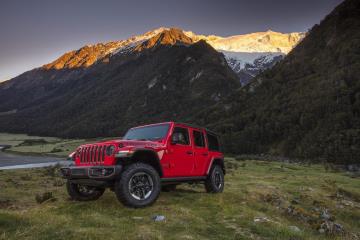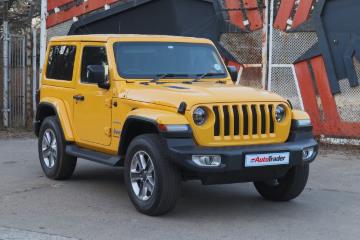


Starting life as a purely-military vehicle, Jeeps soon became must-have items for outdoorsy types. And, while Jeep made several attempts at creating family cars through the decades, this approach only really gained momentum in the 1960s, when the 1962 Jeep Wagoneer combined true off-road ability with a comparatively luxurious and spacious cabin. Thus was the proto-SUV born.
Over time, SUVs started taking up increasing importance in the Jeep line-up, to the point where most of their range are currently made up of wagons, leaving only the Wrangler as a specialist off-road vehicle. And even the Wrangler wasn’t immune to evolving a more-practical body style, with the 4-door Wrangler Unlimited offering more practicality in exchange for some bundu-bashing abilities.
The current range
At the time of writing, Jeep’s South African range consists of 3 main model lines, with the possibility of a fourth (the Compass) making a return in the near future. They start out with the compact Renegade SUV, cater to the luxury market with the Grand Cherokee, and draw in off-road enthusiasts (or fashionable extroverts) with the Wrangler range.
As a result of the Renegade’s limited variety in South Africa, there are no locally-available AWD variants of this model – it’s FWD-only, and offers only a 1.4-litre turbopetrol engine as motivation. Consequently, this is the only model in the local range without Jeep’s “Trail Rating”, although an AWD “Trailhawk” variant is available overseas.
Related: Why the Jeep Renegade could be a used-car bargain.

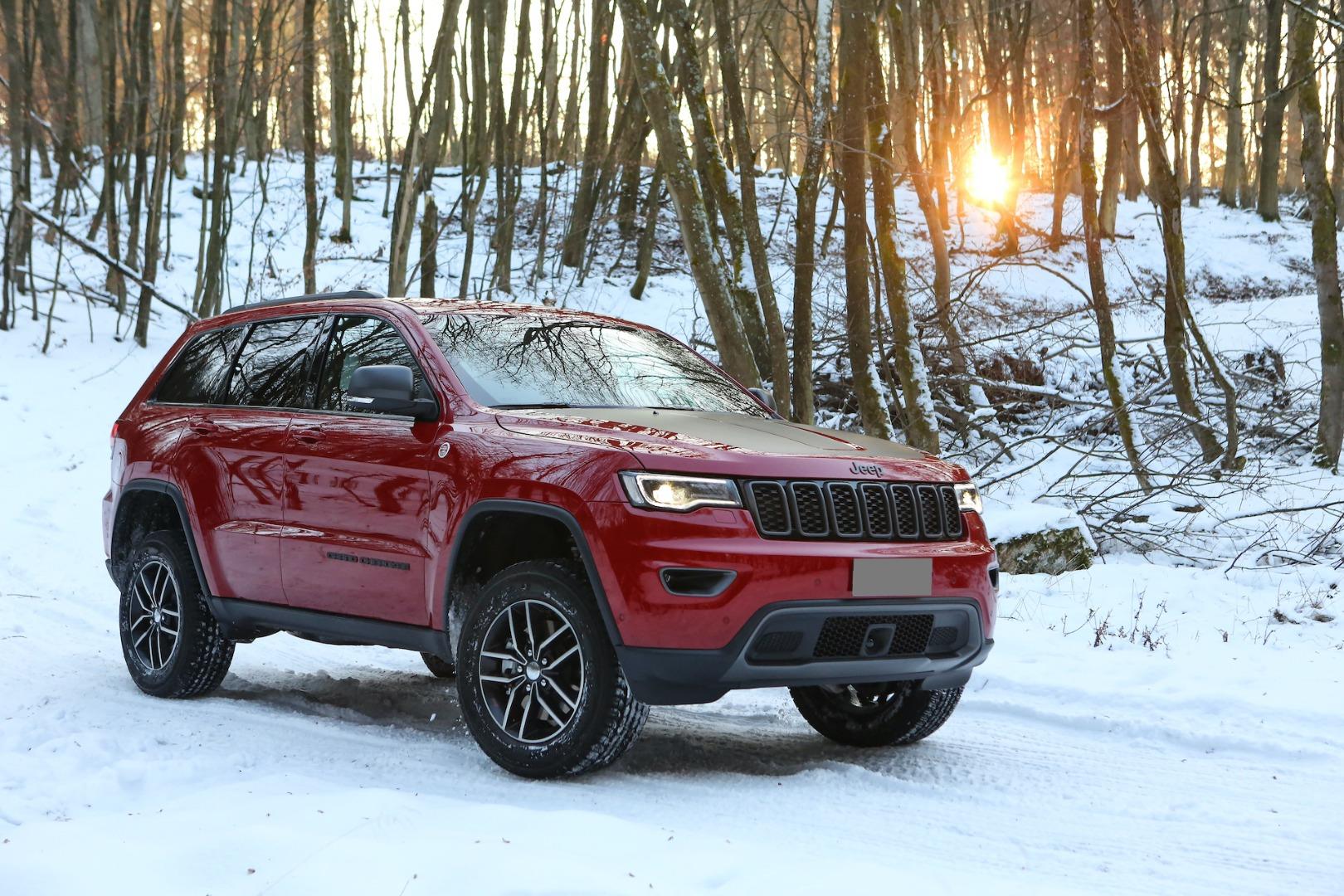
Meanwhile, the Grand Cherokee large luxury SUV is ageing rapidly, and its replacement has already been shown in some international markets. That doesn’t change the fact that even the outgoing model is still a very appealing choice in its segment, however, with plenty of modern tech on hand and an appearance that doesn’t really look its age.
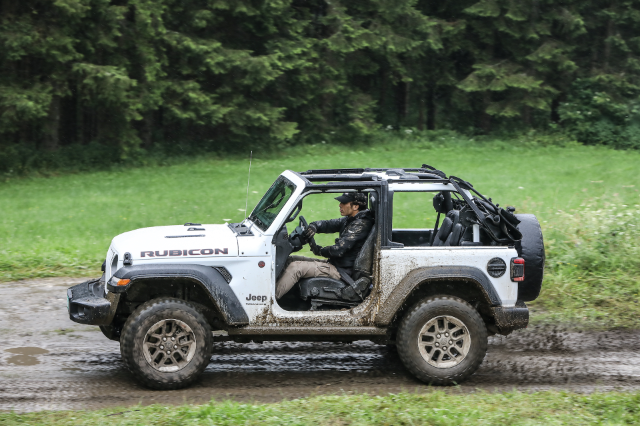
All Grand Cherokees feature all-wheel drive and decent ground clearance, and some variants also include height-adjustable air suspension for extra off-road ability. The final model in Jeep’s local range is the evergreen Wrangler, which has been redesigned in 2017 to look almost exactly like its predecessor, and still offers 2-door (SWB) and 4-door (LWB) configurations.
Related: Which used family off-roader is the best value for money?

Practicality and space
Renegade
The Renegade may be small on the outside, but its boxy shape allows for a surprisingly practical cabin. Its tall roofline gives plenty of headroom, and its comparatively upright side windows liberate a decent amount of shoulder room.
There’s 351-litres available in the luggage compartment, which can be expanded to 1 297-litres with the rear seats folded flat. That means reasonable practicality in a compact footprint for the Renegade, although the boot may be a bit small for family use – especially if baby strollers and carry cots enter the equation.

Grand Cherokee
There’s absolutely no shortage of space in the big-daddy Jeep, though: it has a cavernous cabin with enough room for 5 large adults, and the luggage compartment has at least 782-litre of carrying capacity. Fold down the split rear seats, and it expands to 1 554-litres, giving the Grand Cherokee enough versatility to cater for almost any family-use scenario.

Wrangler
In 2-door form, the Wrangler is essentially a 2-seater, especially if you want to carry more than a gym bag and a laptop in the boot. The SWB body style compromises rear seat room as well as luggage space, but makes the Wrangler extremely handy in rough terrain.
Practicality receives a boost in the 4-door Wrangler Unlimited (LWB), with reasonable cabin space for 5 adults, but its boot space remains compromised by the standard folding soft top, which eats a significant amount of luggage space. The side-hinged rear door/top-hinged rear glass fitted to hardtop variants also make access to the boot more difficult than family users might accept.
Related: Jeep Wrangler trims head-to-head - here's our winner!

Safety
Once again, we’re faced with a mixed bag in the safety department. The Wrangler scored 3 stars in its 2019 ANCAP re-test, following an earlier 1-star rating due to a lack of driver safety assistants. But, even with the assistants on board, adult occupant protection still only scored 60%, with child protection reaching 80% in the re-test. These aren’t great results these days, so the Wrangler stumbles over yet another necessity for family users.
The Renegade also scored 3 stars in 2019’s Euro NCAP crash testing, but for different reasons to the Wrangler’s 3-star rating: Both adult- and child occupant protection were decent (at 82% and 84%, respectively), but lost its stars for the dearth of standard safety aids. The Grand Cherokee performed slightly better in 2011, but it’s doubtful whether its 4-star rating is still applicable more than a decade later – the tests have evolved considerably since then, and a score of 69% for child occupant protection is, once again, not great.
Related: Are Jeeps good first cars?

Comfort and convenience
All current Jeep products are pretty comprehensively-equipped as standard, with niceties like cruise control, a colour touchscreen infotainment system with smartphone mirroring, and air conditioning included across the range. The Grand Cherokee is particularly well-specced, with available equipment including adaptive cruise control, navigation to justify their steep pricetags.
However, not all Jeeps are destined to be equally comfortable for a family: The Grand Cherokee and Renegade are as comfortable as any car, but the Wrangler shows its utilitarian origins and off-roading priorities by being a bit agricultural on the road. Not only is the ride quality a bit unsettled over anything but smooth tarmac, but its seating positions are rather upright and the cabin is pretty noisy on the freeway.
Related: Jeep Grand Cherokee vs BMW X5 vs Land Rover Discovery - Which one is the best value for money?

Verdict
The 2 most car-like Jeep models (Renegade and Grand Cherokee) will undoubtedly suit a family pretty well, provided you’re prepared to overlook some questionable safety aspects. They both have plenty of space and creature comforts, and the Grand Cherokee has a cavernous load bay (one of the largest in its class) and lots of standard equipment.
It's a different story with the Wrangler, however. Not only is it lacking as far as occupant protection in a collision goes, but the 2-door has restricted rear access and limited space, while both SWB and LWB Wranglers have compromised luggage compartments. And, because the latest Wrangler doesn’t offer a diesel option, it’s also very thirsty, so your budget will have to stretch to keep it fed.