
BMW X5 vs Jeep Grand Cherokee vs Land Rover Discovery: which one is the best value for money?
Other manufacturers may have blazed the trail which gave us the premium on-road SUV, but the first globally-successful ones both carried German badges. BMW’s X5 was one of the first contenders, and its marketplace has since grown to include multiple offerings from all aspirational brands. Now, with a fresh new X5 on the market, it’s time to see how it compares to two alternatives, each with its own heritage in this arena. Which one is the best value for money?



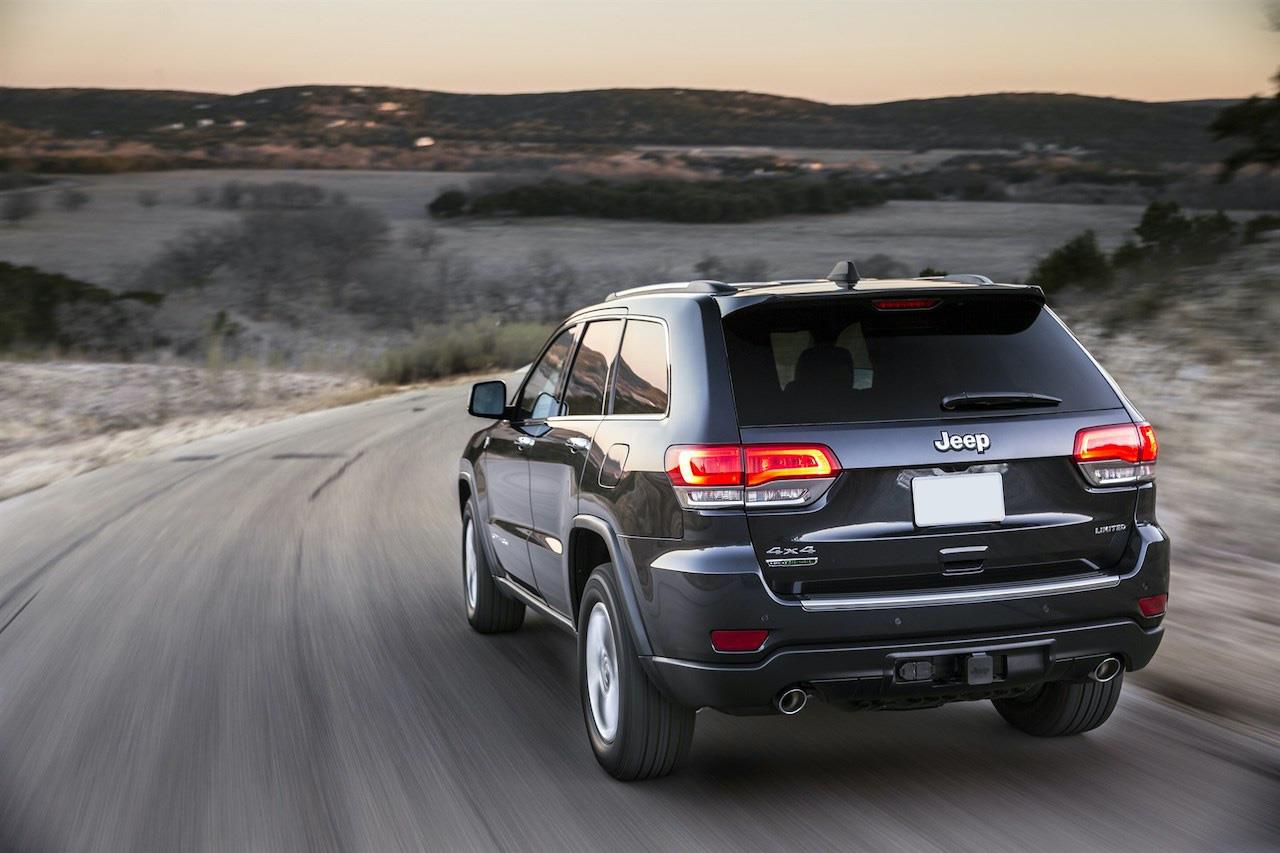

City-bound Bruisers
Mercedes-Benz’s first ML model, often billed as the first modern premium SUV, was actually merely a continuation of a decades-old idea: a large, off-road capable four-wheel drive wagon with nice trimmings and a bunch of premium features. Before it came the original Range Rover (followed by the first Discovery), and a decade before that, Jeep fielded their SJ-series Super Wagoneer. The spiritual successors of both of these pioneers are still around, and they’re ready to take on a German challenger, which re-defined the entire segment when it first arrived.
That German alternative isn’t the Mercedes-Benz ML (later renamed and re-designed to become the GLE-Class), however. Instead, we’re looking at the BMW X5, which transformed its market segment from being off-road-biased, into high-riding but on-road-focussed luxury wagons with added versatility. As it were, the BMW X5 was the SUV to really add some “Sport” to the equation. Calling it a “Sports Activity Vehicle” was (and still is) more than a bit pretentious, but one can’t blame BMW for trying to distance their effort from the horde of truck-based SUVs out there.
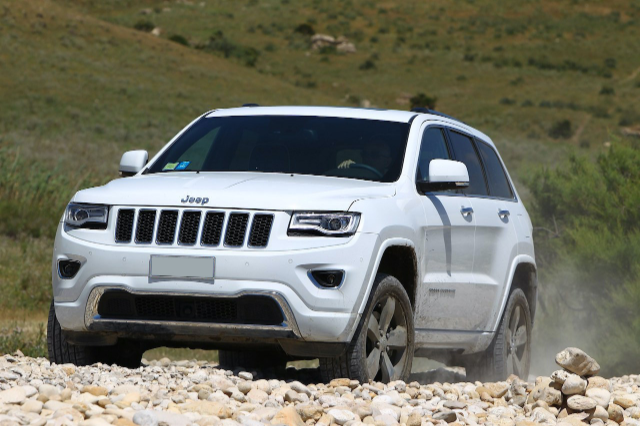
The Mercedes-Benz GLE remains the X5’s most important nemesis, followed by the Audi Q7 and Volvo XC90, but the cars which pre-date them both didn’t exactly rest on their laurels, either. The Jeep Grand Cherokee, the Super Wagoneer’s spiritual successor, is still going strong, and the Land Rover Discovery has had numerous redesigns to become today’s 5th-generation model. And, with the continuing shift in the marketplace, they’re all edging closer to the X5’s original of being a car-like-but-lifted family wagon. So which one of the current crop offers the best value for money?
Facts and figures:
First, let’s look at the key numbers:
|
BMW X5 xDrive30d xLine |
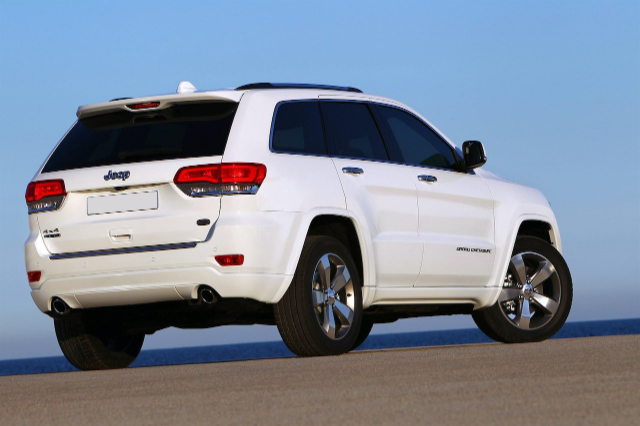
Jeep Grand Cherokee 3.0CRD Summit |
Land Rover Discovery SE Td6 |
|
|
Engine size (cyl/size) |
6-cyl, 3.0-litre turbodiesel |
V6, 3.0-litre turbodiesel |
V6, 3.0-litre turbodiesel |
|
Power/Torque |
195 kW/620 Nm |
179 kW/569 Nm |
190 kW/600 Nm |
|
Kerb Weight |
2185 kg |
2325 kg |
2230 kg |
|
Length (mm) |
4 922 |
4 828 |
4 970 |
|
Airbag count |
6 |
6 |
6 |
|
Load Volume * |
650 litres |
782 litres |
1231 |
|
Top Speed (km/h) ** |
230 |
202 |
207 |
|
Ave Consumption ** |
7.0 ℓ/100 km |
7.5 ℓ/100 km |
7.8 ℓ/100 km |
|
Warranty |
2 yr/Unlimited km |
3 yr/100 000 km |
5 yr/100 000 km |
|
Price |
R 1 233 096 |
R 1 256 900 |
R 1 264 206 |
*With 5 seats in use
**Manufacturer's official claimed figures.
Analysis
Power, performance, and drivetrains
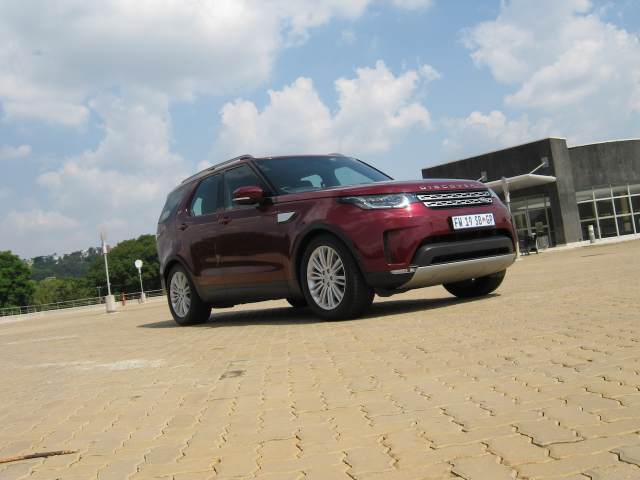
Their engines may have similar displacements and cylinder counts, but there are some notable differences in their power outputs. The Jeep 3.0CRD has the least power and torque (179 kW/569 Nm) from its 3.0-litre V6 turbodiesel, with the similarly-configured Discovery Td6 engine in a strong second place with 190 kW and 600 Nm. Neither of them can match the BMW’s inline-6 on outputs, though, because it puts all of 195 kW and 620 Nm at the driver’s disposal.
Interestingly, all three contenders send their power into their AWD systems through a version of the ZF 8HP torque-converter automatic gearbox, with the main differences coming down to individual engine characteristics, gear ratios, and programming. BMW seems to really know how to set up this transmission by now, because the X5’s programming is a lot more responsive and intuitive than in the others, in spite of its similar hardware.
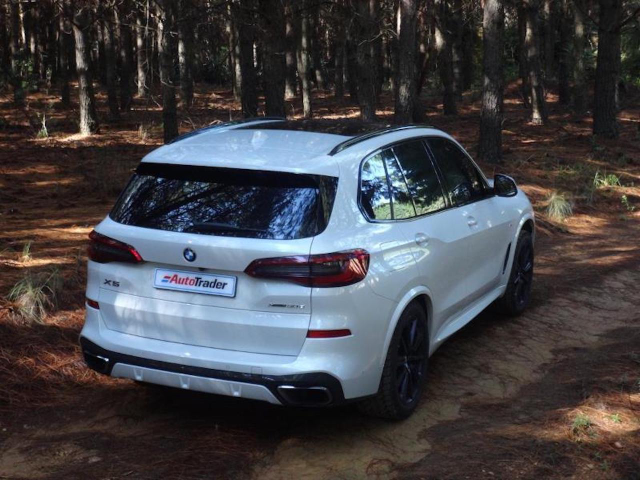
These sharper gearbox responses undoubtedly help in the performance stakes, but the BMW X5 has another card up its sleeve: it’s the lightest car in this group, coming in 45 kg below the Discovery and a whopping 140 kg lighter than the Grand Cherokee. This combination of factors puts the BMW X5 in the performance lead, followed by the Discovery in second, and the hefty, lower-powered Grand Cherokee in third place.
Related: We compare the top 3 Jeep Grand Cherokee trims.
Economy
This department hands another win to the BMW X5-30d, because it has the lowest officially-claimed average consumption in this group. And, while its quoted average of 7.0 ℓ/100 km will prove to be well-nigh impossible to achieve in normal driving, but our tested average consumption of 8.6 ℓ/100 km is commendable in itself.
The Jeep 3.0CRD scores a second place here, because its official average of 7.5 ℓ/100 km is lower than the Discovery Td6’s 7.9 ℓ/100 km. In normal driving, the Jeep will probably use a little more diesel than the Discovery would, on account of its boxier shape and heavier weight, but they should both register around 9.0 ℓ/100 km on real roads.
Related: Our review of a well-specced BMW X5-30d elaborates on its brilliance.
Practicality
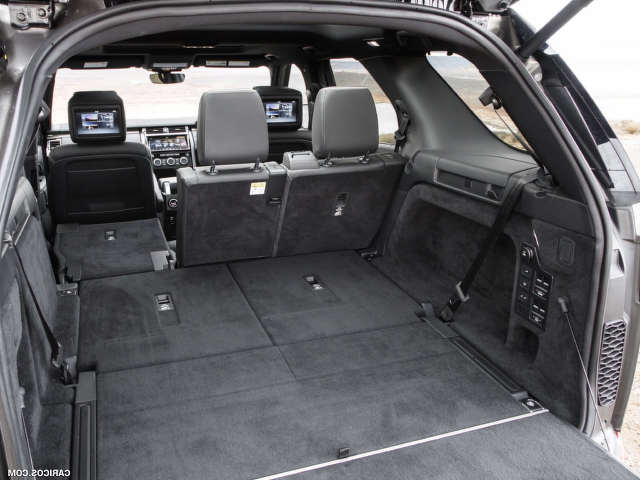
Now we finally get to the Discovery’s strongest suit: practicality. It’s the largest car here, and it’s also available with a 7-seat option. Combine these two factors, and you end up with gargantuan luggage space: there’s a massive 1232 litres available in 5-seater format, growing to a cathedral-like 2500 litres with the second seating row folded down. Like the others, it offers plenty of cabin space for occupants, but it simply overwhelms them both for sheer loading space.
The Jeep stages a strong comeback in this department, because it offers the second-largest luggage volume with all seats in use: a voluminous 782 litres, against the BMW’s 650 litres. It’s not so good when the rear seats are folded, though, where the BMW’s maximum of 1870 litres eclipses that of the Jeep by more than 300 litres. Not that it really matters, mind you – the Discovery beats them both, and both the Grand Cherokee and the X5 are usefully spacious enough to justify an honorable shared second place.
Equipment and safety
We chose an entry-level X5-30d (xLine trim) as the baseline for this comparison. Fortunately, even in base trim, the X5 has a long list of standard features. The standard spec includes 4-zone climate control, digital dash display, adaptive LED headlights, keyless entry with pushbutton start, and electric adjustments for the front seats and steering wheel. In other words, there’s a fair amount of premium features on offer, even at the base price.
The X5 xLine’s closest price competitor from the Jeep front is the top-trim “Summit” specification, which includes pretty much everything as standard. To the X5’s list, it adds air suspension, a panoramic sunroof, heated seats all round (ventilated as well in front) and adaptive cruise control, but it loses the BMW’s standard LED headlights, settling for adaptive Xenons instead. The Discovery largely matches the Grand Cherokee Summit on standard equipment, but loses the climate controlled seats and regains LED headlights (albeit not adaptive as standard).
Basic safety requirements are also met all round, with 6 airbags, stability control, ABS with EBD and BAS, and ISOFIX child seat anchors fitted to all three cars. The X5 and Discovery both scored 5 stars in Euro NCAP crash testing, however, while the Grand Cherokee could only manage 4 stars back in 2011 (yes, it is that old). As a result, the BMW and Land Rover end up sharing first place for safety, with the Jeep quite a way behind in third.
Related: Many of the Grand Cherokee Trackhawk’s safety features echo those of the Summit variant.
Verdict
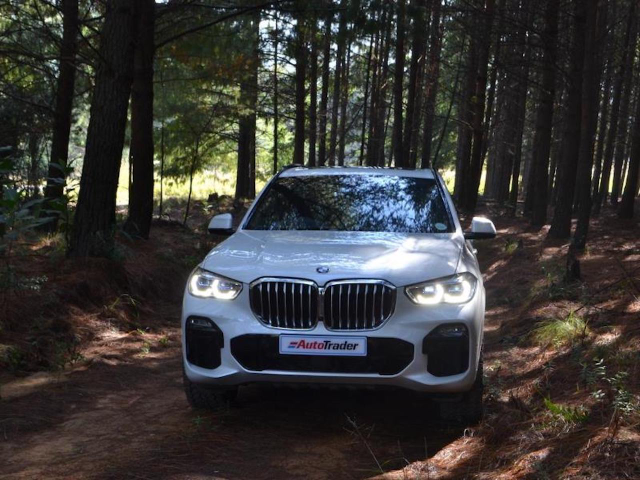
The first car to fall is the BMW X5. It’s a hugely accomplished vehicle, and in entry-level 3.0d xLine trim, it’s not particularly expensive. The problem lies in its relatively barren standard spec sheet, compared to the better-equipped opponents costing similar money. Ticking the appropriate option boxes on an X5 turns it into a wonderful machine that’s loaded with tech, but then it will also cost a lot more than similarly-equipped rivals. Its maintenance plan matches that of the Land Rover (5 years or 100 000 km), so it doesn’t make a particularly compelling case in terms of aftersales support, either.
It’s remarkable that the Jeep Grand Cherokee, currently into the ninth production year of its fourth generation, still performs as well as it does to net a second place here - it really is as old as ages in automotive terms. And, in spite of a number of significant upgrades along the way, the age of its design shows through in some areas, such as vehicle weight, performance, lumbering driving dynamics, and comparatively poor space utilisation.
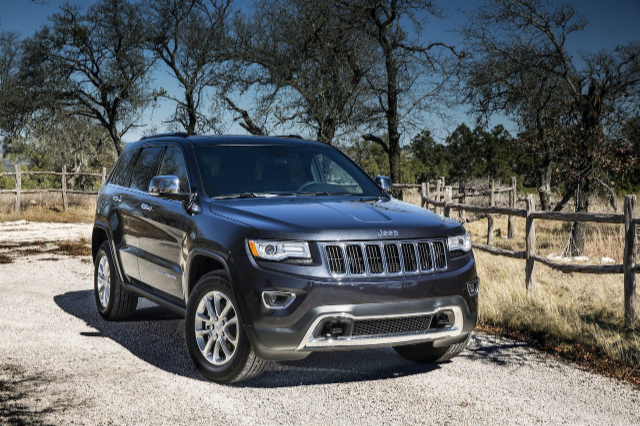
However, the Jeep Grand Cherokee offers a lot of features and a lot of car for the money, and after all these years, it’s fairly certain that any quality glitches will have been sorted out by now. The top-level Summit trim is lovely, but probably not the best value in the range, though – that would be the entry-level (but still well-equipped) Limited trim, yours with a saving of more than R 200 000, and the value sweet spot in the range. A 6 year/100 000 km maintenance plan further sweetens the deal – the strongest aftersales package in this group.
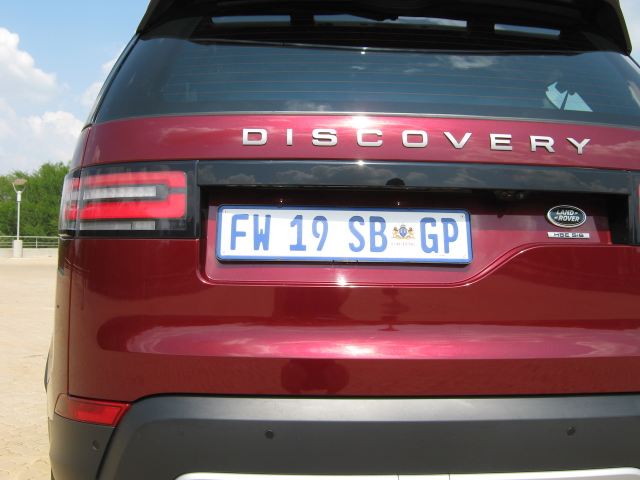
This leaves the Land Rover Discovery as our winner. Its performance isn’t too far behind that of the BMW, it’s not a lot more thirsty than either of the others, and its standard equipment list matches the best elements of both opponents. Throw its unbeatable practicality and competitive pricetag into the mix, and it becomes the obvious value choice in this price range.
* Pricing was accurate at the time of writing, but may change without prior notice.
Recommended Next:
Shop for new or used BMW X5 cars for sale here.
Shop for new or used Jeep Grand Cherokee cars for sale here.
Shop for new or used Land Rover Discovery cars for sale here.