
How suitable are electric cars to South African conditions?
Seeing as the Jaguar I-Pace emerged as the victor in the 2020 AutoTrader Car of the Year contest, we take a closer look at the progress of electric vehicles in recent history. We highlight the advances, and dig into the details about the way forward when looking through a South African-focused lens.



The First Drive in Germany
I still clearly remember my first personal encounter with an electric car (EV) seven years ago, but for reasons far removed from the sensation of driving it. The year was 2013, the setting was Frankfurt (Germany), and the car was a humble little Volkswagen. At that time, the whole Dieselgate disaster was still far in the future, and Volkswagen was riding the crest of a wave of MQB-platformed excellence. The then-new Audi A3 sedan and Golf 7R were two of their brightest stars during the biennial Frankfurt motor show, along with a slew of shiny Bugattis, Bentleys, and Lamborghinis.
But, in an outdoor display area away from their massive main hall, Volkswagen had set up a battery charging station and a briefing room for visiting journalists. The aim here was to introduce their newest electric vehicle range, and VW’s marketing boffins (correctly) surmised that the best way to demonstrate these new arrivals would be to send the journalists out on a test drive.
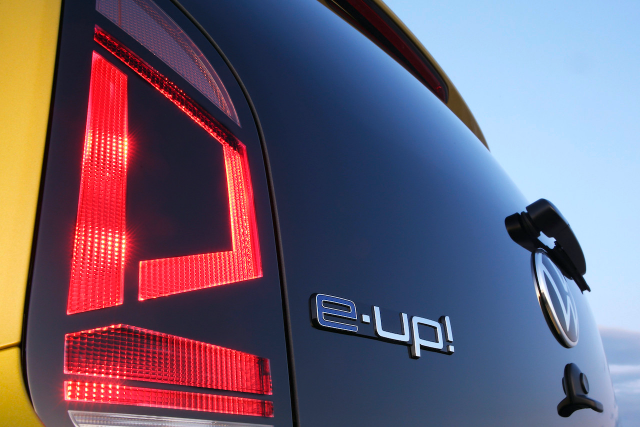
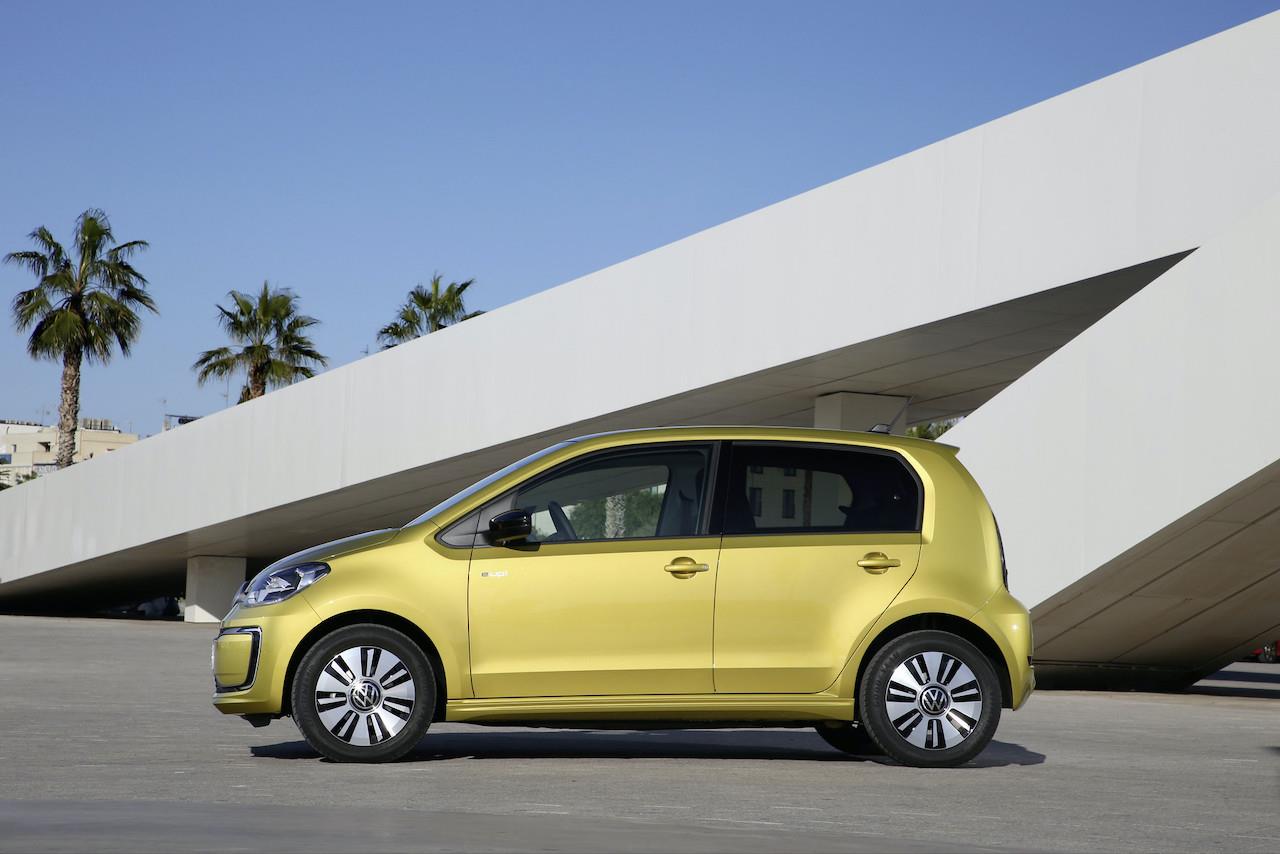
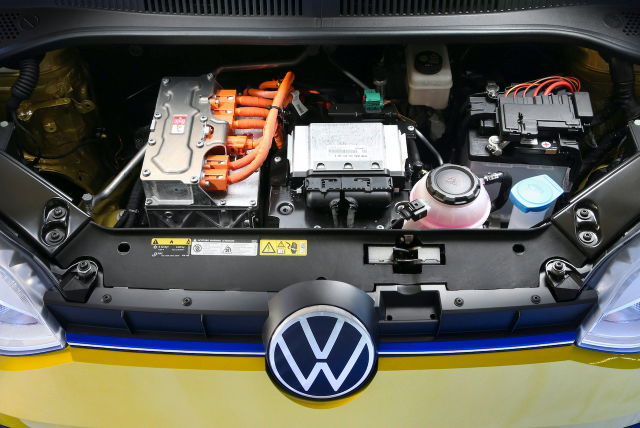
Having dutifully signed the appropriate indemnity forms and sitting through the presentation, I was handed the keys to a new e-Up along with a route map. My driving partner and I were supposed to drive a test route of about 30 km, heading into Frankfurt’s suburbs before switching seats and turning around to head back at the halfway mark. For the first stint, I rode shotgun – admiring the smooth and silent progress, but mostly marveling at the fit and finish of the tiny Up (it wasn’t yet available in South Africa at that stage).
And then my turn came to take the wheel, and within the first 100 metres, I was sold on the concept. In particular, I enjoyed the perky pull-away – a fortunate by-product of an electric motor’s ability to deliver peak torque right from a standstill. I loved those snappy take-offs so much that I used every possible opportunity to floor it from a standstill... until I drew the attention of a policeman in an unmarked car by “accidentally” drag-racing him from a red traffic light. Fortunately, we didn't go fast enough to be deemed completely irresponsible, but in Germany, 10 km/h over the speed limit is a pretty big deal.
Let’s just say that some stern words were directed my way by the uniformed gentleman, but, after some very nervous explanations and a promise that I would be A Good Boy from there onwards, I managed to avoid spending the night in a German jail. In all honesty, that encounter rather overshadowed my joy at driving the e-Up – but that sensation of elastic-band propulsion stuck in my mind nonetheless.
First mass-production EV in South Africa
About a year after my near-arrest in Germany, the Nissan LEAF landed in South Africa, and one of these strange devices duly arrived in my driveway for a road test as well. Once again, the swift pullaways and silent progress won me over, but that first-generation LEAF also illustrated the main drawbacks of earlier modern EVs quite eloquently: range anxiety and charging time. As fate would have it, this demonstration happened one morning when I was in a hurry to go drive a Maserati in Johannesburg.

Leaving Pretoria a few minutes later than planned (because I had to stow the charging cable in the LEAF’s boot before departing), the N1 heading towards Jo’burg was flowing freely, and I made good progress to get to my appointment with some time to spare. But, oh dear... when I arrived at the Maserati agents, the LEAF was showing a mere 35 km of remaining range.
High-speed cruising clearly drained its battery much quicker than anticipated, and left me without enough charge to get back home. And there was no way I was going to request a parking spot inside a workshop overflowing with Ferraris and Maseratis (the two brands were still joined in South Africa back then) to recharge this oddly-shaped contraption, either – oh the humiliation!

I ended up making my way to Melrose Nissan afterwards, where I proceeded to enjoy a late-afternoon coffee while the car was getting some top-up juice of its own, just to get me back home. And lo and behold: I left Melrose after about 45 minutes with an 85% battery charge, but because rush-hour traffic kept my speed down, I made it back with a battery that was still more than half-full. High-speed cruising clearly wasn’t the LEAF’s strong suit: it could get up to a fair lick, but keeping it there would bring the available range down by half...
Enter BMW
About a year later, BMW launched their i3 all-electric car on local shores, after its international launch at the 2013 Frankfurt auto show. And, impressive though it was, range anxiety once again reared its ugly head during the launch drive. The main difference is that the i3 then under my command was fitted with the optional range-extender, which at least kept me from running completely out of steam en route to the airport, but still didn’t address the basic issue of insufficient electric-only range.

Related: Read our review of the early BMW i3 (with the 22 kWh battery pack) here.
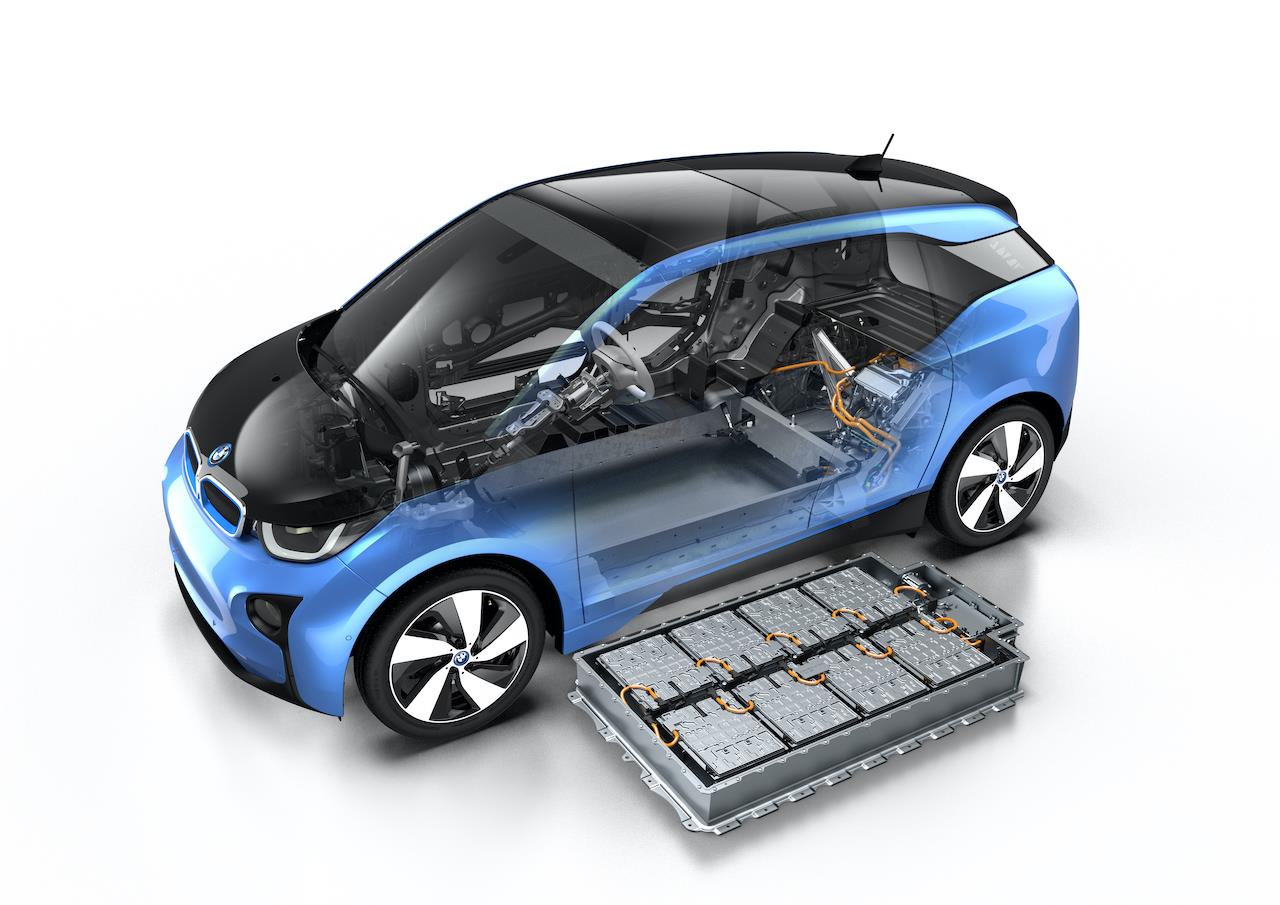
But BMW persevered, and, in 2019, applied a second round of updates to the i3’s battery. As it currently stands, the basic i3 (sans range extender) has a claimed range of 246 km, and is able to make a fast round-trip from Johannesburg to Pretoria and back with power to spare. In fact, the i3’s battery capacity has almost doubled in less than 5 years, transforming it from a shiny trinket to a usable conveyance.
You still can’t drive to Durban in one go, though...
BMW’s i3 amply demonstrates how much battery technology has progressed in a very short time, rising from 22 kWh to 42.2 kWh since its introduction, but that’s still not quite enough for anything outside the realm of peri-urban commuting. This is where manufactures like Tesla really changed the game: they figured out how to pack the “skateboard platform” design of their cars with even more batteries, giving them up to 100 kWh with which to cover long distances.

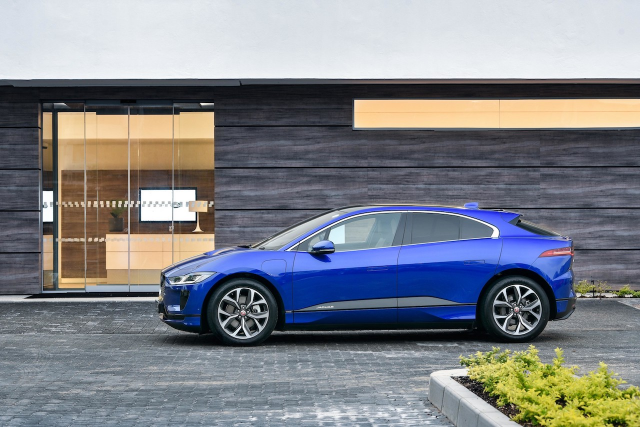
The new Jaguar I-Pace uses a similar construction (as does the physically smaller BMW i3), and manages to squeeze 90 kWh into its underfloor batteries to give a claimed possible range of 470 km in urban use, on a single charge. This means that the I-Pace should be capable of handling an 80-kilometer commuting cycle for a week, before needing to fill up on electrons. The picture changes somewhat when open roads are thrown into the equation, with a range of up to 317 km on the freeway – again showing that sustained high cruising speeds still don’t suit electric vehicles, in spite of all the progress in battery technology.
Why don’t EVs like highways?
Through the decades of internal combustion engine (ICE) domination in the marketplace, we’ve grown used to vehicles being more fuel-efficient in steady-state operation (such as long-distance cruising), maintaining a constant speed and using only a fraction of the engine's full power. This is due to inefficiencies in the basic principles of any ICE powerplant, with the combustion process itself, internal friction, and the engine’s own rotating inertia being among the contributors to these inefficiencies.
Town driving is an ICE vehicle’s nemesis, because stop-and-go traffic essentially means that the engine has to expend energy to get the vehicle moving (transferring some of the energy in its fuel to the car’s motion), only to waste that energy when the car slows down or stops again. Keeping all this in mind, it’s only logical the ICE cars will be much more fuel-efficient on the freeway than in town.
Related: Which electric car has the longest range?

Counter-intuitively, EVs are much more efficient in town than on the highway, but it’s easy to understand why. All EVs use a trick called Regenerative Braking, and here’s how it works. When the driver lifts their foot off the accelerator pedal, the car’s momentum (created by converting battery power into motion) spins the electric motors via the rotating wheels, instead of the other way around. In this way, the electric motors act as generators, converting some of the car’s kinetic energy into an electric charge, which then gets fed back into the batteries by the car’s control system.
Regenerative braking is the key factor in an EV’s efficiency, because it harvests some of the car’s energy to recharge the batteries. But what happens on the freeway? Well, for starters, the car needs a near-constant supply of energy to maintain its chosen speed. To cruise at the speed limit requires approximately 20 kW, due to aerodynamic (and other) drag factors, and, as the speed mounts, this power requirement increases exponentially (doubling the speed will require about four times as much power going to the wheels).
This applies to both EVs and ICE vehicles, but, while an ICE vehicle will draw that energy from the fuel tank, the EV has to draw it from the batteries. However, maintaining a constant speed necessarily means that the EV can’t take advantage of regenerative braking, leading to a constant power drain on the batteries. This, in a nutshell, is why EVs can’t really do their best work on the open road.
Related: Hybrid or electric - which one is the best choice for you?
What about long-distance trips, then?
Let’s look at the Jaguar I-Pace again. As we noted earlier, it could run up to 470 km on a full battery in town (depending on driving style and environmental factors), but on the freeway, that range drops to roughly 317 km. That’s enough to send the I-Pace about halfway to Durban, getting from Johannesburg to Harrismith without any hassle. But what then?
Well, by signing up with GridCars, an independent EV charging service provider, owners can plug their EVs into an open charging point and let those electrons flow. There are already more than 200 charging points scattered across South Africa, and there is one at Harrismith as well. The only downside is the waiting period: while a service station can have your car refilled, clean its windscreen, offer you a comfort break and a quick stop at the shop in at most 10 minutes, you’ll have to linger a lot longer while waiting for your EV to charge.

Using one of GridCars’ DC fast chargers, the I-Pace can recharge from empty up to 80% in about 40 minutes (good for about 270 km), but the older-technology AC chargers will need a lot more time. Charging from (close to) 0 – 100% will take about 13 hours using a normal household power outlet, however, which makes it impractical to attempt to charge an I-Pace on a long trip without the appropriate charging infrastructure in place. A normal household outlet will be enough to keep an I-Pace’s batteries topped-up for shorter trips, however.
Main focus remains on urban use - for now
While there have been great strides in both battery technology and local charging infrastructure, the sheer distances between South Africa’s cities and long recharging times mean that EVs aren’t quite ready for all usage cases – but they are certainly ready for most. In reality, most South Africans drive around town for most of the time, making the vast majority of trips ideally suited to EVs.
For those who often drive long distances, with heavy loads and at high speeds, and with the air-con blowing full blast in the middle of a heatwave, the chances are that an old-fashioned ICE vehicle will still be the more practical choice for the time being. At the moment, it’s quicker and easier to replenish its energy supply, and it can go further between stopping for refills. But have no doubt that, as battery- and charging technology improves, that gap will shrink very quickly.
And if there’s loadshedding?
This is a valid concern, usually voiced by most local EV detractors: what happens if your car’s battery is low but there’s no electricity available to charge it? Well, all that’s really needed is a change in the user’s mindset. Instead of driving an EV until the battery is “empty” (analogous to driving a car until the fuel reserve warning lights up), EV owners quickly dial into the “opportunistic charging” approach.
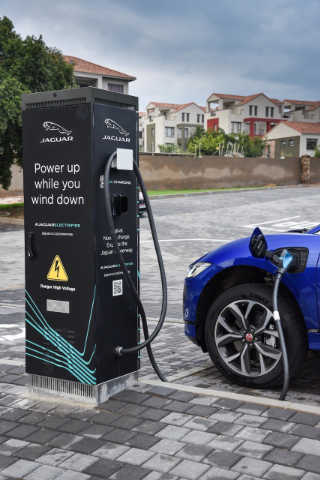
Much like we plug in our smartphones to charge overnight, EV owners soon fall into the routine of charging their cars overnight. And, like we connect our phones to an open USB port upon arrival at the office, EV drivers would connect their cars to the charging infrastructure when they get to the shops/office park/gym, to replenish their cars’ motive power while they carry on with their lives. And, as this infrastructure expands, power sources (“filling stations”) will become evermore commonplace.
Then there’s the cost factor...
Yet again, it largely hinges around battery technology. At the moment, the biggest contributor to the elevated pricetag of an EV in the cost of the batteries. Batteries need very expensive raw materials to work, and their construction methods have constrained battery availability until very recently, due to the difficulty of achieving economy of scale.
However, as the chemical advances in battery tech continues apace, so do the advances in battery construction techniques. In short, as battery technology improves and becomes more widely implemented, the associated costs will keep dropping. For proof of this assertion, consider that the cost of lithium-ion batteries dropped by 35% just between 2018 and 2019, according to a Bloomberg New Energy Finance report. That price reduction obviously cannot continue indefinitely, but serves to illustrate the great strides being made in battery affordability.
How well will an EV work in South Africa?
There’s no denying that South Africa is slightly behind the curve as far as vehicle electrification goes, but recent developments in charging infrastructure have already started to reduce that disadvantage. The main constraint at the moment isn’t really the recharging times and patchy infrastructure, but taxes, so a rethink on the part of government is needed to really make EVs work here.

As things currently stand in South Africa, ICE cars are subject to import duties of 18%, while EVs are taxed by 25% for some strange reason. On top of that comes an additional ad valorem (“luxury tax”) of 17%, brought about by the higher base price of EVs (due to battery costs). Put all these taxes together, and EVs immediately become much more expensive on local soil than they are overseas. This is perhaps the biggest single hurdle to overcome on the road towards widespread vehicle electrification in South Africa. The cars will certainly be up to the challenge!
Recommended Next:
Shop for new and used BMW i3 cars for sale here.
Shop for new and used Jaguar I-Pace cars for sale here.