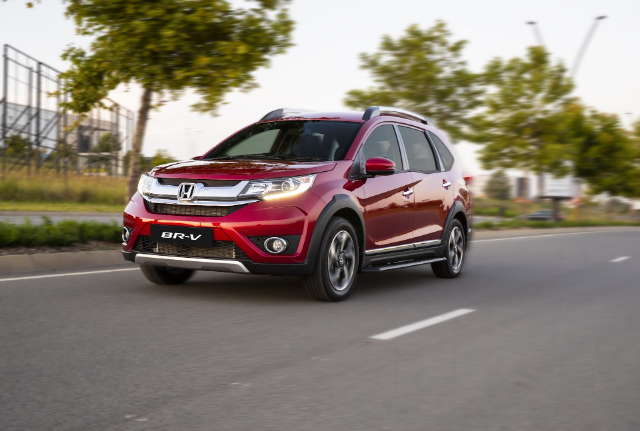
Haval H1 vs Suzuki Ignis vs Honda BR-V: which used small crossover is the best value for money?
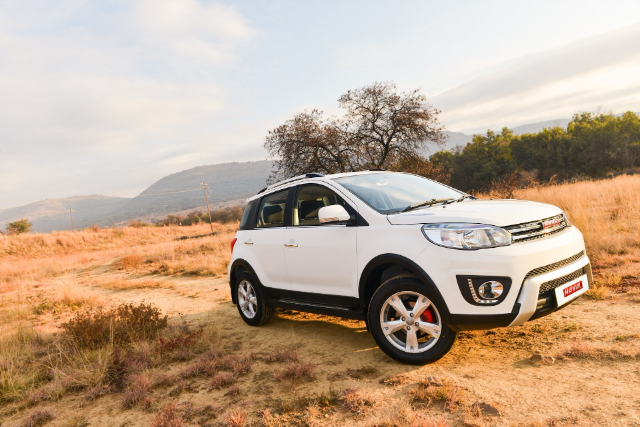
After a long and successful run, the Haval H1 (formerly known as the GWM M4) was quietly dropped from this manufacturer’s local line-up earlier in 2021. You can still buy a late-model used one, though, as they are plentiful in the marketplace. How does a used H1’s value proposition hold up when compared to similarly-priced used opponents? Let’s find out!



It started life in 2008 as a Toyota clone with a Mitsubishi engine, but then morphed into something rather more distinctive as the years went by. Then, having finally found its market niche, it provided Haval with an affordable and capable entry-level model as the brand started inventing themselves with the larger first-generation H2 and H6 models.
Some new H1s are still lingering on dealership floors at the time of writing, but we’re realistically evaluating the Haval H1 as a used car instead. The most-expensive H1s listed here on AutoTrader still slip below the R 225 000 mark with delivery mileage on their odos. However, most of the 2021-vintage cars in our listings retail for a good R 10 000 less, and some even drop below the R 200 000 barrier.
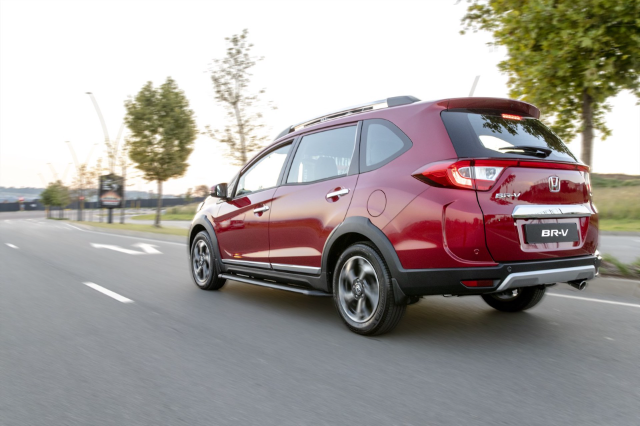
What else can you get for that kind of money? We scoured our listing pages for two similarly-priced, late-model, and low-mileage used alternatives, and came up with the Suzuki Ignis and Honda BR-V. They’re all crossovers, but which one offers the strongest value proposition?
Related: Shop for used Haval H1 and GWM M4 cars for sale here.

Facts and figures:
First, let’s look at the key numbers:
|
Haval H1 1.5 |
Suzuki Ignis 1.2 GLX |
Honda BR-V 1.5 Trend |
|
|
Engine size (cyl/size) |
4-cyl, 1.5-litre petrol |
4-cyl, 1.2-litre petrol |
4-cyl, 1.5-litre petrol |
|
Power/Torque |
69 kW/130 Nm |
61 kW/113 Nm |
88 kW/145 Nm |
|
Kerb Weight |
1 106 kg |
850 kg |
1 210 kg |
|
Length (mm) |
3 961 |
3 700 |
4 453 |
|
Airbag count |
2 |
2 |
2 |
|
Load Volume |
310 litres |
260 litres |
691 litres (in 5-seater mode) |
|
Top Speed (km/h) * |
170 |
165 |
160 |
|
0 – 100 km/h * |
12 seconds (est) |
11.6 seconds |
11.4 seconds (est) |
|
Ave Consumption * |
7.2 ℓ/100 km |
5.1 ℓ/100 km |
6.3 ℓ/100 km |
|
Warranty (when new) |
5 yr/100 000 km |
5 yr/200 000 km |
5 yr/200 000 km |
* Manufacturer's official claimed figures.
Analysis
Power, performance, and drivetrains
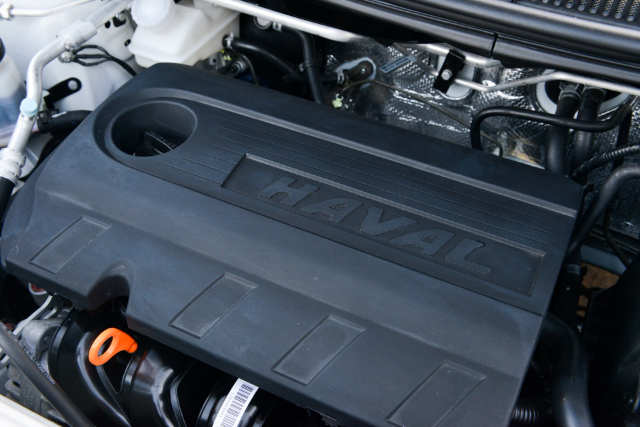
Mechanically, these three cars are as conventional as they can be: Petrol power, no turbo or direct fuel injection, front-wheel drive, and manual gearboxes are the order of the day. The only mildly unusual thing here is the Honda BR-V’s 6-speed transmission, instead of the 5-speed units in the other two contenders.
At first glance, the Suzuki Ignis starts out with a power disadvantage... until you read the fine print. Because, while the Ignis has the smallest engine that produces the least power here, it’s also the lightest car in this comparison: 256 kg lighter than the Haval and a whopping 360 kg lighter than the Honda. Logical, really, because the Ignis is by far the smallest car here, and it’s the youngest design as well.

This is how, in spite of the meagre 61 kW and 115 Nm on offer from its 1.2-litre engine, the Suzuki Ignis still manages to post a 0 – 100 km/h dash in a claimed 11.6 seconds. Suzuki is only manufacturer here to publish comprehensive performance statistics, so we can only estimate the Honda’s and Haval’s acceleration figures, making for pretty unreliable guesswork.
Suffice it to say that all three have enough power to do their jobs, but the Honda should prove to be the faster one overall, simply based on its slightly higher power-to-weight ratio of 72.7 kW/ton. The Ignis records a tidy 71.1 kW/ton, and the H1 works out at 62.4 kW/ton. By this measure, the Haval H1 should be the slowest car in this trio, although claims “less than 10 seconds” for the benchmark sprint...
Related: Shop for new and used Suzuki Ignis cars for sale here.

Economy
The virtue of lightness also works wonders for the Suzuki Ignis’s fuel efficiency, with a claimed average consumption of 5.1 ℓ/100 km. Real-world driving will get close to that figure, as proven in our review. The BR-V’s claimed figure of 6.3 ℓ/100 km is an understandable jump from the Suzuki’s figure, given its greater size and weight, and could be considered a fair trade-off for the extra versatility and power on offer.
Where does this leave our Haval H1? In third place, because the one area where its age really shows is in its fuel efficiency. Haval claimed an average consumption figure of 7.2 ℓ/100 km for the H1, which is rather wildly out of step with the two newer opponents’ claimed figures.
Related: Shop for new and used Honda BR-V cars for sale here.

Practicality
This will all depend on how important practical considerations are to you, as the largest car is the most practical, and the smallest one the least. There are significant differences in their packaging, however, with the Haval’s older design trailing these newer opponents in some key respects. For one thing, the H1 has very cramped rear quarters, and the driver’s seat doesn’t slide back quite far enough to accommodate taller drivers.

In contrast, the little Suzuki Ignis exploits its boxy proportions to the full, yielding more cabin space – in spite of being much shorter than the H1. Its only downside is in the luggage compartment, where the Ignis can only conjure up 260 litres to counter the H1’s 310 litres. Still, the fact that the tiny Suzuki manages to pack so much useful space into such a small box is remarkable, even if it comes last in this metric.
But, in the end, sheer size wins the day for the Honda. That extra 753 millimeters in the Honda’s overall length enabled the engineers to fit 7 seats, and to yield a boot volume of 691 litres in 5-seater mode. If moving people and large things around is important to you, the Honda will undoubtedly be your best call.
Equipment
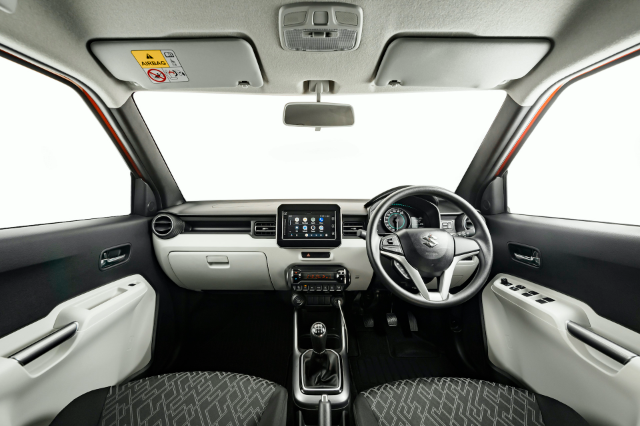
These are budget-minded cars, so none of them feature fancy things like surround-view cameras or adaptive cruise control, but the basic modern amenities are all present in all three cars. Things like remote central locking (keyless in the Suzuki), electric windows all round, air conditioning, and power steering are standard across the board.
But there are some surprise-and-delight features as well. Both the Haval H1 and the Suzuki Ignis GLX feature rear parking sensors and multi-function steering wheels; the Ignis adds a colour touchscreen infotainment system with smartphone mirroring and rear-view camera to its standard kit list; while the Haval has cruise control instead.

The Honda has... almost no extra things, because “Trend” trim is the entry-level specification without alloy wheels, touchscreen radio or cruise control, and thus has to settle for third place in this company. The Haval H1 finishes second, with the Suzuki a comfortable winner in this department.
Safety
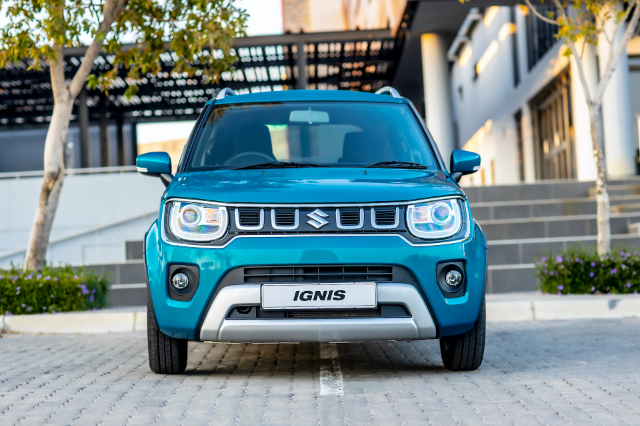
None of these contenders perform brilliantly in a safety evaluation, but they all have the most basic safety essentials on board: Two airbags, ABS with EBD, ISOFIX child seat anchors, and that’s about it.
Two standard Ignis GLX features points towards the Suzuki as safety leader among these three: auto-on LED headlamps and the rear camera/parking sensor combination hands the Ignis an advantage over the Honda, but it loses this position to slip into second place based on the BR-V’s 4-star ASEAN NCAP crash testing rating as opposed to the Ignis’s 3-star Global NCAP rating.

As for the Haval H1? It only managed 2 stars in a 2020 Global NCAP test, so it has to end up in third place here. That is the H1 design’s age showing through again – what was good enough a decade ago isn’t really good enough anymore...
Aftersales support
Apart from their very similar used-car values, the other reason why we pitched the BR-V against the little Ignis revolves around their warranties. Offering cover for 5 years or 200 000 km, even a year-old Honda BR-V or Suzuki Ignis will still have a lot of their warranties left over. The Haval H1 isn’t very far behind in this regard, with a warranty that runs for 5 years or 100 000 km.
The Suzuki Ignis ends up ahead of both the Honda and the Haval, however, because it’s the only one to feature a standard service plan. 2 years or 30 000 km (2 services) isn’t much, but that is still better than no service plan at all.
Verdict
Comparatively poor safety ratings, a heavy fuel thirst, and a spec sheet that was cutting-edge a decade ago all relegate the used Haval H1 to third place in this value comparison. It’s by no means a bad car, and it still looks pretty sharp in the metal, but time has moved on and taken the goal posts with it.
Separating the used Honda BR-V and the used Ignis is not quite as clear-cut, as they really fight in different size classes. A newer used Suzuki Ignis is rather more sophisticated, smarter, better-looking and more frugal than a used Honda BR-V, and only really stumbles when their practical aspects are compared.
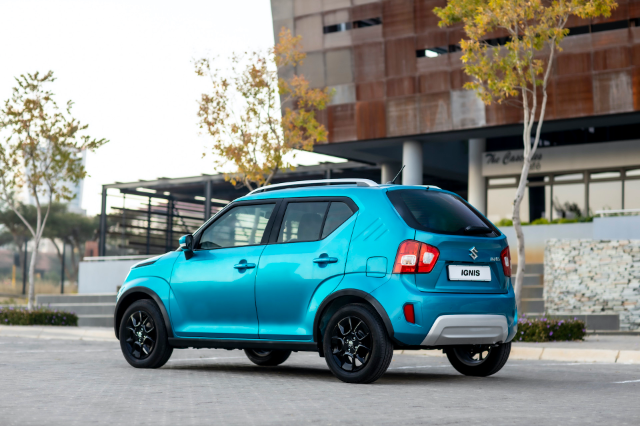
So, if your needs don’t include ferrying around large groups of people, you’d get excellent value for money with a used Suzuki Ignis GLX. But, if your value perspective leans away from high-tech features and towards greater practicality, a used Honda BR-V should be a first choice.
* Prices include all taxes and were accurate at the time of writing, but may change without prior notice.