



The not-so-little Suzuki Ignis has always been a hit with the AutoTrader team. During June 2020, in the depths of lockdown, the Ignis was facelifted and enjoyed a general upgrade. We finally got to drive the enhanced Ignis 1.2 GLX in its glistening Lucent Orange paintwork recently.
Styling
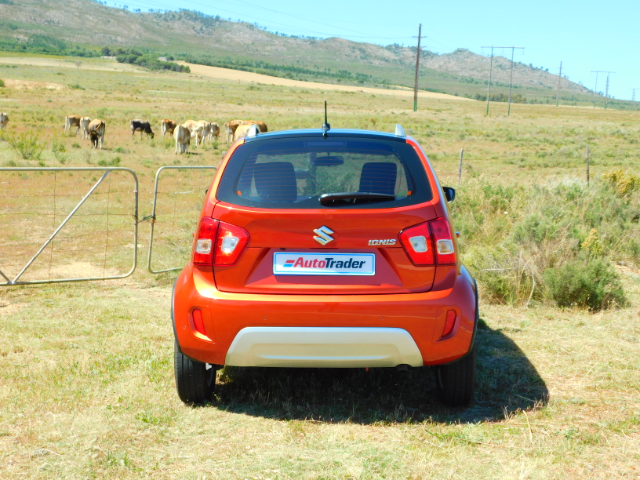
The Ignis has always been one of the more stylish micro-SUVs around town. Its recent appointment with the cosmetic surgeon left it looking even better, but Suzuki applied the changes so cleverly that only a keen eye will notice the differences. This is a well-known trick that keeps the older models looking fresher for longer and slows down depreciation.

Related: 2020 Suzuki Ignis facelift - What's new?
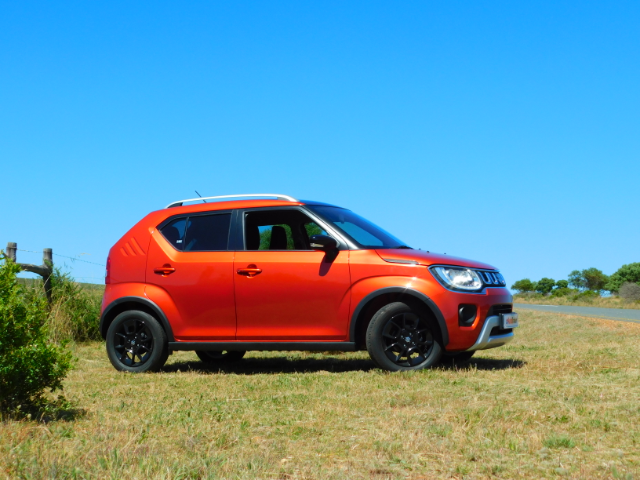
The most prominent change is the four-slot chrome grille and new scuff plates in the front and rear (GL and GLX), with roof rails and flared wheel-arch extensions (GLX only). Ground clearance is still a practical 180 mm, while the sideways-C-shaped light signature and projector headlamps remain. Viewed from the front, it's a handsome, trendy-looking little car, but the rear still looks somewhat heavy at the bottom compared to the top. It's my only real gripe with the Ignis's design and shouldn't deter potential buyers.
Dual-toned exterior combinations can now be specified too: There's Stargaze Blue Pearl Metallic to be had with black, and Lucent Orange with Black Metallic.
Interior
On the inside, you'll find a a quality cabin with an upmarket vibe that belies the Ignis's affordable price tag. The seat material feels durable and has a smooth, silky texture, with a fashionable print. You can also choose between silver or blue cabin accents depending on your choice of exterior colour.

Apple CarPlay and Android Auto can be accessed via the large touchscreen or through Siri/Alexa, and satellite buttons on the steering wheel also allow for easily adjusting settings or answering phone calls. The touchscreen serves as eyes in the back of your head when you reverse, thanks to cameras on the rear bumper. Rear-parking sensors offer further assistance. Other features include USB/AUX ports, Bluetooth, keyless entry and a push-to-start button instead of the traditional key. It's an ergonomic cabin where everything falls to hand easily with enough cubbies to store smaller items.
Related: Top four things you need to know about the Suzuki Baleno

Space and comfort
The amount of space on the rear bench is a huge selling point for the Ignis, allowing three fully-grown passengers to sit side-by-side on the rear bench; not that the average Ignis buyer will load that many people in the car, we reckon, but it's good to know that it's possible. The rear sit can be split 60:40 and the deep 260-litre boot made light work of storing two kids' large school suitcases.
The rear windows are electric, and there are ISOFIX child seat fittings for your child restraint system, and child locks on the rear doors. Climate control is a nice touch in this price range.
Safety
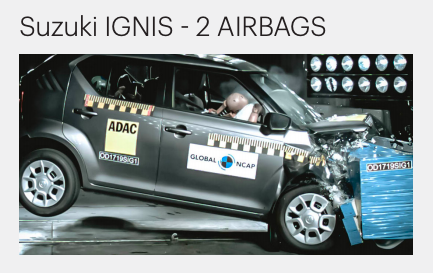
The Ignis scored a three-star score for safety in the last round of Global NCAP tests that were conducted on the Indian-built SA-spec model (the Renault Kwid and Haval H1 recently scored only two stars, while the entry-level Polo Vivo, tested in 2017, scored three stars).
The Ignis has two airbags in front, and the above mentioned reversing camera and rear parking sensors in the rear. It has ABS brakes and brake assist to help the driver to brake harder when an emergency situation arises. European-spec models have 6 airbags and stability control. Hopefully our SA-spec model will also have ESC in the future.
The drive
There are very few cars in this segment that offer this much driving fun, especially cars that have this kind of ground clearance. I drove the Renault Sandero Stepway the week before, which I loved for its practicality and everyday user-friendliness, but the Ignis is something else altogether. It's really rather sporty and it lends itself to enthusiastic driving. The Ignis is fitted with Suzuki’s K12M 1.2-litre petrol engine with variable valve timing and multi-point fuel injection, delivering 61kW at 6000 rpm and 113Nm at 4200 rpm. Teamed with its lithe little body of only 860 kg, it is a recipe for swift progress. I found myself looking for excuses to drive it, running errands for my folks, driving detours to pick up my kids, and taking the Ignis to stretch its eager little legs on Clarence Drive, my favourite testing grounds.
Fuel consumption
I drove the little Ignis with fervour and didn't concentrate at all on making the fuel last long; I was having way too much fun! You're looking at an average of 5.4 - 6 litres per 100 km which is not far from the claimed consumption figure of 5.1. If you're careful, you may be able to better my figure at the coast, but at the reef I reckon your usage will probably be a tad higher.

Price
The Ignis (R223 900 for the GLX) is well-priced considering its driving dynamics and standard specification level. Compared to the Mahindra KUV100 and Haval H1, the Ignis wins with one hand tied behind its back. There's a massive difference between the roadholding of the Ignis compared to these offerings from India and China. Even when pitted against the flaghsip Renault Sandero Stepway Techroad (R251 900) and Stepway Plus (also R251 900), I still choose the Ignis, which also boasts more space on the rear bench. If only the Ignis had stability control and more airbags, like the European cars do.
Other competitors come in the shape of Ford's new Figo Freestyle 1.5 Trend at R241 000, which I haven't driven yet. It has 91kW compared to the Ignis's 61kW but the Figo Freestyle weighs in at 1045 kg vs. the Ignis's low kerb weight of only 850 kilos. The Ignis's 0-100 km/h sprint figure is 11.6 seconds, while the Ford's is 0.2 seconds slower.

Verdict
The Ignis is probably the best combination of driver entertainment and practicality you can have in this price range, if you're buying new. But, as a used model, the Ignis makes perfect sense, especially since youngish, pre-facelift models can be picked up from around R100 000. If I had to buy myself a little city runabout that's equally at home on the highway, the Ignis would be perfect for me.
The numbers
Model tested: Suzuki IGNIS 1.2 GLX (flagship model)
Price: R223 900
Engine: 1.2-litre, naturally aspirated, four-cylinder
Transmission: 5-speed manual
Driven wheels: front
Power: 61kW and 113Nm
0-100 km/h: 11.6 seconds, with a top speed of 165 km/h
Fuel tank capacity: 32 litres
Fuel consumption: 5.1 litres per 100km (claimed)
Fuel range: 628 km (claimed)
Airbags: 2
Safety rating: Gobal NCAP - 3 stars for SA-spec model
Touchscreen: Standard, with Apple CarPlay/Android Auto + rearview camera
Ground clearance: 180 mm
Boot: 260-469-947 litres
Warranty: 3 years/100 000 km
Service plan: 2 years/30 000 km (service every 15 000 km)
Recommended next
Renault Kwid vs. Suzuki S-Presso: Which offers the best value?
Looking for a used model? Read our Suzuki Ignis review from 2017 here.