
Top 4 things you need to know about the Suzuki Baleno
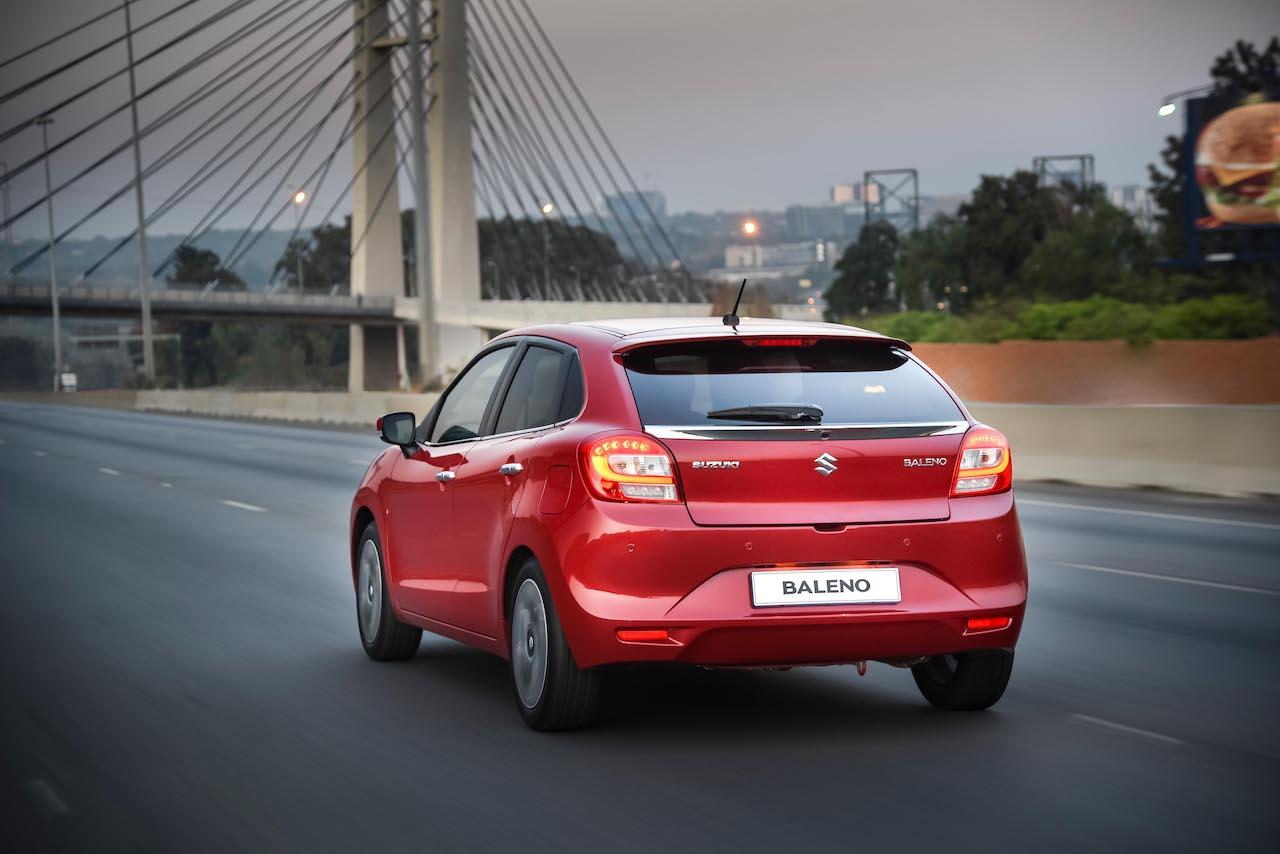
In a strong-selling market segment awash with very appealing choices, the Suzuki Baleno struggles to make inroads against its mainstream opponents. This isn’t the Baleno’s fault, though, for it has enough distinguishing characteristics to earn its own spot in the sun. Let’s explore the top four things you need to know about this often-overlooked compact hatchback.




Flying under the radar
Going up against the Volkswagen Polo has to be quite a daunting proposition for any manufacturer: it has a decades-long runaway success story in South Africa, and pretty much owns the top spots in the local passenger car market. But sometimes, buyers just need to look past the obvious choice, to find an alternative which might suit their requirements even better.
The Suzuki Baleno is one such car: It offers just about everything you’ll find in a Polo, Fiesta, or i20, adds some useful touches of its own, and undercuts them all on price. Add to that Suzuki’s legendary fuel efficiency and proven durability, and the Baleno should rightly prove to be almost irresistible. But, even with all its virtues, it’s largely overlooked by buyers – a state of affairs which may just change if more buyers knew about its strengths.
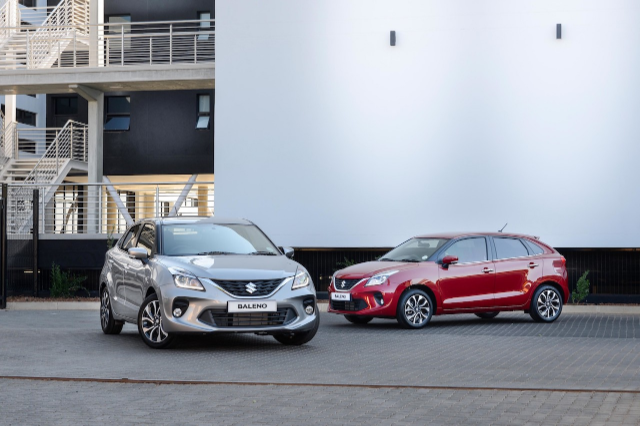
Related: Compact hatchback shootout – Suzuki Baleno vs Kia Rio vs Hyundai i20.
1. Versatile HEARTECT platform
There’s a whole slew of modern Suzukis being spawned off a single platform, which has been optimised to suit various requirements. Called HEARTECT, Suzuki’s small-car platform has a number of noteworthy features which sets it apart from its opponents. For one thing, it’s highly versatile, which enables Suzuki to adapt one component set to cars as diverse as the S-Presso, Ignis, Swift, Ertiga, and Baleno.
It’s also pretty clever, combining a very rigid body with light weight, courtesy of extensive use of high-strength steel in its basic structure. This makes for secure driving dynamics, good refinement, and top-notch fuel efficiency. This platform also improves crash safety, thanks to intelligent channelling of collision forces around the passenger cell.
As a result, the Baleno scored a 4-star Euro-NCAP rating, with a very good 85% score for adult occupant protection. That last star was taken away due to a relative lack of safety assistance systems, with the likes automatic emergency braking and lane departure warning not fitted as standard. This doesn’t affect its basic crashworthiness, however, which remains very strong with a stable passenger cell and very effective crumple zones.

Related: Built-to-last Suzuki Baleno packs a value punch – read our review here.
2. Excellent space efficiency
Suzuki knows a thing or two about packaging compact cars properly, and the Baleno is no exception in this regard. The cabin is one of the most spacious in its class, and actually offers a level of interior room that matches cars one size larger. This is one of the few compact hatchbacks that could realistically double as a family car for road trips, with plenty of head- and legroom all around and comfortable seats.
The good news continues in the luggage compartment. In spite of slightly smaller overall dimensions than its main opponents, the Baleno’s boot is considerably larger than most alternatives could offer. In usual Suzuki fashion, there’s also a removable/false boot floor to stow slim items away from harm or increase the baseline boot space, while the split-folding rear seats can expand the cargo volume even further.

Related: Top 5 accessories for the Suzuki Baleno.
3. Low fuel consumption
At first glance, there’s nothing special under the bonnet: all Balenos employ a naturally-aspirated 1.4-litre 4-cylinder engine to develop 68 kW and 130 Nm. These numbers won’t raise any eyebrows, but because the Baleno has a lowest-in-class kerb weight of only 915 kg (with a manual gearbox), those modest figures nonetheless enable competitive performance.
That light weight also pays dividends in fuel efficiency, because Suzuki claims an average consumption figure of only 5.1 ℓ/100 km. If this seems too good to be true, it’s worth bearing in mind that regular mixed-cycle driving will easily show mid-5 ℓ/100 km consumption in real-world use. Once again, this is at the top of its class, and betters the realistic numbers of most of its turbocharged and smaller-engined opponents.

Related: Suzuki Baleno vs Ford Figo vs VW Polo Vivo – here’s our winner!
4. Great value proposition
In entry-level 1.4 GL trim, the Suzuki Baleno carries a pricetag of only R 214 900, which gives it a large price advantage over its mainstream opponents, and places the basic Baleno amongst a brace of budget cars. Even in this trim level, equipment is pretty comprehensive, with electric windows all round, electric side mirror adjustment, remote central locking, air conditioning and power steering, two airbags, ISOFIX rear child seat anchors, and an audio system (with USB- and Bluetooth capability and steering wheel-mounted remote controls).
Stepping up to the high-trim 1.4 GLX adds a brace of luxury- and safety features such as keyless entry with pushbutton start, cruise control, a leather-trimmed steering wheel, alloy wheels, touchscreen infotainment system with smartphone mirroring, LED headlights, a rear-view camera and rear parking sensors, and a safety upgrade to 6 airbags. But here’s the thing: at R 251 900, the top-level Baleno GLX is still more affordable than its much more sparsely-equipped opponents, such as the entry-level VW Polo and Hyundai i20.

Related: The Suzuki Baleno received a mild facelift towards the end of 2019 – get the details here.
The only Baleno we wouldn’t recommend quite as enthusiastically is the 1.4 GLX Automatic (R 266 900), because it’s still saddled with an old-fashioned 4-speed torque converter gearbox, instead of the dual-clutch and/or 6-speed units on offer in the competition. That said, it’s also much less expensive than those opponents, so the trade-off might be worth it for buyers in need of an affordable self-shifter.
There you have it: four solid reasons why the Suzuki Baleno should be on your shopping list. Sweetening the deal with a warranty for 3 years or 100 000 km, along with a service plan for 4 years or 60 000 km only makes the budget-beating Baleno that much more appealing, as does the brand’s reputation for durability and affordable long-term ownership. When value comes before perceived prestige, there are very few opponents which can match the combination on offer in the Suzuki Baleno.

Related: What’s covered under the Suzuki Baleno manufacturer’s warranty?
*Pricing was accurate at the time of writing, but may change without prior notice.