Selecting an affordable used car is no easy task. You have to be completely honest with your purchase, strict with your budget and completely transparent with your needs. Then the task of sifting through the multitude of makes and models available to you still looms.
Spending R120 000 on a used car that is a few years old is common; it's one of the largest segments of the market. You really are spoiled for choice when shopping in this range, after all, your repayments should amount to an agreeable R2500/month.
Related: We compare the GWM C20R to its competitors: Our winner will surprise you!
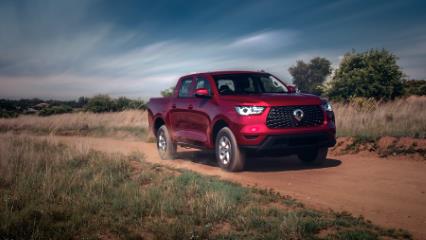
In this segment, you will find the GWN C20R, a vehicle that was only with us for a short while before GWM and Haval realigned their product offerings. This friendly compact crossover offers you a decent amount of space, a respectable build quality. Introduced in 2013 and summarily discontinued in 2015, the C20R competes against the contemporaries like the Renault Sandero Stepway and Toyota Etios Cross.
All three are similarly priced in the used sector but we're asking the hard questions here namely; which one has the best infotainment system, if any? We're comparing similarly aged vehicles and this doesn't reflect the current model offerings. This is as they were in 2015. Here's how they stack up.

GWM C20R
Simply put, you're not going to get an infotainment system with the GWM. In fact, you're not going to get that from any of these three. They are all fitted with basic radio systems and are without touchscreens or interactive menus.
The C20R is fitted with an AM/FM receiver that is equipped with a CD player that supports MP3 playback. It also accepts inputs from USB and AUX but has to make do without Bluetooth connectivity.
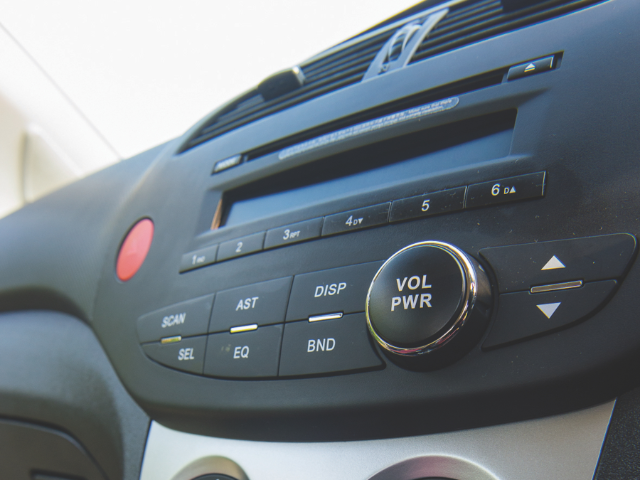
A row of six buttons rest under the monochrome LCD display allowing you to select and save preset stations and control CD playback functionality. A rotary volume/power knob rests below these buttons and is flanked by a further 8 buttons for track skip, EQ and various other functions.
A multifunction steering wheel is welcomed at this price-point and allows for volume control, track skip and mode selection.

Toyota Etios Cross
Based on the Toyota Etios Xr, the Etios Cross is rather well-equipped. It still doesn't have an infotainment system but uses a funky-looking double-DIN radio system that allows for CD playback with MP3 functionality. This unit will also accept inputs from USB and AUX and has the added benefit of being Bluetooth enabled. This allows for playback of audio as well as hands-free calling.
The unit features a multi-line LCD display and is surrounded by a multitude of buttons and a single rotary knob for volume control. The backlit unit presents nicely but the array of buttons makes using the system a little harder than it needs to be. The illuminated Answer and Reject buttons make using the hands-free functionality easier at night when trying to answer or reject incoming calls.
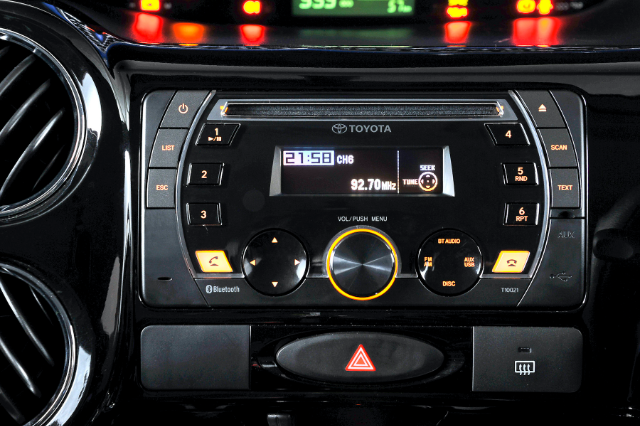
The Etios Cross does not have a multifunction steering wheel though so all inputs have to be made on the unit itself. The double-DIN sizing does allow for an upgraded unit to be retrofitted but this will require trim plates as the Toyota system is wider than the standard ISO opening.

Renault Sandero Stepway
Much like the Toyota Etios Cross, the Sandero Stepway is a crossover version of the regular Sandero. This model too is without an infotainment system and uses a simplified radio instead.
This large unit blends nicely into the dashboard and resembles a double-DIN unit but has slightly larger dimensions. It uses a monochrome dot-matrix LCD display with multiple lines. It will accept AM/FM tuner frequencies, CD, USB and AUX inputs. It is also Bluetooth enabled allowing for hands-free telephone use and audio streaming from connected devices.

The interface is another busy one with multiple buttons laid out in a logical fashion. While initially overwhelming, one soon becomes acclimated to the system and is able to navigate around it freely. A large selector knob takes pride-of-place but this is only used for selections through the menu and the volume controls are push buttons instead. The Renault does provide a control pod behind the steering wheel for easier access, although one has to study and familiarise themselves with the button layout as it is hidden from view when in a driving position.