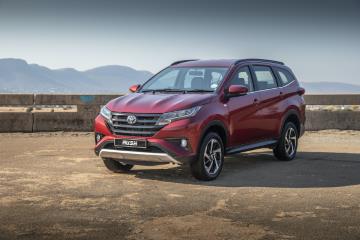
First Drive! The new Toyota Rush
First Drive! The new Toyota Rush



By Ané Theron
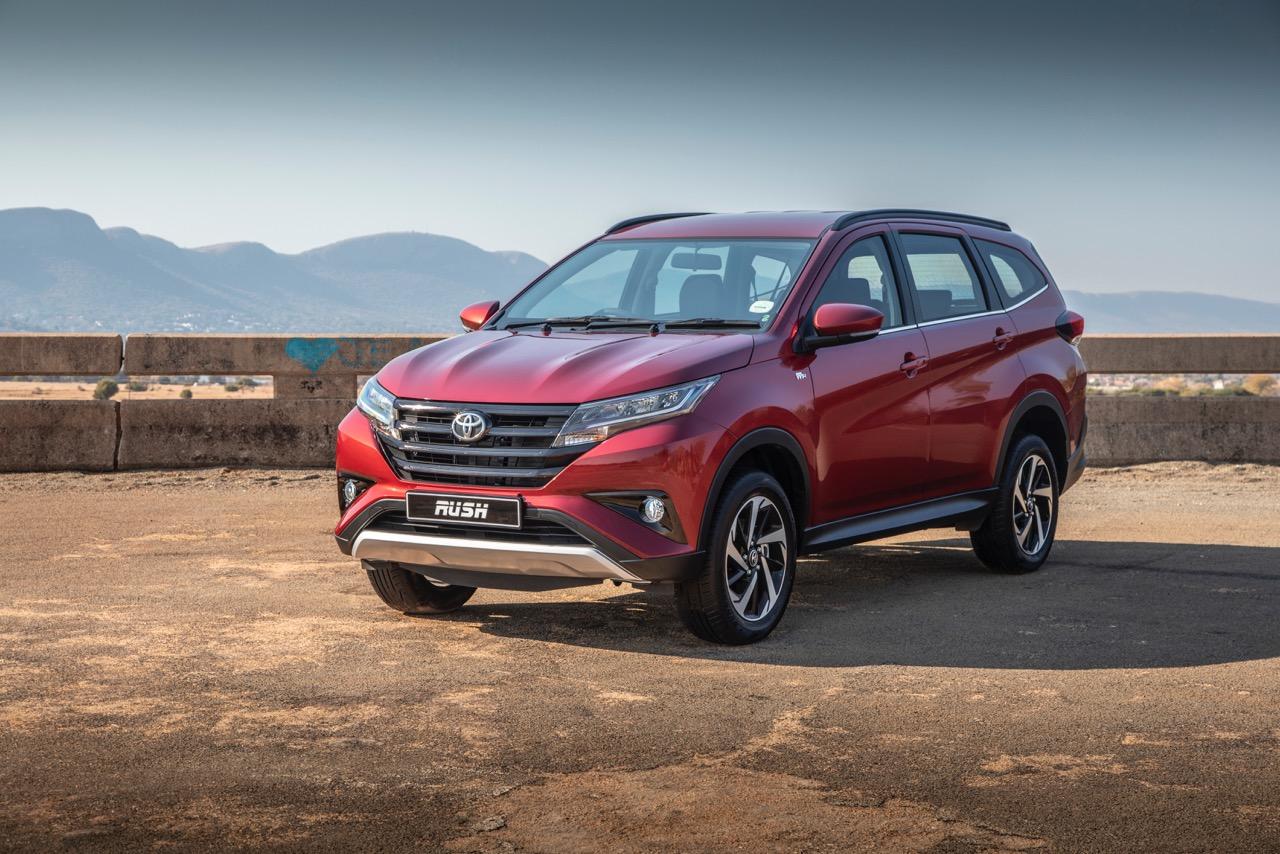
South Africans are an adventurous bunch, much preferring the good ground clearance and multi-tasking attitude of an SUV to the spaciousness and practicality of a sedan. Yet all of us are feeling the financial pinch, and with most family SUVs costing an arm and a leg, Toyota jumped at the chance to bring an affordable, spacious family SUV to the SA market.
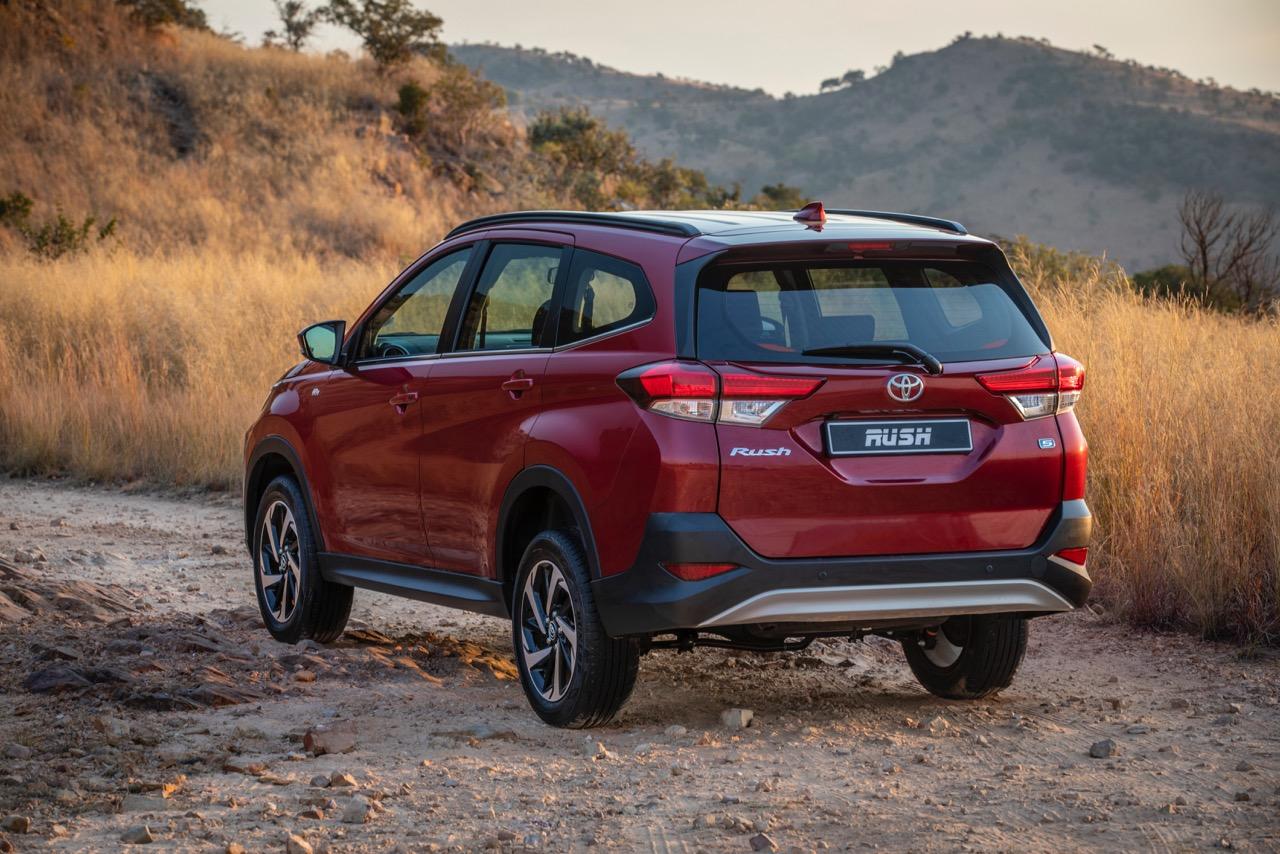
While we expected the Rush to come in a seven-seat configuration as it does overseas, Toyota SA's market research clearly shows that the average, middle-class family would rather forego a cramped third row of seats in favour of a lovely large boot - and as a result, we will now receive the five-seater Rush, with space for days in the rear for camping gear or sports equipment.
Rushing around
Upon our arrival at PE International Airport, the Rush's boot lid was lifted to reveal an extremely spacious luggage bay indeed, where our two sets of overnight and laptop bags seemed very lost and lonely once stowed. My driving partner and I hopped into the white Rush (SA's preferred colour choice), and I plugged my iPhone into the USB port at once. Apple CarPlay was displayed on the sophisticated-looking central screen as soon as I unlocked my phone, but the infotainment system already has satnav as standard, so you won't get lost if you don't have any data for Apple Maps, Google Maps or Waze. The system itself is relatively straightforward to use, but we didn't quite delve into all its functions - but you can rest assured that Bluetooth, music streaming and HDMI functionality are standard fare in both automatic and manual derivatives.
Cabin quality?
The cabin is a mixed bag of hard plastics, upmarket piano black details, mid-range switchgear and some premium-looking bits. The top of the black dashboard has a very budget feel, and yet the touch-screen, with its clear graphics, surrounding brushed aluminium strip and glossy black background, looks like it belongs in a much more exclusive SUV.
The dual-toned interior colour scheme lifts the general ambience and the seat material feels quite luxurious to the touch. For a family car, I would have liked leather seats, but it's not an option - yet.
Out on the open the road
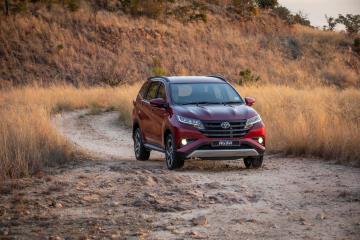
The Toyota Rush is offered with the same free-revving 1.5-litre engine as the Toyota Avanza. The 77kW powerplant is not going to excite you much, and you need to plan ahead when you want to overtake, but it has a reputation of being bulletproof. The 5-speed manual 'box feels a little notchy, but this should loosen up with time. A sixth gear would have been very welcome - at 120 km/h you're seeing 5000 rpm on the rev counter and it's accompanied by engine noise which permeates the cabin quite severely. Once you hit cruising speed of 130km/h, it's somewhat quieter - or maybe the wind noise is just a little louder. The ride itself is slightly choppy over poorly maintained tar but feels much more settled on dirt. I'm also happy to see some chunky rubber on the handsome 17-inch alloy wheels, which reiterates the Rush's can-do attitude.
The Rush has a rear-wheel-drive configuration just like the Avanza, and even though a bit more power would have been nice (especially when the car is fully loaded), it's still going to fulfil the needs of the entry-level SUV buyer. Moms and Dads will be especially chuffed by a comprehensive list of safety features, like stability control and six airbags. Our combined (but mostly extra-urban) fuel consumption gave us around 13 kilometres per litre (or plus/minus 8 litres per 100 km).
Space?
Space in the second row was put to the test when three adults squeezed into the back to be transported to the hotel after dinner, and it's a tight fit (especially for the guy in the middle), but three kids will sit comfortably, and all second-row seats have a three-point seatbelt. Remove the middle passenger and two adults will have ample amounts of leg-, head- and elbow room. There are bottle holders aplenty, even right to the rear, and the second row has its own, designated air vents in the 'ceiling'. As previously mentioned, these features are due to the fact that the Rush is essentially a long-wheelbase seven-seater (such as the Honda BR-V), but with only five seats.
Spec-check
Every Toyota Rush comes with the following, as standard:
Exterior: Power folding mirrors, daytime running lamps, front fog lamps, roof rails, 17-inch alloys.
Convenience: A 7-inch display Infotainment system with 6 speakers, USB port & Bluetooth, Android Auto & Apple CarPlay, HDMI port, reversing camera & satnav; steering wheel switches, dual auto air-conditioning, and power windows.
Safety: ABS and EBD, stability control, hill assist control, park distance control, alarm & immobiliser, auto-locking doors, smart entry with push-button start, and 6 airbags.
And? Will SA go mad for it?
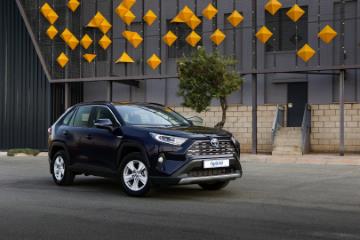
While a RAV4 or Fortuner is out of reach for many leisure lovers, the affordable Rush is an excellent consolation prize, given its credentials of class-leading ground clearance, safety, and 609 litres of boot space. At R299 900 (for the 1.5L MT) and R313 500 for the four-speed automatic version (the 1.5L AT), I predict that the Rush is going to sell like custard doughnuts at the school bake sale.