
Toyota Rush vs Ford EcoSport vs Hyundai Venue: here's our winner.
Thanks to its rear-wheel drive layout, the Toyota Rush is unique in its market segment. Does this matter to buyers who simply want a practical compact family SUV, or will they rather prefer the more car-like characteristics of the popular Ford EcoSport or sparkly new Hyundai Venue? We compare these three price competitors to find out which one we’d recommend.


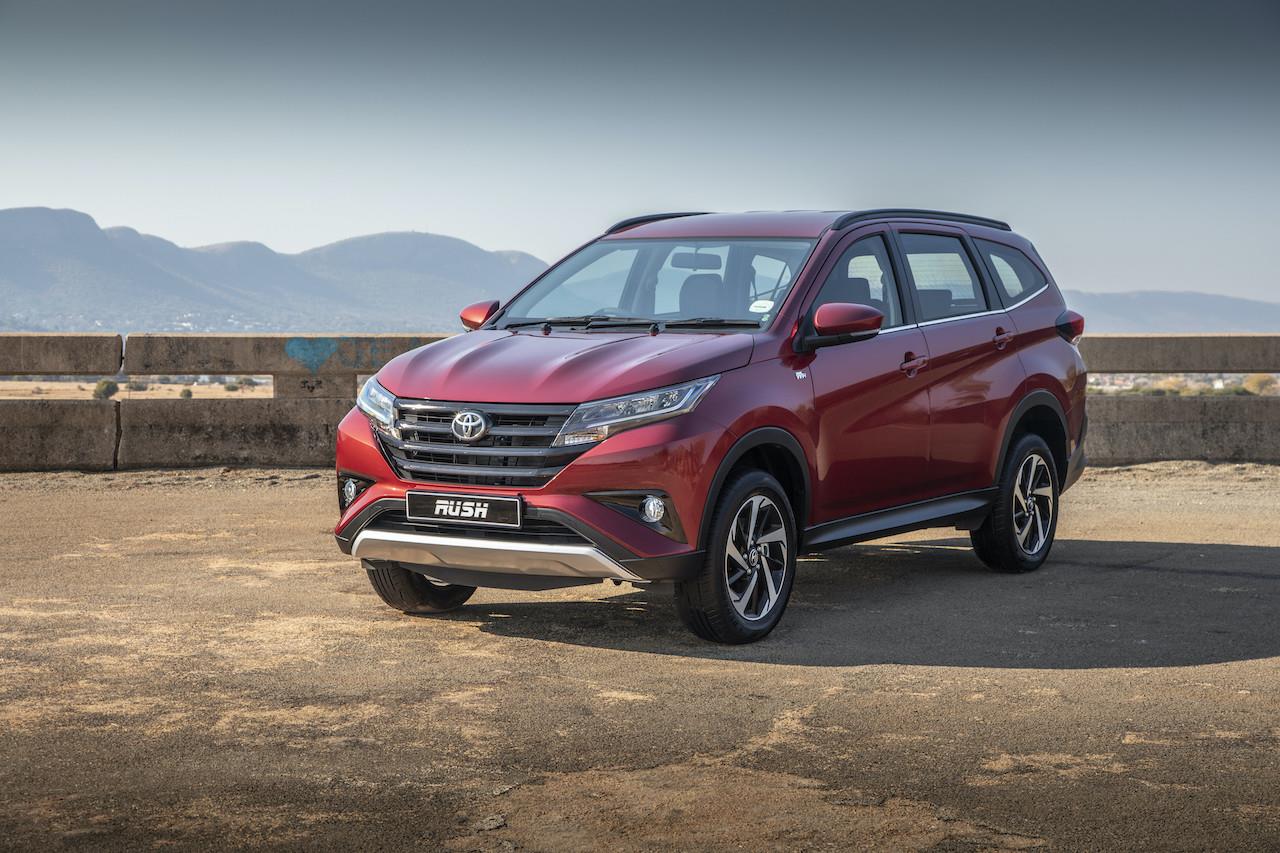
Hot contenders report for family duty
The compact crossover-SUV market is progressively taking over the traditional family-car market, offering butched-up looks, elevated seating positions, and an extra shot of practicality. And, seeing as finances are constrained these days, the lower end of this market segment is showing the strongest growth. High-value offerings abound, and every manufacturer has something to draw buyers into their showrooms.
All three of these contenders come with strong credentials. Toyota has a solid reputation for durability which puts an automatic halo on the Rush, the Ford EcoSport proved to be a smash hit for its manufacturer, and the Hyundai Venue is a good-looking newcomer with modern technology and a generous warranty. But, seeing as these opponents have very similar price tags, which one should get the most attention in the marketplace?
We selected the Toyota Rush S (manual) as the baseline for this comparison and then went looking for high-value alternatives from mainstream brands. Our contenders have price tags that fall within a R7 000 band, but even though they’re priced very closely and should appeal to the same buyers, the Ford EcoSport and Hyundai Venue are both very different in execution to the Toyota Rush. With this in mind, we set out to find out which one best meets the remit of affordable family transport.
Related: Our launch report about the Toyota Rush noted its strong value proposition, but also highlighted some drawbacks.

Toyota Rush 1.5 S
There are only two derivatives in the Rush range, with identical trim levels and engine specifications but a choice between manual- and automatic gearboxes. We chose the manual variant for this comparison, simply because going for the automatic transmission doesn’t do its pricetag any favours, and will adversely affect performance and fuel consumption as well.
As it stands, the Toyota Rush is the most expensive car here, and it’s up against some disadvantages right from the outset. It has the least power on tap, and its semi-monocoque construction and rear-wheel drive with a coil-sprung live rear axle means that it’s the least car-like to drive in its category. On the upside, it has the most luggage space of these three, mainly on account of the fact that, underneath that spruced-up exterior, beats the heart of an Avanza MPV.

Engine, performance and consumption
Motive power is provided by a 1.5-litre 4-cylinder petrol engine. The engine’s specs are predictably modest: there’s no turbocharger in sight, and neither does it feature direct fuel injection. The sole concession to modernity is dual variable camshaft timing. No matter, though, because this engine is well-regarded for durability and toughness – it was designed for applications sold in developing markets, so rough operating conditions were front of mind all along.
It’s not a serious powerhouse, though, because its outputs peak at only 77 kW and 136 Nm, which is then sent to the rear wheels through a 5-speed manual gearbox. Performance is quite leisurely as a result, with a 0 – 100 km/h sprint.... eventually (Toyota hasn’t released performance figures for either the Rush or Avanza) and a claimed top speed of 165 km/h.
Highway cruising will see sustained high revs (and quite a lot of noise) from the engine due to very short gear ratios, so it’s not spectacularly fuel-efficient, either. The Rush has a claimed average consumption of 6.6 ℓ/100 km, but it should return mid-8 ℓ/100 km figures in real-world usage on account of the engine screaming its lungs out all the time.

Standard equipment
To compensate for its limited motor skills and archaic suspension arrangement, the Toyota Rush comes with a fairly loaded standard equipment list. The spec sheet includes 17-inch alloy wheels, LED headlamps, power-folding rear-view mirrors, front fog lamps, a colour touchscreen infotainment with full smartphone mirroring, navigation, steering wheel-mounted audio controls, power windows all round, dual-zone climate control with rear-seat vents, a rear-view camera and rear parking sensors.
Safety
Safety hardware is comprehensive as well, with 6 airbags, ABS with EBD, stability control, hill-start assist, and rear ISOFIX child seat anchors. This is underscored by a 5-star ASEAN (Southeast Asian) NCAP crash safety rating, which bodes well for bodyshell integrity and protection of all occupants big and small.
Related: The Toyota Rush compares well to most opponents in the safety stakes.

Practicality
The Toyota Rush has a very space-efficient design, with enough cabin space for four large adults and a cavernous 609-litre boot within a similar footprint to the others. Note that the cabin is rather narrow, however, which will make for rather cramped accommodation when attempting to fit three adults onto the rear seat. The Rush’s high roof does provide plenty of headroom, though, and the upright posture enforced by its elevated seats make for decent legroom all around.
Price and value proposition
Considering the comprehensive standard comfort- and safety specifications and luggage volume, the Toyota Rush 1.5 S largely justifies its price tag of R330 700 from both value- and practicality points of view. However, it’s neither very pleasant to drive nor especially comfortable, on account of its rather agricultural underpinnings, and it’s rather lacking in the areas of performance and long-distance cruising.
Related: This value comparison sees the Toyota Rush challenging two other low-cost crossovers, and emerging with a favourable verdict.
The competition
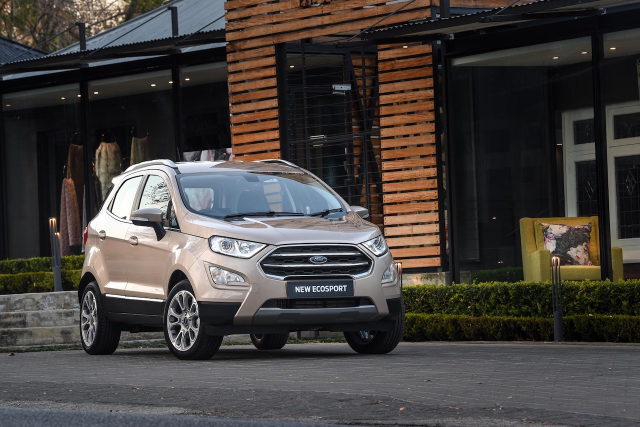
Ford EcoSport 1.0T Trend
Occupying the middle ground in the EcoSport range, the 1.0T Trend offers a much more mainstream approach to the job of hauling families. Rather than sharing the underpinnings of a commercial vehicle, the EcoSport is based on the Ford Fiesta’s platform, which makes it a front-wheel drive product (like most contenders in this segment).
Related: Is the Ford EcoSport the go-to product for modern life?
Those Fiesta underpinnings extend to the powertrain, where a downsized 1.0-litre turbocharged 3-cylinder petrol provides quite a lot more motive power than the Rush could muster. 92 kW and 170 Nm combined with a 5-speed manual gearbox equates to a 0 – 100 km/h sprint in a claimed 12.7 seconds, and it should run up to a top speed of 181 km/h. The EcoSport also trounces the Rush on efficiency, with a claimed average fuel consumption of 5.4 ℓ/100 km, while real-world driving should reveal low-to-mid-7 ℓ/100 km figures in mixed-cycle conditions in the hands of a conservative driver.

As expected, the Rush beats the EcoSport in terms of its standard equipment and practicality. In Trend trim, the Ford has to make do without various of Toyota’s niceties, losing the LED headlights, climate control, navigation system, and rear-view camera in the process. It does add cruise control to the equation, however. And, while they have similar cabin space, the EcoSport has a much smaller, 333-litre luggage compartment.
Related: How good is the Ford EcoSport for family use?
The Ford EcoSport has similar safety equipment to the Toyota Rush, and even adds a driver’s knee airbag for a total of 7. The supporting crash safety isn’t quite as robust as that of the Toyota, though, and only scored 4 stars in Euro-NCAP crash safety in 2013. However, adult occupant protection was still worthy of a 93% score in these tests, so that star probably got lost on the back of lower pedestrian safety scores.
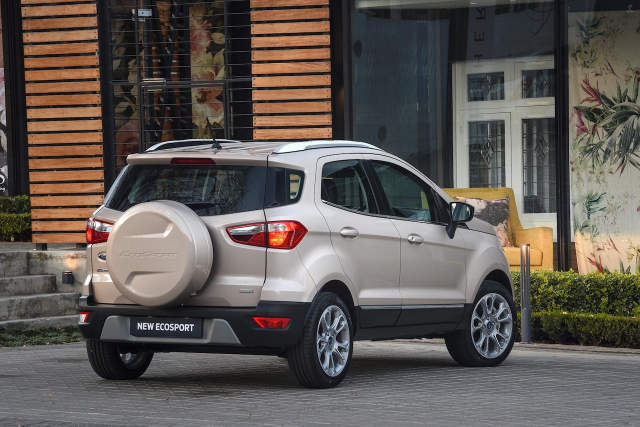
Mid-level Trend trim is probably the best value in the EcoSport range, and makes for a reasonably well-equipped and still-capable compact crossover for its R 329 000 pricetag. The EcoSport also has a stronger warranty (4 years/120 000 km against the Rush’s 3 years/100 000 km coverage), but its service plan for 4 years or 60 000 km can’t match the Toyota’s service cover for 90 000 km with no time limit.
Related: The top 3 Ford EcoSport features that stand out from the competition.

Hyundai Venue 1.0T Fluid
The newest contender of this trio is also the one that’s closest to a normal car in concept. Designed to slot in below the 4.0-metre mark (which is very lucrative in the important Indian market), it’s also the smallest of these three. Like the EcoSport, the Hyundai venue is also based on the platform of a supermini – in this case, using the oily bits of the Hyundai Accent. But, while the small Ford is tall and blocky, the Hyundai looks more like a regular hatchback that’s been put through a bulking programme.
Related: Our launch report about the Hyundai Venue called it “your new happy place”.
It’s also fully in line with current powertrain technology, thanks to a 1.0-litre turbocharged 3-cylinder engine which delivers 88 kW and 172 Nm to the front wheels through a 6-speed manual gearbox. But, because the Venue is significantly lighter than the other two contenders, it’s markedly quicker than even the (slightly more-powerful) EcoSport. The 0 – 100 km/h sprint is dispatched in a claimed 11.3 seconds, with a top speed of 183 km/h (marginally the fastest here). Strangely enough, the lighter Venue has identical claimed fuel consumption to the heavier Rush, with an official average of 6.6 ℓ/100 km. Real-world driving should however realise similar low-to-mid 7 ℓ/100 km figures to the Ford, or possibly even slightly lower, or account of its lower kerb weight and extra gear ratio.

The Hyundai Venue’s standard specification sheet is practically identical to that of the EcoSport Trend, and also loses out on the navigation, climate control and LED headlights you’ll get as standard in the Rush but with the addition of a rear-view camera. Safety ratings and -equipment also largely mirrors that of the EcoSport, losing the Ford’s knee airbag but with a similar 4-star crash safety score in Australasian NCAP (ANCAP) testing.
As far as practicality goes, the Venue’s lower roof line and (much) shorter overall length really places it one size class below the other two contenders. As a result, the cabin isn’t quite as spacious as either the Ford or Toyota, but it somehow still manages to eke out a load volume of 350-litres – more than the EcoSport, but still a lot less than the Rush.
Related: Reviewing the Hyundai Venue showed a very likeable small crossover, and identified it as a high-value proposition.
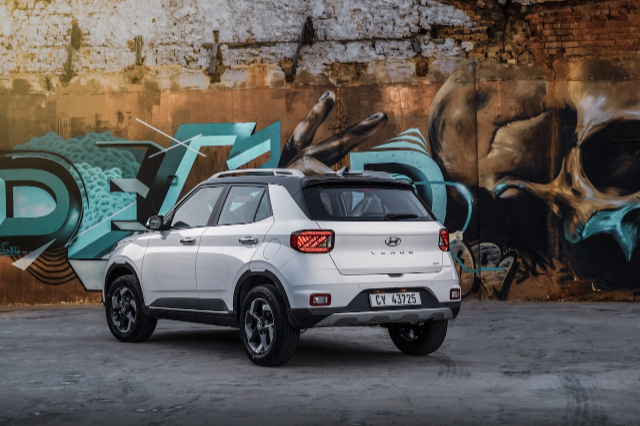
The Venue’s value element appears to be similarly robust, with the lowest list price here (R 324 500), and a magnificent warranty for 7 years/200 000 km on the drivetrain (5 years/150 000 km for the rest of the car). The Venue’s service plan is rather more stingy, though, and runs for 45 000 km or 3 years – the weakest in this group. With that said, the Venue still holds plenty of appeal among these opponents, with its own blend of virtues and value.
Let’s recap the important numbers:
|
|
Toyota Rush 1.5 S |
Ford EcoSport 1.0T Trend |
Hyundai Venue 1.0T Fluid |
|
Engine (cyl/size) |
4-cylinder, 1.5-litre petrol |
3-cylinder, 1.0-litre turbopetrol |
3-cylinder, 1.0-litre turbopetrol |
|
Power/Torque |
77 kW/136 Nm |
92 kW/170 Nm |
88 kW/172 Nm |
|
Transmission |
5-speed manual |
5-speed manual |
6-speed manual |
|
Kerb Weight |
1 260 kg |
1 327 kg |
1 085 kg |
|
Length (mm) |
4 435 |
4 325 |
3 995 |
|
Airbag count |
6 |
7 |
6 |
|
Load Volume |
609 litres |
333 litres |
350 litres |
|
0-100 km/h |
14 seconds (est) |
12.7 seconds* |
11.3 seconds* |
|
Top Speed* |
165 km/h |
181 km/h |
183 km/h |
|
Ave Consumption* |
6.6 ℓ/100 km |
5.4 ℓ/100 km |
6.6 ℓ/100 km |
|
Warranty |
3 yr/100 000 km |
4 yr/120 000 km |
7 yr/200 000 km (drivetrain); 5 yr/150 000 km (vehicle) |
|
Base Price |
R 330 700 |
R 329 000 |
R 324 500 |
* Manufacturer's official claimed figures.
Verdict
As we noted right from the outset, these three vehicles go about their business rather differently, even if they have the same purpose and similar prices. For most family-oriented uses, the Toyota Rush does the job just fine and has very good standard equipment levels, but with some caveats: it’s not as suitable for long road trips as the others, due to its rather old-fashioned mechanical- and suspension layouts; it’s quite noisy; and it’s rather slow in comparison to the others.

For city-bound buyers, these drawbacks won’t matter as much as they would for freeway users, but they have to be noted as limitations in this company nonetheless. The decent service plan does mitigate these drawbacks to some extent, and holds the promise of lower short-term running costs, while Toyota’s legendary durability and traditionally strong resale values makes the Rush arguably the most financially-savvy contender here.

It’s more difficult to separate the Venue and the EcoSport, because they are remarkably similar in many ways. However, it’s the less-generously-equipped EcoSport that has to slot into a close second place here, due to its slightly less-complete standard features list, slower performance, smaller boot, and shorter warranty.
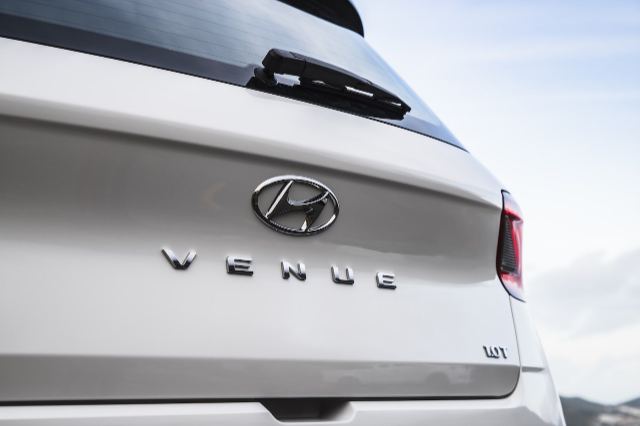
This hands the Hyundai Venue a narrow victory, and demonstrates just how much value can be found with the Korean brand. Its only potential downfall is in the slightly more cramped cabin, but its perky performance, fresh appearance, and the lowest list price in this group makes for a more-compelling overall package in the context of this market segment. One thing is certain, though: whatever needs a compact crossover buyer may have, they’re sure to find a car that’s just right for them in this trio.
*Pricing was accurate at the time of writing, but may change without prior notice.
Recommended next:
Shop for new and used Toyota Rush cars for sale here.
Shop for new and used Ford EcoSport cars for sale here.
Shop for new and used Hyundai Venue cars for sale here.