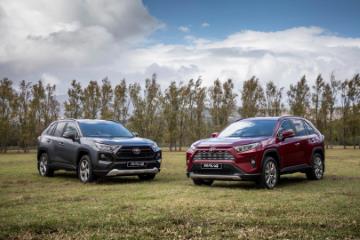
Which Toyota RAV4 is better: petrol or hybrid?
Toyota’s popular RAV4 model recently gained an additional hybrid variant as the Japanese marque looks to introduce hybrid power as an alternative to diesels in its passenger car range. Our question today is, which engine derivative should you choose, the petrol, or the hybrid?



Toyota are pioneers in the hybrid vehicle category, with products like the Prius having prepared the world for the introduction of dual-source powertrains that combine both internal combustion engines and electric motors. Toyota’s hybrid technology has now made its way into the popular fifth-generation RAV4 model, now increasing the model range size to include eight distinct variants.
The slow but relentless push to remove diesel powertrains from smaller passenger vehicles in favour of petrol-electric hybrid models is now common in many counties around the world, a trend that Toyota has jumped upon now in the local market. For today’s comparison, we will be using both the 2.0-litre petrol and 2.5-litre hybrid models in GX guise to eliminate any perceived specification advantage.
|
|
Toyota RAV4 2.0 GX auto |
Toyota RAV4 2.5 Hybrid GX |
|
Engine |
2.0-litre, 4-cylinder, petrol |
2.5-litre, 4-cylinder, petrol-electric hybrid |
|
Power/Torque |
127kW/ 203Nm |
160kW/ 221Nm+e |
|
Transmission Type |
CVT |
CVT |
|
Driven wheels |
Front |
Front |
|
Boot space |
698-litres |
580-litres |
|
Fuel Consumption |
6.5 L/100 km |
4.7 L/100 km |
|
Kerb weight |
1 525kg |
1 645kg |
|
Price |
R495 200 |
R555 300 |
The petrol
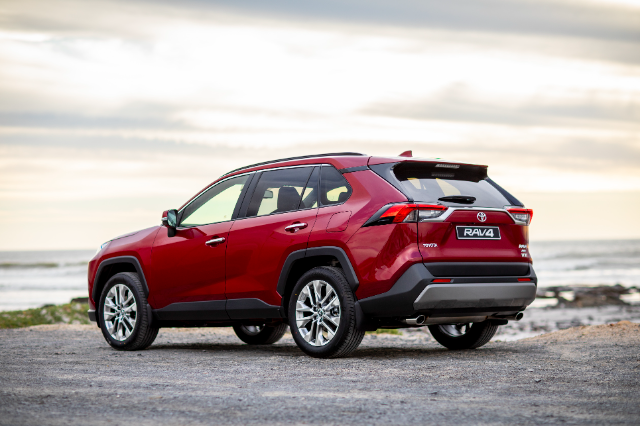
Powering the petrol model is a 2.0-litre naturally aspirated engine that may prove inadequate for a midsize product like the RAV4, with 127kW and 203Nm of torque. The engine is paired with a CVT gearbox that sends power to the front wheels, allowing for reasonable claimed fuel returns of 6.5 L/100km.
The hybrid
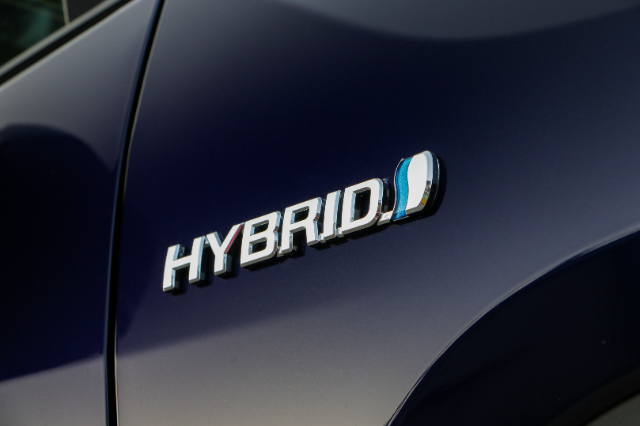
The RAV4 Hybrid features a 2.5-litre naturally aspirated petrol engine that is paired with an electric motor. The powertrain produces a combined power and torque figure of 160kW and 221N+e. The dual motor's power is sent through a CVT gearbox allowing for a claimed fuel consumption figure of 4.7 L/100km.
Analysis
Looking at the numbers, the hybrid model appears to offer the best fuel consumption figure and will be a far stronger performer, however, the hybrid model sacrifices 108-litres of boot space, weighs 120kg more on account of its battery pack and costs around R60 000 more.
Verdict
Despite the weight, boot space and initial cost penalty, the RAV4 Hybrid will be a superior product in terms of drivability and efficiency, handing it the victory in this comparison.