
Everything you need to know about Volvo
Everything you need to know about Volvo



By Martin Pretorius
Volvo’s worldwide reputation is mostly built upon the engineered-in safety of their cars – in fact, many of the safety systems we today take for granted originated at this Swedish manufacturer. And, with an ever-expanding model range and some innovative technology coming on stream, it seems like Volvo should be set for the future as well. It hasn’t been plain sailing through the years, though, as all independent manufacturers have discovered at some point.
From ball bearings to Jacob
As a brand name, Volvo turned 107 years old this past May – but at first, the name wasn’t attached to a car at all. It was registered by the Swedish ball-bearing manufacturer SKF to identify one of their products, and it wasn’t until 1926 that the name was applied to a car manufacturer, and until 1927 that it was applied to a car – the ÖV 4, which eventually took on the nickname of one of its development prototypes: “Jacob”. For this reason, Volvo today recognizes 1927 as the company’s real date of birth, even though their name (which translates as the Swedish verb meaning “I roll”) still harks back to earlier days as a brand name for bearings.
To be honest, the ÖV 4 wasn’t a particularly remarkable car, and it wasn’t exactly a beautiful machine either, but it was rugged and durable, which made it perfectly suited to the poor condition of most of Sweden’s roads at the time. This was to become a recurring theme at Volvo for the next few decades, as we shall soon see.
The big expansion
In the time since their founding, Volvo AB has dabbled (and still operates) in many industrial sectors, ranging from trucks and buses to marine- and industrial drive systems, aerospace engines, and of course, cars. However, the car side of the business is run mostly as a standalone unit, and has seen its share of turmoil through the years.
Following the ÖV 4’s modest success (with around 1000 units produced over two years), Volvo moved slightly upmarket with a series of larger, six-cylinder cars, of which its last descendants were produced until 1950. But the really interesting things started happening shortly after the Second World War ended, when they released the smaller, four-cylindered, PV444 in 1947. This was a hugely influential car, as it marked the beginning of Volvo’s big export mission into what was to become their largest market: the good ol’ US of A.
American styling influences
The curiously styled PV444 (and its successor car, the PV544) stayed true to the by-then-established Volvo design philosophy of being sturdily built and practical, even if it wasn’t exactly what you could call pretty. Shortly after the PV444 was released, the American fad for rounded, hunchbacked styling faded away, but because Volvo had invested so heavily in the tooling to produce this car (their first unitary construction project), it stayed around until well after its successor car arrived.
But what a successor it was: the Volvo 120-series (also known as the Amazon) marked the first time that a Volvo was styled with an eye on anything more than mere utility, even if it also followed then-current American styling trends. The 120 was more than just good-looking as well, with a range of engines which gave it a surprising turn of speed, turning it into effectively the BMW of its era – long before BMW grasped the concept of the compact sports sedan. Predictably, it was a big hit all around the world, and has since matured into a well-regarded and trend-setting classic car.
Safety becomes a main priority
Around this time, Volvo had an engineer and safety researcher named Nils Bohlin working for them, who devised the 3-point safety belt as we know it today. So effective was this safety device, that Volvo decided to open the patent to other motor manufacturers, and the rest is history. However, Volvo was still the first car maker to feature this innovation as standard equipment, when the 122 was upgraded from its original lap (2-point) belts in 1959. Bear in mind that, at this time, most cars didn’t have any safety belts at all, yet the 120-series launched with it!
As a consequence of their new focus on safety, Volvo started adding more and more safety equipment to their cars. The following 140-series added crumple zones and dual-circuit disk brakes, and the 240-series (which was basically a re-developed 140) added large impact-absorbing bumpers and even more-effective crumple zones. It’s noteworthy that the 240-series remained in production until 1993: a 27-year production run is impressive for any car, let alone one which essentially started its life well before the safety- and emissions regulation which became a feature of the 1970s and 1980s.
Boxy but good
The 140 started another enduring trend at Volvo: extremely rectilinear styling. In a word, they were boxy as can be. This wasn’t extraordinary in the beginning, mind you, as most cars of this era were styled with rulers, but Volvo took this theme and ran with it well after everybody else had moved on to smoother, more-aerodynamic shapes. As a result, Volvo eventually acquired the image as makers of safe but boring cars. In fact, their advertising of this era even used this perception to build Volvo’s safety- and practicality reputation, particularly during the era of the subsequent 700- and 900-series cars.
But soon, the limitations of being stuck with a limited model range caught up to Volvo: with the car market expanding in all directions, they desperately needed something to plug the gap at the lower end of their model range. Fortunately, a small Dutch manufacturer named DAF came up for sale in the mid-1970s, and Volvo quickly grabbed this bargain, because they offered an all-new small car which was already developed, along with a complete factory to expand Volvo’s build capacity. The resulting Volvo 300-series, which lived on until 1991, became the first compact Volvo, and the Dutch factory in which it was built went on to produce the subsequent 400-series and first-generation S40/V40, before it was sold off again after about 25 years.
Cold-blooded merger
As you might have gathered by now, by the late 1990s, Volvo’s image in the marketplace was pretty staid and stodgy. Sure, the 400-series and 850 introduced front-wheel drive, and some Volvos of this era were even quite quick (thanks to the miracle of turbo charging), but sales slowed down as buyers became ever-more style conscious. Selling safe but old-fashioned-looking cars simply wasn’t enough anymore, and though the S40 and C70 tried to inject some modern style, it was too little and too late.
This left Volvo Cars vulnerable to take-overs, and soon, other manufacturers were circling the skies. Ford was particularly interested, as they went on a shopping spree during the 1990s. Volvo’s new large front-wheel drive platform (code named P2) was a major drawcard for the Americans, as they needed something modern to underpin their next generation of cars. So it came to be that, in 1999, Volvo became a member of Ford’s ill-fated Premier Automotive Group (PAG), which also included Land Rover and Jaguar.
For the next 11 years, Volvo was a wholly-owned subsidiary of Ford Motor Company, and their good work during this era is still being felt today. As a result of their PAG links, the P2 platform was reworked into the newer P3, which went on to form the basis of (among others) the Land Rover Discovery Sport, Range Rover Evoque, and Jaguar E-Pace.
Geely steps in
As a result of the 2008 global economic crisis, Ford was in a rather precarious position across their wide-spread empire. The only way out was to sell off their non-core brands, with Volvo eventually going to Geely, a Chinese motor manufacturer near the end of 2009. The doomsayers didn’t have much hope for the Swedes in the immediate aftermath of this sale, but they were proven wrong pretty quickly. Under Geely’s wing, Volvo embarked on a model- and technology renewal program, the results of which we’re currently enjoying.
First out of the blocks were the Drive-E powertrains, which focuses on efficiency, allows for easy electrification, and are proving adaptable to ever-more stringent emissions regulations. Next up was the new Scalable Platform Architecture (SPA), which forms the basis for the XC90, S90/V90 twins, and new XC60, with the third-generation S60/V60 due to start production any day now.
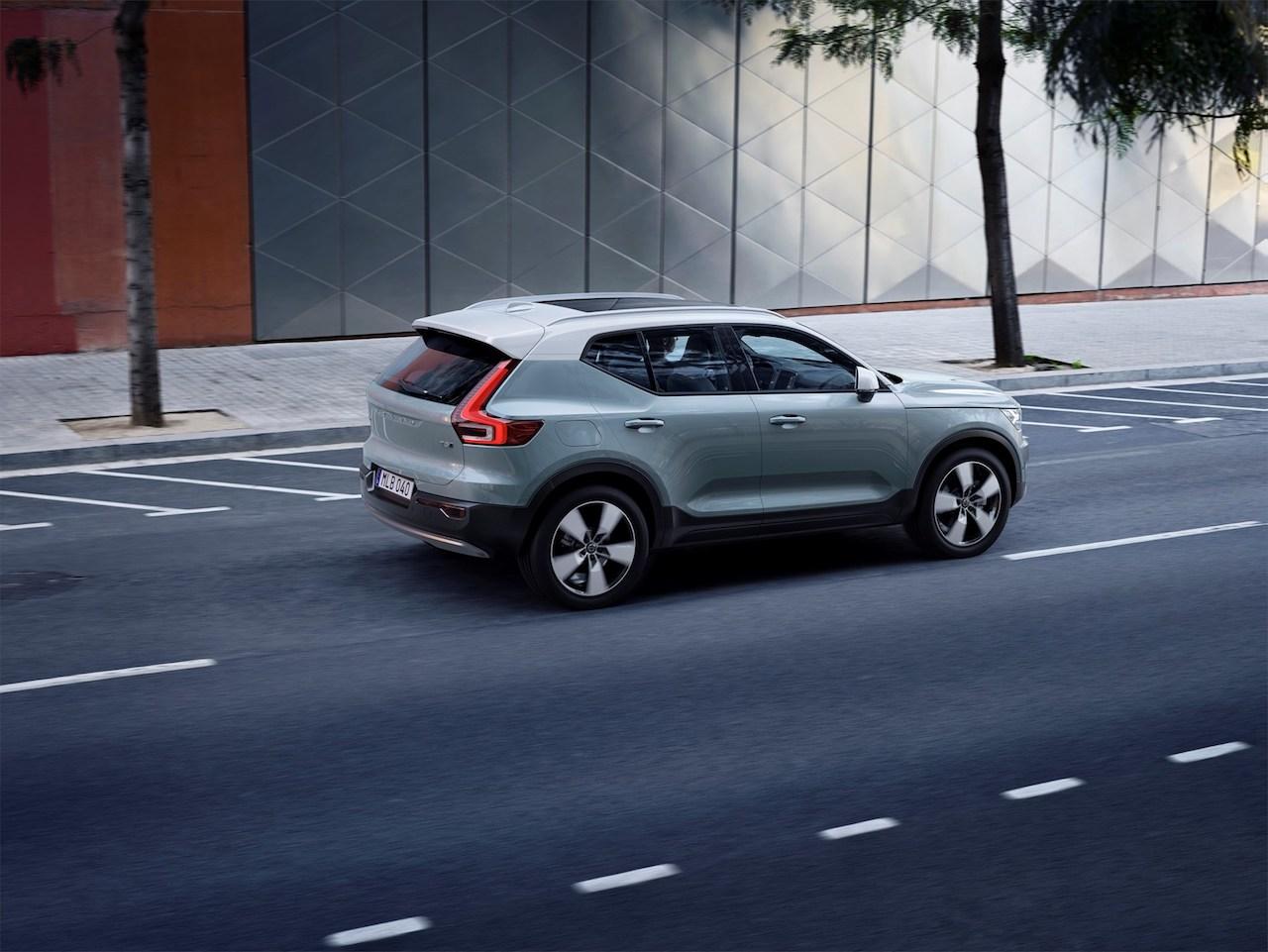
At the other end of the range, the Compact Modular Architecture (CMA) will spawn Volvo’s smaller cars, with the recently-released XC40 leading the charge. This platform will also help Geely to create their new compact cars, and so generate the economies of scale needed for Volvo to sustain two distinct platform families.
But what about the future?
Driven by Geely’s considerable financial backup, Volvo has been able to take a comprehensive interest in future-proofing the company. They’re among the pioneers in the development of mass-market semi-autonomous cars, and have invested heavily in electrified drivetrains and ride-sharing technology.
They currently offer hybrid drive systems in most of their models, and have also launched a stand-alone electrified brand called Polestar. Polestar has a recent history as being Volvo’s performance sub-brand, but they’ll be taking it further in the future, by repositioning themselves as an electric performance car brand. Their first car, enigmatically named the Polestar 1, is a petrol-electric hybrid with a rumoured 450-ish kW, but their future cars are destined to focus on going fully electric.
So, self-driving, ride-sharing electric performance cars... is this the future of Volvo? We’re waiting to see how this all unfolds!