Are Chinese EVs the Answer to South Africa's High Car Prices?
Skyrocketing purchase prices and a fuel cost that never seems to drop, owning a car is becoming more challenging every month. Switching to electric is an option, but it remains an expensive exercise initially. Can the latest batch of Chinese offerings change that? We examine the causes and consider what the future of mobility may hold.


If there's something that every social media comment section offers, it's someone highlighting the exorbitant costs of purchasing a motor vehicle these days. It's not a new or sudden occurrence; this is a tale as old as time, and it's called inflation. I, too, recall a time when the BMW M3 cost R550 000. What is accurate is that, generally, the variance between salaries and costs has increased, making it more difficult for working individuals to afford a vehicle.
Related: The Most Fuel-Efficient Cars in South Africa for 2025
The cost of owning a vehicle extends beyond the purchase price. The insurance (which, at a minimum, should cover third-party damages), maintenance, and operation of the car all contribute to the monthly budget and need to be accounted for. Rising fuel costs do little to help this situation. The cost of fuel has increased by over 47% in the last 5 years, currently costing R21.12/litre 95 unleaded, and costing you R14.59 back in November of 2020. While that year was an anomaly, going back another five years, to 2015, the fuel price was a mere R12.39.

Reducing these overheads has prompted consumers to consider alternative methods of propulsion, with electrification being the most feasible option. Despite South Africa's energy woes, electrification still makes some sense, but it's not without concern. I'll talk about that matter later in this piece. The primary concern is the cost of entry into electric car ownership. Electric Vehicles (EV) remain, for the most part, out of reach of the average Joe.

Why are EVs so expensive?
While many believe it is the taxes imposed on imported electric vehicles that push their prices higher, it's a more complex story than that. The short, conclusive answer is that EVs are expensive to produce. The materials required to produce EV batteries have a higher acquisition cost than other materials traditionally used to create cars. As with any new(er) technology, the initial cost is high as systems still need to be developed (at a cost) and put into place to help spread the costs. We are still in this phase of the EV journey, but it is improving.
Recently, BYD released the Dolphin Surf, the most affordable and feasible all-electric offering in South Africa. With prices starting at R339 900 for the Comfort variant, the Dolphin Surf is far cheaper than the bulk of the EVs on offer today.

Imported vehicles are taxed at 25%, with petrol and diesel vehicles imported from the UK and Europe only being charged 18% import duties as per an existing trade agreement. Internal Combustion Engine (ICE) cars and EVs imported from elsewhere all sit at the 25% tariff. Add this to the VAT, CO2 tax, and tyre levies, along with an ad valorem luxury tax that increases exponentially with the car's price, and you have a recipe for rather expensive and unaffordable vehicles in SA.

Are Chinese EVs the answer to South Africa's high car prices?
China has been instrumental in the development and production of EVs, with companies like BYD charging ahead and surpassing the likes of Tesla for market dominance. There are a variety of factors that have contributed to this success, ranging from government investment and incentives to their unique labour laws and simply the sheer volume they're able to produce and sell domestically. The numbers game favours the Chinese model, and this is slowly starting to spill over into their export offerings. We're seeing increasingly cheaper options making their way to our shores, and I don't doubt that the Dolphin Surf will be used as a test bed for future import considerations from other Chinese firms.
The number of MINI SE and Volvo EX30s seen on our roads tells me that, admittedly in certain areas, EVs are being considered more often for daily commuting purposes. It's easy to see why, though, as the running costs are a fraction of those associated with an ICE vehicle, both in terms of energy replenishment and maintenance costs. Those who have decided to keep a car for an extended period of time are more inclined to take the plunge, knowing that the benefits are best felt over periods longer than 2 years.

However, I still don't believe that Chinese EVs are the solution to South Africa's high car prices. That rests with the government and their policies and duty schedules. Chinese EVs are subject to the same duties and taxes, and while their ability to produce cheaper products places them in a better position, they're still getting carded at the door; so much for BRICS.
A long game
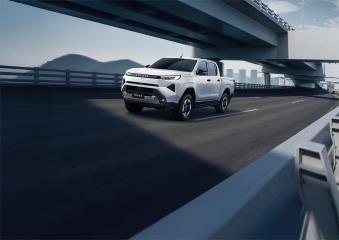
South Africans are still apprehensive about switching to EVs, but this sentiment is slowly changing. Hybrid drivetrains are a more logical solution for South Africa's unique circumstances, where we face challenges both geographically and in terms of infrastructure. This includes the latest slew of Range-Extender Electric Vehicles (REEV) that use ICE to generate battery charge, rather than power the wheels. Vehicles like the new Leapmotors C10 and the Changan Hunter double cab.

The ability to public charge is still somewhat limited but is gradually improving. Manufacturers are reluctant to invest in infrastructure due to the low sales volumes associated with EVs at present, but Jaguar/Land Rover, Audi, BMW, and now BYD have all invested in public charging points.
Consumer mindsets need to shift, though; public charging is not the only form of energy replenishment, and the majority of the charging should take place while the vehicle is idle - at night while you sleep. This, however, does require access to a power outlet - something only afforded to those who live in houses with garages. Still, public charging infrastructure shouldn't be a deterrent and should instead be used as a last-ditch effort, or a convenience when one is planning on spending an hour or two in a shopping mall.
In time, as EV sales continue to grow, so will the support for them. We will see a greater number of EVs on the roads, and more public charging stations will be made available. EVs will enter the used car market more often, and they will become slightly more accessible to the working class. In the meantime, a hybrid solution will help lower fuel costs, even if the initial cost of entry remains high.