
Why the new Toyota GR Yaris needs to come to South Africa
Toyota is full of surprises these days, with a recently-developed habit of giving their fans what they crave instead of just what they need. First came the BRZ, then the reborn Supra, then the cracking little Yaris GRMN. The next step in their enthusiast revival reaches back to the “homologation special” era of the 1980s and 1990s, and it may just be coolest new Toyota in ages. Read along to find out why the new GR Yaris simply has to come to South Africa.


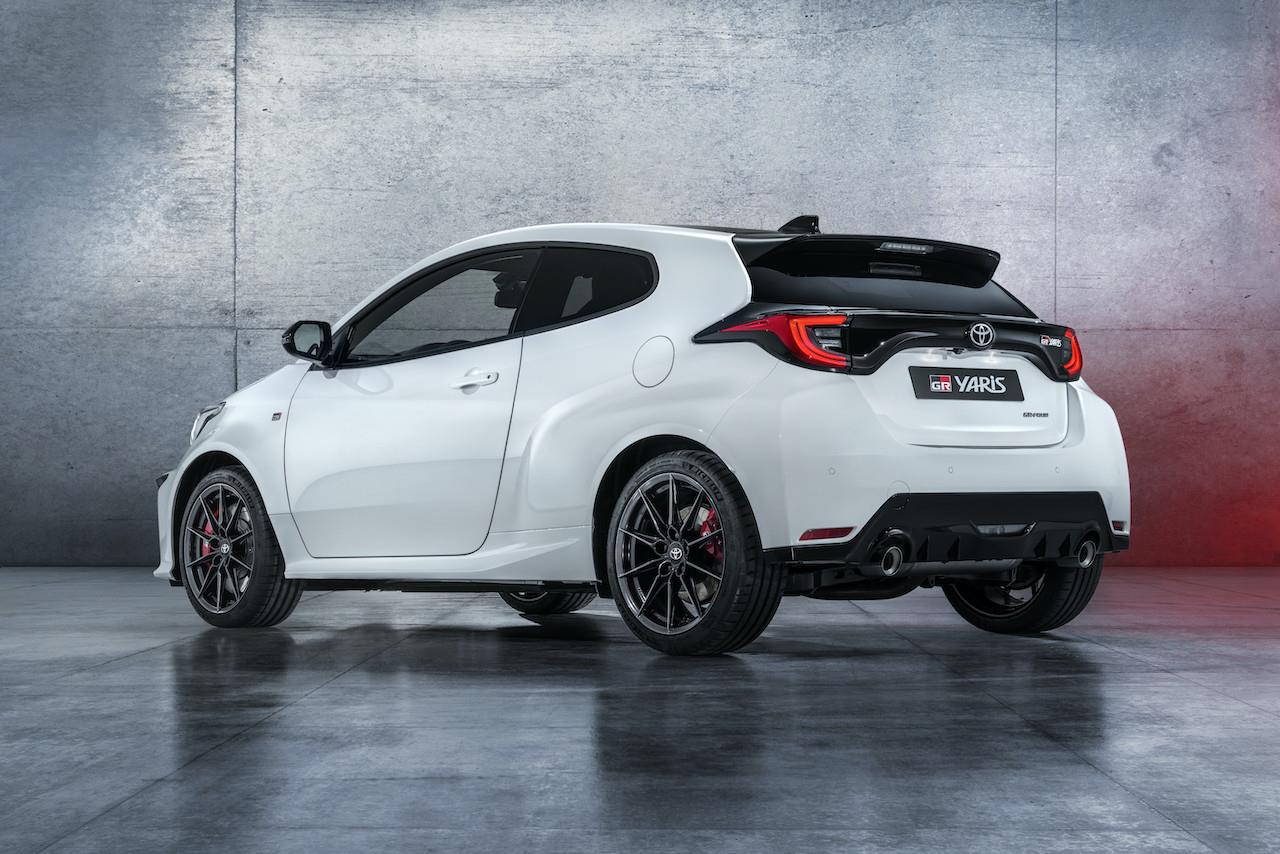
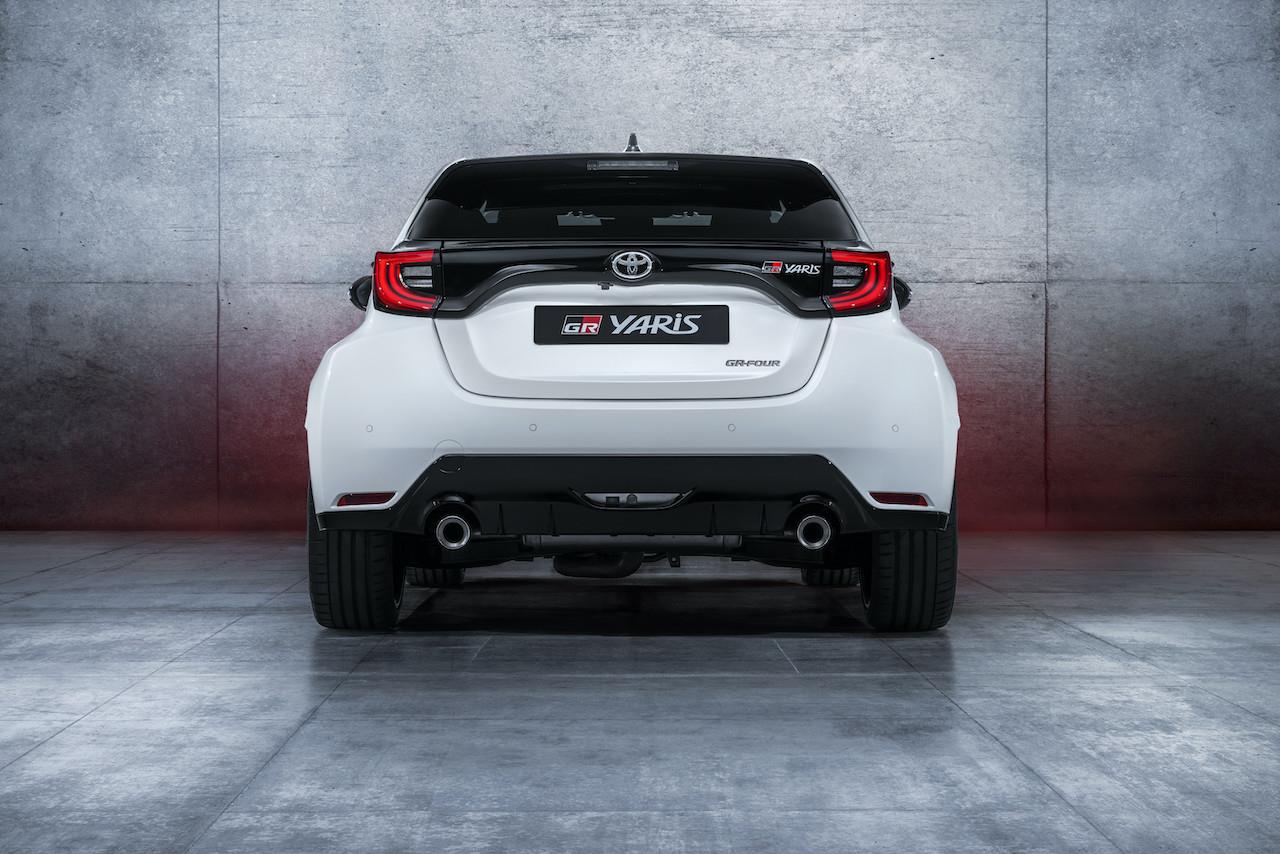
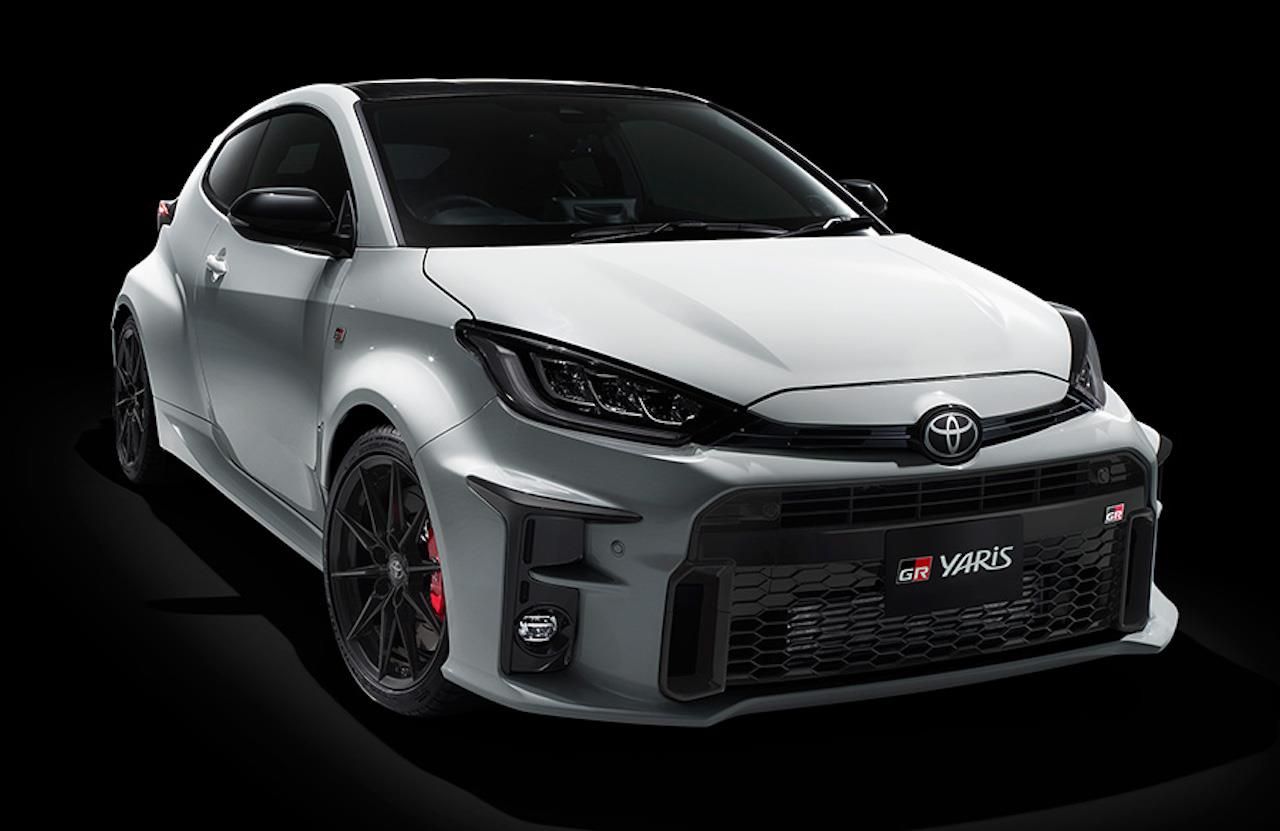
Back in 2018, we called the Toyota Yaris GRMN “an encouraging sign of a new focus on excitement and driving pleasure”, after a memorable few days spent in the company of this little firecracker. Well, it seems like the folks at Gazoo Racing (GR) are staying true to this promise, waving their magic wand over the new Supra and finally getting started on their own range of very special Toyotas. First up is the subject of this article: another very special, limited-edition Yaris, that draws its inspiration from Toyota’s rich racing history.
Related: Toyota rediscovers their fun side – our launch impressions of the Yaris GRMN.
How special can a Yaris really be?
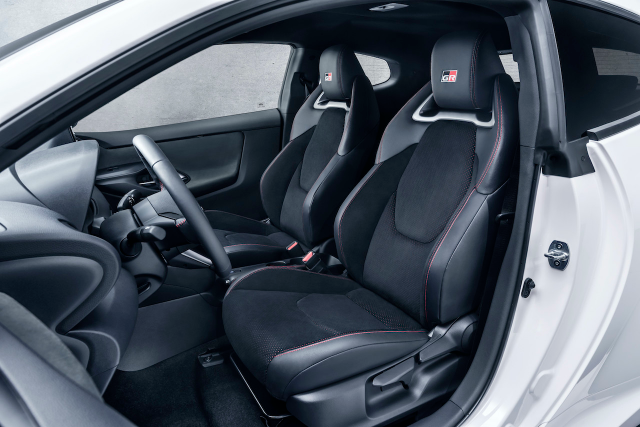
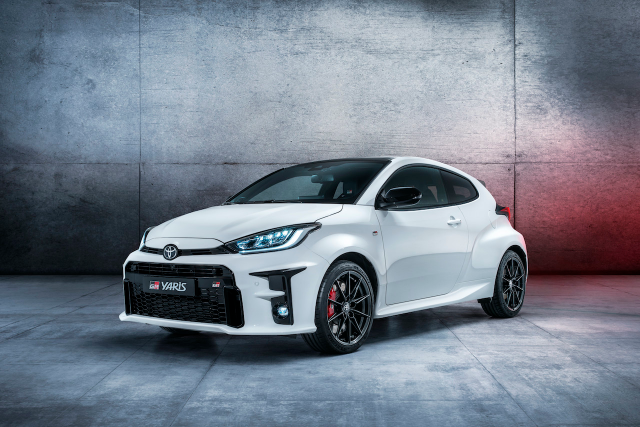
The first clue lies in its construction: It might be called a Yaris, but it shares next to nothing with its mass-market namesake. For starters, there’s a unique 2-door bodyshell with a lowered roofline, gaping air intakes, spoilers, and bulging fenders, instead of the slender detailing of the base car. Given the small frame of the European Yaris (which is completely unrelated to our larger local-market model), the revised proportions gives it the look of a small car stretched over the skeleton of a rather larger one.
Every single panel on the GR Yaris is unique, and it’s all optimized for a single purpose: to achieve success in the World Rally Championship. Why is the roofline lower? To lower the centre of gravity – and just for good measure, the roof is made of carbon fibre, just like you’d find in a full-fat BMW M-car.
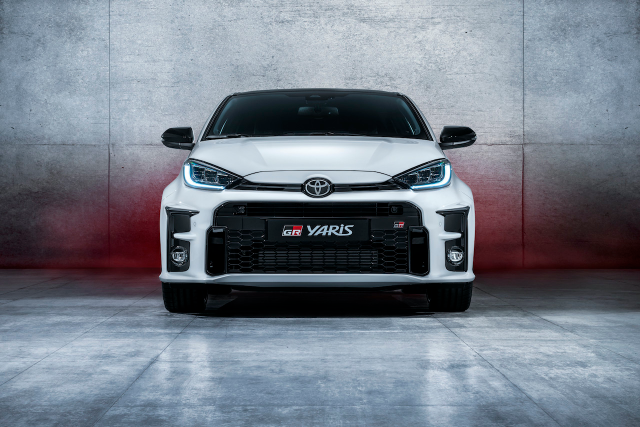
That is extraordinary stuff for a little hatchback, and indicates the single-minded development goals that gave birth to this little beast. It’s designed to go rallying, and seeing as rally regulations require a certain number of similar cars to be produced to be eligible for competition, the GR Yaris is simply the fulfilment of that requirement.
This is the same rule that gave rise to international superstars like the Audi Quattro S1, Lancia Delta Integrale, and the GR Yaris’s spiritual predecessor, the Celica GT-FOUR. For even more credibility, it’s built in the Motomachi plant in Japan, from whence the A80 Supra and and Lexus LFA also originated.
Related: Reviewing the Yaris GRMN reinforced our admiration for the little beast.
It gets even better under the skin
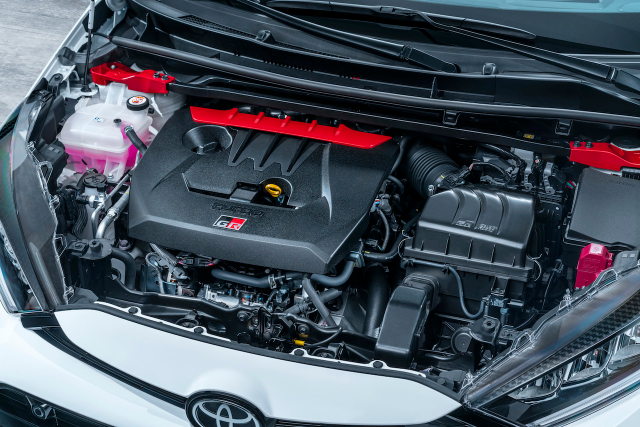
Over the past decade or so, convergent engineering has seen the 2.0-litre 4-cylinder turbo petrol engine emerge as the default configuration for high-performance compact cars. Toyota decided to go in a completely different direction with the GR Yaris, settling on an all-new 1.6-litre turbo 3-cylinder instead. The reasoning behind this isn’t quite clear, but the chances are that it’s a matter of weight saving (and less weight on the front wheels), and creating a more-compact powerplant.
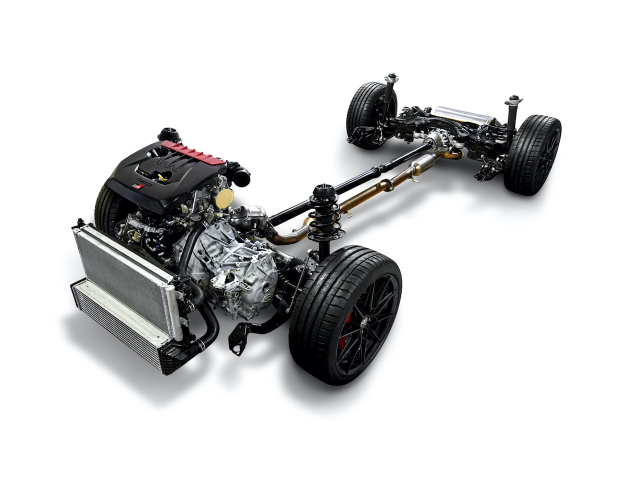
The engineers certainly needed every extra bit of under-bonnet space to cram a whole lot of other stuff inside that small frame, starting with a bespoke all-wheel drive system. That’s right: Toyota engineered not only a new engine, but also an all-new AWD system just for this application, and they threw everything they had at it. Highlights include a multiplate-clutch centre differential which can send 100% of the engine’s torque to either axle, starting with a 60% rearward bias as the default, but adjustable by way of rotary switch.
Unique suspension
They also chucked the Yaris’s normal twist-beam rear axle out the window, opting for an adaptation of the new Corolla’s sophisticated multi-link rear suspension. No effort was spared in making this a finely-honed hot hatch, and it’s clear that cost-cutting simply wasn’t on the list of priorities at all. Of particular interest is the involvement of rallying legend Tommi Mäkinen in the GR Yaris's development, giving an indication of the single-minded purpose behind it.
An optional “Circuit Pack” adds 18-inch light alloy wheels and mechanical limited-slip differentials on both axles, along with re-calibrated suspension to turn it into a track day monster. Either way, traction should be unbreakable, and given recent experience with the Supra and Yaris GRMN, obsessive care will have been expended to ensure that the suspension and AWD system is set up to perfection.
There’s no shortage of speed, either
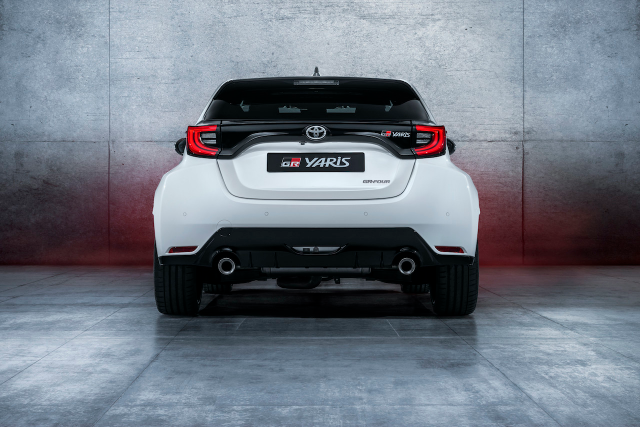
The 3-cylinder engine’s layout might be unconventional, but it puts forth some respectable numbers, with 200 kW and 370 Nm on the menu. That’s a fair bit of power to motivate a car with a kerb weight of 1280 kg, giving a claimed 0 – 100 km/h sprint time of 5.2 seconds and a top speed of 230 km/h. That’s probably fast enough for a car of this size, anyway, and its sprinting ability is good enough to surprise some much more exotic machines.
What makes its sprinting performance even more remarkable is that it’s achieved without the aid of a dual-clutch gearbox, which would have shaved off a good half-second off that time on its own – or even more with launch control in action. Instead, there’s a 6-speed manual gearbox hooked up to the engine, enhanced by Toyota’s iMT rev-matching system, with no self-shifting option at all. This suggests storming in-gear acceleration, an impression reinforced by Toyota’s assertion that the new mill is a high-revving engine with a wide torque spread. In short, the power should come on strong and last for long.
Related: Dynamite in a small package – we review the new Toyota Corolla Hatch.
The only problem...
The GR Yaris is a limited-production model, built on a strong motorsport heritage with numerous unique components, and developed by people who’ve proven that they know what they’re doing. Seen in this light, (and provided it manages to win some rally championships), the GR Yaris will likely become a future classic, revered in the same way as the Celica GT-FOUR.
However, it remains to be seen how willing the specialised customer base would be to pay for such a special model. In the UK, the GR Yaris sells for around R 700 000, and who knows how much that figure will grow once local import charges are added. That’s Golf R-level money, or it could get you a Civic Type R or a base BMW M135i xDrive – all of which are larger and more practical, and carry greater street cred.
The competition is tough around that price point, and buyers might express resistance to paying that much for a small Toyota. It will be an off-beat choice, playing against opponents with long-established reputations. The upcoming GR Corolla, built around the same hardware, may prove to have wider appeal if (when?) it arrives, simply because it will at least match the others in its overall dimensions.
Related: Read our first drive impressions of the new, "normal" local-market Toyota Yaris.
Will it come to South Africa?
With the Rand’s exchange rate growing evermore unfavourable, it will likely be even more expensive by the time it arrives here. We’re given to understand that Toyota South Africa would love to bring it here, but that it’s proving difficult to get the pricing right. Let’s hope they do manage to procure some examples as special imports, though – it’s high time for local Toyota enthusiasts to get the car they’ve been dreaming about for two decades!
Recommended Next:
Shop for new and used Toyota Yaris cars for sale here.