
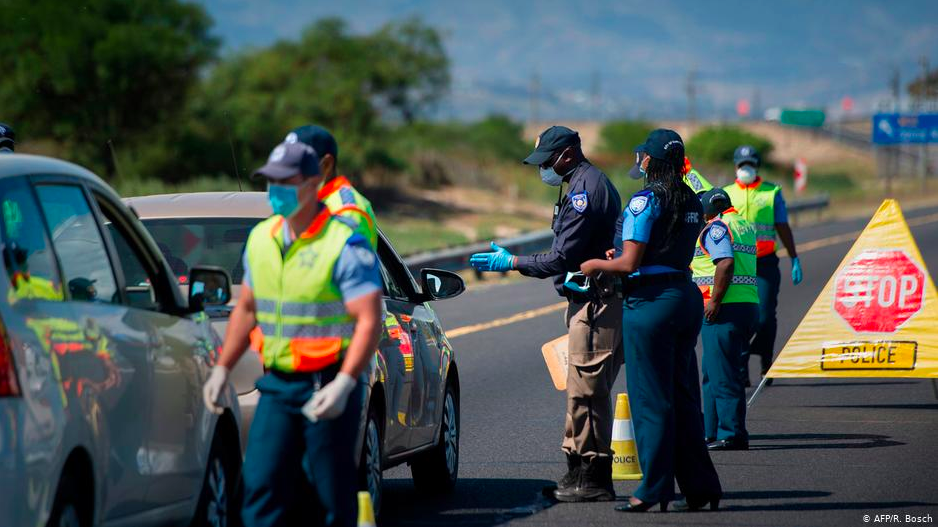
With a constant police presence on our roads because of the countrywide lockdown restrictions, you are bound to encounter a roadblock at some point or another.
You can be legally pulled over to any roadblock for routine vehicle checks, if you committed a traffic offence, or if the vehicle is suspected to be stolen (or another kind of criminal activity is suspected, such as the smuggling of illegal goods).
The difference between informal roadblocks and K78 roadblocks
The main objective of informal roadblocks is to clamp down on drunk driving, unroadworthy vehicles, and speeding. These types of roadblocks will appear on the main roads leading into or out of towns and cities, or at major off-ramps.
If your driver's license or ID is requested, you cannot refuse to hand it over. The officer on duty is also allowed to check your license disk, the roadworthiness of your vehicle, and check for outstanding fines. But don't think you have to pay any fines on the spot - the only time you have no choice in the matter is if the officer can provide a copy of the official warrant or summons.
And, unless the officer(s) can provide extraordinary circumstances, your car or person cannot be searched at an informal roadblock if they fail to produce a warrant or an authorisation from the National Police Commissioner. But, here's where it gets tricky: If the officer believes he has reasonable grounds to search your vehicle or person without a warrant or believes a delay would hinder a possible criminal investigation, and he can prove this at a court of law later, he may perform a search anyway.
A K78 roadblock, however, is an entirely different kettle of fish. Here, a police officer can legally search your vehicle as much as his/her heart desires without a warrant. The only time you can refuse a body search is if the officer is of the opposite sex. Police can also confiscate any illegal items or anything that they believe is linked to a crime. (Goodbye, black market cigarettes!)
You are well within your rights, though, to request a copy of the written authorisation letter given by the National Police Commissioner that provides information on the date, duration and purpose of the roadblock. This goes for both informal and formal K78 roadblocks.
Related: If your license expired during lockdown, don't stress...
When can I be arrested at a roadblock?
There are certain things that will get you a go-to-jail ticket as easily as playing Monopoly. These include: Speeding, (i.e. exceeding the speed limit by more than 30km/h in an urban area or more than 40km/h outside an urban area or on a freeway), driving an overloaded vehicle, driving recklessly, driving under the influence of alcohol or narcotics, (refusing to undergo the breathalyzer test also means you can be legally detained until a blood test can be done at the nearest police station), driving with a license disc/driver's license which has been cancelled or is false, driving without license plates or driving with a false license plate, willful obstruction of the roadway, or if you verbally or physically abuse an officer.
You can also be placed under arrest if you leave the scene of a crash (that you were involved in) without checking if the other party or his vehicle/property was damaged (hit-and-run incidents), or if you are a suspect in a crime, or suspected of being about to commit a crime.
What to do if you feel it's dangerous to stop at a roadblock
If you get pulled over at a roadblock or by a police car out on the road, and you suspect things aren't quite above board, you should immediately call 10111 and report their vehicle license plate, so the operator can verify if it is indeed an official police vehicle.
If you're being followed by a vehicle with blue lights and you're afraid to stop, (or you can't make out their license plate), you should slow down, switch on your hazards, roll down the window, and indicate with your arm to the other vehicle that you intend for them to follow you to the closest police station or petrol station, where there are CCTV cameras and other people. Drive at 40km/h.
If you have already stopped and you feel uneasy, you, as a member of the public, are allowed to ask for the police officer for his/her badge number, identity card, or appointment certificate.
Should you feel that you are being treated unfairly, harassed, or you suspect that the person in question isn't an official police officer, you can call 10111 or you can report the incident to the Independent Police Investigative Directorate.
By law, you are allowed to film police officers
If you filmed an incident, officers are not within their rights if they try to take your recording equipment from you, and neither can they force you to remove images or videos recorded on your device. This footage can later be used as evidence in your case.
Source: Carte Blanche
Recommended next