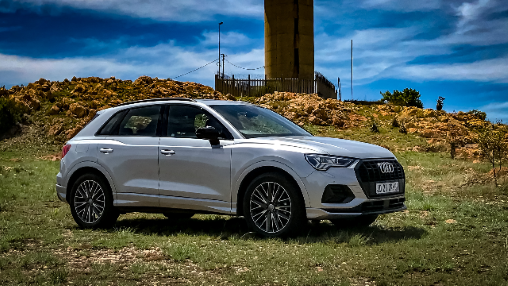
Which Audi Q3 (1st Gen 2012 - 2018) is better: diesel or petrol?
Which first generation Audi Q3 engine is better: diesel or petrol? We'll give you the facts and figures here.


The Audi Q3 is Audi's most compact Q model. The first-generation model contains the recipe that mades the Q range practical and attractive but in a more exciting and dynamic package. This seems to have worked because since the Q3's introduction back in 2012, the Q3 locally sold in excess of 5000 units and was considered a top performer in its range.
Related: Audi Q3 vs BMW X1 vs Mercedes-Benz GLA: here's our winner.
With this in mind, we compared the petrol and diesel engines that were on offer in the first-generation Q3. If you're sold on this generation of Q3, you can search AutoTrader for the latest used and new offerings. While you're at it, if you want to sell your current car for a Q3, you found on our website quick and easy, why not try out our Instant Offer tool? Need some more Audi Q3 advice? Check it all out here.

Diesel
| Audi Q3 2.0 TDI (88 kW) | Audi Q3 2.0 TDI (110 kW) | Audi Q3 2.0 TDI quattro (135 kW) | |
| Engine type | 4-cylinder inline diesel engine with common rail injection system and turbocharging | 4-cylinder inline diesel engine with common rail injection system and turbocharging | 4-cylinder inline diesel engine with common rail injection system and turbocharging |
| Max. output in kW at rpm | 88/3,500 | 110/3,500 | 135/3,500 |
| Max. torque in Nm at rpm | 290/1,750–3,000 | 340/1,750–3,000 | 380/1,750–3,000 |
| Drive Type | Front-wheel drive | quattro permanent all-wheel drive | quattro permanent all-wheel drive |
| Transmission type | 6-speed manual transmission [7-speed S tronic] |
6-speed manual transmission [7-speed S tronic] |
6-speed manual transmission [7-speed S tronic] |
| Acceleration 0–100 km/h in s | 10.9 | 9.3 | 7.9 |
| Fuel consumption in l/100 km urban extra-urban combined |
5.5–5.2 4.4–4.1 4.8–4.5 |
6.0–5.6 4.8–4.5 5.2–4.9 |
6.7–6.3 4.9–4.5 5.6–5.2 |
|
CO₂ emissions in g/km combined
|
126–117 | 138–127 | 146–135 |

Petrol
| Audi Q3 1.4 TFSI (92 kW) | Audi Q3 1.4 TFSI (110 kW) | Audi Q3 2.0 TFSI quattro (132 kW) | Audi Q3 2.0 TFSI quattro (162 kW) | |
| Engine type | 4-cylinder inline petrol engine with direct fuel injection and turbocharging | 4-cylinder inline petrol engine with direct fuel injection and turbocharging | 4-cylinder inline petrol engine with direct fuel injection and turbocharging | 4-cylinder inline petrol engine with direct fuel injection and turbocharging |
| Max. output in kW at rpm | 92/5,000 | 110/5,000–6,000 | 132/4,000–6,200 | 162/4,500–6,200 |
| Max. torque in Nm at rpm | 220/1,500–4,000 | 250/1,500–3,500 | 320/1,400–3,900 | 350/1,500–4,400 |
| Drive Type | Front-wheel drive | Front-wheel drive | quattro permanent all-wheel drive | quattro permanent all-wheel drive |
| Transmission type | 6-speed manual transmission | 6-speed manual transmission [6-speed S tronic] |
7-speed S tronic | 7-speed S tronic |
| Acceleration 0–100 km/h in s | 10.8 | 9.2 | 7.6 | 6.4 |
| Fuel consumption in l/100 km urban extra-urban combined |
7.4–7.1 5.3–5.0 6.1–5.8 |
7.4–7.1 5.3–5.0 6.1–5.8 |
8.4–7.8 6.3–5.7 7.0–6.5 |
8.6–7.9 6.5–5.8 7.2–6.6 |
| CO₂ emissions in g/km combined | 141–133 | 141–133 | 161–149 | 168–152 |
A vehicle’s fuel consumption and CO₂ emissions depend not only on how efficiently the vehicle uses the fuel but are also considerably influenced by driving behaviour and other non-technical factors. CO₂ is the greenhouse gas primarily responsible for global warming.

Verdict
We can't tell you whether to buy a petrol or diesel engine, that decision totally lies with you. We can, however, give you the information that will allow you to make an informed decision. But when deciding, also keep in mind that diesel cars incur low running costs whereas petrol cars have lower maintenance. Diesel engines also need regular checkups and changing of fluids and are generally higher maintenance. Another factor to consider is your daily running. If you're driving for more than 80 km/day, then you should opt for diesel for the aforementioned reasons. Otherwise, petrol is the way to go.
We like the 110 kW engines, as they sit in the middle of the range and have a good balance of power and fuel efficiency.

In the Audi Q3 2.0 TDI ultra (110 kW 109 g CO₂/km combined), specific technical measures in the vehicle lead to lower fuel consumption and reduced CO₂ emissions compared to the other Audi Q3 models. The Audi Q3 2.0 TDI ultra (110 kW) was equipped with the following as standard:
- 6-speed manual transmission
- Tyres with improved rolling resistance to allow fuel to be saved
- Forged aluminium wheels in 7-arm design, size 6.5 J x 16 with 215/65 R 16 tyres
- S line sport suspension for a low drag coefficient and improved aerodynamics