Want to support SA? Here are the automotive brands you need to know about
We've made a list of many of the brands that produce automotive products in South Africa, including vehicle producers and specific suppliers. There are many more, but this is a great place to start for those looking to be local and lekker when shopping for a car, bakkie or truck.


Before we get into why supporting local manufacturers is important, we must emphasise that imported products remain essential; however, traditionally, two out of every three new cars sold locally were locally made. Now, the figure is more like one in three, and that needs to change if we want our local manufacturing hub to remain robust.
The multiplier effect (job creation)
The automotive industry is one of SA’s largest employers. It doesn't just create jobs at the factory; it creates a "ripple effect" through the entire country:
Direct jobs: Roughly 115 000 people work directly in vehicle and component manufacturing.
The 1:4 Ratio: For every one person employed at an assembly plant (like Toyota, Ford, or BMW), roughly four more jobs are created or supported in the supply chain—from the people making seats and tyres to logistics drivers and administrative staff.
Extended impact: It is estimated that one worker in the auto sector supports about 10 people in their extended family and community.
Economic Stability and GDP
As of 2026, the automotive sector contributes over 5% to South Africa’s GDP.
Keeping wealth local: When a car is built here, the money spent on labour, electricity, and local parts stays within our borders rather than being sent offshore to a foreign headquarters.
Export power: South Africa is a global hub for right-hand drive vehicles. We export roughly two-thirds of everything we build (such as the BMW X3 and Mercedes C-Class) to Europe and Asia, bringing vital foreign currency into the country.
The 60% localisation goal
The South African Automotive Master Plan (SAAM 2035) aims to have 60% of every car manufactured in South Africa by 2035. Currently, we are at about 40%.
Supporting local manufacturers encourages them to source more parts locally (like glass from Shatterprufe or leather from local tanneries).
This transforms the industry from "just putting parts together" to actually manufacturing the components from scratch.
Resilience and self-reliance
Global supply chain shocks (as seen in recent years) show that a country that can't build its own goods is vulnerable.
Lower Costs: Locally produced cars are often shielded from the extreme price hikes caused by a weakening Rand, as they don't face the same heavy import duties as fully imported cars.
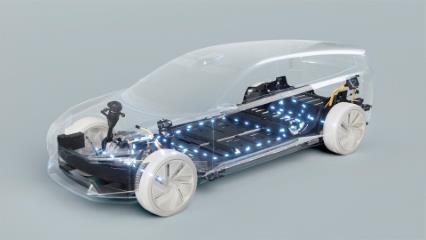
Innovation: Local manufacturing forces us to invest in skills development and new technologies, such as the new EV and hydrogen vehicle production incentives starting in 2026.
What is SKD?
In simple terms, SKD stands for Semi-Knocked Down. If a full manufacturing plant is like a professional kitchen where they cook from scratch, an SKD plant is like a kitchen that uses "meal kits." The heavy prep work is done elsewhere, and the final assembly happens locally.
The South African government and the "Big 7" manufacturers (BMW, Mercedes, VW, Toyota, etc.) have recently pushed to close the "SKD Loophole. SKD is often called "screwdriver assembly" because it requires very little local labour or parts. From March 2026, new policies will favour CKD (full manufacturing) with higher tax incentives, while SKD operations may face higher duties to encourage them to invest in full local plants.
How SKD it works
The Kit: A car is partially built in its home country (e.g., India or China). It is then "knocked down" into a few large, pre-assembled sections.
Shipping: These large sections—usually the engine, the chassis, and the already-painted body shell—are packed into containers and shipped to South Africa.
Assembly: Local workers in SA perform what is often called "screwdriver assembly." They bolt the engine into the frame, attach the wheels, fit the interior, and connect the wiring.
SKD vs. CKD
The main difference is the amount of work done in South Africa.
SKD (Semi-Knocked Down): The body arrives already welded and painted. It’s mostly about bolting the big parts together. (Example: BAIC B30).
CKD (Completely Knocked Down): The car arrives as thousands of individual parts, many sourced from local suppliers. The local factory has to weld the steel together and run the car through a massive paint shop. (Example: Toyota Hilux or VW Polo).
Why do brands choose SKD?
Cheaper imports: Importing a "kit" attracts much lower tax (import duty) than importing a finished, driveable car.
Lower risk: It costs a brand much less to set up an SKD assembly line than a multi-billion Rand CKD factory. It’s a way for brands to "test" the South African market.
Job creation: Even though it’s less intensive than full manufacturing, it still creates local jobs in assembly and logistics.

Local light commercial and passenger car producers
Toyota (KZN)
Toyota South Africa Motors (TSAM) is the undisputed heavyweight of the local industry. Their massive Prospecton plant in Durban is more than just a factory; it is a hub for high-volume production.
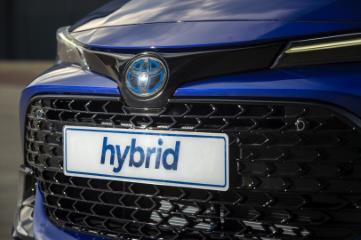
Key Models: The legendary Hilux (SA’s top-selling vehicle), the Fortuner SUV, the Corolla Cross (including its popular Hybrid version), and the Hi-Ace taxi.
Impact: The brand consistently leads the market in both local sales and total production volume.
Volkswagen (Eastern Cape)
VW has been a part of the South African family since 1951. Their Kariega (formerly Uitenhage) plant is one of the most efficient in the global VW network and is the sole production site for certain models.
Key Models: The Polo Vivo (the "people’s car" of SA) and the standard Polo hatchback. The Tengo crossover will soon come out of the same facility!
Impact: The Kariega plant is a vital lifeline for the Eastern Cape economy, employing thousands and sustaining a massive network of local parts suppliers.
Ford (Gauteng)
Ford’s Silverton Assembly Plant in Pretoria recently underwent a multi-billion rand upgrade to become one of the most advanced "green" factories in the country, even utilising solar energy to power its operations.
Key Models: The Ford Ranger and the Volkswagen Amarok (which is built by Ford as part of a global partnership).
Impact: Ford’s investment in the Tshwane Automotive Special Economic Zone has transformed the Pretoria automotive corridor.
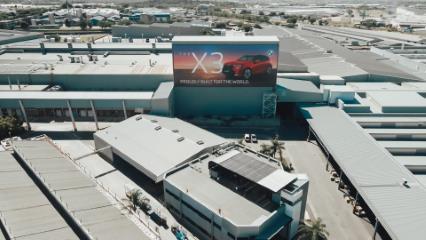
BMW (Gauteng)
BMW Plant Rosslyn was the first BMW factory established outside of Germany. It has a prestigious history of producing iconic cars like the 3 Series and has now pivoted to become a global hub for luxury SUVs.
Key Models: The BMW X3.
Impact: Almost every X3 you see on South African roads—and many you'd see in Europe—was born right here in Pretoria.
Isuzu (Eastern Cape)
After General Motors exited South Africa in 2017, Isuzu Motors South Africa took over the Struandale plant in Gqeberha, ensuring that the city remained a vehicle manufacturing powerhouse.
Key Models: The D-Max bakkie and various heavy-duty commercial trucks.
Impact: Isuzu is a major player in the commercial sector, keeping SA’s logistics and farming industries moving.
Mercedes-Benz (Eastern Cape)
The East London plant is a high-tech facility that produces luxury sedans for both the local market and export to right-hand-drive markets worldwide.
Key Models: The C-Class sedan.
Impact: This plant is the largest industrial employer in the Buffalo City Metropolitan area.
Mahindra (KZN)
While relatively new to the manufacturing scene, Mahindra opened an assembly facility in Durban's Dube TradePort in 2018. Mahindra is currently in the middle of a major transition from SKD to CKD, meaning that, unlike its current setup, a CKD plant would involve building the cars from individual components, including on-site welding and painting.
Key Models: The Pik-Up series.
Impact: Their local assembly has allowed them to offer competitive pricing, making them one of the fastest-growing brands in the country.
The Newcomer: Chery (Gauteng - Coming mid-2026)
In a major shift for the industry, Chinese giant Chery recently reached an agreement to acquire Nissan's manufacturing assets in Rosslyn. By mid-2026, Chery is expected to begin local production, preserving jobs as Nissan transitions to an importer-only model.
BAIC (Eastern Cape)
While BAIC and Foton are Chinese brands, they have established manufacturing operations in South Africa through a BAIC Group subsidiary. Since late 2025, BAIC and Foton has been locally assembling its vehicles—including the Tunland G7 and the newer V7 and V9 hybrid bakkies—from "completely knocked down" (CKD) kits at the R11 billion BAIC plant in the Coega Special Economic Zone near Gqeberha. This joint venture with South Africa’s Industrial Development Corporation (IDC) needs a more complete production solution that includes local suppliers.

Medium and heavy commercial
FAW
FAW is a major player in the commercial vehicle sector with a massive plant in Coega.
Status: They assemble a wide range of medium and heavy trucks using SKD kits. Because truck volumes are lower than passenger cars, SKD is a common long-term strategy in the heavy-vehicle industry.
Tata
Tata has an assembly facility in Rosslyn (Pretoria) managed by Tata Africa Holdings.
Status: Similar to FAW, they focus on SKD assembly for commercial trucks and buses rather than passenger cars (which are fully imported).
Volvo Trucks (Durban)
Iveco (Rosslyn)
MAN (Pinetown/Olifantsfontein)
Specialist & Local Niche Manufacturers
Beyond the major "Original Equipment Manufacturers" (OEMs), South Africa is home to specialised local businesses that design and build vehicles from the ground up:
Brandt BRV: Based in Bloemfontein, they create rugged, specialised utility vehicles.
Hi-Tech Automotive: Based in Gqeberha, they are world-renowned for building high-quality replicas of classic sports cars like the Shelby Cobra for international collectors.
Paramount Group: A global leader in defence, producing advanced armoured vehicles like the Marauder in its Midrand facilities.
Metair Investments (KZN, Gauteng, Eastern Cape)
Metair is a South African giant that manages several specialist brands. If you drive a locally built car, there is a very high chance it contains Metair-made parts.
Hesto Harnesses: Based in KwaDukuza, they employ over 8 000 people making complex wiring systems (the "nervous system" of the car).
Lumotech: Located in Kariega, they manufacture the headlights and taillights for brands like VW.
Smiths Manufacturing: Based in Durban, they produce air conditioning and cooling systems.
Shatterprufe (Eastern Cape)
An iconic South African name, Shatterprufe is the leading manufacturer of laminated and toughened automotive safety glass.
What they do: They supply the windscreens and side windows for almost every local OEM, ensuring they meet global safety standards.
Feltex Automotive (KZN & Eastern Cape)
Ever wonder where your car's carpets and acoustic padding come from? Feltex is the primary supplier of textile-based trim.
What they do: They produce the moulded carpets, roof linings, and sound-insulation materials that make your cabin quiet and comfortable.
Gabriel South Africa (Western Cape)
Originally an American brand, Gabriel has been manufacturing shock absorbers in Cape Town since 1962.
What they do: They are a major supplier of suspension components for both the new car assembly lines and the local aftermarket.
Supreme Spring (Gauteng)
Based in Nigel, this company is the muscle behind your bakkie's load-carrying capacity.
What they do: They manufacture coil springs, leaf springs, and stabiliser bars. If you’re driving a Hilux or Ranger, your suspension likely started its life here.

Why the Supplier Network is the real hero
For every one job created at a car factory (like Ford or BMW), roughly four more jobs are created at these component suppliers. Supporting a South African car means you are also supporting:
Behr Hella Service: (Cooling and thermal management)
Bosal: (Exhaust systems and towbars)
Continental & Bridgestone: (Tires manufactured in Gqeberha and Brits)
Alfa: (A leading local supplier of brake drums and discs based in Springs)
How to spot a "supporter" brand
When shopping for parts or accessories, look for the NAACAM (National Association of Automotive Component and Allied Manufacturers) seal or the Proudly South African logo. Buying local brands for your service (like Gabriel shocks or Shatterprufe glass) keeps the Rands circulating in our local economy.
Why it matters
Choosing a locally produced vehicle supports the South African Automotive Masterplan, which aims to have 60% local content in every vehicle by 2035. This means more of the money you spend stays in South Africa, supporting tyre manufacturers in Gqeberha, leather stitchers in Ga-Rankuwa, and steel mills in Middelburg.