Toyota Hilux Raider 48V (2024) First Drive Review
Toyota has always been advocating hybrid systems and now mild-hybrid technology has finally filtered down to some of the brand’s most popular vehicles in SA: The Fortuner, and the Hilux. We made a journey to the foothills of the Drakensberg, to put the new Hilux raider Raider 48V derivative to the test!

Say what? A Toyota Hilux hybrid?
Toyota stays at the forefront of the light commercial sector with the ever-popular Hilux. While some Hilux diehards might be hesitant about the new hybrid system, there's little reason to worry.
The Hilux features a mild-hybrid system (MHEV), which means you never need to worry about plugging it in. And unlike the parallel-series (aka self-charging) hybrids with larger batteries, the MHEV system keeps the weight down while still offering a variety of benefits. Also, the 48V models aren't replacing the internal-combustion variants.
Selling your old car? Get an instant offer here and sell it in a flash.
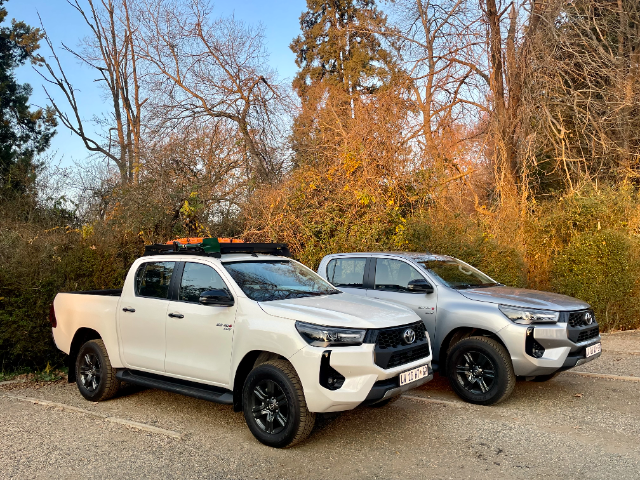
How does the mild-hybrid system work in the Hilux?
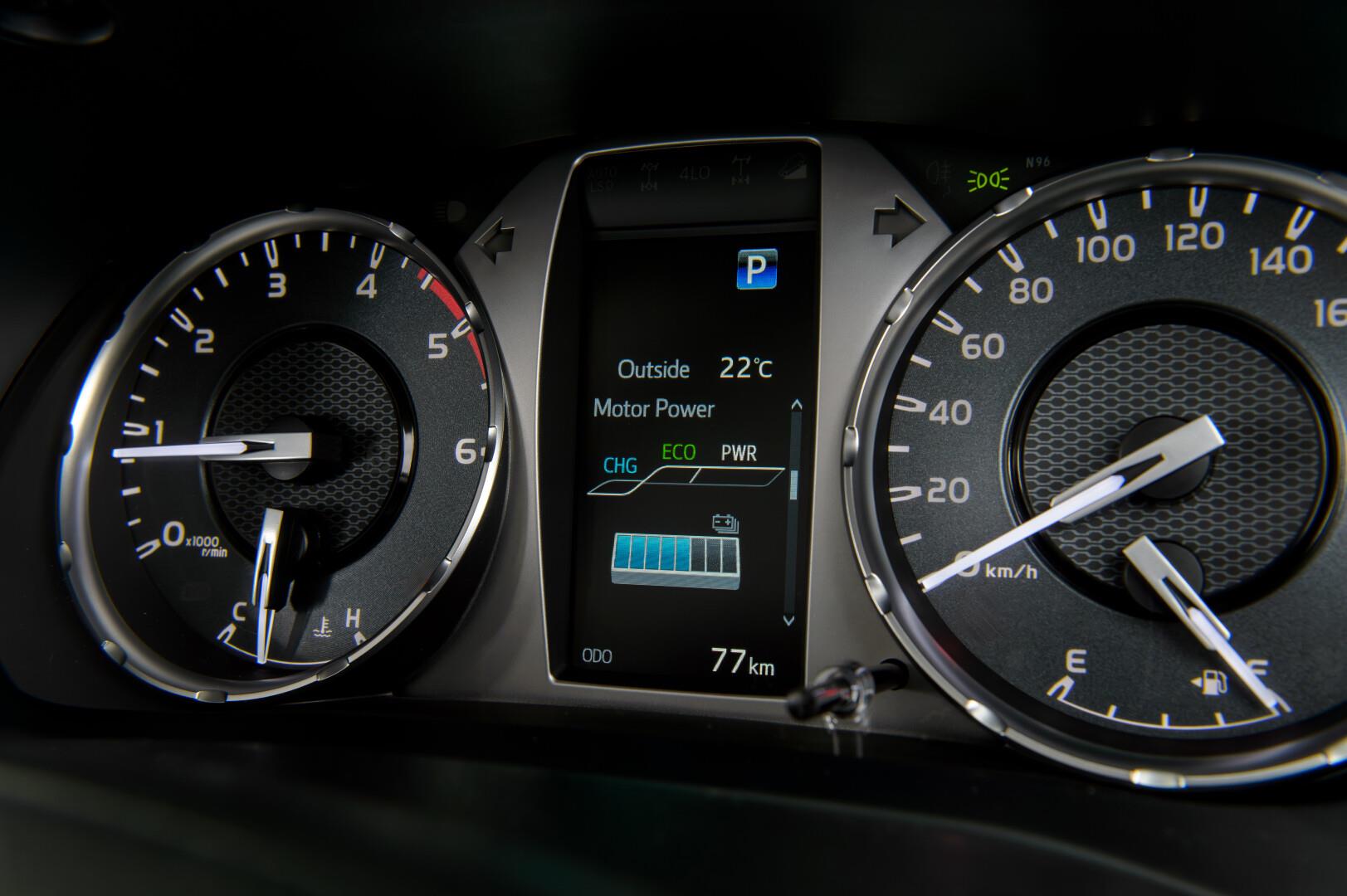
The mild-hybrid system means that there’s a motor generator being driven by the engine (via a belt system), which charges a small, light 48V lithium battery (weighing in at only 7.6 kg), hidden below the rear seats, that also powers the Hilux’s 12V system. Every time the Hilux driver brakes or decelerates, the battery recharges. This kinetic energy would have been lost under normal circumstances, but the hybrid system 'harvests' it and saves it in the battery.
Related: Hilux GR-Sport III goes on sale in SA
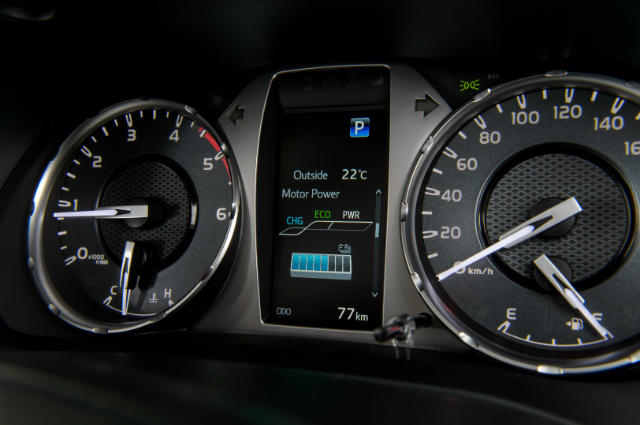
What are the benefits of mild hybridisation in the Toyota Hilux?
The Japanese automaker says there are several reasons to embrace the 48V models: Better fuel efficiency, a nice little boost of power and better throttle response, smoother acceleration and better braking ability, and reduced engine load. When charged, the lithium battery is good for an additional 12kW and 65 Nm. Basically, it can be seen as your behind-the-scenes driving-efficiency co-ordinator that ensures your Hilux performs at optimal levels at all times.
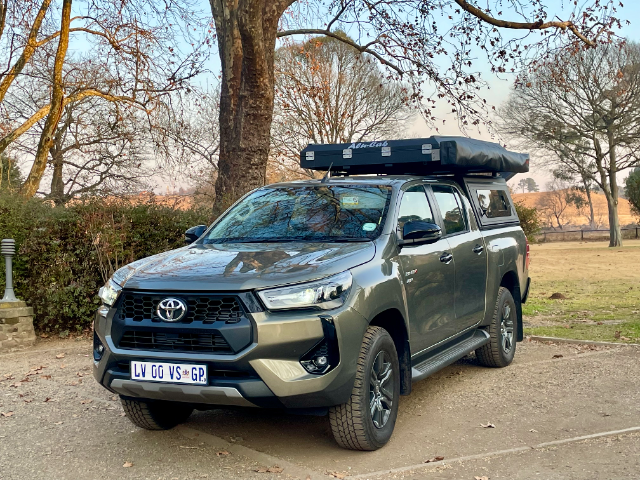
Driving the new Hilux Raider 48V on launch
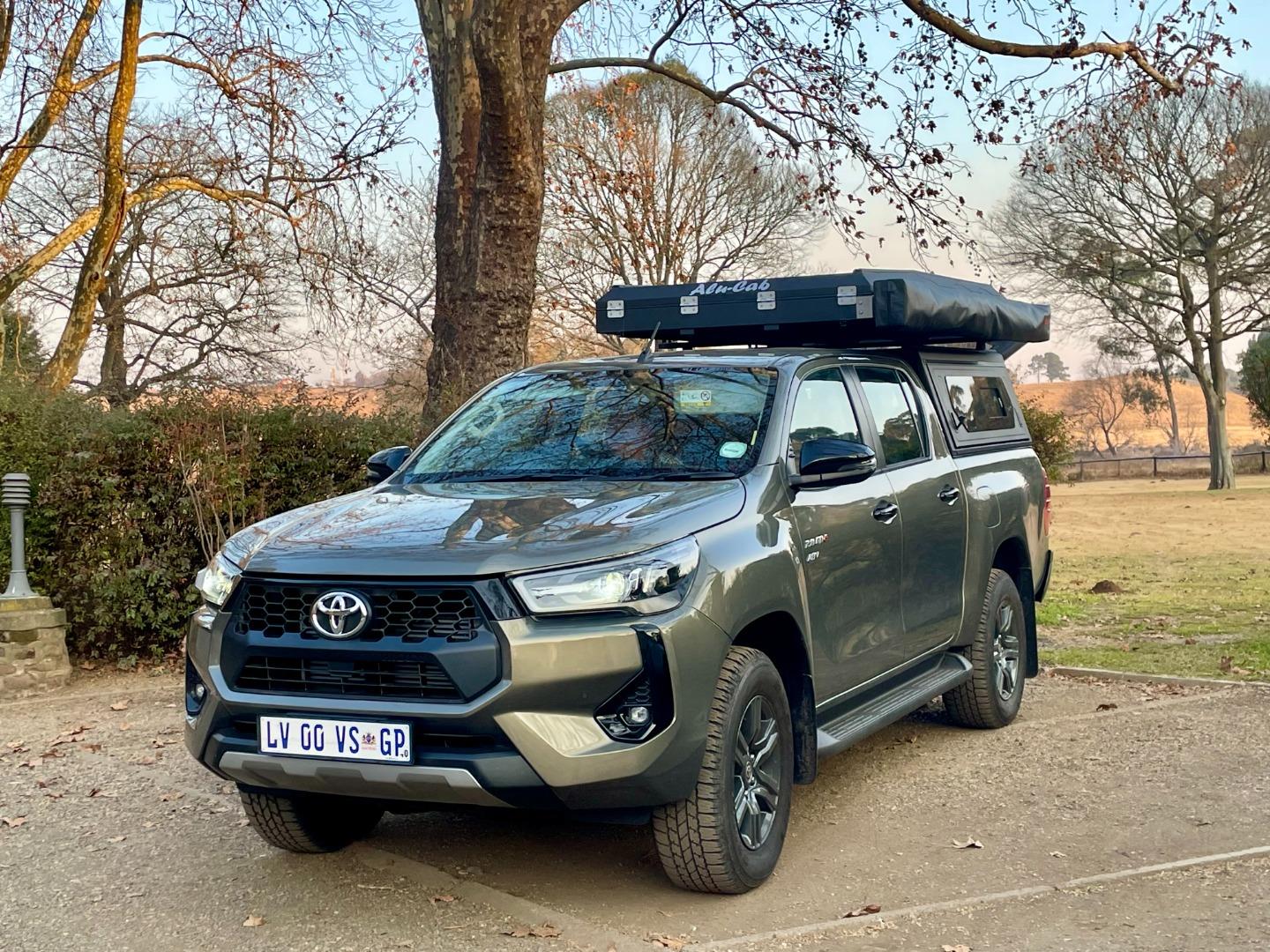
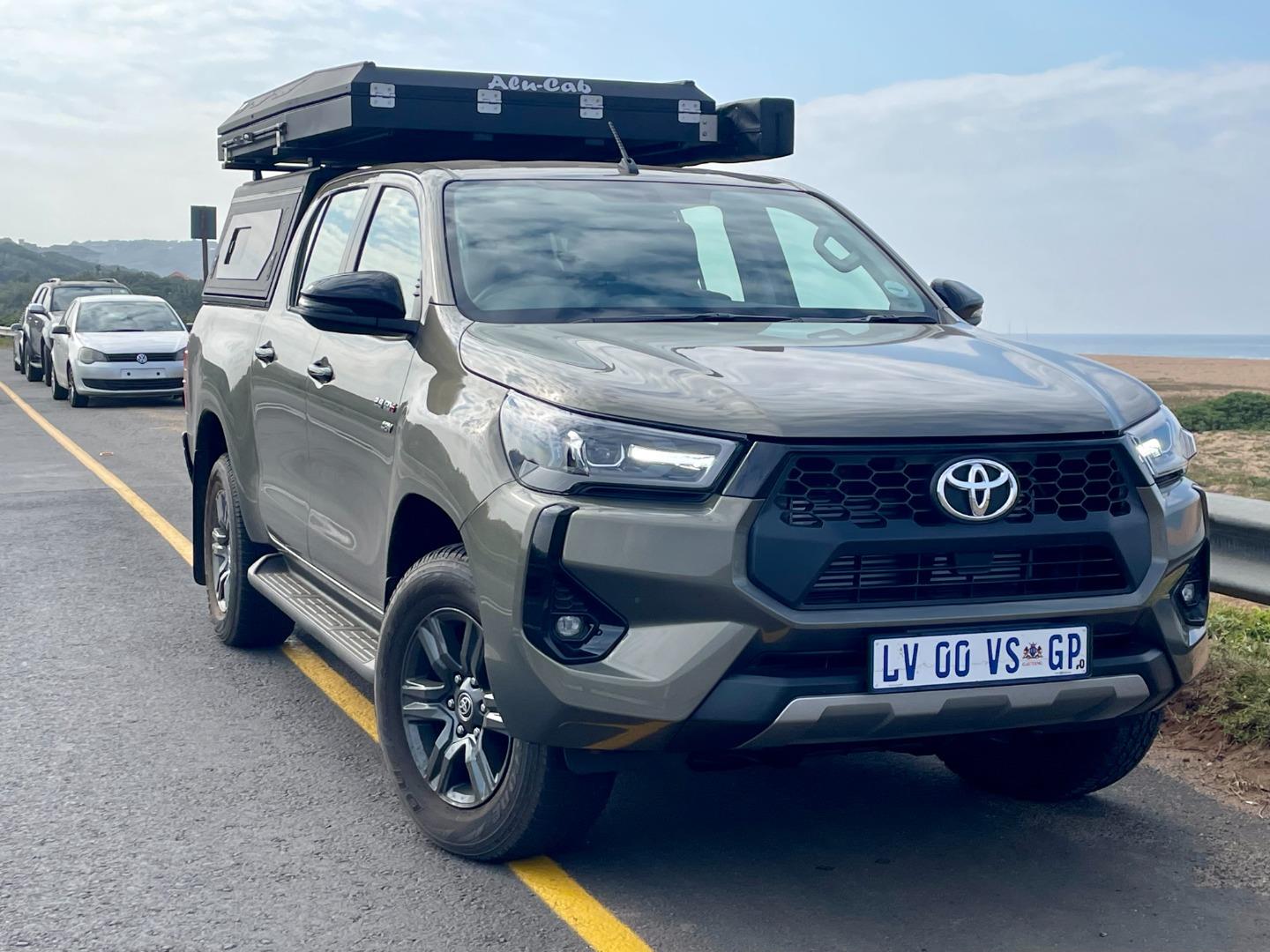
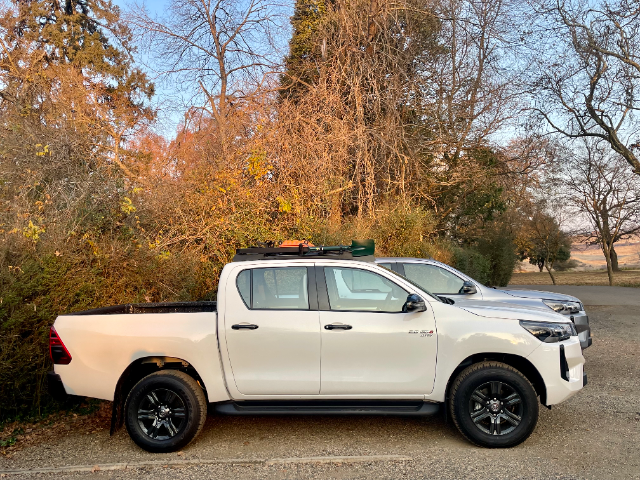
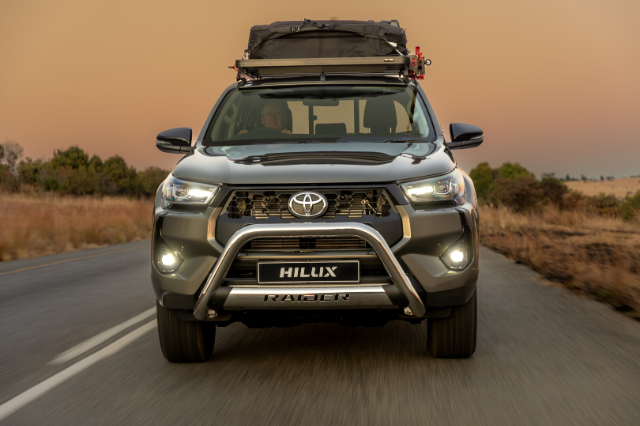
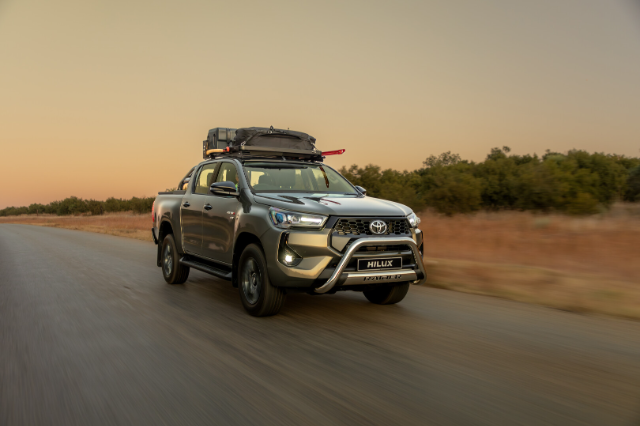
Upon our arrival at KZN airport, my co-driver and I stepped inside an accessorised Hilux fitted with a roof tent, heavy duty canopy and a massive fridge in the load bay. Toyota has recently joined hands with some of SA’s most prominent manufacturers of outdoor and off-road equipment and should you opt to have any of these fitted to your Hilux, you can include it with your car finance:
Collaborating with respected suppliers such as Ironman 4x4, 4x4 Megaworld, Front Runner, IVXIVBUSHINDABA, and Thule, the accessories range is competitively priced and offers convenience through Toyota dealers across South Africa and neighbouring countries. - Toyota SA
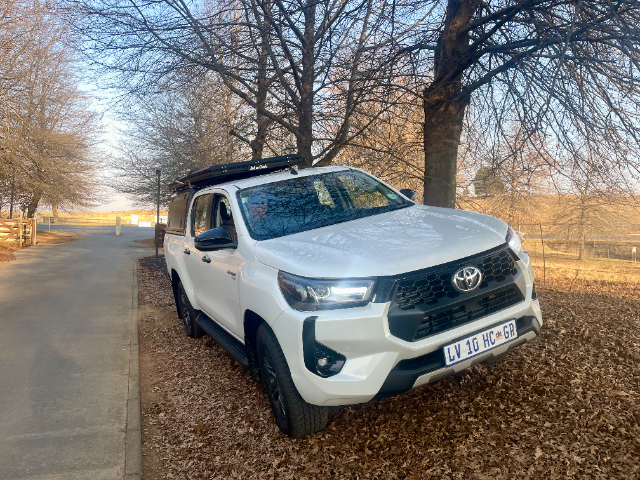
We continued on our launch route which offered up the best possible mixed-bag of KZN’s roads, from smooth to potholed tar, dirt, and dust. I could feel that the suspension had been tuned to feel more comfortable, and thanks to the motor generator, the stop-start system is probably one of the best in the business, restarting instantly when your foot leaves the brake pedal.
Acceleration feels more brisk, steering feels meatier, and the drive just seems more pleasant overall, living up to stringent Toyota driving standards with all the new systems on board. I was very impressed when a deep ridge in the road made our heavy Hilux bounce quite high but it just continued on without batting an eyelid, a testament to the level of tuning that the suspension has enjoyed under the hands of clever engineers.
Fuel consumption
We also opted to drive the Hilux in Sport mode for most of the way, and with all the heavy kit we were lugging along, fuel consumption came to a decent 10.3 litres per 100 km, which is not be be sneezed at, considering that the rooftop tent creates wind resistance and increases drag, which also affects consumption negatively.
Toyota claims a fuel-consumption figure of 7.4 litres per 100 km in the rear-wheel-drive 48V double cab models, and a range of 1080 km (when you don't have heavy accessories fitted!). In the 4x4 double cab 48V models, the claimed average consumption is slightly higher at 8 litres per 100 km.
What’s new in the Raider derivative?
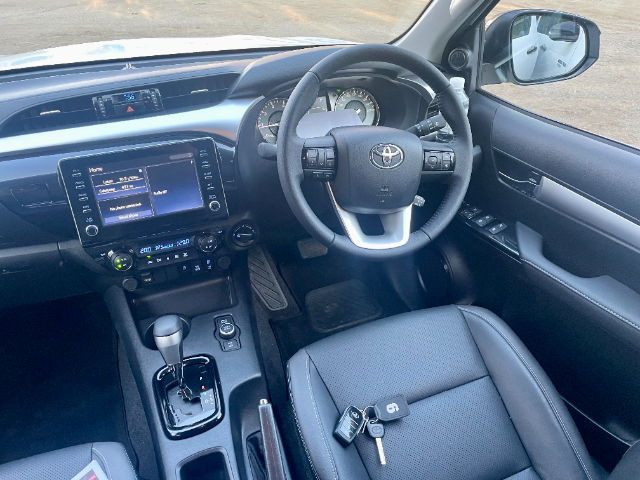
The Raider model has always been seen as a real value offering in the lineup with sufficient creature comforts, but it now features even more convenience kit such as retractable side mirrors (2.4-litre model) and full leather seats with 8-way power adjustment (in the 2.8-litre model), the aforementioned Multi Terrain Select system, push-start and smart entry, and one-touch power windows (in the 2.8-litre 48V models).
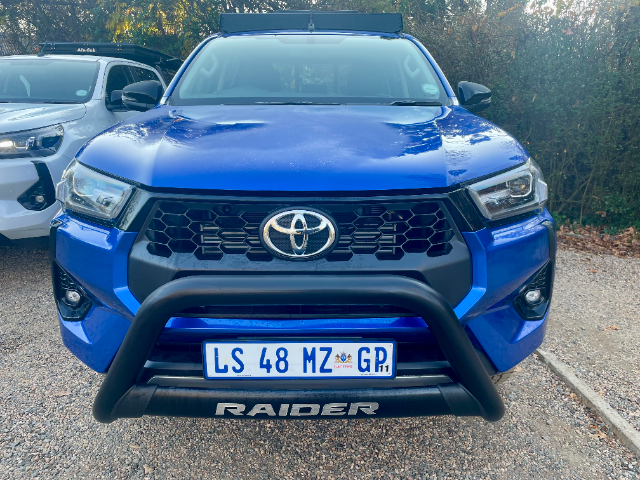
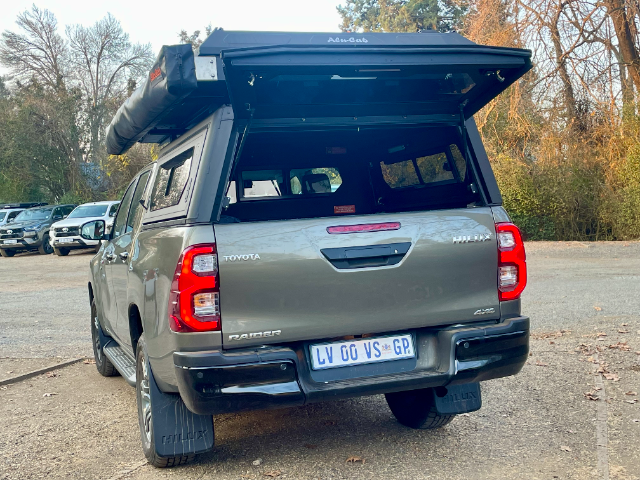
The Hilux exterior has also been refreshed with a redesigned front bumper featuring a matte-black honeycomb grille that underscores its tough demeanour. The black outside mirrors are standard on the 2.8 Raider models while the colour-coded doorhandles are standard on the 2.4 Raider model. At the rear, the bumper and tailgate handle are now black which also suits its personality better.
Does the hybrid system make the Hilux any less tough?
Toyota says no - the engine system has been tuned to adapt to the hybrid system, which in turn, aids the Hilux on the track less-travelled, and is robust enough to withstand whatever the roughest South African driver can throw at it. The power generated by the motor is said to also result in smoother acceleration on challenging surfaces and during hill descents, as the revs are lowered from 720 rpm to 600 rpm for better control. The 2.8-litre Euro 6D-compliant engine offers 150kW at 3400 rpm and 500Nm between 1600 and 2800 km.
Related: How much weight can the Hilux carry?
Can you still cross rivers in your mild-hybrid Hilux?
Yes, you can; Toyota says they waterproofed the 48V battery and converter, and adapted the Hilux in such a way that you can still happily cross bodies of water up to 700mm, as before. All 48V Hilux and Fortuner models feature Toyota’s Multi-Terrain Select system for the best ride and stability control settings on whatever surface you find yourself on.
Buying used? Read our Toyota Hilux 2.4 GD-6 double cab Raider auto(2022) Review
Verdict
Driving the mild-hybrid Raider with a number of leisure accessories fitted, highlighted its skill of adapting to its environment. You never need to make corrections to the steering wheel, the Hilux didn't feel overly top-heavy, and even when faced with challenges, the Hilux doesn't flinch; it just powers on through, but never at the expense of passenger comfort.
Toyota Hilux Raider Pricing
At first I thought the new tech- and spec-filled hybrid Raider model would cost north of R900 000, so I was pleasantly surprised when the media presentation revealed a price tag of R784 500 for the rear-wheel-driven double cab mild-hybrid model. The range-topping 4x4 Raider model we drove costs R876 600.
See the rest of the Raider pricing below:
Extra Cab: | |
Hilux Raider 2.8 GD-6 RB 6AT | R587, 200 |
Hilux Raider 2.8 GD-6 4X4 6MT | R563, 200 |
Double Cab: | |
Hilux Raider 2.8 GD-6 4x4 6MT | R612, 100 |
Hilux Raider 2.8 GD-6 RB 6AT | R633, 200 |
Hilux Raider 2.8 GD-6 4x4 6MT | R684, 800 |
Hilux Raider 2.4 GD-6 4x4 6AT | R716, 300 |
Hilux Raider 2.8 GD-6 RB 6AT | R769, 900 |
Hilux Raider 2.8 GD-6 RB 6AT 48V | R785, 400 |
Hilux Raider 2.8 GD-6 4x4 6AT | R858, 600 |
Hilux Raider 2.8 GD-6 4x4 6AT 48V (driven on launch) | R876, 600 |
ENDS