South African rookies dazzle at 46th annual Dakar rally
A whirlwind trip to support the local efforts at the 2024 Dakar Rally in Saudi Arabia ends with a positive takeaway after a challenging 2024 event that saw 5 cars fielded under the Toyota Gazoo Racing South Africa banner.

It's bright and early on a Wednesday morning as I walk out onto the apron at Lanseria Airport. A Dassault Falcon 50X awaits me, ready to whisk me off to Saudi Arabia, where I am to attend the final few days of the legendary Dakar rally, arguably the world's toughest off-road race. This 46th running of the event under the ASO banner is the 5th time that the event has taken place in the Kingdom of Saudi Arabia.
Related: New Dakar Hilux dons black livery!
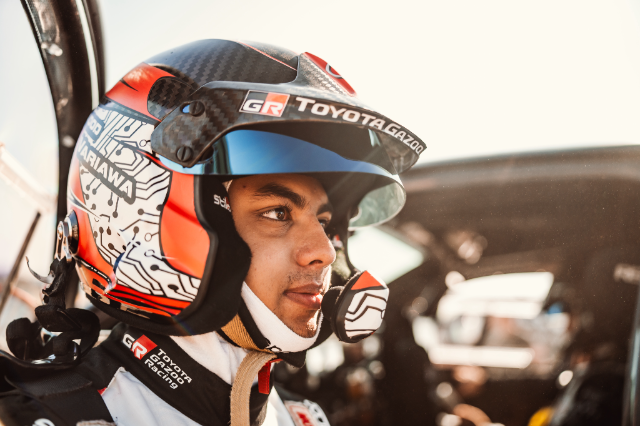
South Africa has a vested interest in the event, with Toyota Gazoo Racing South Africa having entered the event every year for more than a decade, enjoying several victories along the way. For the 2024 year, TGRSA fielded a team of 5 cars, three of which were crewed by South African drivers and navigators. Former Dakar winner Giniel de Villiers and co-driver Dennis Murphy would be joined by rookie drivers Guy Botteril and Saood Variawa and their respective co-drivers, Brett Cummings and Francois Cazalet.
The two other cars, specially prepared Toyota GR IMT Hilux EVO T1Us, were to be piloted by young hotshots in the form of Brazilian Lucas Moraes and USA's Seth Quintero. Both of these drivers impressed last year, and this year, they'd have the backing of Toyota Gazoo Racing and the support of the local SVR talent. Alongside them, providing navigational support would be Armand Monleon and Dennis Zenz.
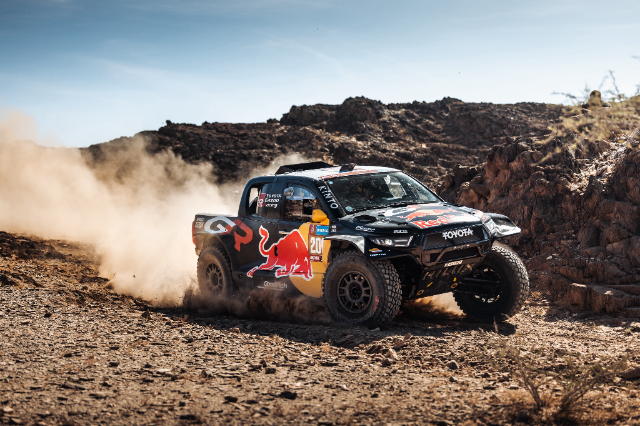
New Hilux EVO T1U
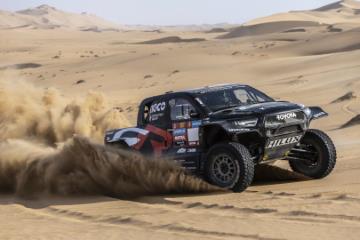
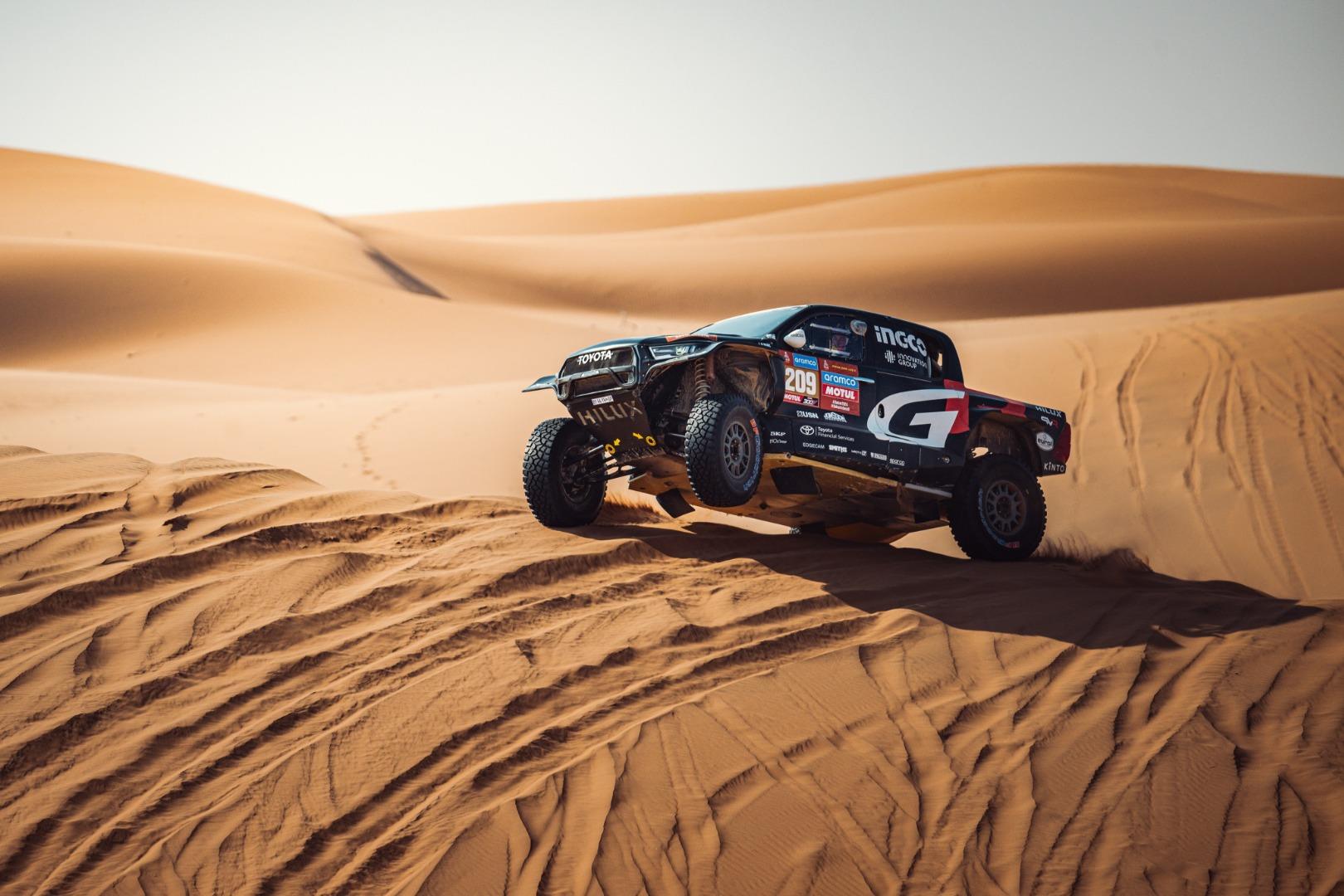
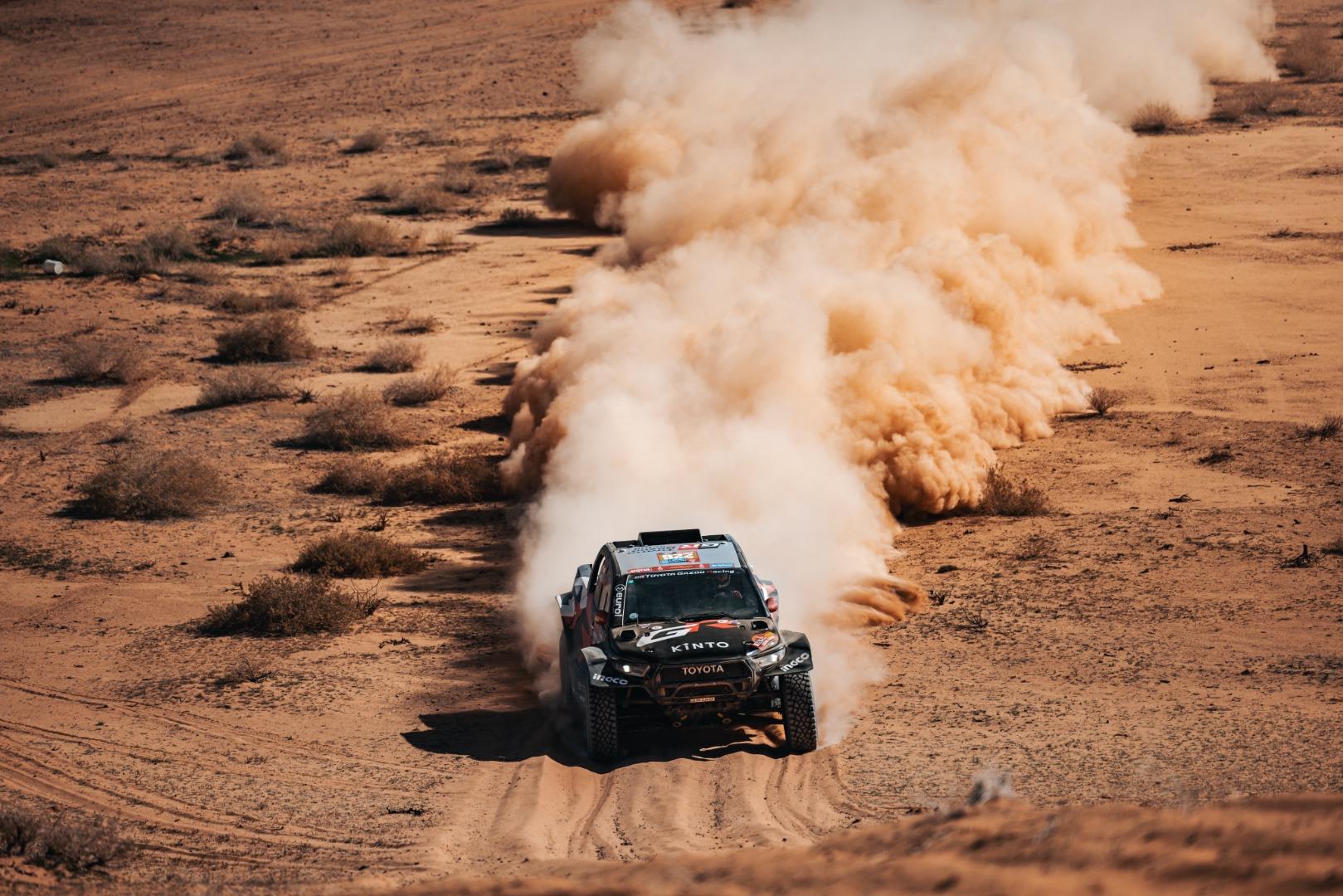
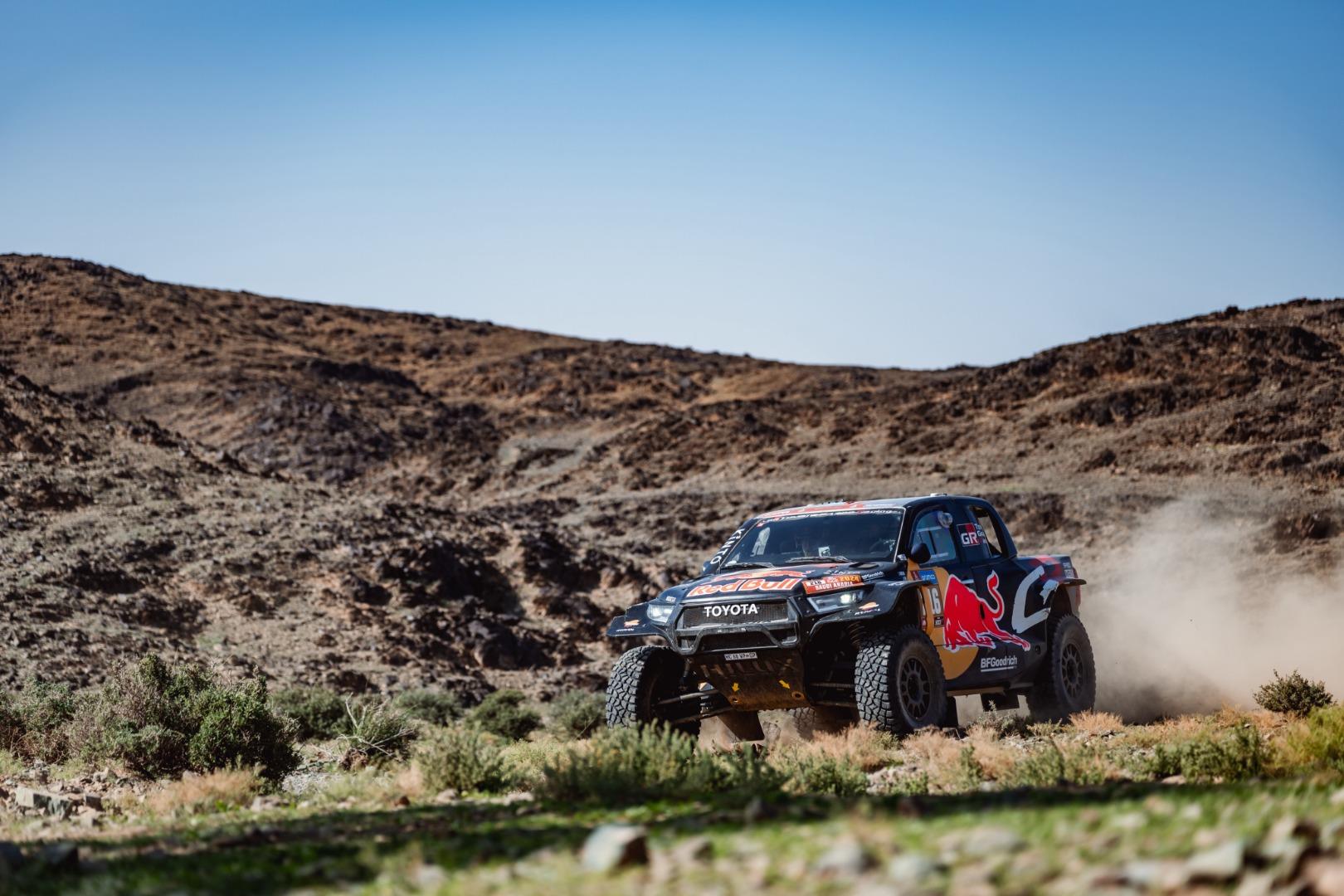
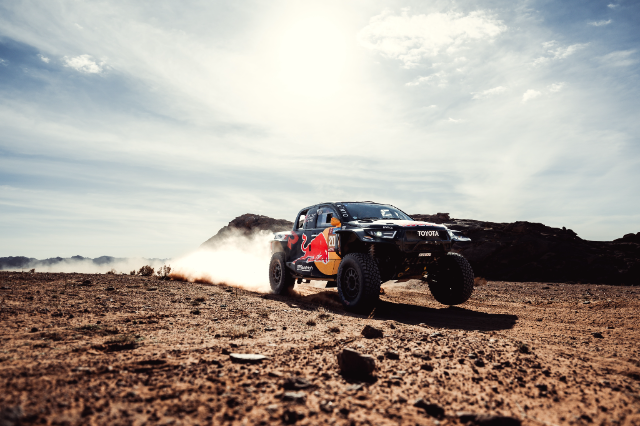
2024 saw the Dakar debut for the new EVO version of the famed Hilux rally-raid vehicle. 100mm wider than before with improved cooling and a revised suspension, the vehicles are still powered by the 3.5-litre twin turbo V6 from the Land Cruiser 300, producing a controlled 264 kW and 620 Nm of power. The new composite body rests on a tubular space frame and weighs in at 2010 kg, the minimum dry weight as allowed by the FIA. The power is sent to all four wheels through a Sadev 6-speed sequential gearbox with ceramic twin-plate clutches and routed to corners through three limited slip differentials.
While not a production vehicle, the EVO T1U still shares a few cosmetic parts from the standard, production Hilux while numerous mechanical components are lifted straight from the assembly line. Much of this contributes to the reliability of the World Rally Raid Championship (W2RC) contender.
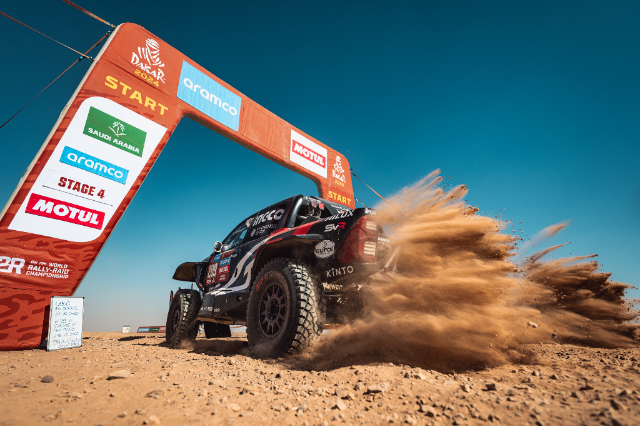
Strong starts
The Dakar starts with a prologue stage that doesn't count towards the overall finish but rather determines the starting order for the first stage. Quintero made his mark early, finishing second in the prologue, while Moraes/Monleon placed 16th and second highest of the 5 TGR entries.
De Villiers and Murphy were the cream of the TGRSA crop on stage one, coming in third fastest, while Moraes/Monleon finished 6th, and the duo of Botterill/Cummings finished up in 7th. 18-year-old Saood Variawa drove the Toyota onslaught home by bringing his Toyota Hilux EVO T1U back in 11th place. Quintero dropped slightly further afield but still ensured that all five vehicles finished the first stage in the top 20.
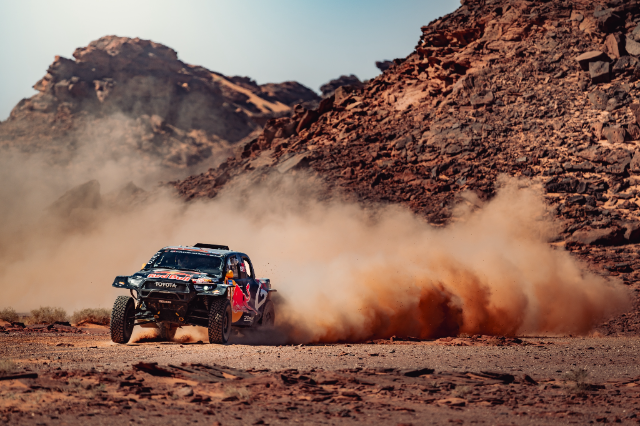
The good form continued in stage 2 with commendable results from Quintero/Zenz, finishing third in the stage, followed by Moraes/Monleon, who managed a 9th-place finish. The South African contingent remained within striking distance, but Variawa/Cazalet struggled with the dust and could only manage a 36th-place finish for the second stage.
Moraes, spurred on by his teammate's performance, took the outright stage win on the third stage, clearing his next nearest rival by only 9 seconds after the gruelling and hazardous 437 km stage. The stage proved tough for the TGR team, with De Villiers and Quintero struggling with multiple punctures that forced them to stop and remedy the situation. As a result, they slid down the order and only just managed to finish within the top 20 for the day.
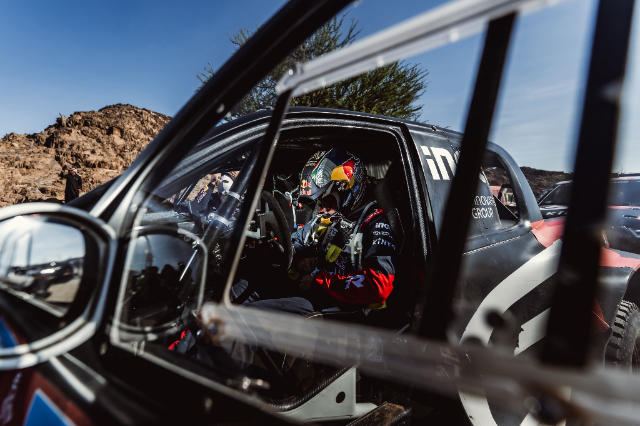
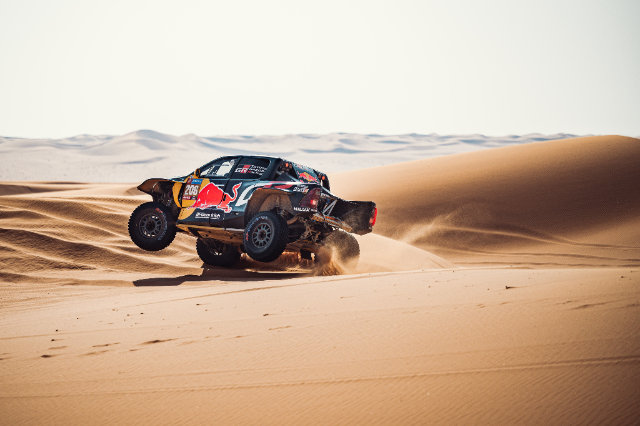
The fourth stage would be the undoing for Quintero, though, as the short 299 km stage proved tougher than anticipated. An oil feed issue resulted in the duo having to wait for the service vehicle, negating their chances of an overall win. Still, the duo would be able to contend for stage victories, earning them points in the W2RC championship and allowing them to provide essential backup for the rest of the team.
Second half charge
Botterill, who had initially found the sand dunes of the Empty Quarter challenging, soon found his rhythm and systematically climbed up the rankings, posting commendable results in the stages that followed with a event-best finish of 5th in stage 9. De Villiers, well-versed in the challenges of the Dakar, stuck to his game plan and posted consistent results despite some obstacles along the way.
Variawa showed steady improvement in the later half of the race, progressively improving his stage finishes and ensuring that the GR Hilux EVO T1U came home in one piece at the end of the day. His best stage finish came in the 11 stage, where he and co-driver Cazalet finished in 5th position.
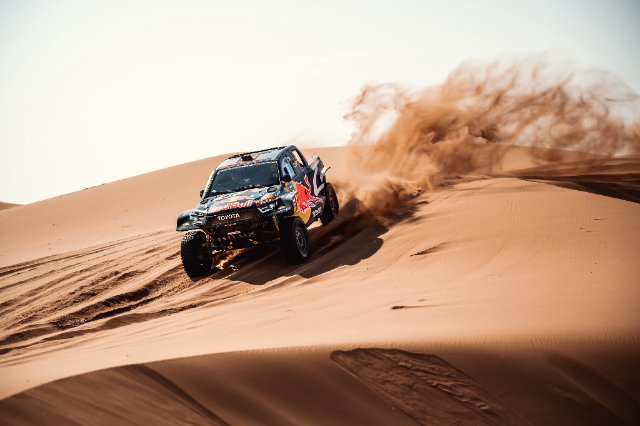
Quintero and Zenz were determined to show their pace and managed multiple top 10 stage finishes, with a 5th in stage 8 standing out as their highest finish in the wake of their misfortune. It was short-lived, and in stage 10, a hard landing saw the duo do significant damage to their GR Hiux EVO, bending the chassis and dislodging their engine, snapping the suspension in the process.
Moraes' fine form continued with a string of top 10 stage finishes, and the pairing was all set for a podium finish, but it was on stage 11 that disaster struck. A broken damper and fractured wishbone saw them stranded for an unfortunate amount of time. This had a ripple effect as both Botterill and De Villiers stopped to assist, hindering their progress. Ultimately, the damage was too severe, and Moraes would only finish in 100th on the stage, dashing any chances of a podium finish.
Toyota domination despite Audi victory
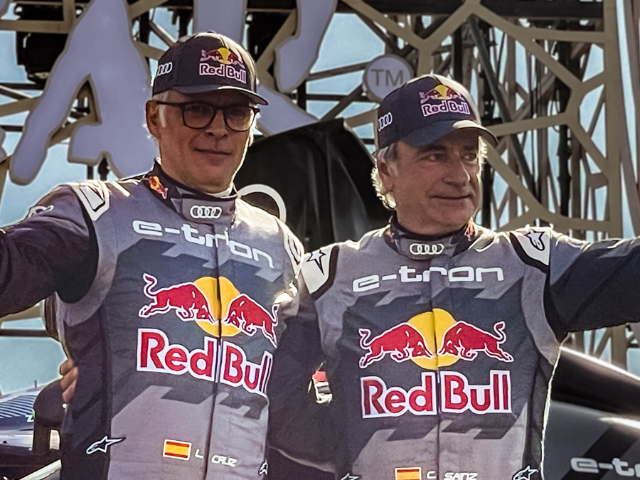
Ultimately, it was seasoned off-road veteran Carlos Sainz who claimed the overall win for the 2024 Dakar, piloting his Audi RS Q e-tron to the finish line 1hr20 ahead of runner-up Guillaume de Mevius in a South African-built Toyota Hilux T1+. Sebastian Loeb rounded off the podium, finishing third in his BRX Prodrive Hunter.
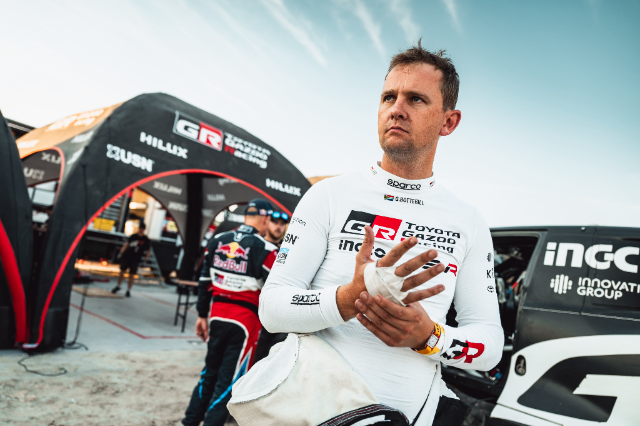
The Toyota Gazoo Racing South Africa team saw Guy Botterill finish in 6th place on his debut outing, making him the highest-ranked rookie for the 2024 race. Geniel de Villiers followed closely behind in a commendable 7th place. Lucas Moraes secured a top 10 finish by placing 9th, while 18-year-old Saood Variawa placed 17th in his debut. Quintero, out of the running early on, would be classified in 100th.
The real success is seen in the number of locally-built Toyota Hiluxes that placed in the top 10, with no fewer than 6 Hiluxes making an appearance.
The future of Dakar for Gazoo Racing South Africa
The impressive performance from both rookies, Botterill and Variawa, cement the future of Dakar contention for the South African Toyota Gazoo Racing efforts. Completing the Dakar requires a metered approach to the event, balancing speed with preservation. The reliability of the Toyota GR Hilux EVO can not be underestimated in this either.
Under the careful guidance of the experienced de Villiers, both are in a great position to be in contention for the title in the coming years. As Giniel de Villiers draws closer to the end of his career, with 2025 touted to be his last Dakar, all eyes will be on Botterill and Variawa, who have successfully transitioned from rally and circuit racing into this unique discipline.