Passing the Torch in Rosslyn: Chery Takes the Reins of a South African Automotive Icon
The South African automotive landscape is shifting beneath our feet. Today marks the official launch and handover celebration of the historic manufacturing facility in Rosslyn to Chery International. In exactly one year, this sprawling complex will finish its transition period and roar back to life as a multi-brand manufacturing powerhouse.


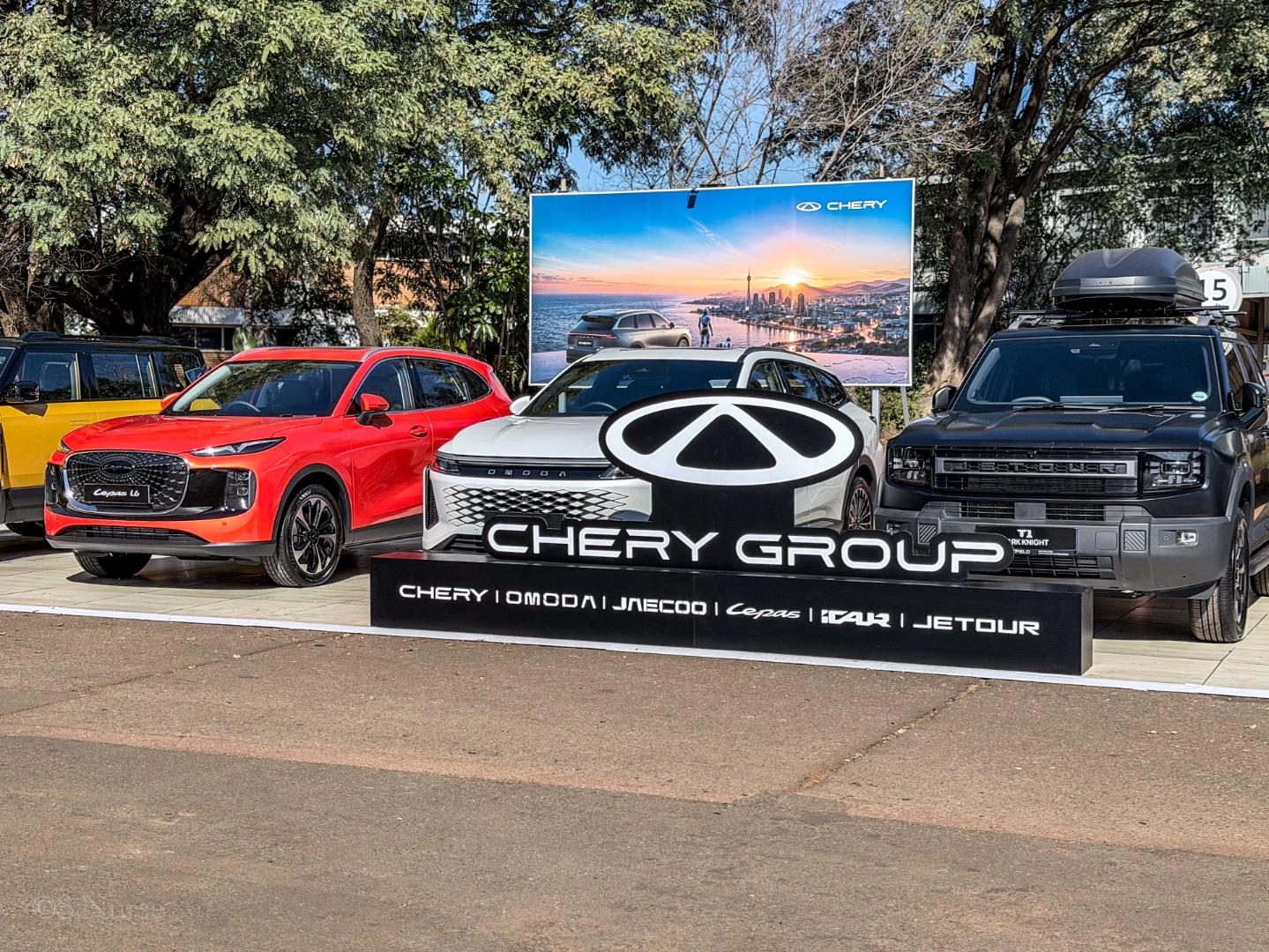

For decades, Rosslyn has stood as a symbol of South Africa’s industrial muscle. Now, it becomes the launchpad for Chery’s next aggressive expansion phase. The Chinese automotive giant has confirmed that this plant will soon build an impressive, multi-brand localised portfolio: the Chery Cross, the rugged Jetour series, the luxury-oriented Lepas division, and highly anticipated Jaecoo models.
The 60-year legacy
To understand the sheer magnitude of today’s acquisition, one must look at the history embedded within these factory walls. Formerly the beating heart of Nissan South Africa, the Rosslyn facility boasts a production lineage that spans more than half a century:
The foundation (1966–1973): Nissan’s South African roots took hold in 1966 through the localised assembly of Datsun vehicles from complete knock-down (CKD) kits. Recognising the region's immense potential, Nissan formally commissioned and opened the permanent Rosslyn plant in 1973.
Legends of the road: The factory became legendary for engineering products tailored explicitly for the unique demands of South African buyers. It gave rise to the iconic NP300 Hardbody workhorse and the NV350 Impendulo (2014), a vehicle purpose-built to serve the local minibus taxi industry.
The half-ton king: In 2008, the facility began rolling out the NP200. For 16 years, it reigned supreme as the country's undisputed favourite small bakkie before production wrapped up in early 2024.
Modern foundation: As recently as 2021, Nissan injected a massive R3 billion investment into upgrading Rosslyn’s infrastructure to support the production of the current-generation Navara, rendering the facility highly sophisticated, automated, and ready for modern vehicle architectures.
Changing of the guard: Faced with shifting global corporate strategies and local economic pressures, Nissan announced its transition to a pure import/distributor business model in South Africa. This left a state-of-the-art facility looking for its next chapter—a chapter that the Competition Tribunal has officially approved for Chery International to write.

The ghost in the machine: Rosslyn as a liminal space
In the days leading up to the event, I had the rare privilege of visiting the facility and taking a brief but illuminating tour. There is a distinct, unsettling echo that accompanies a walk through an empty industrial giant. Standing inside the cavernous production halls of what was, until very recently, the beating heart of Nissan South Africa, you are forcibly confronted by a profound sense of liminality. A liminal space is a threshold—a place of transition, caught awkwardly between a chapter-long past and an unwritten future. It is a space defined not by what it is, but by what it no longer is and what it has yet to become.
Right now, the facility is being resurrected and adapted to reflect a broader shift in the automotive market.
The silence inside some of the production halls is heavy, a stark contrast to the decades of mechanised order that came before it. Where the deafening chorus of pneumatic tools, heavy stamping presses, and the rhythmic clanking of assembly lines once lived, there is now an eerie, hollow stillness. Dust motes dance in the shafts of sunlight cutting through the high, industrial windows, settling on concrete floors that were once scrubbed clean daily by hundreds of factory workers.

The most jarring sights are the scars left behind by the building's former identity. On the main walls, you can still see the distinct, "ghosted" outlines of the Nissan logos. The physical badges themselves have been pried away, leaving behind clean patches of paint framed by years of industrial grime—faded silhouettes of a corporate empire that has packed up and moved on. It feels less like a factory and more like an archaeological site of modern industry. You can almost feel the collective memory of the thousands of hands that built South Africa’s favourite bakkies, left suspended in the air.
Yet, liminal spaces are not just about decay; they are about potential.
As you stand in the quiet footprint of a departed Japanese giant, you realise you are witnessing a literal passing of the torch. In twelve months, these empty halls will belong to the future. The silence will be broken by a new language of manufacturing as Chery, Jetour, Jaecoo, and Lepas retool the lines. Today, signs of the future are there. Parking lots filled with Chery products, new signage, and the odd worker grinding away or moving items from place to place as the facility slowly reshapes into its future.
Employment
There will be some 692 Nissan staff members retained in the new facility. Chery claims that the facility will create a total of 3 000 jobs, target 50 000 units per year by 2028, and have 40% local content in its initial production phase, with a goal of higher local content as the plant establishes itself. At the event, Gauteng Premier Panyaza Lesufi addressed the media, praising Chery's commitment to the local market, calling for continued growth in the country's vehicle manufacturing sector.

A word from government
South Africa's Deputy President Paul Mashatile delivered a keynote address celebrating Chery's entry into local automotive manufacturing. During his address, which highlighted the government’s commitment to inclusive economic growth, the Deputy President explicitly aligned Chery's investment with the stringent national standards of the South African Automotive Masterplan (SAAM) 2035. He emphasised that Chery's local manufacturing expansion directly feeds into the broader strategic goals established by South Africa's overarching industrial policy, which sets highly ambitious benchmark targets for the country's automotive sector to meet by 2035:
Units per annum: Grow domestic vehicle production to achieve 1% of global output, which translates to a target of approximately 1.4 million units per year (up from historical levels of around 600 000).
Number of jobs: Double the total employment within the automotive value chain, raising the sector's workforce from roughly 112 000 to 224 000 jobs.
Local production elements: Aggressively elevate the industry-wide local content threshold to 60% (up from the baseline of roughly 39%).
By initiating its operations at a 40% local-content rate, Chery establishes a foundational footprint that will scale toward the legislated 60% national standard as local tier-component supply networks mature.

What’s coming to the line?
With a one-year runway before vehicles begin rolling off the line, the local industry is buzzing with anticipation. Buying an active automotive facility means inheriting a ready-made ecosystem. Chery has committed to retaining many of the skilled manufacturing workforce previously employed at the site, with years of deep experience in body-on-frame and complex unibody assembly—an invaluable asset for Chery’s diverse lineup.
By shifting from an import-only model to a localised production strategy, Chery will bypass heavy ad valorem import duties and escape international shipping vulnerabilities. This cost advantage will likely translate into incredibly aggressive, highly competitive pricing on dealer floors.
Here is how industry experts project Chery will utilise Rosslyn's immense real estate:
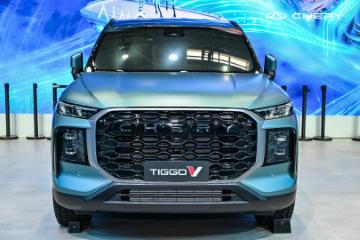
Chery Tiggo Cross: While not officially confirmed, we can expect the Chery Cross to be built locally, and lead the volume charge, looking to take first place in the monthly sales charts for passenger vehicles locally.
Jetour T Series: The immense demand for boxy, adventure-ready SUVs like the Jetour T2 means local assembly lines can keep up with domestic appetite without relying on maritime logistics. This may also mean that Jetour works more closely with Chery locally, having been independent so far.
Jaecoo J5: Localising the Jaecoo brand solidifies South Africa as the foundational Right-Hand Drive (RHD) production hub for export into Sub-Saharan Africa. The J5 will form part of the core production line-up at Chery Group’s first South African manufacturing plant. Both ICE and NEV derivatives are planned for local production, giving South African customers a broader choice of powertrains
Lepas: The newly introduced Lepas division will allegedly have a model built in Rosslyn in the near future.

A new era
Chery’s rise in South Africa has been nothing short of meteoric. By planting deep industrial roots in Rosslyn, they are making it clear that they are no longer just visitors to our market—they are building their future here. For South African car buyers, this means more choices, more localised jobs, and a highly competitive market that pushes every brand to bring its best. I feel privileged to be here at the start of it all, and regardless of what critics say, Chery has put its money where its mouth is.