Opinion: Stop Calling It Innovation. It’s a Party Trick With a Press Release
Remember when car innovation meant safer brakes, better fuel economy, and the democratisation of features previously reserved for flagship products? Those were the good old days. Today, the auto industry has discovered that the fastest way to sell a car is to make it do things no car should ever do, like fly.



Somewhere in a glass boardroom, a car maker’s marketing team is very pleased with itself. Their new car can float, hop, or possibly fly, and the press release and the event that followed went viral. We’ve now seen this on our phones before starting our day: crawling to work on the highway or through the city, minutes of stop-start misery, while our definition of the future is getting there without destroying a tyre on the latest poorly maintained piece of road. A flying car is indeed tantalising at 7 am when you're being cut off by a taxi on the N3, I get it.
The Jetsons have arrived
So let’s ask the simple question: Will I ever be allowed to fly my car to work? Almost certainly not. Aviation and road laws would have to be rewritten first. Can you imagine the untold chaos of a mid-air car crash, compared with a regular bumper bash on the N1? Does Elon Musk actually market the product as a flying car? Not really. But the implication, and the audience’s understanding, is that we have one, just as we had a supposedly revolutionary bakkie in the controversial Cybertruck.
The Cybertruck may have faltered commercially, but buried under the stainless steel is actual innovation: a 48-volt electrical system that shrinks wiring harnesses and reduces manufacturing complexity. The tragedy is that real engineering, better thermal battery management, structural casting, or lower drag coefficients, doesn't go viral on TikTok. To get attention, quiet progress gets wrapped in a spectacle. When Elon's lead designer "accidentally" broke the supposedly ultra-strong window of a pre-production example with a metal ball during the launch event, the internet went wild, signalling a successful pre-launch campaign. That campaign led to hundreds of thousands of refundable $100 pre-orders, providing a healthy capital injection and a surefire way to bolster your share price.
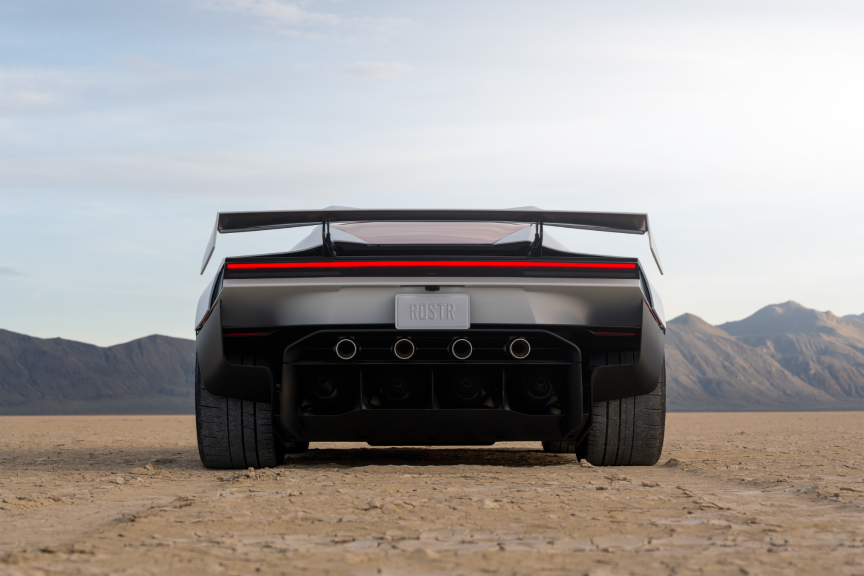
Tesla has spent years dangling a flying car in front of us. Recently, the Roadster left the ground during a demonstration in Texas. It wasn’t a sustained flight, the car isn’t approved for the air or for public roads, and I cannot see a world where we're allowed to use the Roadster's party trick on public roads. The internet doesn't care about practicalities. To the average viewer, it looks like a flying car, and Elon Musk is an alien genius. The share price spiked, but only a bit, and then dropped again because investors are now wise to Tesla tricks. There is very little in the way of production volumes, confirmed pricing and the introduction is slated for 2028. As quickly as the Roadster flew across our phone screens, it disappeared. Viewers, as is apt in the age of instant gratification, moved on to the next thing. In a consumer economy where 30 seconds is all the attention you get, a 2028 introduction date is millions of short-form videos away.

For all of Elon's intellectual and scientific genius, it is perhaps his ability to market products and companies that is his greatest strength. He doesn't need to make a car that flies everywhere; it just needs to fly long enough for our social media-imposed short attention spans to consume the video online, so we all think, "Wow, we finally have a flying car," without applying much critical thinking to the true implications of such an invention. I'm as guilty as anyone in this regard, but as part of my job, I have to question why and how motoring news affects all of us, and scratching the surface just a bit reveals that this is nothing more than a marketing stunt.
But the thrusters are for acceleration?
I hear the rebuttals already, the fact that the thrusters are not only intended to allow for the car to fly for short bursts, but they're also there to assist with spectacular acceleration, which the American brand claims can allow the car to get from 0-100km/h in under 1.0 second with the optional SpaceX package, and a comparatively pedestrian 1.9 seconds as standard, which is close to the practical limit for a road car on standard tyres without thrusters. To put that into perspective, I recently drove the new Porsche 911 Turbo S. Its 2.5-second 0–100 km/h sprint was already borderline violent, a level of performance almost impossible to exploit responsibly on public roads. Now layer on thrusters to push sub-1.0-second launches, and you move past engineering achievement into pure novelty. The first few times you drive the car, it will be unlike anything you've ever experienced, like being attached to a missile, but after that, just like every other performance EV I have driven, it is likely to become a one-trick pony.
I've never connected with performance EVs on an emotional level, but I really enjoy EVs for commuting and daily driving. That is where Tesla uses its marketing to make things exciting for prospective buyers, because the idea of a good commuter doesn't get people talking, but a flying car with a SpaceX package does. I had non-car people I know send me the clip, asking if it is real, and yes, it appears that the demonstration was very real indeed, and spells yet another high-profile marketing campaign launch success for Tesla.
BYD's previous stunts
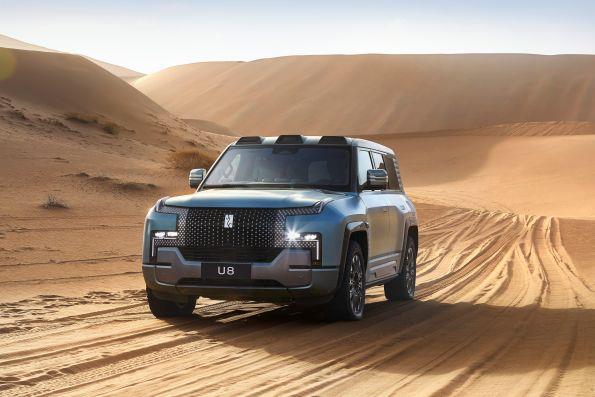
BYD’s Yangwang U8 can paddle through floodwater. Its Yangwang U9 can leap off the ground like an electric frog. We then ask, "Can I cut across the nearest dam to shave ten minutes off the commute?" Probably not, and the traffic officer will have opinions. And jumping a pothole? I was once fined for popping a wheelie on a motorbike, when only one wheel left the ground. I can only imagine how an automotive ollie would go down with the authorities.
Let’s be clear about what this is. It isn’t engineering for practical innovation. It’s electric vehicle makers fighting for attention, and a range figure won’t get you a viral clip. A car bouncing like a lowrider, or floating like a pool toy, looks fantastic on TikTok. Meanwhile, affordability continues to worsen amid record fuel prices and inflation. We have cars that can leave the ground at a demo, and a generation of young South Africans who can’t afford personal mobility, let alone a car that can fly, swim or jump.
One big distraction
When BYD floats a luxury SUV across a lake, nobody creeping through morning traffic in Soweto or Stellenbosch is taking notes. They aren't looking for amphibious transport; they're trying to figure out how to stretch a fuel budget against relentless inflation and interest rates.
Think about what most South African drivers actually need.
Here’s the real list, and it has nothing to do with flying:
- Mobility that’s affordable: If a car can fly, float, or hop, surely one everyone can afford is within reach.
- Running costs that don’t eat the grocery budget: Fuel and electricity prices are already brutal. A bank balance that survives the month is more impressive than any amphibious car.
- Safety at the entry-level: One of the big problems we face is that many entry-level cars are not safe, a fact usually justified by "Well, it's safer than public transport," which might be true, but is entirely besides the point.
Innovation should solve something
The problem isn’t that innovation is happening. It’s that innovation is measured by how well a car can impersonate an amphibian or an aeroplane, when it should be measured by whether it meaningfully improves how people get around.

We keep buying the tickets
Let’s not pretend we’re innocent bystanders. We share the videos. We argue about specs in WhatsApp groups. We gasp at the flying car as if it’s the moment we’ve been waiting for. Every click tells carmakers that they're onto something.
So here’s my modest proposal. The next time a manufacturer unveils a vehicle that can swim, hop, or fly, ask the only question that matters: how will this help fix the mobility problems we have today?
If the answer is no, treat it for what it is: entertainment and marketing. I understand escapism has its place, but these are carmakers, not Netflix. We’ve got bigger problems to solve.