
Lexus IS (2021) First Drive Impression: Going against the current
Sporting a very distinctive new look, up-to-date technology and sparkling handling dynamics, the new Lexus IS has the potential to pose a serious challenge to the (predominantly German) compact executive saloon establishment. Buyers will need some mental recalibration, though, because the all-hybrid line-up makes the new IS a very different take on the usual formula.


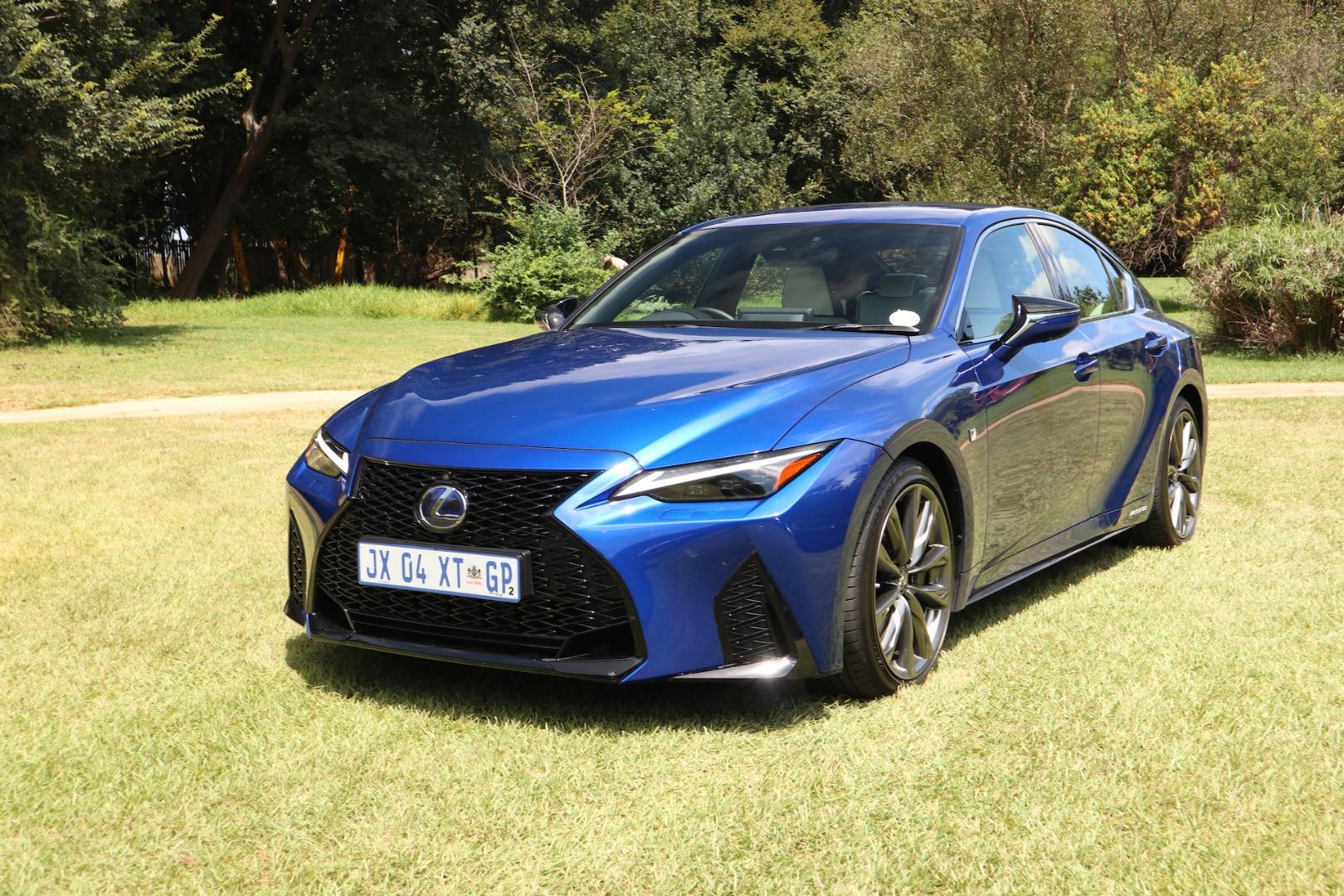
From the moment when the first-generation Lexus IS arrived on the world market in 1999, it was the keen driver’s choice in the Lexus sedan range, thanks to its modest size, and classic RWD handling to go with its sweet-spinning 6-cylinder engines. But the times are a-changing, and subsequent to the previous generation’s eventual availability with a turbo 4-cylinder and a hybrid option, the entire (local) range has moved to hybrid power for its latest iteration.
This is in line with Lexus’s (and parent company Toyota’s) stated mission of expanding the availability of hybrid technology throughout their model ranges. The new IS heralds the next step in this medium-term plan, and is a serious attempt to blend the traditional IS attributes of refinement and excellent handling with the high efficiency inherent in hybrid drivetrains.

It's hybrid or nothing
It’s a puzzling move, though – especially as the previous-generation struck a particularly sweet balance with the 2.0-litre turbo/8-speed automatic combination, while the 3.5-litre V6 was characterful and sounded lovely. Lexus is certainly aware of the demand for an IS with some extra spice in the mix, because they offer an IS 500 variant with a 5.0-litre V8 rated at 352 kW in North America already, where it’s widely acclaimed for its engaging driving experience.
But, seeing as we’ll be limited to the hybrid drivetrain, at least for the time being, let’s see what’s on offer. There’s a naturally-aspirated 2.5-litre 4-cylinder mounted lengthwise, driving the rear wheels through an electrically-assisted constantly-variable transmission (CVT), in a setup known as Lexus Hybrid Drive. The batteries are mounted under the boot floor, and there’s enough electrical power on tap to allow some low-speed electric-only driving.

The petrol engine produces 133 kW and 221 Nm, with the electric motor contributing the rest of the total system output of 164 kW. This is good for a 0 – 100 km/h sprint in a claimed 8.7 seconds and a (likely governed) top speed of 200 km/h. Not terribly sluggish, but well off the pace of its predecessor’s 2.0-litre turbo derivative (and its competition). There is a positive here, though: the electric/petrol changeovers are seamless and almost imperceptible, the regenerative braking is well-calibrated to blend nicely with the friction brakes, and the CVT makes for generally smooth (if not quite energetic) operation.
The other upshot is very good fuel efficiency, with a claimed average consumption as low as 5.2 ℓ/100 km – a number which should be attainable in the hands of a conservative driver who's familiar with a hybrid's optimal driving style. Otherwise, real-road mixed cycle driving should be around the 7 ℓ/100 km mark, especially when driven with the verve encouraged by its expertly-tuned chassis.

The other good things
While the drivetrain may be a bit uninspiring, the rest of the driving experience is a genuine delight. For this, we can thank spring- and damper rates which are tuned for a near-perfect ride/handling compromise (strongly controlled but always supple, even without the F-Sport’s fancier adaptive suspension), steering that is linear in response, resistance and feedback, and a stiff body shell.
Based on the outgoing model’s platform, every body panel is new and optimised for rigidity, aerodynamic efficiency, and weight saving. It’s also proportioned a bit differently, with wider tracks (45 mm in front and 50 mm at the rear), reduced aerodynamic drag, and a lower roof and centre of gravity.

Striking restyle
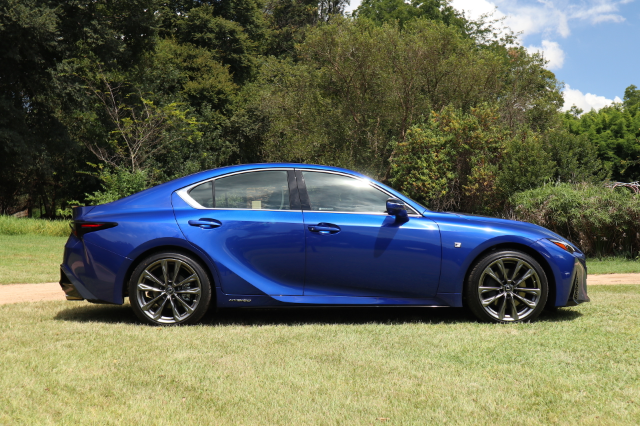
To go with its updated skeleton, the Lexus IS is also wrapped in all-new clothes. The bonnet- and boot lines are lower than before, shoulder lines and creases are emphasised, and increased use of horizontal styling elements (particularly in the lighting department) makes it look wider still.
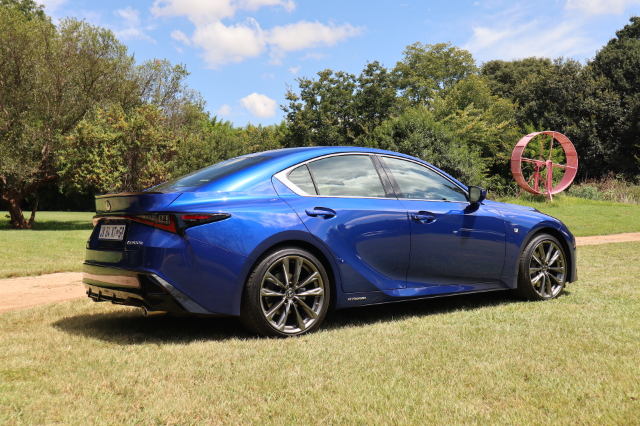
Of course, there’s a Lexus spindle grille up front, now with a new 3D design, which combines neatly with the new sliver-like LED headlamps. Moving around to the rear shows exaggerated haunches over the wheels, a fastback profile leading to an abrupt rear end, and a thin LED strip to link the taillight clusters. The IS’s styling perhaps not to everybody’s taste, but it does look intriguing in the metal and plastic, and is certainly refreshingly different to the de facto segment leaders.
Related: Shop for new and used Lexus IS cars for sale here.
Three trim levels
In traditional Lexus fashion, even the base-trim IS 300h EX is very comprehensively equipped at its list price of R 841 300. Dual-zone climate control; a partially-digital instrument cluster; a new 10.3-inch colour touchscreen infotainment system with smartphone mirroring, 10 speakers, and navigation; cruise control; keyless entry with pushbutton start; heated and electrically-adjustable front seats; a rear-view camera and parking sensors at both ends; automatic headlight- and wiper operation, rear cross-traffic alert and -braking; and 10 airbags all reside on the basic IS spec sheet.

The middle ground is covered by the IS 300h SE trim level, which retails at R 899 800. It upgrades the headlights to include high-beam assist, exchanges the EX’s artificial leather for the real thing, and gains a host of other safety- and comfort add-ons. Added safety upgrades include blind-spot monitoring, surround-view cameras, adaptive cruise control with lane-keeping assist, pedestrian- and cyclist detection, and pre-collision warning and -braking. Luxury boosts in the SE include a 17-speaker Mark Levinson audio system; ventilated front seats; a memory function for the driver’s seat; and a standard-fit sunroof.

At the top of the range, the F-Sport (R 916 100) looks a lot more assertive with its 19-inch alloy wheels with a darkened finish (as opposed to the EX and SE’s silver 18-inch items); and a bespoke styling kit with revised bumpers, side skirts, a discreet boot spoiler, and gloss-black trim accents. The F-Sport also features adaptive suspension for an even smoother ride and flatter cornering.

Mild cabin revisions
In contrast to the relatively dramatic exterior re-skin and wholesale switch to hybrid power, the new Lexus IS interior is clearly derived from the old one’s design, albeit with small yet significant improvements. The horizontal design theme for the dashboard and centre console carries over, giving an impression of width in the cabin, but the material quality takes an extra step upwards and looks rather more dashing with an expanded available colour palette.
Most significantly, the central display screen is now mounted 150 mm closer to the front seat occupants, and gains touchscreen functionality to augment the console-mounted touchpad interface (which is, unfortunately, still as obstinately awkward to operate as ever). F-Sport and SE trims also receive a very cool fully-digital dashboard with various display styles to match the selectable drive modes.

Which one would we recommend?
The best value for money can likely be found with the range book-ends. The EX is nice enough inside, has most of the luxury goodies of its siblings, and comes with a significantly lower pricetag. Meanwhile, the F-Sport looks the business and is that little bit more sophisticated in its driving experience, and carries a comparatively minor price penalty of less than R 17 000 over the SE. If you want it all, go for the last number.
But, as is often the case, the sweet spot in the range is the mid-level SE trim level. It has all the cool safety- and luxury gadgets and slightly plusher trim than the base EX, but it does without the F-Sport’s (some would say) frivolous cosmetic add-ons. While it doesn’t have adaptive suspension, the higher tyre sidewalls add a small measure of extra ride compliance without significantly affecting the IS’s dynamic prowess.
Because, when the available performance is deliberate rather than thrilling, it’s perhaps best to just allow the Lexus IS to be the luxury car it is at its core. Yes, the F-Sport’s looks, suspension, and driving dynamics are certainly sportier than the two lower-trim variants, but that doesn’t really matter when the basic chassis is already so far ahead of the drivetrain...


