
New Lexus IS breaks cover, arriving here early-2021
More than two decades after the first Lexus IS issued its direct challenge to the compact executive sedan class-leaders, the fourth generation of this model has been revealed to world’s media during a virtual launch event. We bring you all the details.


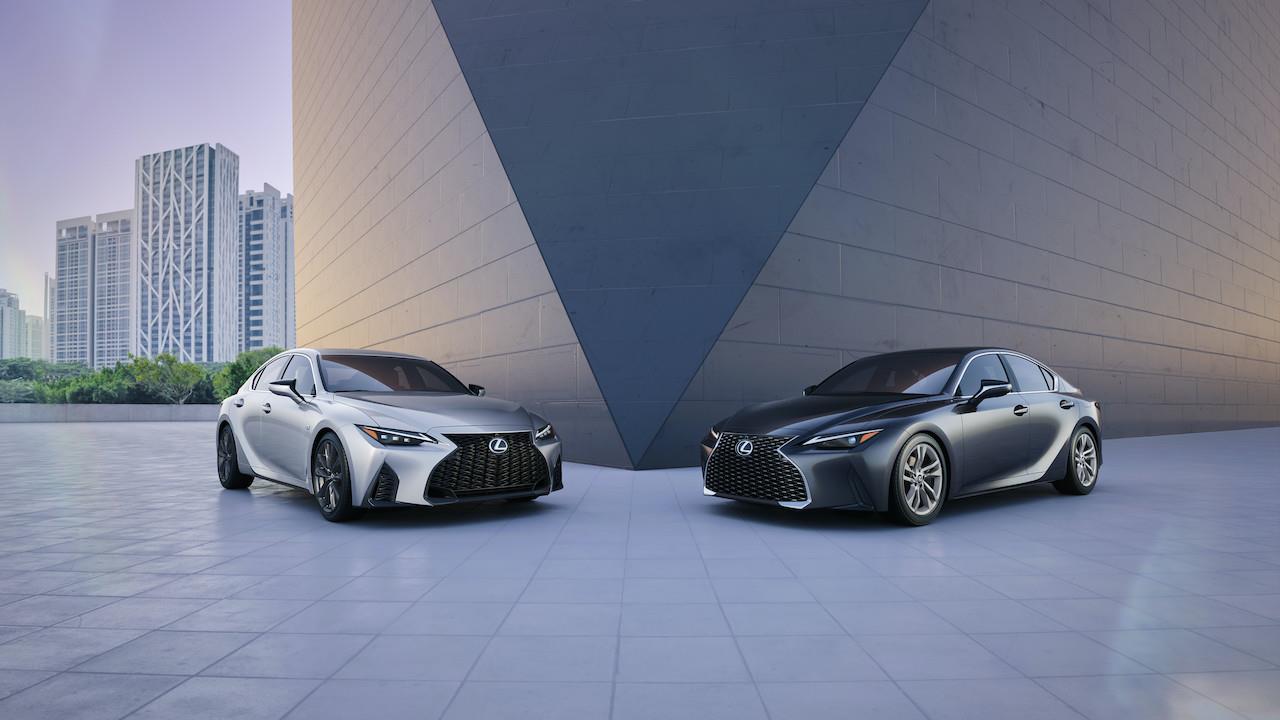

The Japanese challenger fires off another salvo
Lexus has been chipping away at the sports sedan market for years, making their IS more appealing and capable as time went by. The latest version of this sporty executive sedan continues the good work of its predecessors, and promises improved driving dynamics to complement its fresher styling. But, in spite of a brand-new skin and a host of refinements, it’s not quite all-new under the surface.

The basic architecture remains
Unlike many recent products from the Toyota conglomerate, the newest IS isn’t based on the group’s “New-Generation” architecture (TNGA). The IS uses an evolution of its predecessor’s “N” platform instead, which also underpins the Lexus RC coupé. Meanwhile, the larger LS and LC models have both been moved onto the TNGA hardware.
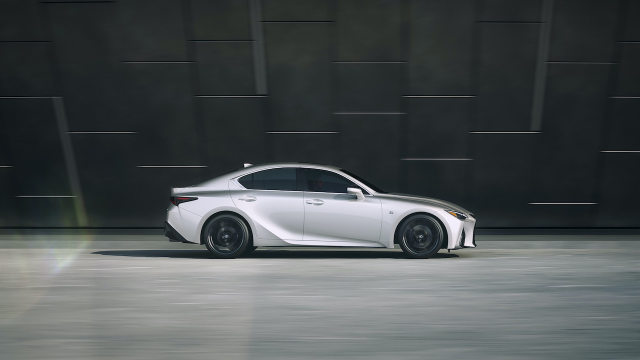
This is not necessarily a bad thing, though, because the previous (third-generation) IS already boasted sparkling driving dynamics and top-notch safety ratings. In a marketplace where SUVs and crossovers are steadily eroding the traditional sedan’s customer base, the new Lexus IS resolutely sticks to its sedan heritage. The outgoing model’s RWD-derived proportions are, if anything, even more pronounced in the new car, with a long bonnet, swooping roofline, and a stubby tail.
Restyled to keep up with current Lexus themes

The (in)famous “Spindle Grille” appears in its latest form, now with a 3-D structure that originates at the front tip of the grille, while the F Sport trim level changes that up to a different mesh pattern. Down the flanks, the character lines are sharper, and the fender flares are more pronounced, drawing the visual balance rearward and accentuating the bulging wheel arches.
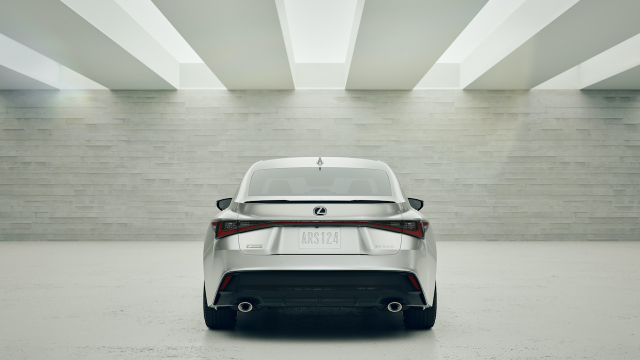
As far as the lighting systems go, the old IS’s two-piece headlights are replaced by slender single-piece LED units with automatic high-beam, and the rear view is enhanced by a full-width LED lightbar which merges into angular tail lamp clusters. F Sport trim adds blacked-out trimmings, a rear spoiler, and special 19-inch alloy wheels. Overall, it looks like a sharp re-working of the old car, but it doesn’t really move any boundaries in its styling.

Interior gets subtle tweaks too
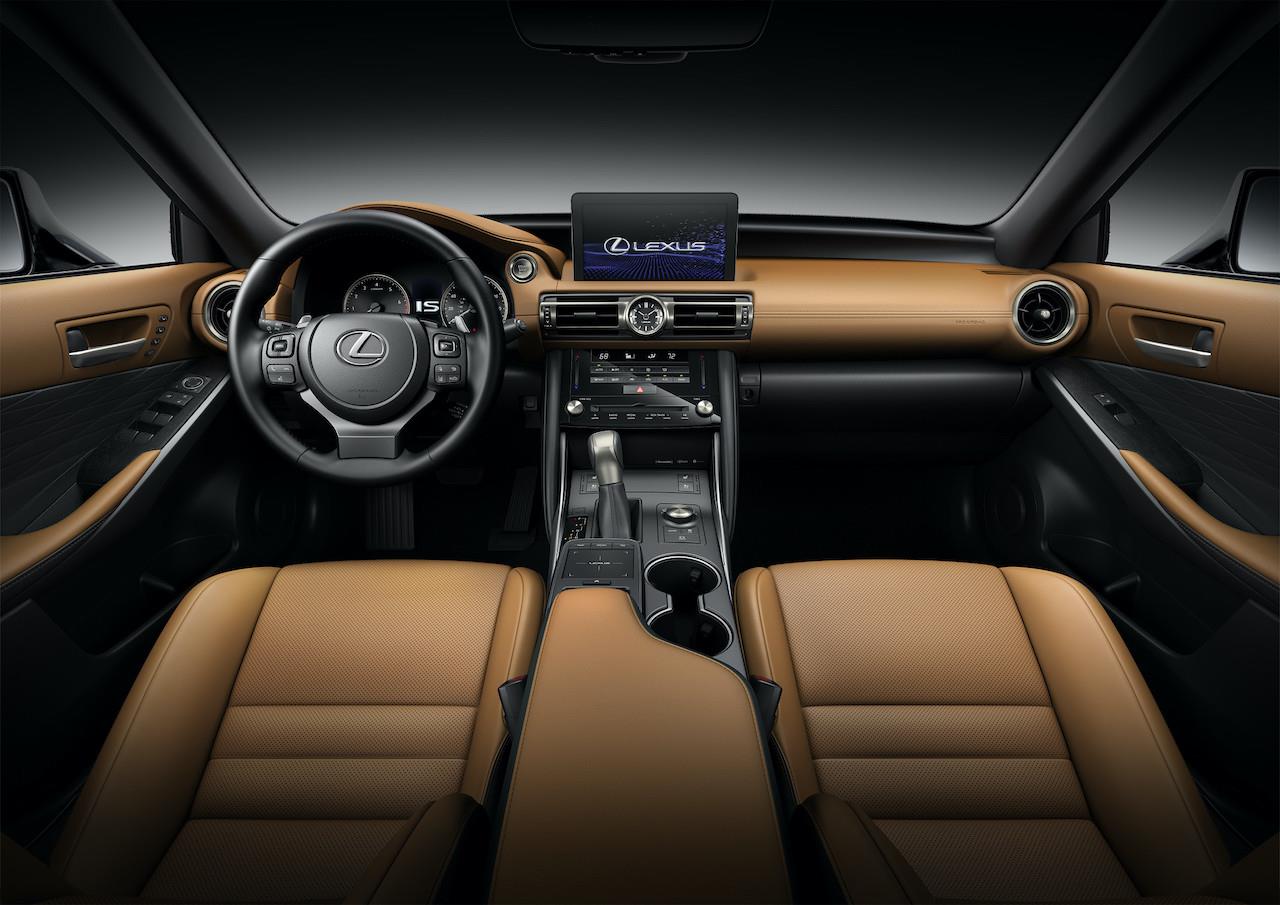
Don’t expect a radical change when you open the door and step inside, because the basic design remains essentially unchanged. That’s not necessarily a bad thing all-round, as the outgoing IS has always had a very pleasant and high-quality interior ambience.

The big change comes in the infotainment system, which now offers full smartphone mirroring, and is operated by a larger touchscreen that’s mounted closer to the driver than before. Unfortunately, the infuriating touchpad alternative user interface remains, instead of the easier-to-operate rotary control wheels employed by most of its rivals.
The engines carry over, but the suspension is revised
The one area which sees no change at all is the drivetrain package. As before, the new IS will be available with a 2.0-litre turbocharged petrol engine (180 kW and 350 Nm), or a higher-performance 3.5-litre non-turbo V6 (232 kW and 380 Nm), and the power is sent to the rear wheels through an 8-speed automatic. There’s no word on the hybrid variant yet, but expect it to arrive shortly after the mainstream models’ launch – this is a Lexus, after all...

Related: Read our driving impressions of the outgoing Lexus IS Hybrid here.
More significant are the updates made to the running gear. In addition to the larger wheels, significant changes to the springs, dampers, and suspension components aim to improve the ride comfort while improving stability and driving dynamics. This is a traditional Lexus IS strong suit, and even the outgoing IS offered excellent chassis refinement. Upgrading to F Sport level will allow buyers to add the optional “Dynamic Handling” package, which adds adaptive suspension to the mix.
Safety systems get a boost
This appears to be an area where the engineers expended a lot of effort, further improving on the outgoing car’s sterling safety credentials. New add-ons include Emergency Steering Assist (part of the lane recognition system), Dynamic Radar Cruise Control with enhanced Lane Tracing Assist, and a pre-collision system which has been expanded to include daytime pedestrian-, cyclist-, and traffic monitoring.
Combine these new high-tech goodies with the N-platform’s proven crash safety record (the third-generation IS scored 5 stars in Euro-NCAP testing back in 2013), and the new Lexus IS should be just as safe as it will be good to drive.
Related: Is the Lexus IS good for families?
The new Lexus IS is scheduled to reach South Africa early in 2021, but because of wildly fluctuating exchange rates, the local model range and pricing will only be announced closer to its arrival.
Recommended Next:
Shop for new and used Lexus IS cars for sale.