
Everything you need to know about the Audi A6
Everything you need to know about the Audi A6


By Martin Pretorius
Most people recognise the Audi brand as an upmarket extension of the Volkswagen Group empire - the executive-class branch of a diverse portfolio which includes (amongst others) super-luxury Bentley and high-performance Lamborghini. But, unbelievable as it may seem now, Audi as we know it wouldn’t even exist today, if it weren’t for the influence of Mercedes-Benz. Here’s the backstory of how the precursor to the Audi A6 helped establish the brand, and pointed it towards the future.
Two-strokes and four rings
We’ve already detailed how the Audi 80 set Volkswagen onto their front-engined, water-cooled path, saving their parent company from oblivion back in the 1970s. But, a decade before this, Audi didn’t even exist as a brand.
Well, that’s not technically true: Audi was one of the upper-crust manufacturers absorbed into Auto Union, back in 1932. The Audi name itself lay dormant for the next 3 decades, however, with DKW becoming the only car-producing entity in Auto Union until the early 1960s.
But Auto Union was in serious trouble by the mid-1950s, because their two-stroke-engined cars were increasingly falling out of favour with a buying public which demanded ever-increasing power and sophistication. In 1958, one of Auto Union’s major shareholders, a gentleman by the name of Friedrich Flick, facilitated the purchase of the ailing Auto Union by Daimler-Benz (which was, conveniently, also 35% owned by Herr Flick).
The first order of business was modernising Auto Union’s production facilities, which included building a new factory at Ingolstadt. Next up was a revamp of Auto Union’s products, for which an engineer named Ludwig Kraus was moved over from Daimler-Benz. He brought with him a brand-new engine design, and immediately set to work installing this engine into DKW’s upcoming F102 model.
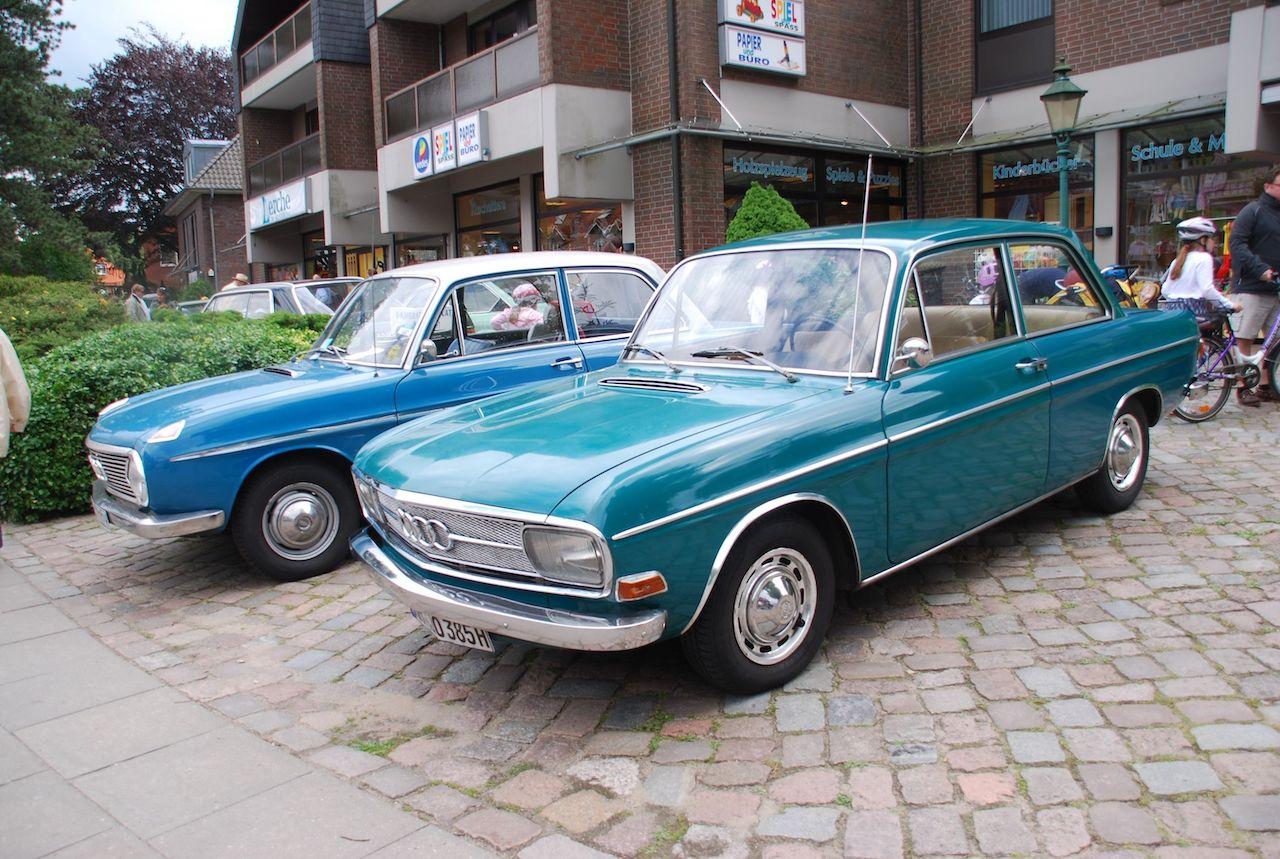
As a result, the F102 was only produced with its original two-stroke engine for two years, before being superseded by the facelifted, four-stroke F103. But, by this time, the DKW brand had irreparable image problems, so Daimler-Benz decided to re-brand the F103 as the Audi 72. At the time of these decisions, the Audi was intended to be an entry-level companion to the Mercedes-Benz range, but things were about to take an interesting turn.
Volkswagen steps in
Daimler-Benz were having second thoughts about the wisdom of this idea, however, and when Volkswagen made an offer for Auto Union in 1964, they promptly got rid of their troublesome subsidiary. Why did Volkswagen want Auto Union? To lay their hands on the new Ingolstadt factory, with a view towards increasing Volkswagen production.
And then the unexpected happened: Volkswagen’s new acquisition proved to be both popular, profitable, and commercially viable, with the Audi 72 (later 60/75/80/Super 90) becoming a surprising sales success. This led to Volkswagen boss (Heinrich Nordhoff) giving the F103-based range a temporary stay of execution. But, once this model reached the end of its life, the original plan would forge ahead, which was to build more Volkswagens at Ingolstadt.
Going underground
Nordhoff specifically prohibited further developments of the Audi range, and started moving Volkswagen production to Ingolstadt almost right away. But Herr Kraus had other ideas, because he put together a small team to secretly design and develop a more-upmarket, mid-sized new Audi from the F103 base.
To keep this development work away from the naysayers in Wolfsburg’s, this team only worked on the new Audi after hours, hiding styling prototypes and design drawings during office hours. It was only after the Volkswagen board member overseeing Auto Union accidental saw a prototype, that the larger Audi was revealed to Nordhoff.
Nordhoff was again impressed enough to give a reluctant go-ahead for production – but once this car reached the end of its production life, Ingolstadt would move over to Volkswagen production...
The new Audi, now named the 100, went on sale at the end of 1968, and became an instant sales hit. In a hilarious reversal of fortunes, demand for the new 100 was such that Volkswagen’s Wolfsburg factory ended up producing Audis as well, because Ingolstadt couldn’t keep up with demand.
More of a good thing
With the Audi 100’s future secured (especially following Nordhoff’s retirement in 1968), work began on a replacement for the F103-series, which became the B1-generation Audi 80, and an all-new Audi 100, which débuted in 1976. With crisp, angular styling by Claus Luthe and Hartmut Warkuss, and engineering by the legendary (or is it notorious?) Ferdinand Piëch, the second-generation Audi 100 (now named C2) represented a concerted effort to push further upmarket.
The C2’s targets were formidable, with the BMW 5 Series and mid-level Mercedes-Benz squarely in its sights. As such, the C2 presented a host of “firsts” for the company, including Audi’s first 5-cylinder engine, fuel injection, and series-production turbo charging. Like its predecessor, the C2 was a worldwide success, which gave Audi the confidence to push the limits some more with the next-generation 100 (named C3)
Vorsprung Durch Technik
Making its début in 1982, the third-generation Audi 100 moved the boundaries even further than before. Growing a size class, the C3 (known in South Africa as the Audi 500) had massive interior space and a huge boot, as well as uncanny refinement, thanks to its super-slippery body. In fact, the C3 created the template for modern aerodynamic styling, with its smooth wedge shape and innovative flush glazing.
The C3 also introduced quattro all-wheel drive to Audi’s large sedans, and later in its life, received the potent 2.2-litre 20-valve turbo 5-cylinder engine to lift its performance into ever-higher echelons. As a result, the C3 had considerable global racing success, basically dominating every formula in which it was entered.
At the other end of the scale, new TDI engines provided near-petrol performance with spectacular fuel efficiency. The C3 also formed the basis for Audi’s first modern luxury car, named the V8 (predecessor to the A8), and was even built in China until 2004.
C4: Further innovations and the first S-car
After a long and successful run of 9 years, the C3 Audi 100/200/500 was finally fully replaced by the substantially updated C4-generation in 1991. While it used a derivative of the C3 platform, the C4’s safety and body integrity received particular attention, and early examples featured Audi’s fiendishly clever procon-ten safety system instead of airbags.
The C4 marked the appearance of Audi’s first V6 engines, supplanting the non-turbo 5-cylinders in the upper-midrange. Top performance honors still resided with the AWD S4 and S6 derivatives, which featured a 169 kW version of the 20-valve turbo 5-cylinder. Later (overseas) S6 variants upgraded this to a V8 engine with either 206, 213, or 230 kW, all obviously mated to a quattro drivetrain.
1995 saw the model designation change from Audi 100/200/500 to the new Audi nomenclature of A6 and S6, placing it midway between the handsome new compact A4, and the technological tour de force of the luxury A8.
Constant evolution
When the C5-generation arrived in 1997, its styling created shockwaves. The front end was instantly recognisable as an Audi, but the arched roof and rounded rear end were more reminiscent of the Audi TT concept than those of its straight-cut predecessors. An interesting development was the Audi "allroad quattro", which featured height-adjustable air suspension and body cladding, giving it a measure of off-road ability. This became one of the earliest crossovers as we know them today.
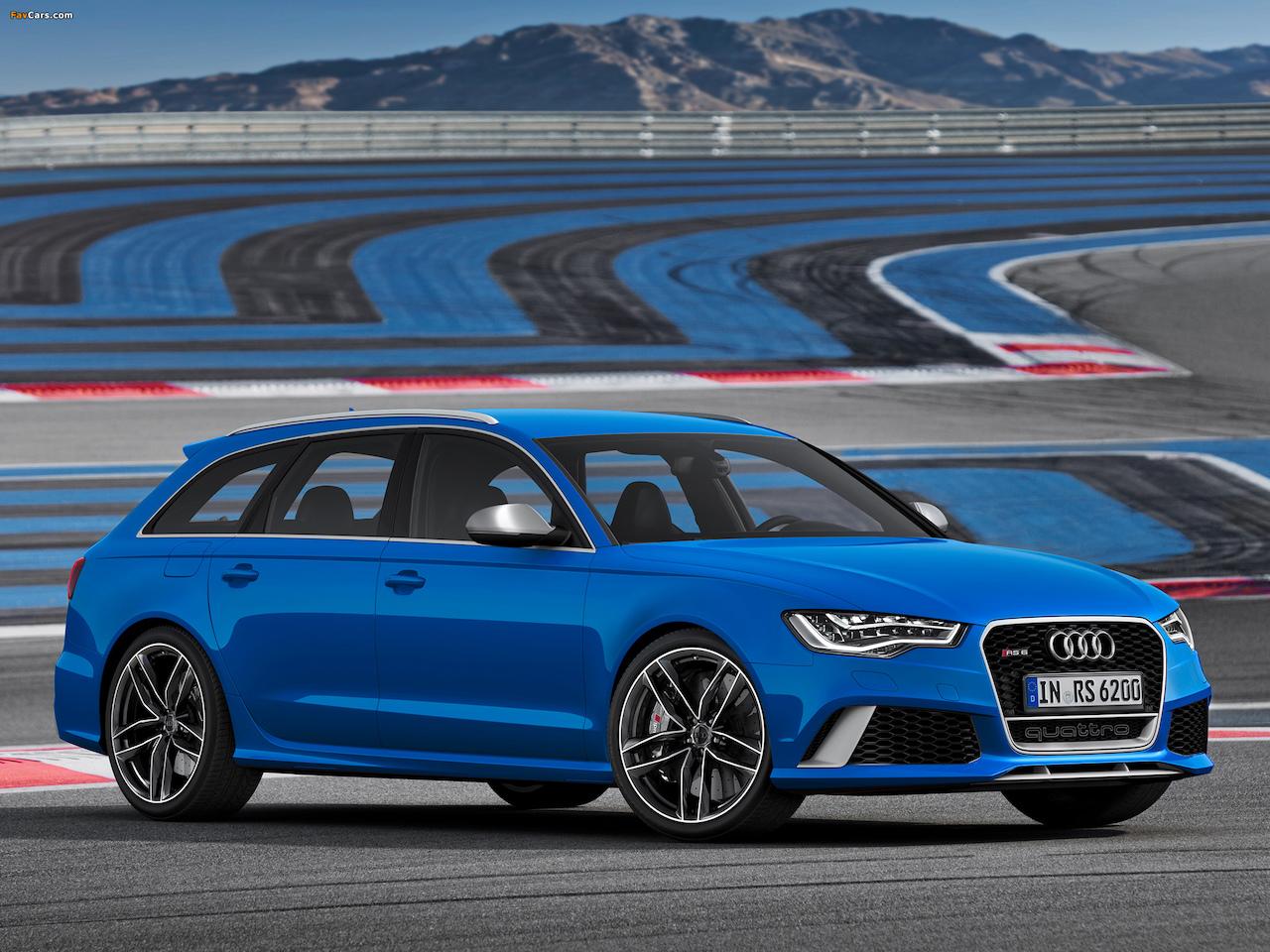
This generation finally dropped the long-serving 5-cylinder engines, and featured the 5-valve petrol units from the A4 and A8, ranging from a 1.8-litre “four” to a 4.2-litre V8. TDI variants appeared in a variety of sizes as well, and the facelifted C5 was one of the first cars to feature the dreaded Multitronic CVT gearbox. Top of the range was the storming RS6, with its twin-turbo V8 delivering 331 kW and 560 Nm.
The 2004 C6-generation was really more of the same, only this time with Audi’s then-new “single frame grille”, and an upgrade to Lamborghini-derived V10 engines in the naturally-aspirated (320 kW) S6 or twin-turbo (427 kW) RS6 performance variants.
The current range
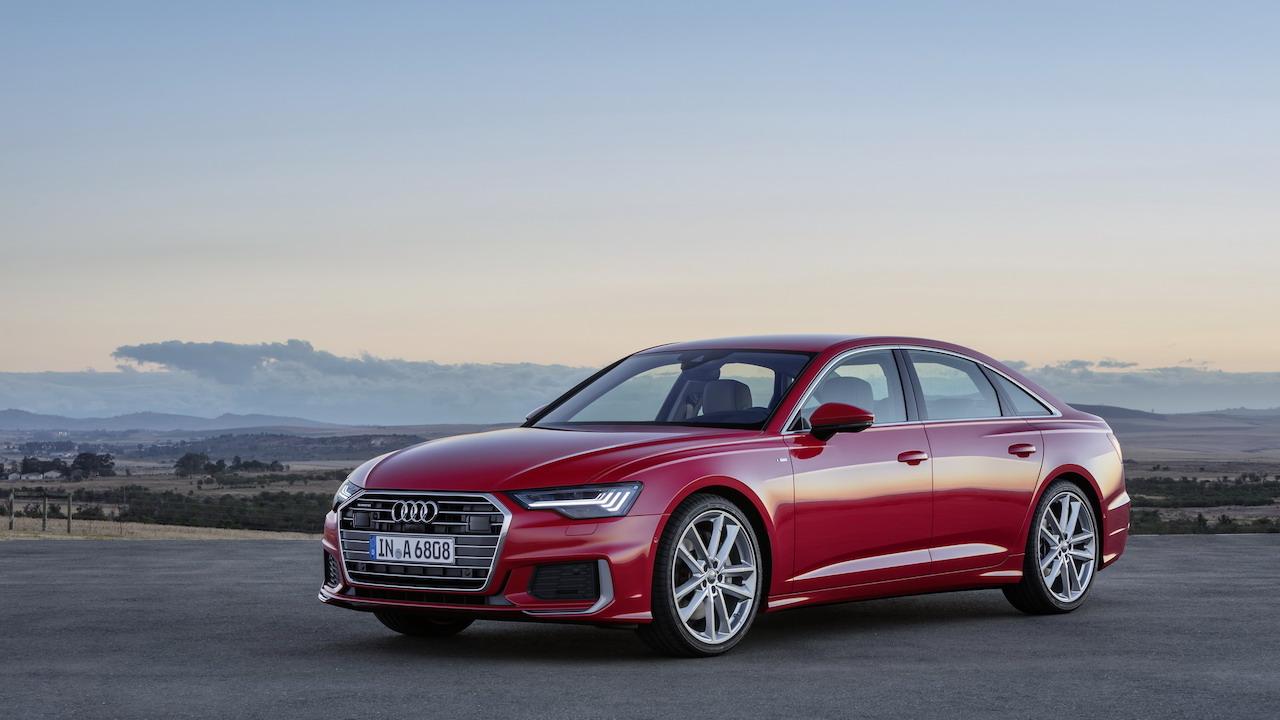
Some examples of the 2011-2108 C7-generation A6 are still available in showrooms, but it’s been discontinued to make way for the new C8 model, which should be available in South Africa soon. Available engines on the outgoing A6 include a 1.8- and 2.0-litre TFSI engine in 132 kW, 140 kW or 155 kW trim, a 3.0-litre Supercharged petrol V6 with 228 kW, a 130 kW 2.0 TDI, and a 180 kW 3.0 V6 TDI.
Performance variants include the S6 (with a twin-turbo 4.0-litre V8 delivering 309 kW) and the RS6 Avant (Estate), which has a 412 kW variant of the 4.0-litre twin-turbo V8). The option list is extensive, and includes a head-up display, LED headlamps, a sport rear differential, and a Bang & Olufsen audio system with a 1200W power output.
Into the future
With the arrival of the C8-generation on local shores drawing near, it’s still unclear as to which variants we will receive locally. Expect the 2.0-litre TFSI to make a repeat appearance, as well as a 250 kW twin-turbo 3.0-litre V6 TFSI, along with 2.0-litre 4-cylinder TDI and 3.0-litre V6 TDI diesels ranging from 150 kW to 210 kW. Some form of electrification will be included, in line with Volkswagen Group's new commitment to electric propulsion.
The C8 will roll on an updated version of the C7’s MLB platform (used to great effect in the A4, Q5 and Q7, amongst others), and shouldn’t differ too dramatically from its predecessors in overall concept.
It’s unlikely that Daimler-Benz ever considered that their proposed 1960s entry-level car could metamorphose into such a successful, respected and long-lived powerhouse. If they did, they would probably have killed it off before even updating the F103, and yet, here we are: Audi is now a legitimate premium brand, and a constant threat to their erstwhile parent company. How the tables have turned... especially considering how nearly it almost never happened!