Do electric cars depreciate?
It is still too early to cast a reliable verdict on the local long-term depreciation curves of electric cars, but initial signs look quite promising. At least in the medium term, most EVs appear to depreciate slower than most ICE cars of comparable starting price, although there are some exceptions.



The case of the BMW i3
With only 20-something EVs in total listed on AutoTrader at the end of 2021, the majority of which being BMW i3s of various vintages, it’s clear that the sample size is much too small to give a realistic indication of overall EV depreciation trends. But, examining that (relative) horde of i3s shows one element, common to them all: surprising value retention, regardless of age.
The oldest ones on site date from 2015, and still have an average retail value of R 406 567. That equates to 76.4 % of their original price when new, which is pretty remarkable for any car after 6 years, even those from respected brands with traditionally strong residual values.
Newer i3s mirror this trend, with the latest (2020-2021) examples retailing at least as high as their original list prices. The same applies to the 2020 MINI Cooper SE, which uses the same electric drive system as the i3.
Related: New cars coming to South Africa in 2022 – a lot of them are electric!

The Porsche effect
Largely because it is brand new and carries a highly-aspirational badge, the 2021 Porsche Taycan also shows strong depreciation resistance at this stage. While the higher-end “turbo” and “turbo S” Taycans listed on AutoTader SA can lose up to 6.6 % of their new value in the first year, entry-level and mid-range variants actually command more than their current new price.
Some of this may be influenced by fitted options, but it’s nonetheless clear that strong demand for Taycans are keeping used values aloft for now, especially in the more-affordable realm.
Related: Our review of the entry-level Porsche Taycan finds that it offers all you need.

The odd one out
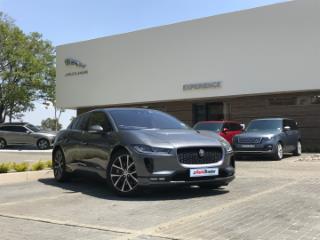
The final car in this discussion is a bit of a head-scratcher. It’s a beautiful, practical, very rapid and futuristic vision of the car of the future, but the Jaguar I-Pace seems to fly under the radar of current EV buyers. It’s a brilliant car that somehow can’t seem to hold onto its value.
You can get a 2021 Jaguar I-Pace with less than 1000 km on the odometer for just less than R 1.6-million, retaining only 73.9 % of its original value. So here’s our tip: Find yourself a used, low-mileage I-Pace, and enjoy the current pinnacle of real-world EV motoring at a comparative bargain price.
Related: How suitable are EVs to South African conditions?

What about the long run?
A common fear among EV skeptics is battery life and cost. This is not unfounded, as EV batteries and drive units can be (and currently still are) extremely expensive, should either need replacement. However, the chances of this happening within the first 8 years are slim-to-remote, as this is how long EV batteries’ guarantees typically last.
The distance of the coverage varies by manufacturer, with BMW Group products having coverage for 100 000 km, and VW Group and Jaguar providing cover for 160 000 km. This means that, for its first 8 years, an EV should be able to maintain its resale value quite well.
What happens after that? According to industry experts, EV batteries should last at least 10 years, by which time aftermarket replacement packs should have dropped in price to the extent that a car battery replacement becomes price-comparable to (or lower than) replacing an ICE car’s power unit.
Consequently, EVs (and their batteries) should have similar lifespans to those of their ICE-powered siblings, and most likely even exceed poorly-maintained ICE vehicles’ lifespans as they age.
Related: How expensive are EVs in the long run?

Conclusion
We’ll be able to keep close tabs on developments as these cars age, and as a host of new EVs are due to hit our market in 2022. Once we have a greater variety of new- and used cars to use as data reference points, the statistics will start showing definite trends, upon which we can then comment. But, on the whole, it looks like EVs are likely to out-perform their ICE brethren on value retention as well...