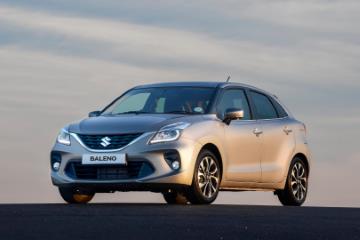
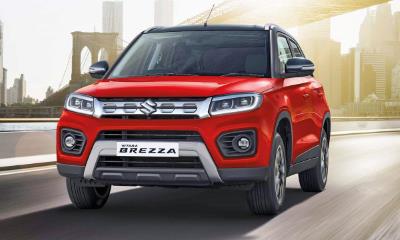
Best value shoot-out! Suzuki Baleno vs Hyundai Grand i10 vs Mahindra KUV100 NXT
Shoppers in this segment of the market deem value for money to be all-important. We've selected a well-known value champ, the Suzuki Baleno, and compared it to the sparkly new Grand i10 and the well-known Mahindra KUV 100 NXT, a micro-SUV.


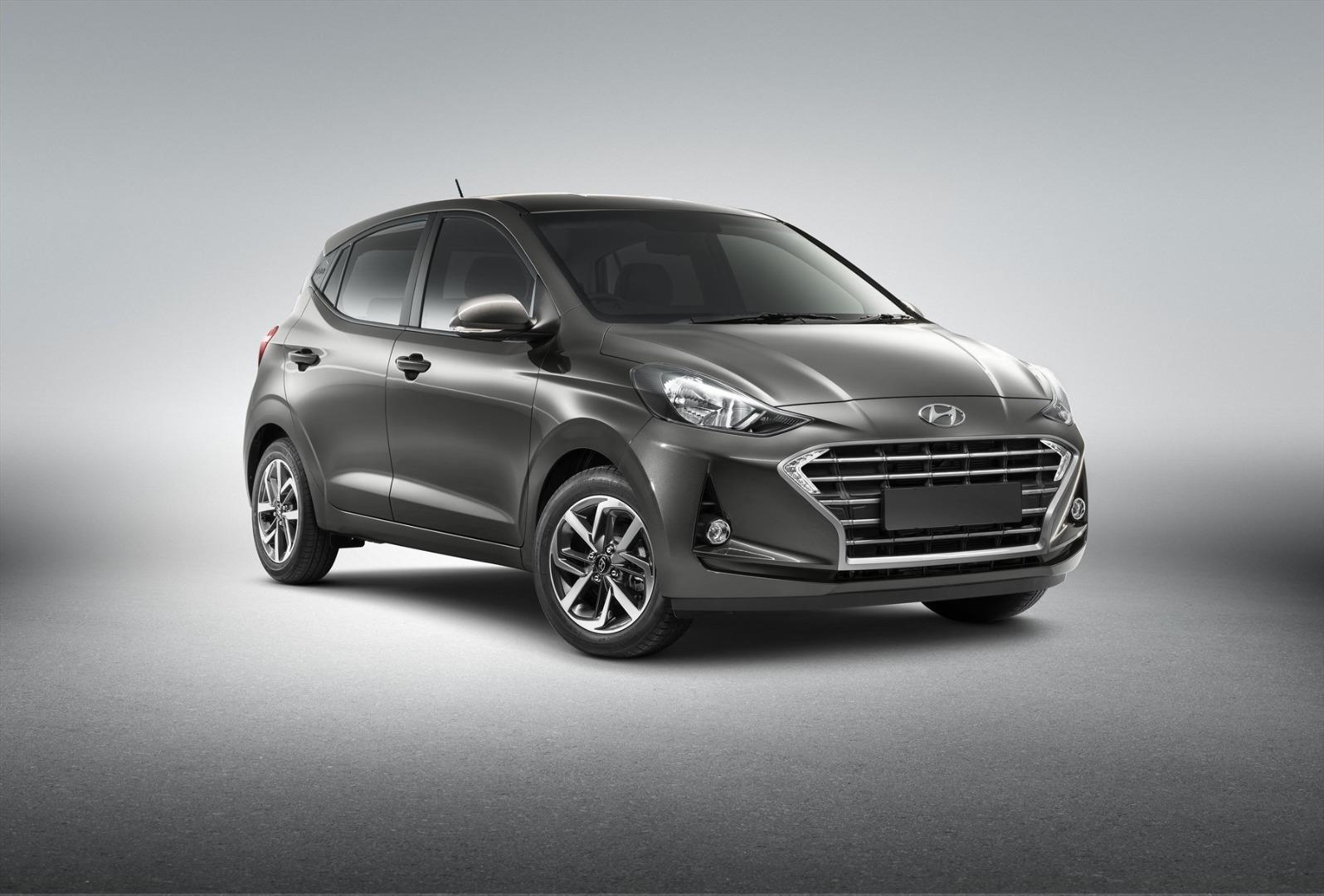
All three contenders cost roughly the same, and are practical city slickers that can be utilised by families who are downsizing or who simply don't require a larger car. For the purpose of this exercise, we selected three variants that are the closest in price: The entry-level Suzuki Baleno 1.4 GL (R221 900), the mid-spec Hyundai Grand i10 1.0 Fluid (R222 500), and one of the top-spec Mahindra KUV100 NXT models, namely the 1.2 G80 K8 (R224 999). This model is classified as a sub-compact crossover, while the other two are hatchbacks.
So let's get into it!
Engines
The 1.4-litre engine in the Baleno's light sheetmetal makes it the sprightliest of the lot, with 68kW and 130Nm, and as a result it boasts an excellent power-to-weight ratio of 74.3. The Hyundai has a much smaller engine, a naturally-aspirated 1.0-litre, good for only 49kW and 94 Nm. It's power-to-weight ratio is a meagre 54.9, while the Mahindra's 1.2-litre engine in its 1190 kg body translates to an even lower power-to-weight ratio of 51.3. The Baleno wins this round hands-down. (Another one of its talents is how lightly it sips fuel, and if you compare it to the other two contenders, it uses even less, despite being decidedly more powerful.)
Space, and comfort features
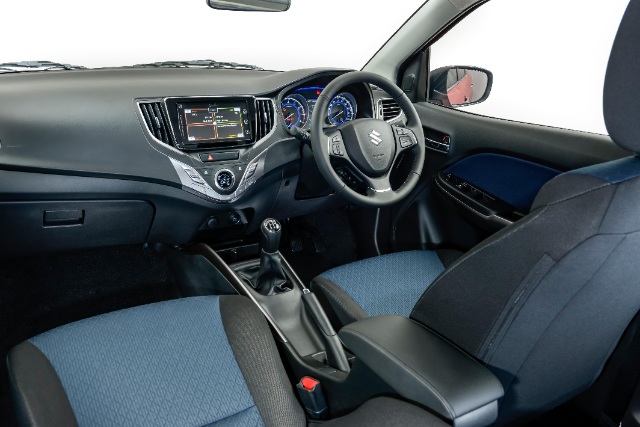
Yet again, the Baleno impresses with its large 355-litre boot and rear legroom, but the Grand i10 also offers a spacious cargo area and a roomy rear seat. Its boot is actually 5 litres bigger than the Baleno's: 360 litres vs. 355 litres. The KUV's boot size pales in comparison with quite a compact 243 litres.
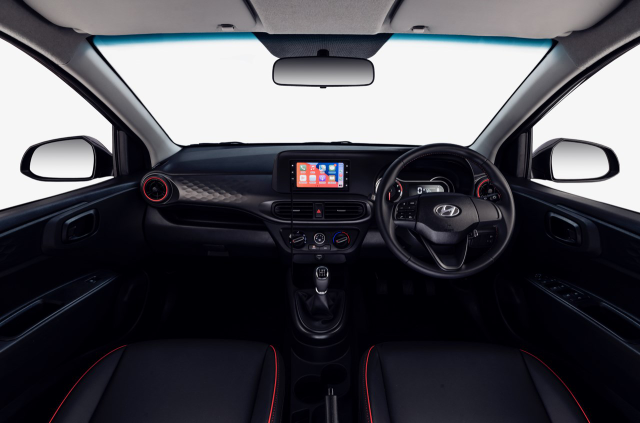
All three cars have central touchscreens, satellite buttons on the steering wheel, air-conditioning, Bluetooth, USB ports, remote central locking, electric windows, and electrically adjustable mirrors.

Safety
Two airbags are to be found in all three cars, as well as ABS brakes, and electronic brake-force distribution. Stability control is standard on the Mahindra and the Suzuki, but not the Hyundai. All three feature ISOFIX child-seat anchorage points on the outer rear seats. The Grand i10 and KUV100 have time-delay (aka follow-me-home) safety headlamps that stay on for a short period of time after you've already exited and locked the car. The Grand i10 and KUV100 Nxt both have LED daytime running lamps, but if you pick the entry-level Baleno, you can just switch on your headlights to be more visible.

The KUV100 is the only car with hill-start assist, while both the Grand i10 and KUV100 have a full-sized spare wheel. It's close, but the Baleno still deserves to win because of the extra power at your disposal for easy overtaking manoeuvres, and because it also feels more solid to drive than the Mahindra. Often times, head-on collisions happen when motorists misjudge the time and distance they need to overtake slow-moving vehicles. Having a few more kiloWatts under the bonnet makes the whole process less stressful.
Warranties and service plans

The Baleno has a 5-year/200 000 km warranty, while the i10 gets Hyundai's 5-year / 150 000 warranty and a 7-year warranty for its drivetrain components. The KUV100 Nxt also offers a 5-year / 150 000 powertrain warranty and 3-year 100 000 warranty for the rest.
The reason the Baleno wins this round, is because of its generous 4-year / 60 000 km service plan, while the Hyundai has to make do with a measly 1-year / 15 000 km plan (but it's better than nothing, isn't it?). The Mahindra gets a 3-year / 50 000 km service plan.
Verdict
The Baleno, being the most powerful, and the most fun to drive, would be my top choice, even in its most basic trim. Even though the KUV100 is safe and well-equipped, its handling leaves a lot to be desired; I speak from personal experience when I say that it doesn't grip very well in the corners. Its ride height doesn't help its case either.
This specific Hyundai Grand i10, despite being very well-engineered, is just too underpowered for my liking. You would need to buy one of the 1.2-litre models for decent performance — it's a great little engine and makes the i10 a highly entertaining drive — but it's also significantly more expensive.
The award goes to the Suzuki Baleno.