
5 extras you should fit on a new Toyota C-HR
The Toyota C-HR has established itself as a catalyst for Toyota’s modern design language and its adoption of turbo petrol technology within the local market. We have a look at 5 accessories worth fitting to the C-HR.


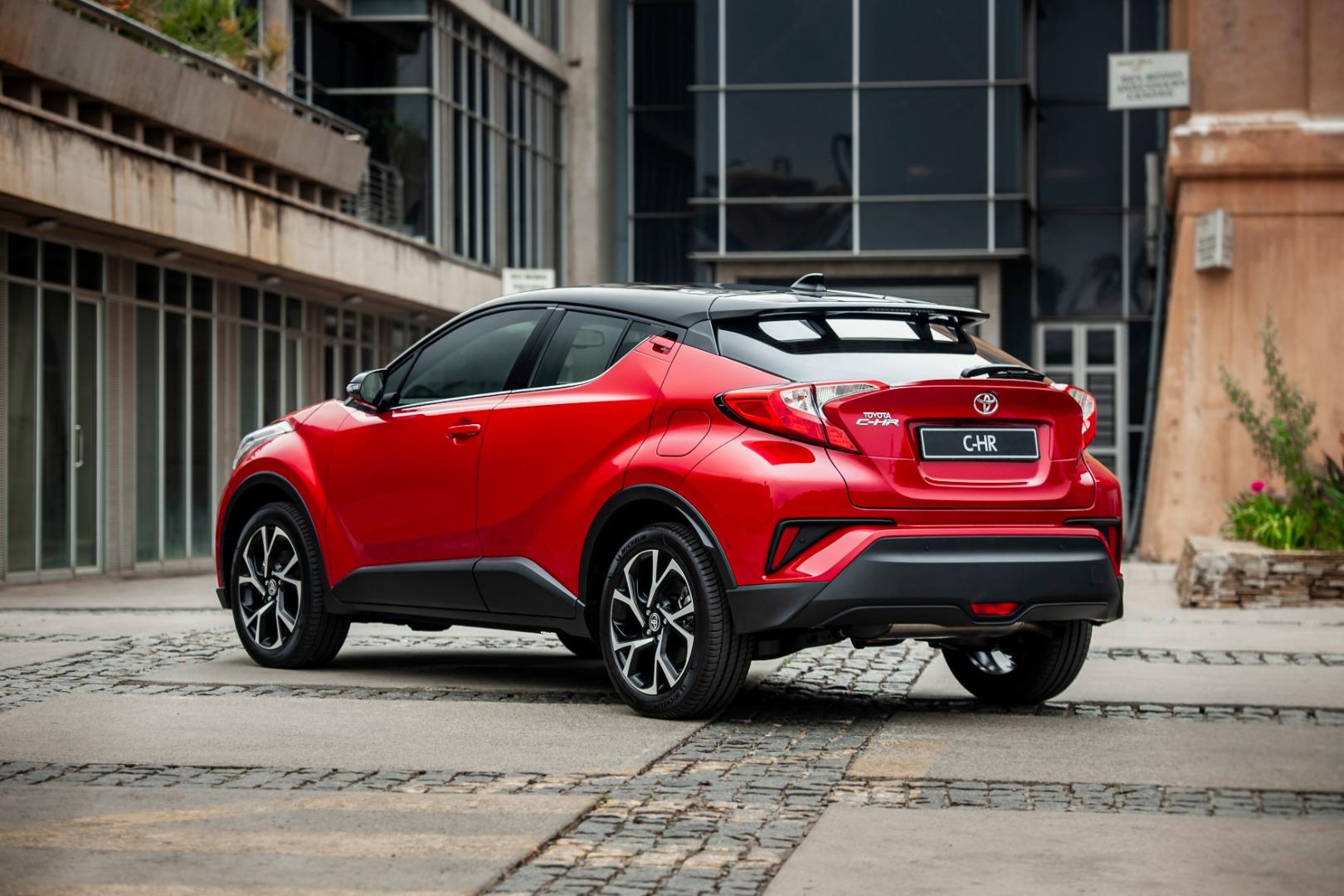

The Toyota C-HR was first introduced to the local market in February of 2017, ushering in a new era of design-centric Toyota products that has opened the brand up to a new audience. The model also introduced small capacity turbocharged petrol power to the local line-up for the first time, with the 8NR-FTS 1.2-litre engine being the engine option, mated to either a CVT or a six-speed manual transmission powering the front wheels. With a more youthful buyer with a potentially active lifestyle in mind, we look at 4 accessories worth specifying on a C-HR
Compact crossover

As a compact crossover, the C-HR competes with the likes of the Honda HR-V, the Volkswagen T-Cross, Suzuki’s Vitara, the Haval H2 and Mazda’s CX-3 to name a few. Measuring 4.38-metres long, 1.79-metres wide and 1.56-metres tall, the C-HR fits the crossover description perfectly, offering a C-Segment hatchback-like 328-litres of boot space and seating for five occupants inside.
Related: Toyota C-HR vs Mazda CX-3 vs Hyundai Kona: Which one has the lowest running costs?

At the beginning of 2020, Toyota South Africa announced that an updated C-HR had arrived in South Africa. Sporting a refreshed front-end, improved safety items and improved infotainment thanks to the inclusion of a larger 8.0-inch infotainment screen with Apple CarPlay and Android Auto functionality.
The range is made up of three trim lines which include the Standard, the Plus which is available with either the CVT or manual gearbox and the flagship Luxury which is only available with the CVT. The 1.2-litre turbocharged petrol engine produces 85 kW and 185 Nm of torque. The C-HR sips fuel at a claimed 6.3 L/100km in manual guise and 6.4 L/100km with the CVT while the former produces 141 g/km of CO2 and the latter 144 g/km.
The accessories
1. Detachable tow bar

While offering a modest 1 300kg of towing capacity in manual guise and just 1 100kg when equipped with a CVT, the C-HR isn’t the ultimate towing vehicle, however, as a lifestyle product, the addition of a tow bar adds another dimension of practicality to the package.
2. Cross Bars

The addition of cross bars allows you to add items such as bicycle holders and roof-mounted luggage solutions to the roof of your vehicle, improving versatility while simultaneously improving its looks.
3. Wheel lock nut

This may seem like an arbitrary addition, however, with the increasing cost of tyres and the fact that the entire C-HR line-up comes with alloy wheels means that a lock nut will prevent any unscrupulous individuals from relieving you of your wheels and tyres.
4. Toyota safety Film 150 Micron

The addition of safety film to the windows of your Toyota will prevent glass shattering into the vehicle in the event of an accident or hijacking while also providing a degree of anonymity and UV protection.
5. Horizontal Cargo Net

This handy cargo net clips into the four existing holes in the book of the C-HR, which will allow the net to cover and subsequently protect any luggage or items from sliding around in the boot.
Models
| Toyota C-HR 1.2T | R379 100 |
| Toyota C-HR 1.2T Plus | R411 100 |
| Toyota C-HR 1.2T Plus Auto | R423 400 |
| Toyota C-HR 1.2T Luxury | R486 100 |
Recommended next:
Top 3 things you need to know about the Honda HR-V
Which Toyota C-HR trim holds its value best?