
2021 Audi A4: More than a facelift, but not quite all-new either
It used to be Audi’s mainstay model, but, over the years, the A4 has gradually become a fringe player in its model range. On top of buyers increasingly turning to SUVs and crossovers, the Audi A4 also faces stiff familial competition from the impressively capable Q3 and Q5, and feels the squeeze from the A3 Sedan and A5 Sportback at the same time. But now the Audi A4 is fighting back, with a fresh look and a comprehensive array of new available technology.


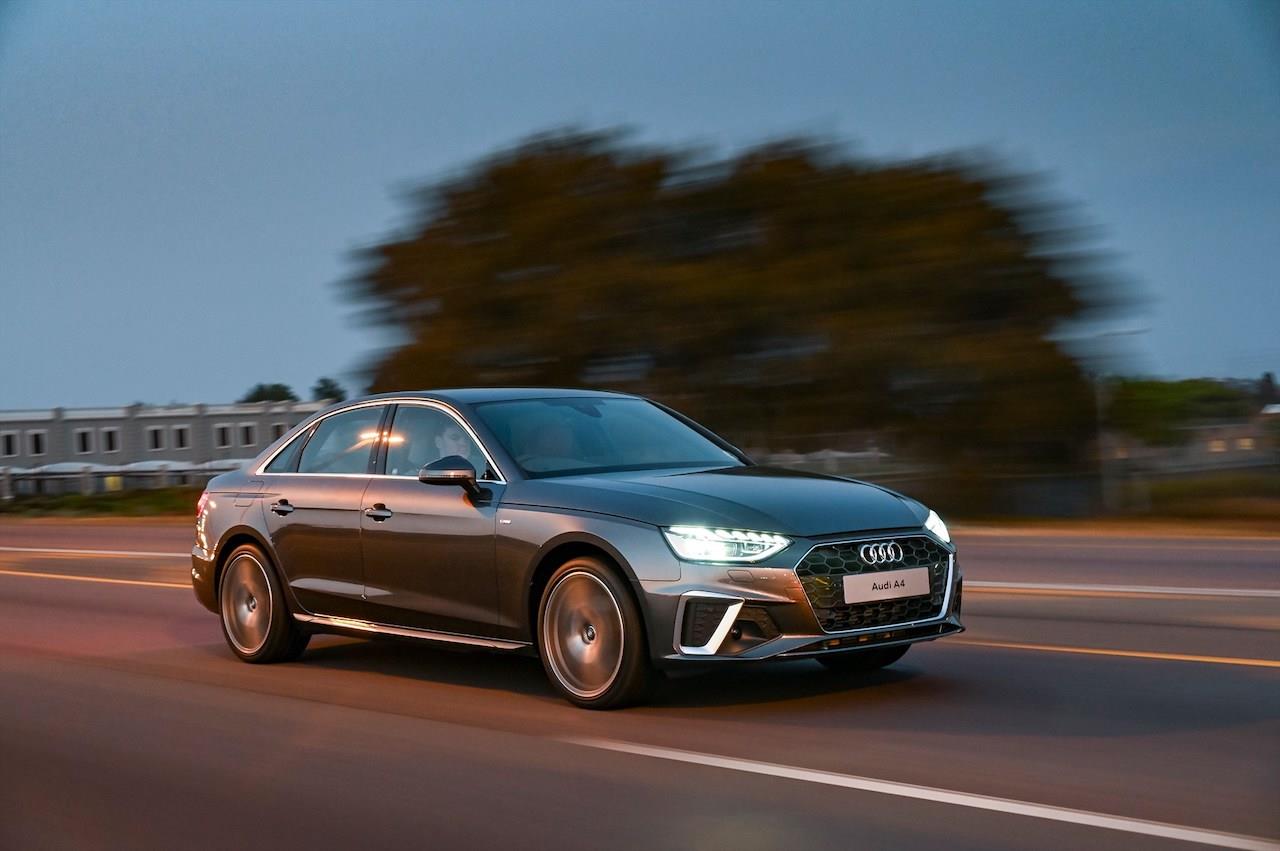
It took a while for the latest Audi A4 to reach local shores, seeing as it was released in Europe midway through 2019. Audi South Africa had other priorities: they wanted to get the handsome Q8, hot-selling new Q3 and pretty little A1 on our roads first, before revisiting their traditional offerings. But, with the higher-volume segments now covered by new (or extensively revised) models, it’s time for the stalwart A4 to get some love as well.
We’d be hesitant to describe the new A4 as brand-new, mind you – its predecessors’ skeleton still shows through, but it’s nonetheless been further optimised to shed about 15 kg from the body structure. Along with some changes to the oily bits and a fairly thorough re-skin of the coachwork, the electronic hardware also receives a significant update. And, as with other new-generation Audis, the glitter factor also steps up a notch, thanks to the ever-evolving light show from the LEDs on each corner.
Related: Everything you ever wanted to know about the Audi A4’s origins.
Styling
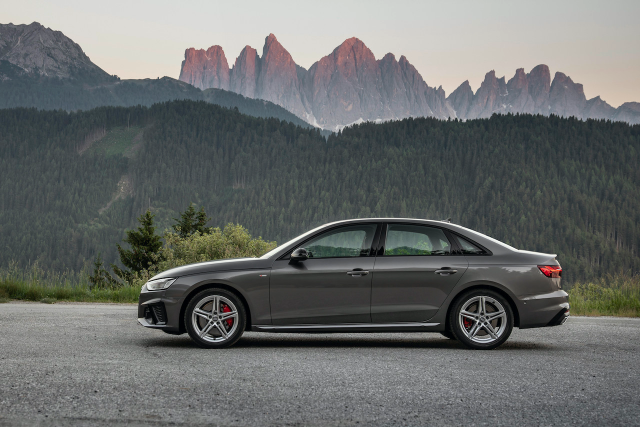
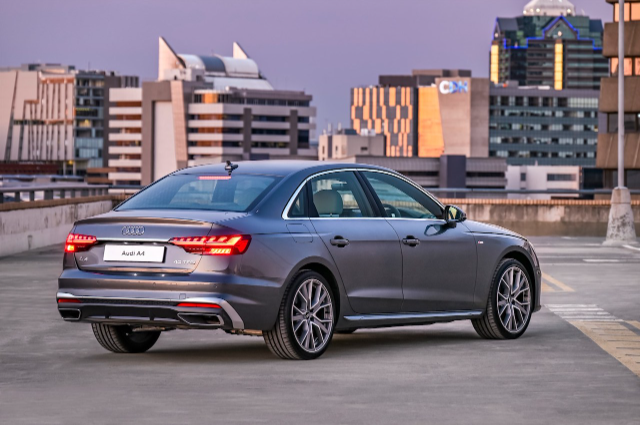
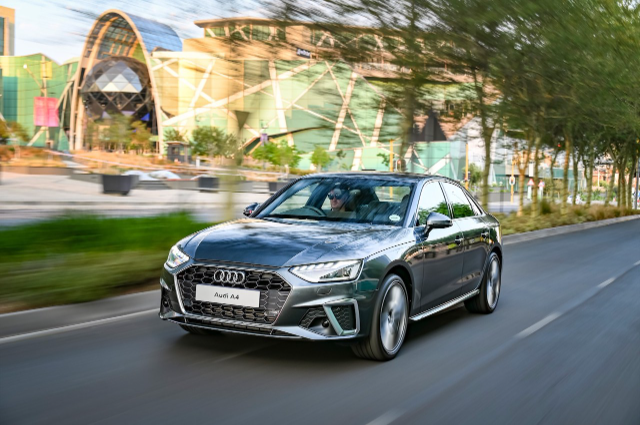
At first acquaintance, it’s not all that apparent what was changed on the styling front. A new interpretation of Audi’s Singleframe grille, restyled headlights, and more-aggressive air intakes give the new A4 a broader stance, an impression that’s reinforced by the surprisingly subtle “quattro-style” fender flares.
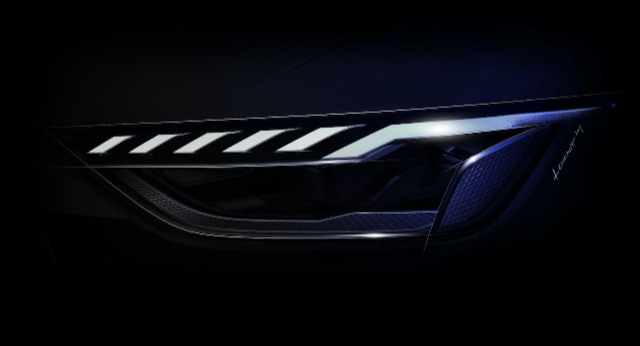
Of greater significance is the fact that all A4s now feature LED headlights (with different DRL designs): static as a default for "35" derivatives, with sequential turn signals for the "40" and S4 variants, with a further optional upgrade to active matrix LEDs for the ultimate car light show.
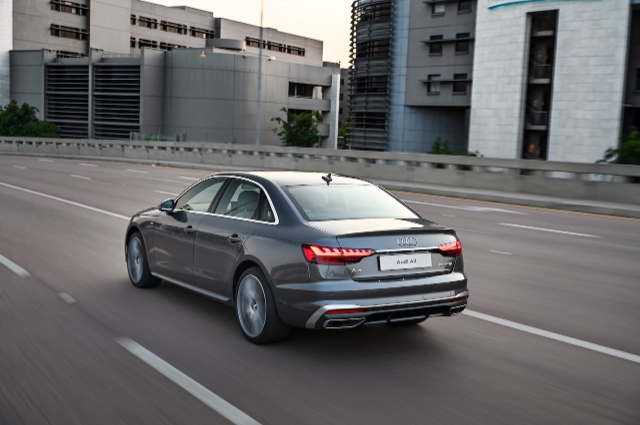
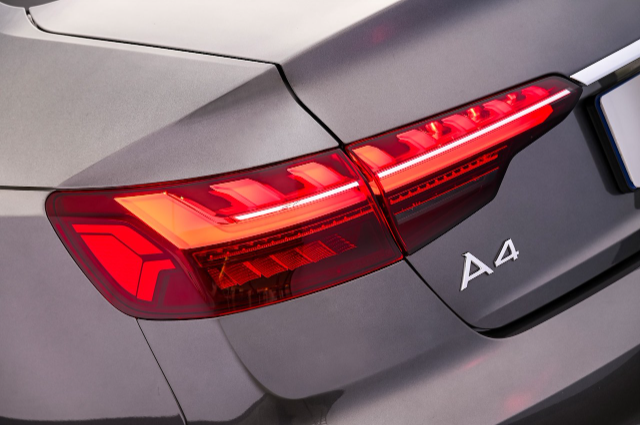
At the rear, the redesigned LED light clusters are now connected by a chromed (or gloss black, depending on specification) trim strip, while the bumper is reshaped for a sleeker appearance. New body panel pressings include the doors, fenders, and tailgate, and the front- and rear-end design themes vary according to the trim level.
Related: Considering a used Audi A4? This video review has all the details about the older 1.4 TFSI variant.
Two petrol engines and an S4 right away
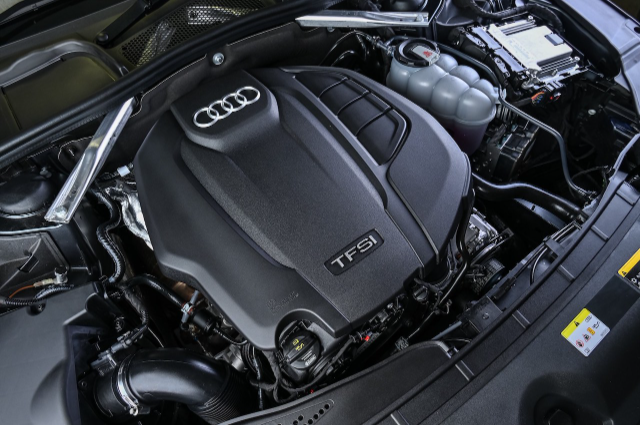
At launch, the model range essentially comprises three engine options, with a fourth to follow early in 2021. The two lower-powered derivatives both employ some version of the Volkswagen Group’s corporate 2.0-litre petrol engine, tuned to produce either 110 kW and 270 Nm in 35 TFSI trim, or 140 kW and 320 NM in 40 TFSI trim. This means the demise of the outgoing A4’s 1.4-litre engine, with the void being filled by the lower-powered engine.
These versions are front-wheel-driven, use a 7-speed dual-clutch automatic transmission. They also incorporate mild-hybrid technology, with a secondary battery harvesting the car’s kinetic energy to power the steering, air-con, and on-board electronics. Apart from the belt-starter generator spurring the engine to life, here’s no electric assistance to the drivetrain, though, so battery-only driving is not on the cards.
Further consumption gains are achieved by a more-aggressive stop/start system, which can now cut the engine completely as soon as the road speed drops below 20 km/h, instead of only at a standstill. Audi reckons that this could improve fuel consumption by up to 0.3 ℓ/100 km, and is imperceptible in operation: we’ll have to try it out first to see if those bold claims hold true.
The third petrol engine is a 3.0-litre petrol V6, with a single turbo bolted into the engine’s “vee”. Its outputs are rated at 260 kW and 500 Nm, which is sent to the quattro (AWD) drivetrain through an 8-speed Tiptronic automatic for the S4 variant. This makes the S4 suitably rapid, with overseas claims of 0 – 100 km/h sprints in around 4.7 seconds, and a governed top speed of 250 km/h.
For the moment, this is the highest-performance A4 derivative, and may just be the quickest one we’ll ever get, seeing as the RS5 already covers the top end sports fastback/coupé segment... but we nonetheless live in hope that Audi SA would eventually surprise us with the RS4 Avant.
If you wonder why we didn’t mention any diesel option, it’s because the diesel will only arrive in February 2021. Once again, a corporate 2.0-litre will be employed, this time tuned to produce 110 kW and 320 Nm, earning it a 35 TDI badge and low-to-mid 4 ℓ/100 km fuel consumption claims. It appears that the lovely V6 TDI will not be available for South African buyers this time around, though.
Related: We compare a new Audi A4 to two used opponents to find out where the best value for money lies.
Trim differences
A4-badged derivatives can be had in three different trim levels, each with its own exterior design theme and standard specification. “Standard” and “Advanced” trim levels is offered with the 35 TFSI powertrain, while upgrading to a 40 TFSI adds “S line” to the trim option mix.
It is not yet clear exactly how these trim levels differ, but it’s safe to assume that Advanced will be slightly flashier-looking than Standard; and S line has an “S” in it, so it will likely have the sportiest looks, largest wheels, and stiffer suspension.
Related: The top three extras you should fit to a new Audi S4.
Up-to-date connectivity
Of greater significance is the new electronic architecture and connectivity features. As with most new premium cars, the new Audi A4 has an embedded SIM card, and can link to a smartphone via the data connection thus created. Then, by means of the “myAudi” app, it can relay data such as the car’s status (fuel level, lock status, theft alarm notification etc.) to the paired phone.
The horn and lights can indicate the car’s position on (remote) command, and the owner can lock or unlock the car remotely. This system also allows for automated emergency calling, automated service booking, and over-the-air car diagnosis of car-related issues – all via an international call centre that liaises with local service providers.
Related: The top 6 accessories you may want to consider for your Audi A4.
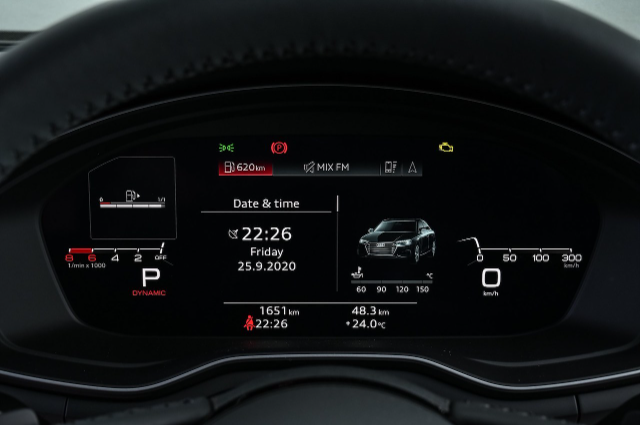
Two screens, but the climate control still has buttons...
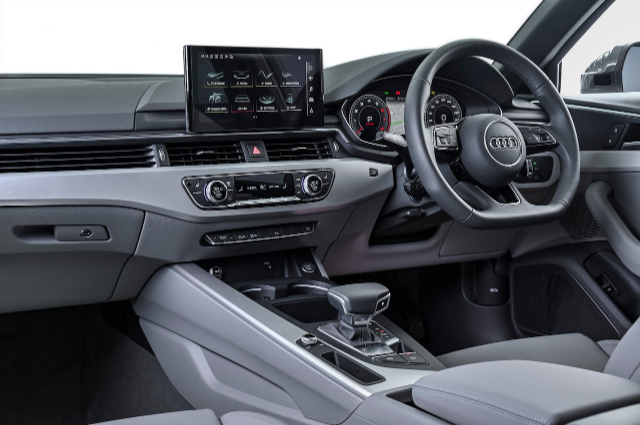
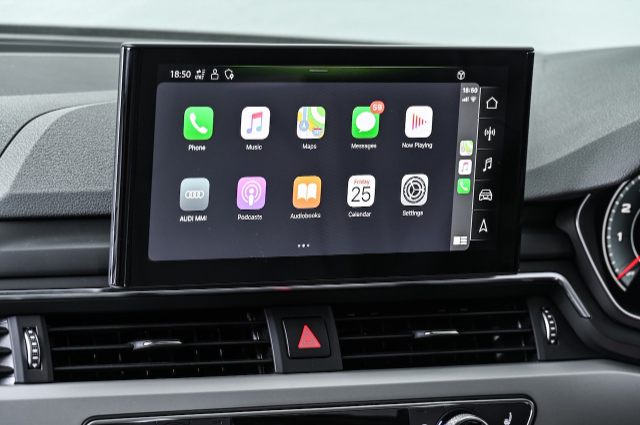
Audi’s class-leading digital instrument cluster (“virtual cockpit” in Audi-speak) also came in for an upgrade, and is now standard equipment. In its latest iteration, it exchanges the old car’s NVIDIA graphics hardware for a Samsung-based display unit with even better clarity and slicker operation. The tablet-design infotainment screen benefits from the new “MIB 3” hardware architecture, which again is standard across the range, as is smartphone mirroring.
You’d want to upgrade to MMI Plus system (part of the technology pack), however: it gives a bigger screen, adds navigation, and expands on the connectivity features. For instance, you could find your next location on the myAudi app, and then transfer this info to the car’s navigation system. Result? The car knows where you need to go before you even push the engine start button.
Because Audi has now wholeheartedly embraced the touchscreen, the old rotary MMI control on the centre console has disappeared completely. Fortunately, the audio volume and climate control are both still adjusted via actual knobs, so there’s no need to poke blindly at virtual buttons on a distant screen for simple operations like adjusting the cabin temperature or turning up the sound...
Various options are available as package deals. As an example, the technology pack adds the MMI Plus Nav system, along with adaptive cruise control and lane-keeping assistance with traffic jam assist. Automated parking is also available, as is a surround-view camera system, blind-spot monitoring and a wireless charging pad. We’ll delve deeper into the new A4’s gadgets as more information becomes available, but the fact that some commonplace features are optional goes some way towards explaining the new range’s relative bargain pricing at the entry level.
Related: We looked at the outgoing Audi A4 range, to determine whether petrol- or diesel power suits it best.
Audi A4 range and prices:
Audi A4 35 TFSI Standard: R 644 000
Audi A4 35 TFSI Advanced: R 663 000
Audi A4 40 TFSI Standard: R 681 500
Audi A4 40 TFSI Advanced: R 700 500
Audi A4 40 TFSI S line: R 726 500
Audi S4 TFSI: R 944 500
* Pricing was accurate at the time of writing but excludes optional extras, and may change without prior notice.
Recommended Next:
Shop for new and used Audi A4 cars for sale here.