
Latest Information on Puma
Before becoming South African, Puma was a Brazilian automaker that was established in 1966. Puma had sourced engines from other automakers and mounted them onto its own chassis and fiberglass bodies. They sourced 3-cylinder engines from DKW, 4-cylinder engines from VW and GM and also got 6-cylinder engines from GM. Puma also manufactured trucks between 1978 and 1999. Brazilians encountered problems with high import tariffs which effectively obstructed the industry during much of this period to foreign-built cars. Puma production in South Africa then began in Durban in 1973. The South African model was closely related to the Brazilian GTE version. The most obvious difference was that South African models were right hand drive opposed to the Brazilian left hand drive. South African models also made use of VW Beetle pans and had front drum brakes. The Brazilian versions of the GTE used VW Karmann Ghia pans and had front disk brakes. In the span of 21 months, 357 units were built. One was also sent to Australia to test waters. Apparently, the car is still surviving and has been kept in showroom condition by its owner. On a different account, it is said that a Brazilian car was sent to Australia. Puma Marketing Unfortunately, it was due to the lack of cost control in the manufacturing process that lead to the company’s downfall. However, demand for the cars remained strong even after production had ceased. As a result, one Puma enthusiast by the name of Jack Wijker approached Puma Brazil. He wanted the rights to continue manufacturing Puma cars in South Africa. He was granted rights in 1986 and Puma Marketing was formed to sell the cars and parts in South Africa. Puma Marketing began importing whole cars from Brazil but because of heavy import duties it was stopped. The company then bought molds and began building the cars locally. Cars were being assembled in Verwoerdburg between 1989 and 1991 and 26 units were built.
Puma Model Range
Related car reviews
 Premium Feel Without The Premium Price Tag - Chery Tiggo 9 2.0T Vanguard ReviewThe Chery Tiggo 9 2.0T Vanguard AWD is Chery's premium flagship offensive, delivering seven plush seats, genuine leather, a 14-speaker Sony system, and comprehensive safety tech for under R780k. While steering lacks real feel and throttle is overly sensitive, the value proposition is staggering - premium feel without the premium price tag.
 Is the Suzuki Swift 1.2 GLX the best budget hatch? Welcome Our New Long-TermerSuzuki provided us with a new long-term test vehicle. The new Swift in 1.2 GLX will be put through it's paces over the next coming weeks, but here is what it offers.
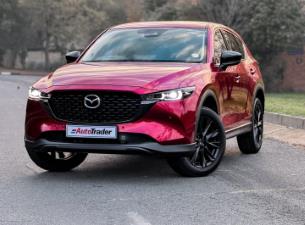 Mazda CX-5 2.0 Carbon Edition (2026) ReviewWith a brand-new successor just around the corner, the ageing Mazda CX-5 is officially entering its sunset phase. Does its analogue, physical-button charm and premium cabin refinement still make it the clever alternative to modern rivals like the Volkswagen Tiguan, Kia Sportage, and Haval H7, or has time finally caught up with this local favourite? We take the 2.0 Carbon Edition for a drive to find out.
 Volvo ES90 (2026) ReviewThere's something to be said about breaking away from the status quo. It's easy to get it horribly wrong, but Volvo seems to have nailed the execution of the ES90. This full-electric flagship sedan forces you to rethink what you know about sedans.