
Motorcycle riders in SA are some of the most vulnerable road users. Between reckless drivers on cellphones, aggressive taxi drivers, and oblivious truck drivers, bikers must have their wits about them whenever they swing a leg over the machine. The solution to this situation is simple - training and more training, drumming reflexive and conscious responses into riders so they can respond to events with muscle memory, but how is it done?
Related: Are there motorcycle training courses available for new riders in South Africa?
The acronym S.I.P.D.E. is a fundamental mental strategy for defensive riding, especially crucial for beginner motorcyclists. It stands for the five steps you should constantly apply while riding to maintain situational awareness and manage risk. Although not directly taught in training schools around SA, the system's tenets still apply, perhaps under other names. But what does SIPDE stand for? Let's find out!
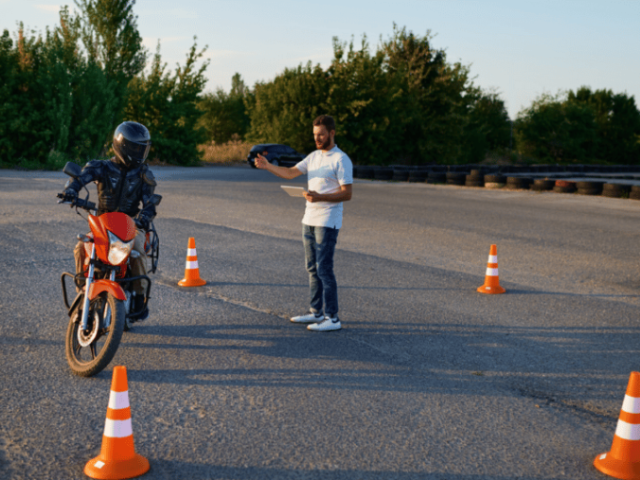
Suzuki Rider Safety training day at RedStar Raceway
What is SIPDE?
S - Scan
What it means: Actively and aggressively search your environment for potential hazards.
How to do it: Don't just look straight ahead. Constantly sweep your eyes from side to side, check your mirrors (rear and side), and look 20 to 30 seconds down the road (far ahead) as well as 12 to 15 seconds ahead (mid-range).
Goal: Gather all information about traffic, road conditions, weather, and roadside objects.
I - Identify
What it means: Pick out specific objects or conditions that could pose a risk to your path of travel.
How to do it: Categorise potential hazards:
Other Vehicles: A car approaching an intersection, a vehicle tailgating, a parked car whose door might open.
Road Conditions: Potholes, gravel, oil/antifreeze spills, wet pavement, railroad tracks.
Pedestrians/Animals: People near the road, children playing, or animals.
Goal: Filter the information from your scan down to the actual threats.
P - Predict
What it means: Determine what could happen if a hazard materialises, and how critical the situation might become.
How to do it: Ask "What if?" For example: "If that car doesn't stop at the stop sign, where will it go?" or "If I hit that patch of gravel while turning, what will happen?"
Goal: Anticipate the worst-case scenario and estimate the necessary time and space to react safely.
D - Decide
What it means: Choose the best course of action to reduce risk or avoid the hazard, usually 4 to 5 seconds before the danger point.
How to do it: You typically have three main options, or a combination:
Adjust Speed: Slow down, speed up (if safe to create space), or stop.
Adjust Position: Steer to change lane position (left, right, or centre of the lane).
Communicate: Use your horn, flash your lights, or signal.
Goal: Select a specific, concrete strategy to prevent a collision or loss of control.
E - Execute
What it means: Perform the action you decided upon smoothly and correctly.
How to do it: Use your riding skills (braking, accelerating, steering, shifting) to manoeuvre. This should be a decisive action, not a panicked reaction.
Goal: Safely navigate past the hazard and continue to the next iteration of the S.I.P.D.E. process.

In closing
S.I.P.D.E. is a continuous loop. You should constantly scan and identify, make a prediction, decide on a plan, and then execute the plan, all while immediately beginning the process again. Mastery of S.I.P.D.E. helps turn potential crises into routine manoeuvres.