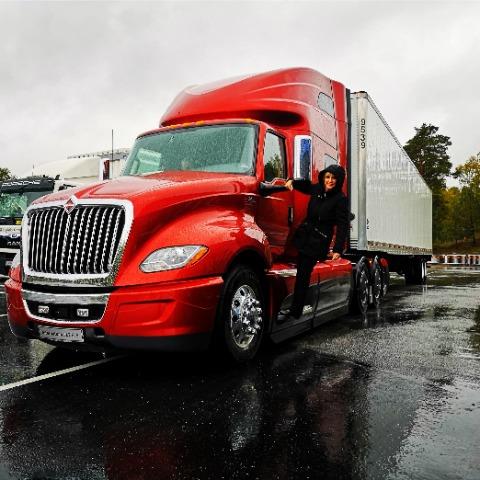
Introducing the trucks
Every now and then, the truck world produces a story that seems almost too good to be true. Two truck tractors, built an ocean apart, shaped by different cultures and regulations – yet powered by the same heart. Meet the DAF XG 530 FTG and the Peterbilt 579 EPIQ.

Both run on three axles and both carry the mighty PACCAR MX-13 under the cab. One hails from Eindhoven, in the Netherlands, and it is perfectly at home in the land of roundabouts. The other is pure highway steel, born and bred for America’s endless interstates.
The trucks in a nutshell
At the core is the same 12.9-litre PACCAR MX-13 – it is a powerplant that is smooth, strong and efficient.
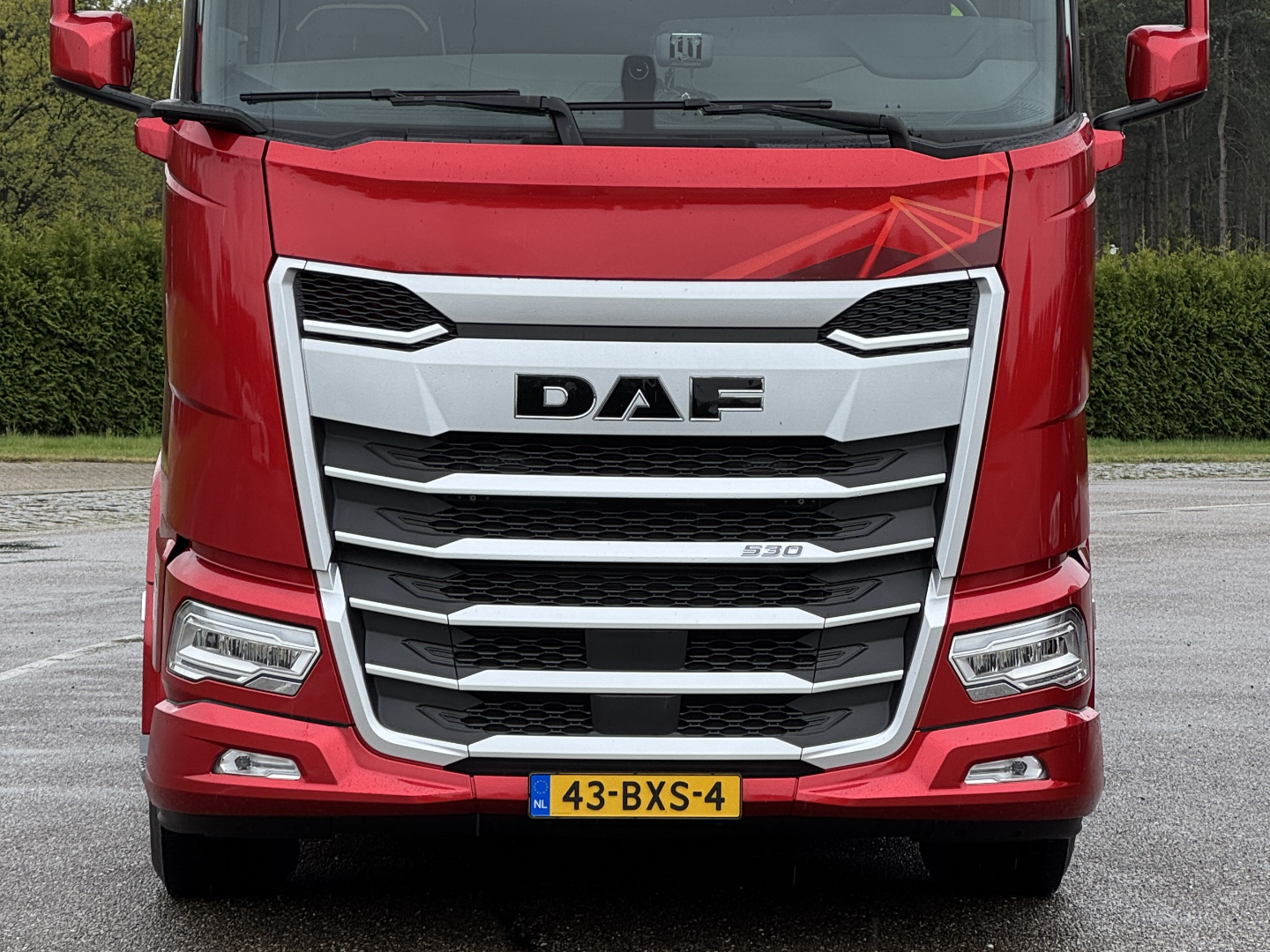
In the DAF, it’s tuned to 530hp and paired with ZF’s automated 12-speed TraXon transmission, delivering lightning-fast, near-seamless shifts. Designed around Europe’s varied drive cycles, the set-up provides quick bursts when needed and whisper-quiet cruising the rest of the time.
The Peterbilt’s MX-13 is rated at 510hp, only slightly down on paper, but paired with PACCAR’s TX-12. Shifts are slower, revs are lower and the whole driveline has that typically American “take it easy” feel. Kickdown here is less about overtaking and more about adding a little drama to the radio playlist. And unlike the DAF, the MX-13 is allowed to make itself heard in the cab.
Exterior
The DAF XG is unmistakably European in its design priorities. Its elongated cab, enabled by revised EU regulations (and much bigger than the cabs we see in South Africa), pushes the front forward for improved aerodynamics and safety. The result is a sleek, almost sculpted appearance that is as functional as it is distinctive. Camera-based mirrors reduce drag further, while tight turning geometry reflects its intended environment: narrow roads, busy distribution hubs and endless roundabouts.

The Peterbilt 579 EPIQ, by contrast, wears its purpose openly. Long, low and broad-shouldered, it is built for straight lines and wide lanes. The EPIQ package adds refined aerodynamic elements such as extended side fairings and airflow management around the trailer gap. These refinements are not merely cosmetic, with claims of fuel savings approaching 10% in optimal conditions.
Interior
Step inside the DAF and you’re greeted by a high, flat-floored cab with clever storage, premium finishes and excellent build quality. The sense of space is impressive by European standards, aided by the extended cab design. Materials feel robust, switches are logically placed and the overall impression is one of quiet, understated quality.

But climb into the Peterbilt 579 EPIQ sleeper – via its impressive staircase – and suddenly the XG feels almost modest. Space is abundant, with cupboards, tables, a microwave, a fridge and enough room to live – not just rest. The 80-inch UltraLoft sleeper transforms the cab into something closer to a mobile studio apartment than a workplace.

That said, the difference in philosophy is clear. The Peterbilt prioritises space above all else, sometimes at the expense of perceived quality. Cupboard doors feel lighter, plastics less refined and the abundance of faux wood trim may not appeal to European tastes.

The DAF, in contrast, feels engineered down to the last detail, with a focus on durability and driver ergonomics rather than sheer volume.
Drivetrain
Despite their shared engine, the driving experience differs markedly. The MX-13’s broad torque curve and low-rev pulling power mean both trucks require fewer gear changes and deliver strong, consistent performance across conditions.
In the DAF, the drivetrain feels tightly integrated. Throttle response is crisp, gear changes are rapid and well-timed and the truck maintains momentum effortlessly even on undulating terrain. It is a system tuned for efficiency, balancing performance with fuel economy and minimal driver input.

The Peterbilt’s drivetrain takes a more relaxed approach. Acceleration is more gradual, shifts are more deliberate and the overall experience encourages a steady, unhurried pace. On long, flat highways this character makes perfect sense, allowing the driver to settle into a rhythm that prioritises comfort over urgency.
Unladen, the Peterbilt can feel slightly lively over uneven surfaces, whereas the DAF remains composed and predictable. However, once loaded and cruising, both trucks demonstrate the inherent strength and refinement of the MX-13.
Safety
The DAF XG embraces European safety trends with enthusiasm. Advanced driver assistance systems include adaptive cruise control, lane support and optional camera-based mirrors that improve visibility and reduce blind spots. The cab structure itself benefits from improved crash protection thanks to its extended front design.

The Peterbilt 579 EPIQ approaches safety through a combination of robust design and integrated systems such as Bendix Fusion. Collision mitigation, lane-keeping assist and blind-spot monitoring are all present, tailored to the demands of high-speed interstate travel.

Both trucks reflect their operating environments. The DAF focuses on precision, visibility and urban safety, while the Peterbilt emphasises long-distance stability and collision avoidance at speed.
Verdict
The DAF XG is the consummate European all-rounder: nimble in the city, efficient on the motorway and generous with space. It feels engineered for complexity, capable of handling tight roads, variable loads and demanding schedules with ease.
The Peterbilt 579 EPIQ is the American long-haul dream: a rolling loft designed for days and nights on the road. It prioritises comfort, space and steady progress over agility, thriving in environments where distance matters more than manoeuvrability.

Like fraternal twins, they share the same DNA but couldn’t be more different in character. One is precise, efficient and quietly sophisticated. The other is expansive, relaxed and unapologetically bold.
Choosing between them is less about specification and more about context. Europe’s (and indeed South Africa’s) roads demand the DAF’s discipline. America’s highways reward the Peterbilt’s ease.
And just like with siblings, it’s hard to say which one you’ll prefer – until you’ve driven both.
- We are grateful to Florian Engel,Chairman of the International Truck of the Year Jury, who supplied us with information and photographs.