Volvo launches 500 hp biogas trucks in SA
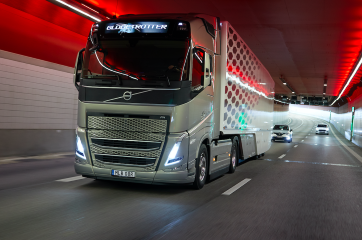
Volvo Trucks is launching 500 hp biogas-powered trucks in South Africa. The trucks can be ordered now – with delivery scheduled for the second half of 2023. Biogas trucks offer the same drivability as diesel trucks, and it is possible to run with high loads and cover long distances.


No newcomer to biogas
Volvo is no newcomer to the field of biogas. Back in February 2018, the company launched Euro 6 trucks that can run on liquified biogas – stating that they “offer the same level of performance, handling and fuel economy as diesel-powered Volvo trucks”. In addition, the CO2 emissions of these new trucks were said to be 20 to 100% lower compared to models equipped with diesel engines, depending on the choice of fuel.
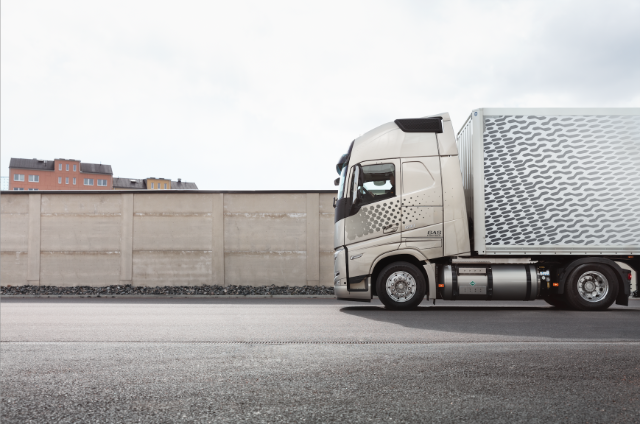
Those new Volvo FH LNG and Volvo FM LNG were available with 420 or 460 hp engines for regional and long-haul operations. “With our new trucks running liquefied natural gas or biogas, we can offer an environmentally friendly alternative that also meets the high demands on performance, fuel efficiency and operating range. This is a combination that our regional and long-haul customers require, “ Lars Mårtensson, Director of Environment and Innovation at Volvo Trucks, said at the time.
What is biogas?
But what is biogas and why is it beneficial? According to Nordsol, a company in the Netherlands that is committed to making bio-LNG mainstream as a clean and safe advanced biofuel that is widely available at an affordable price, liquified biogas – often called bio-LNG – is a biofuel made by processing organic waste flows, such as organic household and industrial waste, manure, and sewage sludge. Bio-LNG is a practically carbon-neutral biofuel.

When anaerobic digestion of organic waste occurs, biogas is emitted in the process. The main components in this biogas are methane (CH4) and carbon dioxide (CO2). To make bio-LNG, the methane is separated from the carbon dioxide and other critical components, and then liquefied. This process, which is very complex, increases the energy density 600 times and makes biofuel ideal for heavy-duty and maritime transport.
Complementing electric transport
According to Waldemar Christensen, MD of Volvo Trucks South Africa, biogas is a great complement to electric transport. “It helps hauliers with their sustainability ambitions and aims towards climate-neutral transport. That is especially true for Southern Africa, where fleets need to travel long distances to deliver cargo across the region for which bio-LNG trucks, with their larger 225 kg fuel tanks and a range of up to 1 000 km, would be ideal.”
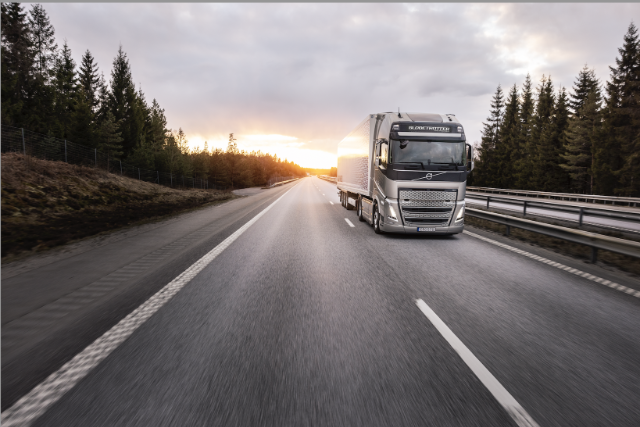
With the new 500 hp trucks, the gas engines also get major technical upgrades that make them up to 4% more fuel efficient which, together with a new 10% larger gas tank, also contributes to a longer range.
Can biogas work in SA?
But can biogas be implemented practically in South Africa? Where will operators get the biogas?
In an exclusive interview with AutoTrader, Eric Parry, Sustainability Solutions Manager at Volvo Trucks South Africa, revealed that there are some pilot biogas projects in South Africa. “We are aware of a few pilot projects, but none are publicly available as yet. The price is still to be seen, but indications are around a 20% discount to diesel. We are assisting with technical information where possible. There are no plans for Volvo to produce biogas ourselves.”

There are no public biogas stations in the country. “Right now the only refuelling points are privately controlled by customers, there are no commercial refuelling stations that we are aware of. But there are a number of players investigating the business case,” he said.
What about refuelling and cost?
Then there are the all-important issues of refuelling and cost. How do biogas trucks perform in this regard? “Refuelling is almost as fast as a diesel truck. When refuelling from a commercial refuelling station the time is around 10 to 15 mins for a 205 kg LNG tank. As with diesel, it depends on the capacity of the station pump,” Parry said.

The trucks will cost more than their diesel counterparts. “There is a premium over a diesel truck. This is driven partly by the LNG technology and partly by the fact that this is a Euro 6 emission class engine versus the more common (in South Africa) Euro 3 diesel. The final price will depend heavily on the spec ordered,” he revealed.

In a bit of a chicken-and-egg situation, we will only see the trucks on our roads once biogas is available. “We have tested dedicated LNG units locally, and they are very suitable for our roads. So, when the gas is readily available, we are ready to support our customers,” Parry concluded.