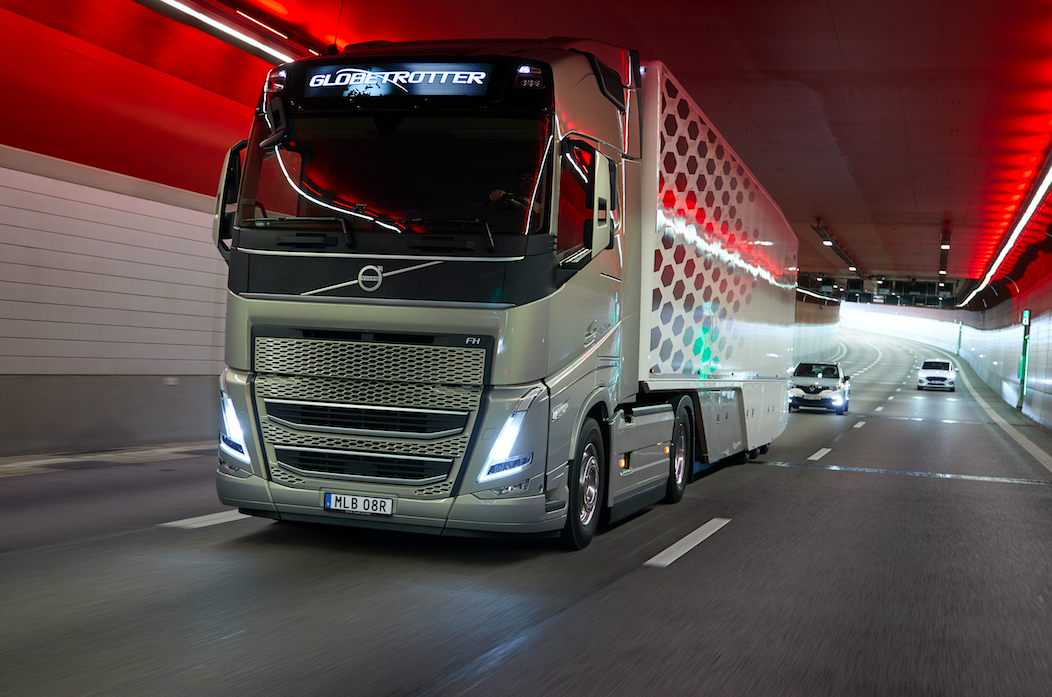

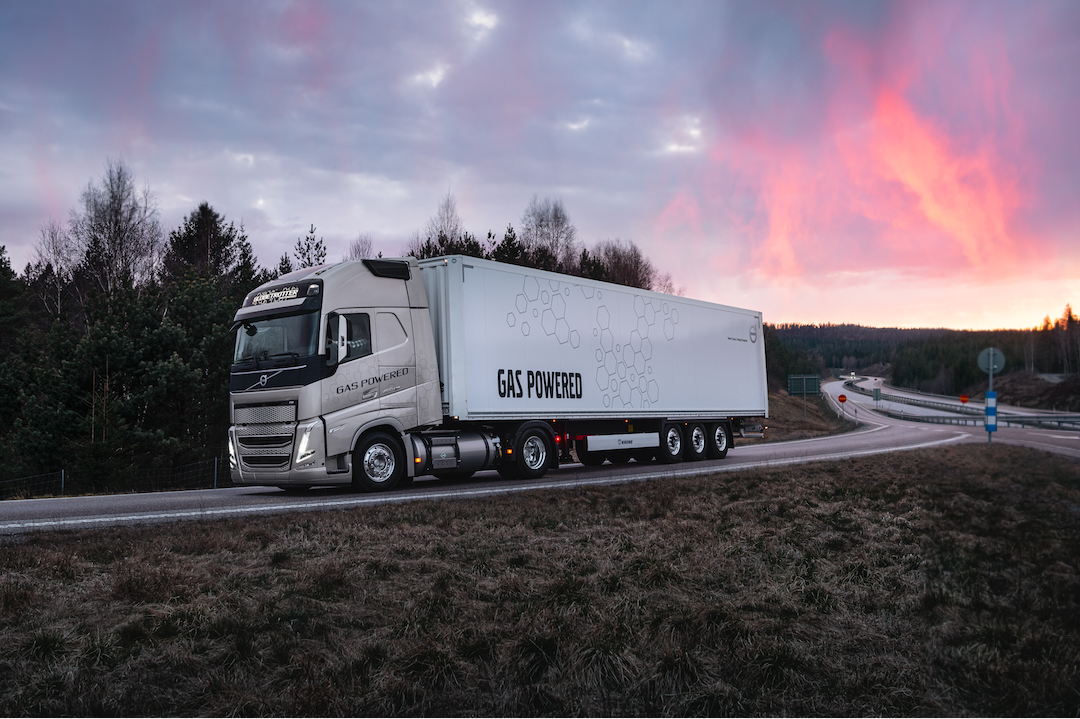
Enter the Volvo FH. Thanks to updates to its aerodynamic design, the latest FH further reduces flow separation and pressure drag, and by extension, helps save fuel in long-haul operations. We go behind the scenes to find out how Volvo’s engineers achieved this.

Why aerodynamics rule
But firstly, why the big fuss about aerodynamics? Well, overcoming air resistance on a truck is vital if one wants to achieve low fuel consumption. That’s because air resistance is a significant contributor to a truck’s fuel consumption when it is driving at speeds from around 50 to 60 km/h and upwards. Its effect on fuel consumption increases exponentially the faster the truck drives. A study published in Automotive Engineering in August 1975 found that a tractor-trailer unit moving at 88.5km/h displaces as much as 18 tons of air for every kilometre travelled!

According to Cameron Dudley-Owen, managing director of Aero Truck, some 50% of the fuel used by a truck is to overcome aerodynamic drag when travelling at highway speeds. “Aerodynamics represents an inexpensive way to reduce both fuel usage and lower carbon emissions,” he points out.
His comments are borne out in many research studies. For instance, in 2006, a two-year collaborative study conducted by members of the Truck Manufacturers Association and the US Department of Energy found that the widespread application of new aerodynamic technologies on tractor-trailer trucks could cut US fuel consumption by nearly one billion gallons per year!
Delayed flow separation vital

Truck manufacturers are mindful of this. As such, improving the efficiency of their products is an ongoing challenge for all bus and truck manufacturers – including Volvo. Accordingly, aerodynamic design has long been one of the company’s most important focus areas when it comes to reducing the fuel consumption of its vehicles.

Practically, how does the company achieve this? Well, its engineers are continuously working with wind tunnels and simulations to identify further improvements. One of their key aims is to delay what is termed “flow separation”. Essentially, this is when a layer of airflow detaches from the truck’s surface. The earlier it detaches, the larger the wake behind the vehicle and therefore the higher the pressure drag. Minimising and delaying flow separation therefore reduces pressure drag.
“The flow greatly accelerates as it goes from the stagnation point in front of the truck (high pressure) over to the sides (low pressure),” explains Anders Tenstam, Aerodynamics Specialist at Volvo Trucks. “If a truck is driving at 90km/h, then the flow velocity at the corners can reach speeds as high as 200km/h. This makes the front corners a very sensitive region, and any small object or gap can have a huge impact on the overall airflow.”
Mind the gap

Gaps are bad news when it comes to aerodynamics. One of the most significant gaps, of course, is that between the truck and the trailer. According to the Dryden Flight Research Center, closing the gap between the cab and the trailer can realise a significant reduction in drag and a fuel consumption saving of 20 to 25%.
But smaller gaps need attention too. And eliminating those gaps is also very important, as Mattias Hejdesten, Engineering Specialist Aerodynamics at Volvo Trucks, explains. “In our most recent simulations and tests, Volvo Trucks’ engineers were able to identify a number of small gaps and split lines on the truck’s exterior, that could further improve aerodynamics if sealed.

“We could see that split lines and gaps can be crucial depending on where they are situated. They allow airflow to seep in behind the front panels, which then gets sucked out in the low-pressure regions on the cab’s sides. From there, it can trigger flow separation when it interacts with the external airflow.”
To help stem these leakage flows on the FH, new seals have been placed between the various front panels. As a result, any triggering of flow separation at the vehicle’s front corners is eliminated, helping the external flow to stay attached to the vehicle’s sides for longer.
Small stuff makes big differences

A small seal may sound like a minor improvement – but, in the field of aerodynamics, small improvements can amount to big differences, as Tenstam explains.
“Truck aerodynamics is a lot about mastering the small details. The truck cab is a workplace with many legal restrictions and considerations, so there is a constant battle for every millimetre of available space, to accommodate all essential functions.”
One of the small details entailed adding those new seals. Adding these seals does not only improve overall aerodynamics. It also opens up additional opportunities for improvements further along the vehicle. These improvements include adding an extended door extension to fill the void in the footstep box. This creates a flat surface for the external airflow to attach to, thus further reducing flow separation.
New fender flare

The FH also features a new fender flare, which reduces the gap from the wheel. This results in reduced evacuation flow from the wheelhouse and by extension less aerodynamic drag. Furthermore, new curved designs for the mirror arm covers with smaller peak holes also help reduce flow separation.
“By improving the conditions at the front of the truck, we can suddenly see some opportunities to maintain an aligned flow along the sides too,” explains Hejdesten. “Otherwise, if we had not done this, we would have seen minimal benefits from these additional aerodynamic improvements.”
So, there you have it: insight into why the FH is one of the most aerodynamic trucks around. And, as you can see, it’s not a case of one giant leap but rather a collection of smaller aerodynamic improvements. Each individual improvement makes its own contribution to improving the vehicle’s energy efficiency – and helps to lower that dreaded fuel bill.