More vehicles equal more risk
One of the challenges with lowering insurance costs is lowering risk. And, sadly, more vehicles on the road mean more risk.
Brandon Saunders, director of Short-Term Insurance at ASI Financial Services, notes that our roads are busier than ever before. “In recent times a global spike in demand for resources, most recently coal, has added to the scarcity of this particular fossil fuel due to the supply constraints caused by the raging Ukraine war. With South Africa being a key supplier around the world, the heavy commercial vehicle market has seen a massive increase in activity in a short space of time.

“As South Africa’s ageing rail infrastructure is still to undergo much-needed reinvestment, there are more vehicles on the road,” Saunders says.
An accident waiting to happen
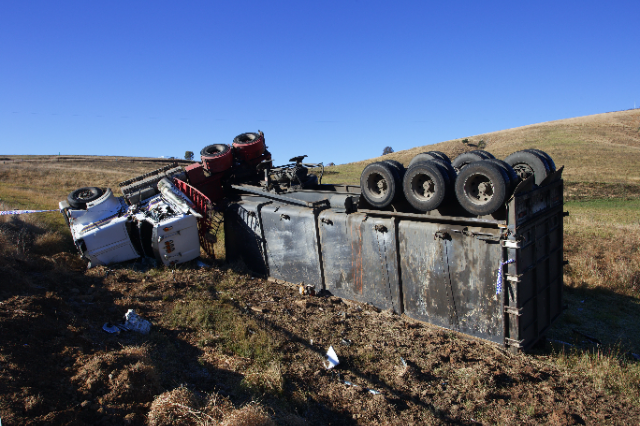
Unfortunately, more trucks on the roads rushing to ports can lead to congestion, increasing time pressures, delays and potentially causing more accidents.
“Delays can then cause unscrupulous operators to push their drivers beyond reasonable expectations, especially when it comes to driving time and lack of rest,” says Saunders.
Another unfortunate reality is that, for an “off-the-books fee”, some officials will even sell licenses to unqualified candidates. This not only places the lives of other motorists and pedestrians in danger, but it also puts billions in assets at risk, not to mention the loss in productivity.
Insurance implications

Indeed, non-compliance ultimately increases the overall risk of operating in the country. This, in turn, increases the premiums that insurers will require from members. “In addition, unusually high claims paid out in recent years, including business interruption claims due to the Covid-19 pandemic and those associated with the devastating floods in KwaZulu-Natal, will simply add to an already high inflationary global economic environment. This, along with the strain on the country’s power supply due to infrastructure failure, will have an additional impact on the cost of commercial insurance,” Saunders says.
Working with insurers

Conscientious operators have begun to realise that they can not only protect employees and assets, but also bring their cost of insurance down over time by implementing a few key measures.
“For instance, installing a telematics system may initially present a capital cost, but will pay for itself over time. Live, centrally monitored systems provide detailed information about vehicle conditions, location, driver behaviour and sometimes road conditions, including the best route to take at any given time. They enable operators to take preventative measures, like scheduling services and replacing parts before their failure creates costly problems,” says Saunders.

“Clearly, this enables more efficiency in operations, bringing fuel costs down and saving on maintenance. Importantly, insurers recognise such systems as reducing risk, and will be more likely to reduce premiums – a vehicle that has a simple tracker installed will attract a lower monthly premium,” he adds.
Invest in technology

Operators wishing to lower their insurance premiums should invest in the very best technology. “The transportation industry is constantly evolving thanks to advancements in technology. There is great value in collision mitigation and avoidance systems,” notes Ryan Loftin, a specialist in transportation risk for Beehive Insurance, a company based in the United States.

“An easy investment for any trucking business is dash cameras. Video evidence can exonerate truckers from what could become huge claims and pay-outs based originally on word alone,” he points out.
Driver training to the fore
Driver training is also vital if any transport operator wishes to lower its cost of insurance, as Nicci Scott, founder of the Commercial Transport Academy (CTA), confirms. The CTA – which is based in Johannesburg – is one of the benchmark companies globally when it comes to the training and empowerment of female truck drivers.

Scott says that ongoing impactful driver development should be a core value of every transporter in South Africa and should be ingrained into the organisational culture. “Driver development should address both the technical skills (hard skills) of defensive and product training and the soft skills, being driver behaviour and attitude. While hard skills are easier to teach and to monitor, when incorporated with soft skills, driver development can be really impactful and achieve long-term results in lowering the risk of crashes and accidental damage.
“Soft skills – such as maintaining physical fitness, balanced nutrition and having a strong work ethic by being a responsible team player – should be considered as part of the annual training plan. It is impossible to achieve sustainable results if driver training does not address the drivers’ health and wellness, as this forms a critical basis of how conscious and unconscious decisions are executed in the cab,” she notes.
Incentivise those drivers

Once drivers are suitably trained, they need to be incentivised. An excellent way of getting drivers to do a better job (better drivers mean fewer accidents which, in turn, means lower insurance premiums at the end of the day) is via driver recognition programmes. Consider establishing a “driver of the month” or “driver of the year” accolade.
Talk to your insurer
Unlike medical insurance, which is community-rated, short-term and vehicle insurance is risk rated. “So, anything that can help an insurer see lower risk will have a beneficial impact,” Saunders explains.

“Starting the conversation with an insurance provider can only help, especially when you can prove that you have invested in policies and practices that support drivers to make better decisions,” he concludes.