
1. Mercedes-Benz eActros LongHaul

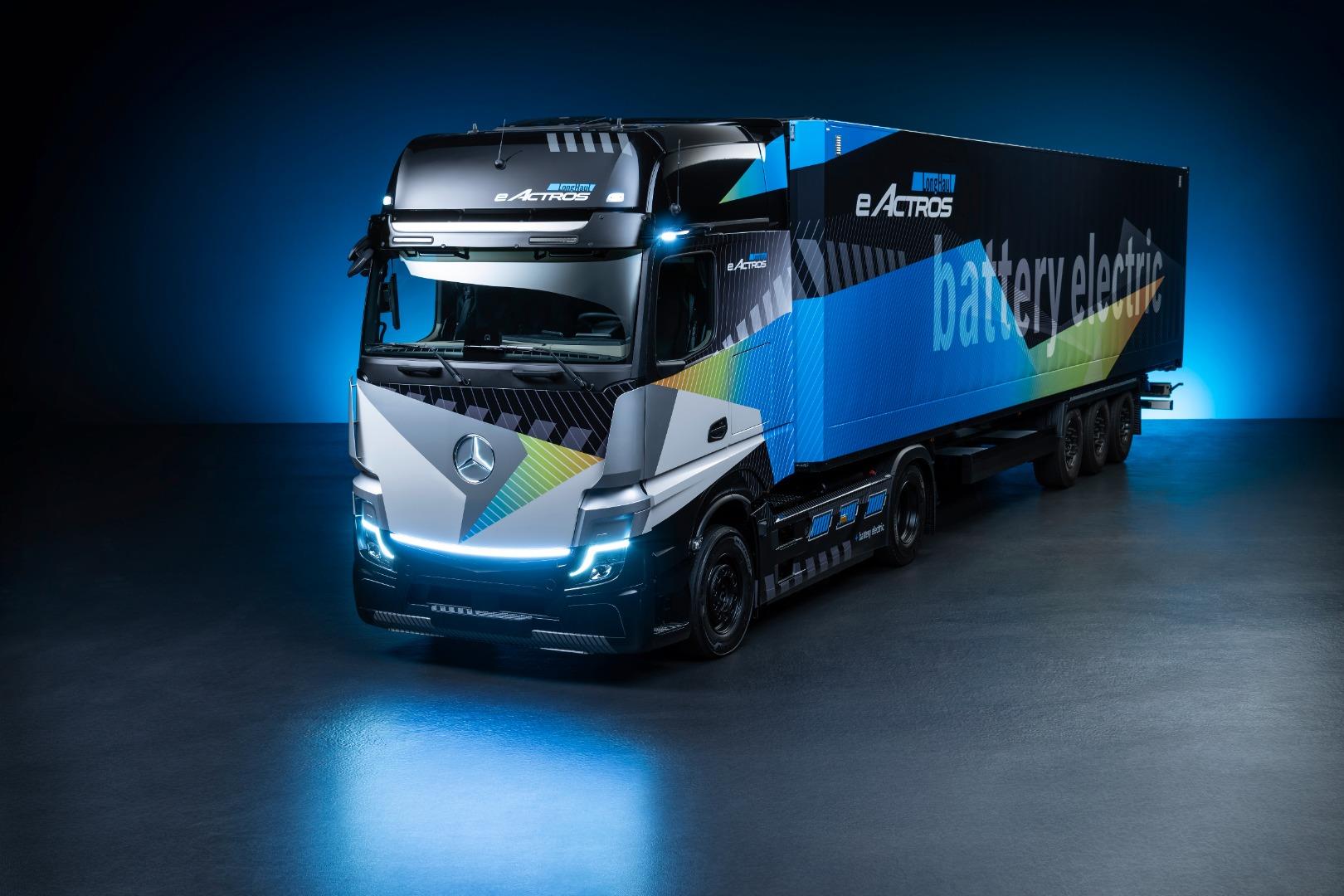
One of the biggest challenges with electric trucks is longevity. The question on everyone’s lips is always this: how long will those (rather expensive) batteries last? Then, of course, there is the age-old debate about charging time. The eActros LongHaul answers all these questions – and more. The truck – scheduled to go into production in 2024 – can be charged from 20 to 80 percent in less than 30 minutes at a charging station with an output of about one megawatt. It uses lithium iron phosphate cell technology (LFP) in its batteries, which means that it’s good for 1.2 million kilometres over a period of ten years. It will have a range of around 500 kilometres.
2. MAN eTruck

Like the eActros LongHaul, the new MAN eTruck will also go into service with the first customers in 2024. This heavy-duty long-haul truck will have daily ranges of between 600 and 800 kilometres (and even up to 1 000 kilometres in the future). While MAN didn’t comment on charging time at the IAA, this truck also has megawatt charging capability – so it should be as fast as you can say MAN.
3. Ford’s all-new electric truck
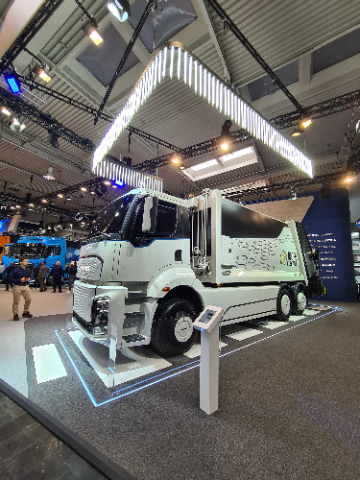
Ford Trucks unveiled a new electric truck which is expected to go into production in (yes, you guessed it) 2024. It offers a payload of 18 to 26 tons and energy costs will be half of that of a diesel-powered truck, the company claims. The range will be 300 km.
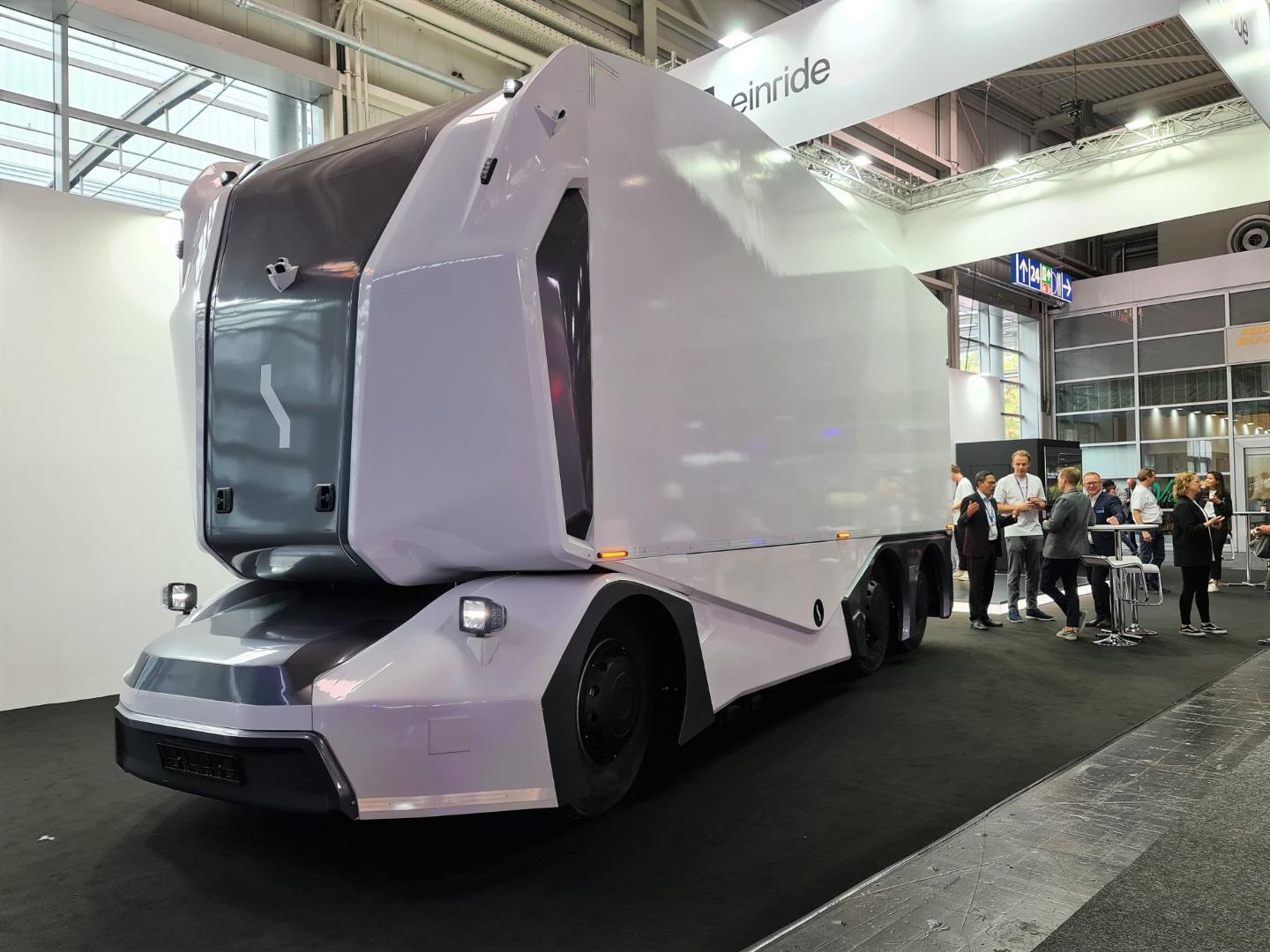
4. Einride Pod

The Einride Pod is far from new. It was first launched ages ago – back in 2019, Einride became the first company in the world to drive a fully autonomous and electric heavy transport vehicle on a public road. But we could not resist placing it on our list of seven sensational trucks at this year’s IAA – because the electric and autonomous Einride Pod remains a real head-turner. It’s possible to oversee and operate pods from anywhere in the world with Einride’s Remote Operator Station. This is real futuristic stuff.
5. Quantron QHM FCEV
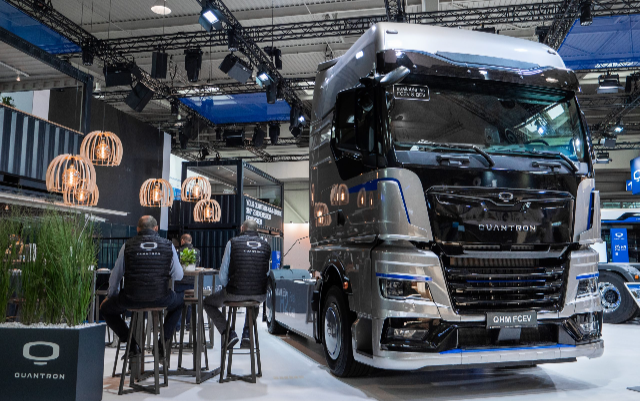
The world premiere of the Quantron QHM FCEV, a truck tractor unit for heavy long-distance transport, also took place at the IAA. It has a range of up to 700 km (54 kg hydrogen tank capacity) or 1 500 km (116 kg up to 122 kg hydrogen tank capacity). In developing the truck, Quantron has partnered with Ballard (which supplies the newly developed FCmove-XD 120 kW fuel cell) and Allison Transmission (which is responsible for the integrated eGen Power 130D E-axle). Deliveries of this vehicle will kick off in Q2 2023.
6. Volta Zero

Volta Trucks presented a roadgoing Volta Zero Design Verification prototype vehicle at the IAA. The Volta Zero is the world’s first purpose-built full-electric 16-ton vehicle designed for urban logistics. Designed from the ground up with an operating pure-electric range of 150 to 200 kilometres, the first Volta Zero vehicle was completed at the company’s contract manufacturing facility in Steyr, Austria, during September this year. A pilot fleet of trucks will be loaned to customers for extended periods in late 2022 and early 2023. Series production will start in early 2023.
7. New Generation Fuso eCanter

The eCanter has been around for a while – for five years, to be precise. This means that the chaps at Fuso have been able to get lots of feedback from customers worldwide (because their eCanters have collectively driven more than six million kilometres). Based on that feedback, Fuso has come up with the Next Generation eCanter. It’s more flexible than ever before (applications between 4.25 and 8.55 tons of permissible gross vehicle weight are par for the course). There are six different wheelbases (from 2,500 mm to 4,750 mm) and the Next Generation eCanter is powered either by a 110 kW (variants with a GVW of 4.25 and 6 tons) or 129 kW (variants with a GVW of 7.49 and 8.55 tons) electric motor with an optimized driveline and 430 Nm of torque. A range of up to 70 km, 140 km or 200 km on a single battery charge is available. The start of sales is planned for Q4 2022, while series production of the Next Generation eCanter will happen in 2023.