Local assembly to the fore
The event brought together senior leaders from Tata Africa and Tata Motors, industry stakeholders, dealer partners and His Excellency Mr Prabhat Kumar, High Commissioner of India to the Republic of South Africa. Their presence also reflected the industrial links between India and South Africa, particularly in sectors such as automotive manufacturing, mobility and trade. The 12,000th vehicle was a Tata Ultra T.14, which was officially unveiled and handed over to RAM Couriers during the event.

Rosslyn’s role in Tata’s South African footprint
Established in 2011, the Rosslyn assembly facility has been central to Tata Motors’ localisation strategy in South Africa. The plant covers about 35,000 square metres and has an installed annual capacity of more than 2,200 vehicles, with flexibility to increase output depending on demand.

The facility assembles a range of Tata Motors commercial vehicles, including the Ultra, Prima and LPT ranges, as well as Tata Daewoo models. These vehicles serve a variety of market needs, from logistics and distribution to heavy-duty commercial applications. For South Africa, local assembly remains an important part of the broader industrial economy. Facilities such as Rosslyn contribute to manufacturing capability, job creation, skills transfer and the development of supplier and dealer ecosystems.
Recognition from India’s High Commission
Congratulating the Tata Motors South Africa team, Kumar described the rollout of the 12,000th vehicle as a significant achievement.“The High Commission of India congratulates Tata Motors South Africa on the rollout of the 12,000th vehicle from the Rosslyn facility. It is indeed a significant milestone. I wish the Tata Motors SA team many more achievements in the coming years,” he said.

His comments highlighted the wider relationship between India and South Africa, two markets with long-standing commercial, diplomatic and cultural links. Tata’s operations in South Africa form part of that broader relationship, with the group having been active in the country since the mid-1990s.
Focus on customers and productivity
Speaking at the event, Asif Shamim, Head of International Business at Tata Motors Ltd, said the milestone was built on trust, customer confidence and partnerships. He added that the rollout reflected Tata Motors’ long-standing commitment to South Africa by bringing products closer to customers while supporting jobs, skills and the local automotive ecosystem. He also pointed to the company’s “Better Always” philosophy as a guide for delivering relevant, high-quality vehicles suited to the market.
For fleet operators, the value of a commercial vehicle is measured not only by its purchase price but also by uptime, maintenance costs, performance, fuel efficiency and aftersales support. Tata Motors Commercial Vehicles has said it is working to strengthen its dealer footprint across South Africa, improve access to its vehicle range and enhance service capability.
Building capability in South Africa
Jacques Taylor, Managing Director of Tata Africa Holdings Distribution, said the 12,000th vehicle represented more than production scale. He said it reflected progress made with employees, partners and customers over many years, adding that sustained investment in local capability, skills development and operational excellence can create a meaningful impact in industries and communities.

That point is particularly relevant in South Africa, where manufacturing remains under pressure from rising input costs, infrastructure constraints, changing demand and intense competition. Against this backdrop, continued investment in assembly, skills and distribution networks is important for long-term industrial participation.
New Ultra models previewed
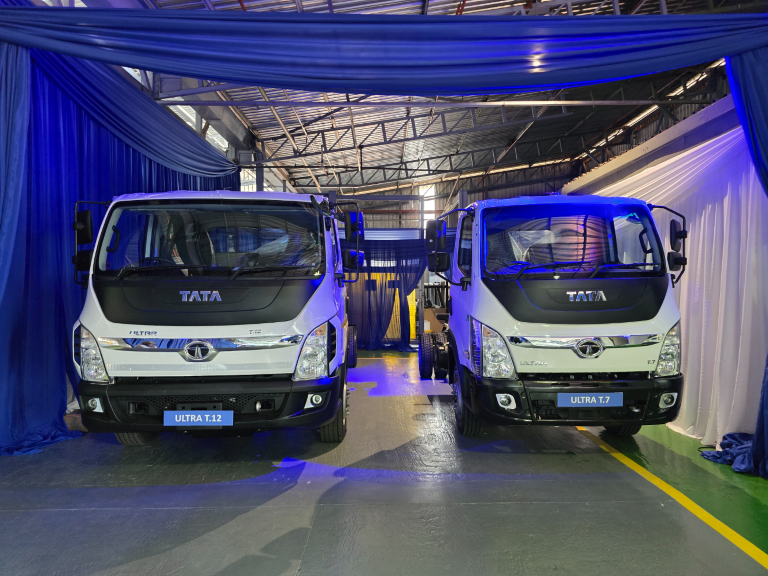
As part of the milestone event, Tata also offered an exclusive preview of two new models that will expand the Ultra platform offering for the South African market. The Ultra range has become a central part of Tata Motors’ commercial vehicle portfolio, designed for applications where payload, driver comfort, efficiency and reliability are important. The addition of new models suggests Tata is looking to broaden choice for local customers and address a wider range of operational requirements.

While the 12,000th rollout was a ceremonial moment, its significance lies in what it represents: a sustained manufacturing presence, a growing customer base and continued confidence in South Africa’s commercial vehicle market. For Tata Africa and Tata Motors, the Rosslyn milestone is both a marker of past progress and a signal of future intent.