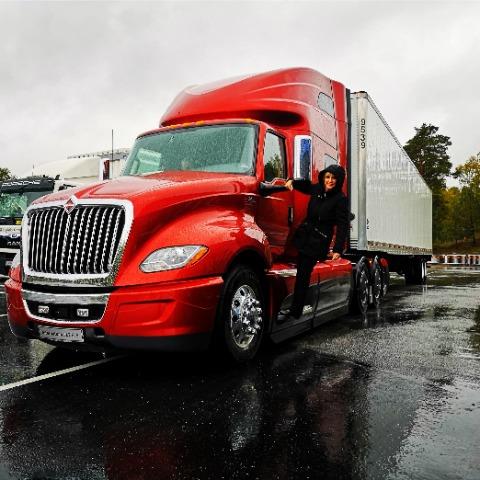
Volvo Trucks bags five-star safety rating
Long synonymous with safety, Volvo Trucks has once again secured a five-star rating from Euro NCAP, this time for its FM model. The achievement is a reminder of the steady progress that is being made in improving truck safety – modern trucks are now among the safest vehicles on our roads.


A persistent road safety challenge
Road safety remains one of South Africa’s most pressing public concerns. Each year, thousands of lives are lost on the country’s roads, with heavy vehicles sometimes involved in severe crashes. Their size and weight mean that, when incidents occur, the consequences can be devastating. Multiple factors contribute to this reality. High traffic volumes on key freight corridors, inconsistent law enforcement and varying vehicle maintenance standards all play a role. In such an environment, improvements in vehicle safety are not merely desirable – but essential.

Against this backdrop, developments in truck safety testing and technology take on added significance. They offer a glimpse into how risks might be reduced, particularly on routes where freight transport and everyday road use intersect.
Expanding safety testing to trucks
Euro NCAP, long regarded as the benchmark for passenger car safety in Europe, has recently extended its testing programme to include heavy commercial vehicles. This marks an important shift, recognising the growing need to assess safety performance beyond passenger cars.

In its latest round of testing, focused on what it terms “regional distribution” trucks, the Volvo FM 4x2 rigid achieved the highest possible rating of five stars. Importantly, this is not an isolated result. Seven Volvo truck models have now received five-star ratings under the programme, spanning different configurations and applications. Together, they point to a consistent approach to integrating safety systems across a wide range of vehicles.
How the rating system works
The Euro NCAP truck assessment differs from traditional crash testing in a key respect: it prioritises prevention as much as protection. Rather than focusing solely on what happens during a crash, it examines how effectively a vehicle can help avoid one. Three main areas are evaluated: safe driving, collision avoidance and post-crash response. Within these, systems such as driver monitoring, visibility, speed assistance and automated braking are tested in realistic scenarios.

A five-star rating indicates that a vehicle performs strongly across all categories, exceeding minimum regulatory requirements. Technologies such as forward collision warning, automatic emergency braking and lane support systems are central to this performance. Equally significant is visibility. Both direct and indirect vision are assessed to determine how well drivers can detect pedestrians, cyclists and other vulnerable road users. In busy urban environments, this can make a crucial difference.
Urban safety and the “City Safe” standard
One of the more notable aspects of the Euro NCAP framework is its “City Safe” criteria. This standard focuses specifically on urban conditions, where interactions between trucks, pedestrians and cyclists are most frequent. All of the Volvo models tested to date have met this benchmark. This reflects a wider trend in vehicle design, where safety systems are increasingly tailored to complex, mixed-traffic environments rather than only long-distance highway use. For countries like South Africa, where urban congestion and pedestrian activity are a daily reality, such developments are particularly relevant.
Why it matters locally
Although these specific truck models are not necessarily available in South Africa, the underlying technologies and standards have broader implications. They point to what is possible when safety is prioritised at the design stage. Advanced systems that assist with braking, maintain lane discipline or enhance visibility can help reduce the likelihood of collisions. This is especially important in situations involving driver fatigue or human error, both of which are recognised contributors to road accidents.

These technologies are not a substitute for responsible driving or effective regulation. However, they provide an additional layer of protection that can mitigate risks and potentially save lives.
Raising expectations across the industry
Euro NCAP’s move into truck testing also reflects a wider push towards greater transparency and accountability. By assessing vehicles against standards that go beyond basic legal requirements, the programme encourages manufacturers to innovate and compete on safety. This has a ripple effect across the industry. Fleet operators gain clearer information when making purchasing decisions, while regulators and policymakers have a more robust benchmark against which to measure progress.

Looking ahead, Euro NCAP plans to expand its testing criteria further, incorporating additional systems and eventually crash protection. This phased approach ensures that the programme evolves alongside technological advances. This can only be good news – for the global transport industry and for South African road users too. Thanks to the efforts of companies like Volvo and organisations like Euro NCAP, modern trucks are extremely safe. So too are well-trained drivers. Now, all that is needed – in South Africa, anyway – is proper infrastructure and consistent enforcement of road traffic legislation. But therein lies another article entirely…