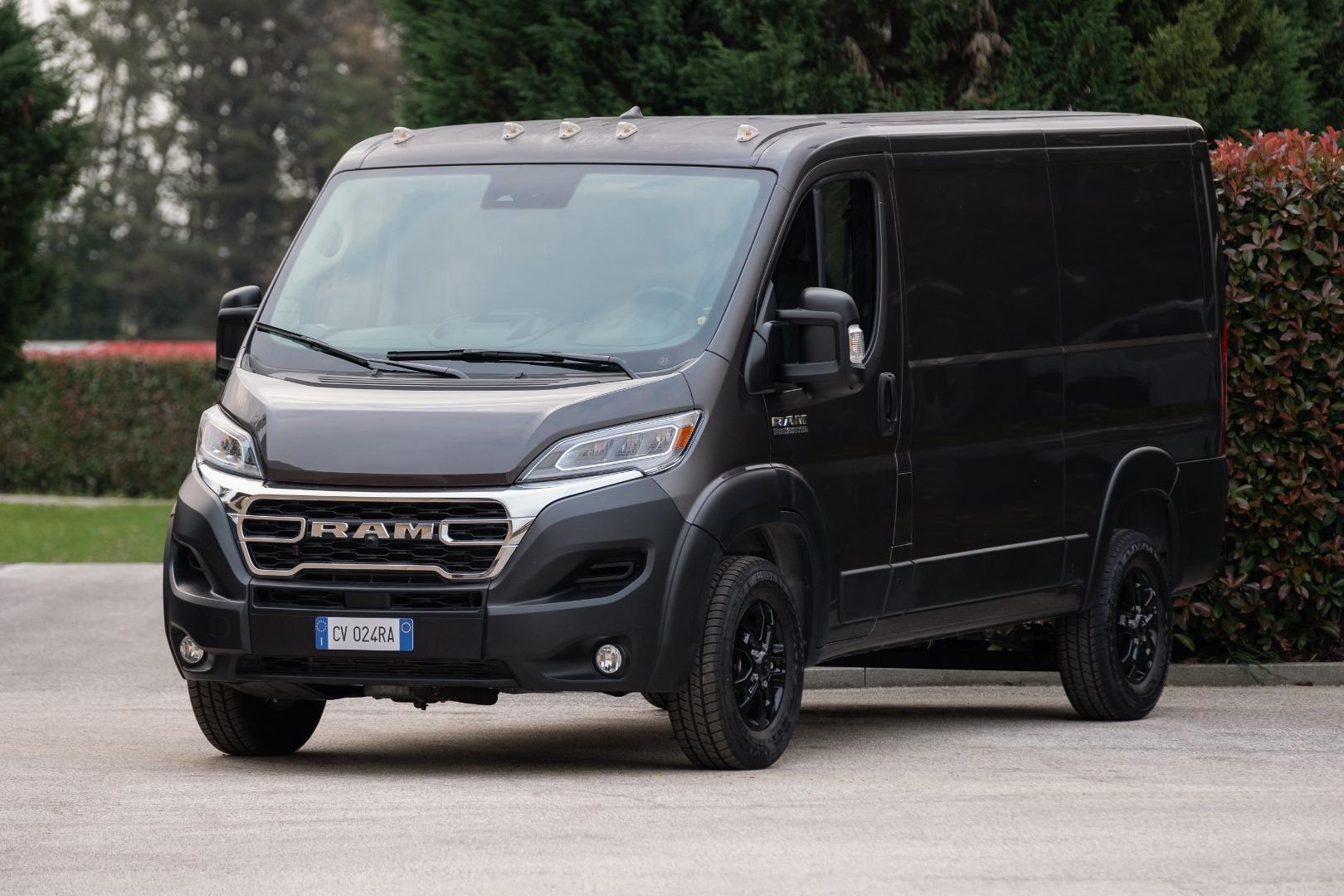

It announced details of the plan and indeed the vehicle launches on October 23, but this writer – as a member of the International Van of the Year jury – was treated to a sneak preview at the Balocco Proving Ground in Italy on October 19.
Introducing Stellantis

On January 16, 2021, Peugeot SA merged with Fiat Chrysler Automobiles. The new company was named Stellantis, which – today – is one of the world’s leading automakers. Its brands include Abarth, Alfa Romeo, Chrysler, Citroën, Dodge, DS Automobiles, Fiat, Jeep, Lancia, Maserati, Opel, Peugeot, Ram, Vauxhall, Free2move and Leasys.

The company is the CV market leader in Europe – with more than 40% market share in battery-electric vehicles (BEVs), it occupies the number one position in South America, number two in the Middle East and Africa and number three in North America, supported by 20,000 dedicated so-called “customer touch points”. It has a global manufacturing footprint, with 15 commercial vehicles plants in Europe, North America, South America, Middle East and Africa (including South Africa).
High aspirations
Not satisfied with this dominant position, Stellantis is eyeing massive growth. A super enthusiastic Jean-Philippe Imparato, Head of the Stellantis Commercial Vehicles Business Unit, told jury members that he wants to double CV revenues by 2030 (over 2021).
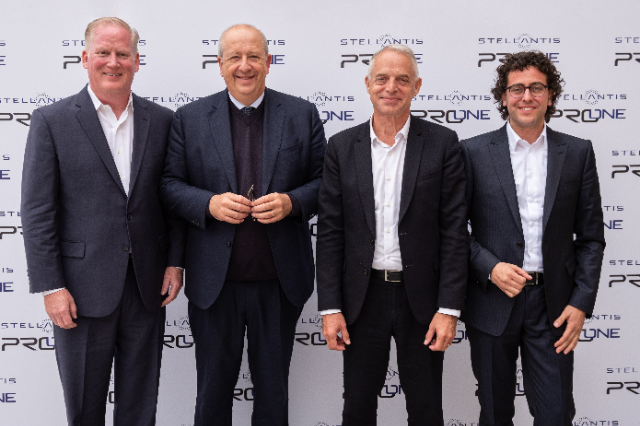
“With the Commercial Vehicles Business today accounting for one-third of Stellantis Net revenues with 1.6-million-unit sales annually, the Pro One strategy will help Stellantis to achieve a 40% electric vehicle (EV) sales mix and generate €5 billion in service revenues,” he revealed.

“Our ambition is to be the preferred business partner for our customers around the world,” added Xavier Peugeot, Senior Vice President of Pro One, the Stellantis Commercial Vehicles Business Unit. “Offering a full range of class-leading vehicles, bolstered by the latest in zero-emission propulsion, driver assistance technology and connectivity is just the start. We will be there for our customers throughout their entire ownership journey.” He also revealed that Stellantis has already sold 1.1 million vans and pick-ups this year.
Unprecedented vehicle introductions
One of the ways in which Stellantis will meet its Pro One objectives is via new product launches – and the jury was introduced to 12 new vehicles, which we then proceeded to test drive (the vehicles we tested were prototypes; watch this space for driving impressions). As an aside, the number of launches was unprecedented; I honestly cannot recall ever attending a launch of 12 vehicles.

The new vehicles are small, medium and large vans from five of the Stellantis brands, namely Citroën, FIAT Professional, Opel, Peugeot and Vauxhall. (New vehicles are also going to debut in the Ram range – including the Ram ProMaster EV by the end of 2023 and the Ram 1500 REV in late 2024. The future portfolio also includes hydrogen fuel cell technology. We will share more details in the future.)

Luca Marengo, Global Head of Product – Serial Life for the Stellantis Commercial Vehicles Business Unit, took us on a journey through the entire 12-vehicle range, and he was also upbeat. “The essence of our customer-centric renewal of our entire van lineup is no compromise – in range, capability, safety and connectivity,” he said.
Overview of new vans
We won’t go into too much detail about the 12 vehicles now; we will provide this information closer to the actual launch next year. But we will share the overview provided by Marengo.

First, the compact vans. They come in van, combi, people mover and crew van guise and in two lengths (with up to seven seats). They offer a payload of up to one tonne and a loading length of up to 3.44 metres. They are available with internal combustion engines (ICE) or a second-generation BEV (with a range of up to 330 km).

The mid-sized vans come in van, combi, people mover, crew van, platform cab and motorhome guise. There are two lengths, and the vehicles have a payload of up to 1.4 tonnes. They can load a volume of up to 6.6 cubic metres. They are available with ICE, second-generation BEV (with a range of up to 350 km) and hydrogen fuel-cell powerplants.
Finally, there is the new large van range. It is available in van, delivery van, cab, crew cab, tipper, dropside and motorhome guise. There are four lengths and three heights. They offer a payload of up to two tonnes, a volume of up to 17 cubic metres and a GVM of up to five tonnes. They are available with ICE, second-generation BEV (with a range of up to 420 km) and hydrogen fuel-cell powerplants (in 2024).