Iveco dominates Dakar while Hino maintains reliability streak
The 2025 Dakar Rally once again showcased the endurance and engineering of top truck manufacturers, with Iveco securing a clean sweep of the podium in the truck category. Meanwhile, Hino extended its remarkable finishing record, marking its 34th consecutive completion of the gruelling race.


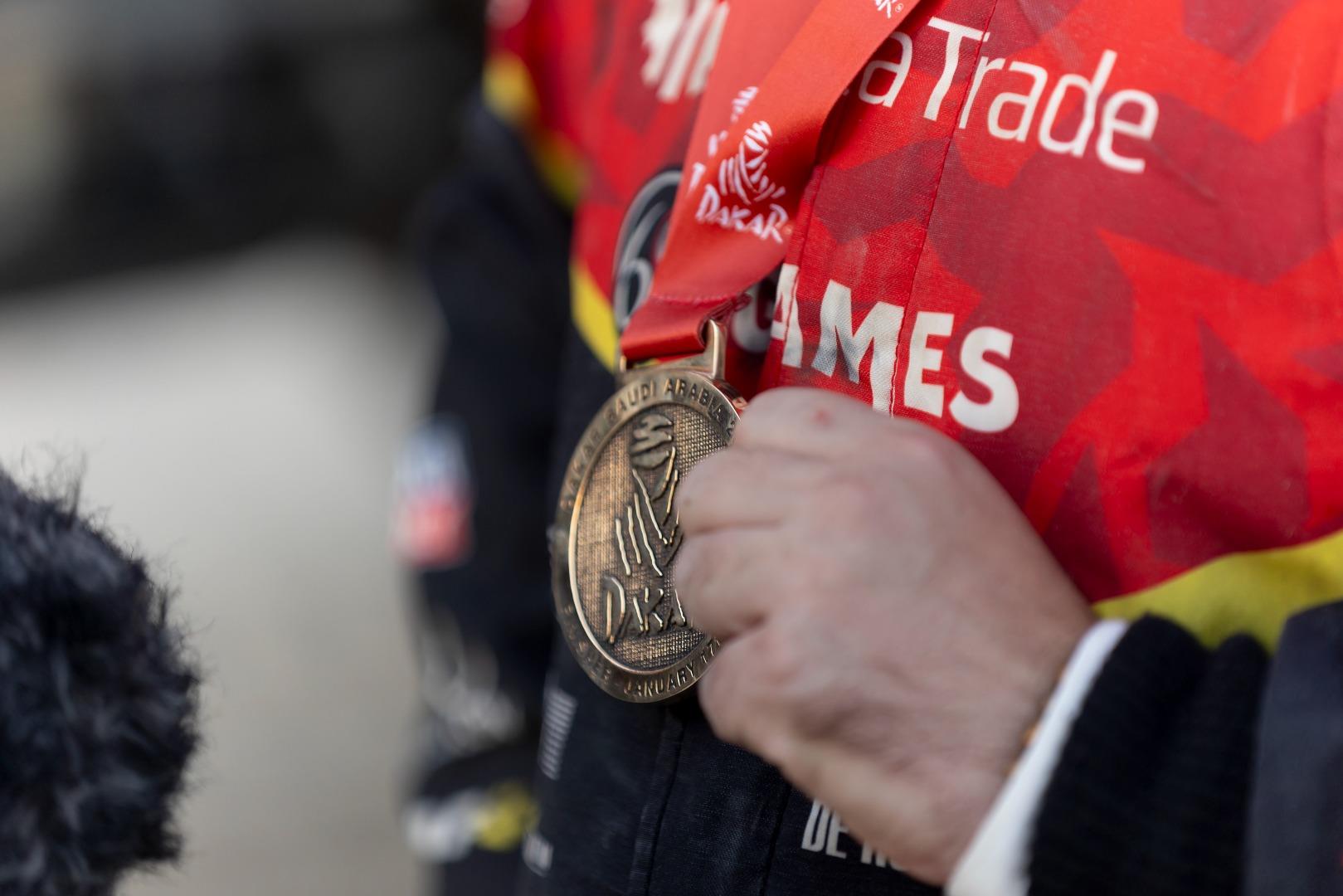
Iveco secures top three positions
Czech driver Martin Macík – in an Iveco PowerStar – claimed victory in the truck category, with a total time of 58 hours, 42 minutes, and 58 seconds. This marked his second consecutive win, following his triumph in 2024. His closest rival, Mitchel van den Brink, also driving an Iveco PowerStar, completed the rally two hours, 21 minutes, and 13 seconds behind the winner, securing second place with a time of 61 hours, four minutes, and 11 seconds. Aleš Loprais, also in an Iveco PowerStar, secured third place, finishing two hours, 26 minutes, and 43 seconds behind Macík.

Iveco’s dominance extended beyond the podium, with its FPT Industrial-powered trucks securing nine out of the top ten positions in the final truck standings. The Cursor 13 engine, fitted to the Iveco PowerStar, is a 12.88-litre, six-cylinder powerplant, which produces 1,000hp and 5,000Nm of torque.

Reflecting on his victory, Martin Macík credited the performance of his Iveco EVO 4 truck, affectionately known as "Benny the Big Guy". He remarked, "I trusted Benny from the beginning, but I didn’t dare to assume that he would carry us to victory. Besides the joy of first place, we are taking home a lot of knowledge that we will use to fine-tune the truck a bit more before the next Dakar."
Hino’s Dakar consistency continues
While Iveco dominated the top rankings, Hino maintained its record of reliability and endurance. The Japanese manufacturer, which has competed in the Dakar Rally since 1991, completed its 34th consecutive race, making it the only truck manufacturer to achieve this feat.

Team Hino Sugawara, the factory-backed entry, fielded a single truck, continuing its strategy from previous years. The crew consisted of Teruhito Sugawara as driver and team director, Somemiya Hirokazu as co-driver and navigator, and Mochizuki Yuji, a mechanic responsible for keeping the truck operational. Despite competing against trucks with larger displacement engines, Hino secured 13th place overall, maintaining its strong finishing record.

Teruhito Sugawara’s 20th consecutive Dakar finish matched the record set by his father, Yoshimasa Sugawara, who competed in 36 editions of the rally and founded Team Hino Sugawara in 1992.
Challenging event
The 2025 Dakar Rally, held in Saudi Arabia, spanned 7,826 km, with 4,903 km dedicated to special timed racing sections. The course was particularly demanding in the opening stages, with two consecutive marathon stages preventing teams from receiving outside assistance at overnight stops. This forced crews to manage mechanical wear carefully, conserve tyres, and adapt to unpredictable terrain.

Hino’s truck, based on the bonneted 600 Series model predominantly sold in the United States, shares engineering similarities with the 500 Series models available in South Africa. While its nine-litre engine is smaller than many of its European competitors, its performance in Dakar has consistently demonstrated durability and efficiency, factors that have contributed to Hino’s strong presence in long-haul and off-road transport markets.
Hino’s Dakar heritage
Hino made history in the 1997 Dakar Rally, becoming the first truck manufacturer to secure a 1-2-3 finish in its category. This record was later matched by Kamaz in 2011 and 2013. Over the years, Hino has consistently excelled in the under 10-litre engine category, securing multiple class titles and earning a reputation for reliability and endurance.

Since 2022, Hino has incorporated hybrid power units into its Dakar trucks, marking a shift towards sustainable motorsport solutions. In 2024, its hybrid-powered entry secured a sixth-place finish, demonstrating that alternative powertrains can be competitive in off-road endurance racing.
Iveco and Hino’s presence in South Africa
Beyond the Dakar Rally, Iveco and Hino have strong footholds in the South African transport sector, where their trucks are valued for durability, fuel efficiency, and reliability. The Hino 500 Series, for instance, which shares technology with the manufacturer’s Dakar entries, is widely used in local logistics, long-haul transport, and off-road applications. On the other hand, the Dakar-winning Iveco is based on the PowerStar. The standard PowerStar is utilised in various industries for tasks such as long-haul transportation and heavy freight duties.