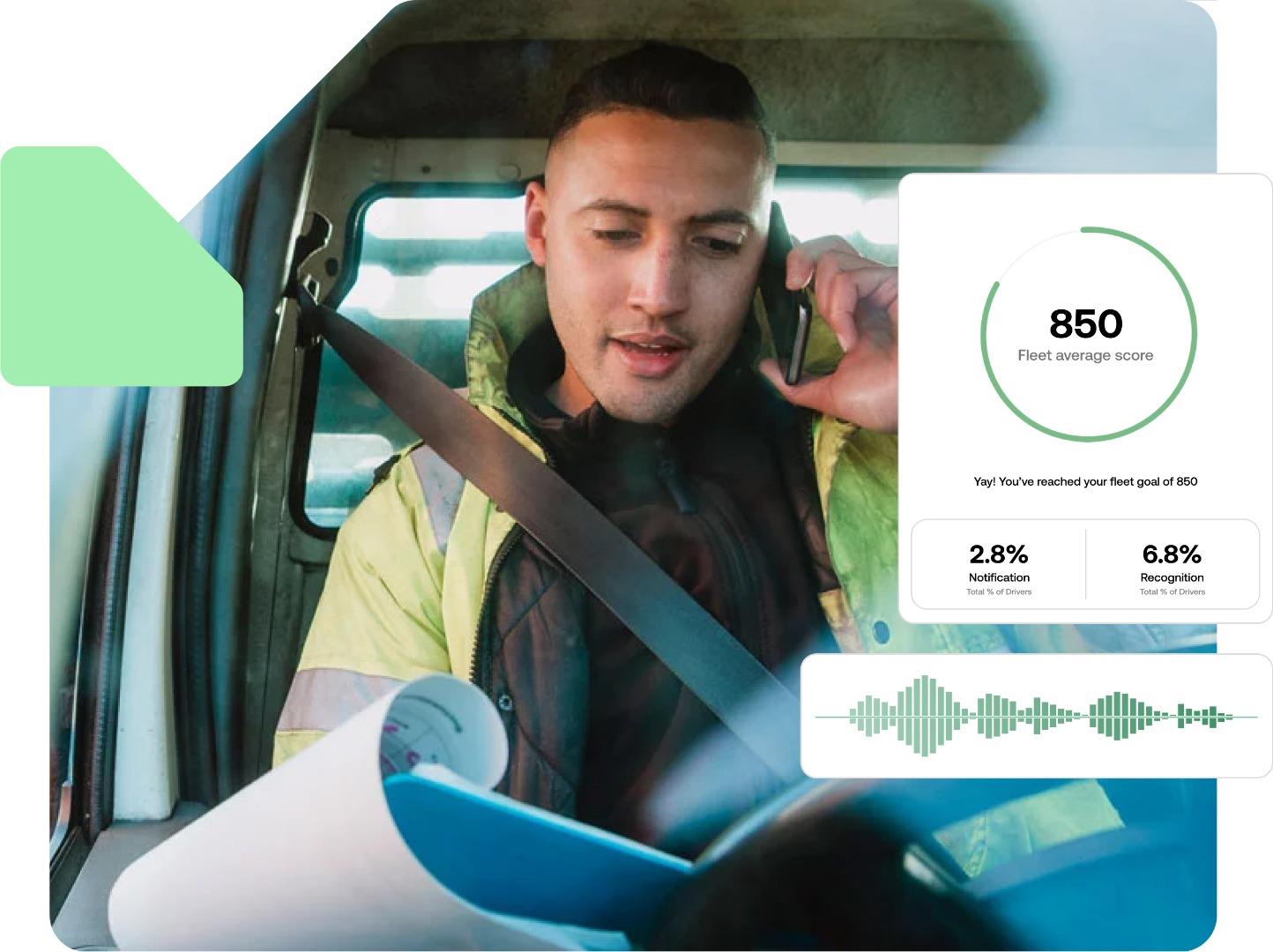

While fleet operators have traditionally relied on telematics systems to monitor driver behaviour, these tools often fail to capture the full picture, leading to missed opportunities for improvement. Now, artificial intelligence (AI) is stepping into the spotlight, promising to revolutionise fleet management by improving safety and operational efficiency.
A new approach to driver coaching
Traditional fleet management systems often take a punitive approach, flagging behaviours such as speeding without considering the context. Such methods can alienate drivers and create a negative work environment. AI, however, offers a more nuanced alternative. By analysing real-time data, it provides a clearer understanding of driver actions within their environment.

“As highways improve and vehicle speeds increase, the potential for mishaps grows exponentially. This is where advanced AI-powered computer vision technology steps in, revolutionising safety standards by enabling proactive risk mitigation,” explains Durgadutt Nedungadi, Senior Vice President for International Business at Netradyne.
Netradyne, a company established in 2015 and headquartered in San Diego, California, has developed advanced video telematics systems, including its flagship product, Driver•i. This technology uses AI and machine learning to analyse driver behaviour, offering actionable insights that foster a culture of safe driving.

The Driver•i platform takes a positive recognition approach, rewarding safe driving practices and acknowledging exemplary behaviour. This shift can motivate drivers and create a more engaged workforce.
Addressing industry challenges
The South African fleet sector faces unique hurdles, including rising fuel costs, fluctuating interest rates, and increasing regulatory pressures. Additionally, false claims and ‘nuclear verdicts’ (high-value legal settlements) have created an urgent need for accurate, real-time data to protect both businesses and drivers.

AI systems such as Driver•i provide fleet managers with the tools to address these challenges effectively. By analysing every minute of driving, they deliver precise insights, enabling fleet operators to respond to incidents quickly. This not only helps to minimise claims but also allows for proactive interventions that reduce the likelihood of accidents.
“While it’s impossible to eliminate road accidents, adopting a positive recognition approach to driver coaching can help reduce their frequency and severity. With false claims and nuclear verdicts on the rise, accurate, real-time data is becoming increasingly crucial for protecting drivers and companies,” Nedungadi notes.

Beyond its safety benefits, AI also improves operational efficiency. Real-time alerts, predictive maintenance, and streamlined data management enable fleet managers to optimise their operations, reducing costs and improving productivity.
Striking a balance between safety and efficiency
While AI tools such as Driver•i are designed to enhance safety, their value extends far beyond accident prevention. For example, Netradyne’s Safety Manager Assistant allows fleet managers to identify drivers needing coaching without sifting through extensive data manually. By offering a centralised view of driver performance, these tools enable faster, data-driven decision-making.
Operational benefits include reduced time spent on administrative tasks, allowing managers to focus on strategic priorities such as route optimisation. Predictive maintenance also reduces vehicle downtime, ensuring fleets operate at maximum efficiency.
However, not all fleet operators have embraced AI technology. Concerns about privacy and the high initial costs of implementation remain barriers for many. Some drivers worry that constant monitoring could infringe on their privacy, while fleet owners are wary of the significant upfront investment required.
A balanced view of AI in fleet management
While AI promises transformative benefits, its integration comes with challenges. South Africa’s fleet operators face unique road conditions and regulatory frameworks, which AI systems must adapt to. Furthermore, the effectiveness of these technologies relies heavily on high-quality data and the ability to interpret it accurately.

Nedungadi acknowledges that AI systems must strike a balance between monitoring and respecting privacy.
“AI-powered solutions provide fleet managers with the tools they need to balance safety, efficiency, and cost-effectiveness, ensuring long-term success in a competitive industry.”
Another challenge lies in the skills gap within the sector. As AI systems become more sophisticated, fleet operators will need technicians trained in data analysis and system management to maximise the potential of these tools.
The road ahead
The adoption of AI in South Africa’s fleet industry is still in its early stages, but its potential is undeniable. By rewarding good driving behaviours, addressing risky actions, and enabling proactive management, AI is not only making fleets smarter but also setting new standards for road safety.
However, a cautious approach is necessary. Fleet operators must weigh the benefits of AI against its challenges, particularly concerning costs and privacy. Having said this, as the technology matures and becomes more accessible, it is likely to play an increasingly central role in shaping a safer, more efficient future for South Africa’s roads.

With tools like Driver•i becoming available globally, the integration of AI into fleet management is poised to transform the industry. But, as with any innovation, its success will depend on the willingness of businesses to adapt and the ability of the technology to meet the unique demands of the South African market.