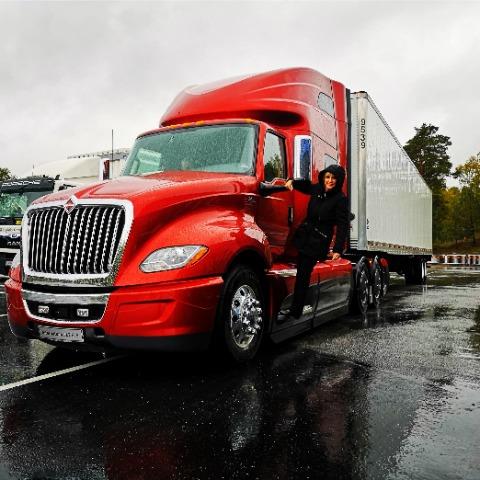
Europe, China and US opt for EVs
Electrification of transport is one of the most talked about instruments to set the world on a net-zero carbon trajectory. And electric mobility is gaining momentum! In fact, the total number of electric vehicles (EVs) on the world’s roads has increased from nearly zero to 6.6 million in 2021.
This is especially the case in Europe, China, and the United States, which account for more than 90 percent of the world’s EV fleet. At the recent IAA Transportation exhibition, which we attended, EVs dominated the fair – with some companies not displaying one single truck powered by an internal combustion engine!
What about developing countries?
But what about EVs in developing countries such as South Africa? They’re performing dismally right now. According to a paper entitled Guiding the deployment of electric vehicles in the developing world, Africa has the lowest EV fleet worldwide – and, as of January 2022, South Africa had about 1000 EVs in its vehicle stock of 12 million.

One of the reasons for the scarcity of EVs on the African continent is price. EVs come at a cost premium, sometimes more than 70% compared to conventional vehicles, creating a financial hurdle for many consumers in developing countries.

However, according to a World Bank report, The Economics of Electric Vehicles for Passenger Transportation, EVs could be increasingly relevant for low- and middle-income countries (LMICs).
Buses to the fore
According to the World Bank research, there are a number of feasible entry points to an electric mobility transition in developing countries. Electric buses, which cover long mileage and high occupancy, and electric two- and three-wheeled vehicles, which provide last-mile connectivity, are emerging as cost-effective starting points that also bring development benefits.

The report notes that, for a developing country such as South Africa, going the EV route offers more benefits than just net-zero carbon emissions. Transitioning from conventional vehicles to EVs brings additional benefits too: improved local air quality, last-mile connectivity in remote places, and reduced dependency on imported fuel.
EVs make cents

There are other benefits too. According to the World Bank report, in many markets, the savings in fuel and maintenance costs accrued over the life of an EV more than offset the relatively high purchase price. Further, when health and environmental benefits are factored in and monetized, the economic case for e-mobility is already strong in about half the countries studied. The viability of EVs is expected to further improve between now and 2030 as prices may continue to drop and charging infrastructure may become more ubiquitous.
Local company confirms World Bank findings

These findings are confirmed by leading South African bus operator, Golden Arrow Bus Services (GABS). It has been testing electric buses and the savings over operating buses with internal combustion engines can be substantial. Energy costs are 69% lower than with diesel while there are other savings too; GABS estimates savings of 50% on spare parts, 80% savings on oils and lubes and 30% savings on labour when running electric buses (versus diesel).

GABS believes that the implementation of EVs is possible in developing markets such as South Africa. And the World Bank report confirms that, while there are challenges here such as load shedding, this is feasible, as Riccardo Puliti, Vice President of Infrastructure at the World Bank, explains: “We already knew that an e-mobility transition was important; with this research, now we know that it is feasible. Our report makes it clear that all countries need a plan for incorporating electric vehicles into their strategies for sustainable mobility.”
Government action needed

E-mobility will only be rolled out in developing countries such as South Africa if local governments promote the EV revolution. And, in addition to making the economic case for e-mobility, the report highlights several actions governments and financial institutions can take to accelerate the transition to EVs. Investing in EV charging infrastructure can be up to six times more effective at encouraging EV purchases than subsidies, it notes. Additional priorities should be advancing innovative models for leasing and recycling batteries, which can reduce the cost of vehicles, and bring additional commercial financing to the market. Governments also need to examine the fiscal implications of an e-mobility transition, especially if fuel taxes comprise a large share of tax revenue, or if the fiscal sustainability of power utilities is precarious.
Mobility is a lifeline
The World Bank is already working with many countries to advance electric mobility. Cecilia M. Briceno-Garmendia, Lead Economist for the Transport Global Practice at the World Bank and lead author of the report, says this is vital.

“Mobility is a fundamental lifeline that connects people to jobs, education, critical services and opportunities. But each year 7.8 million lives are lost due to health complications arising from air pollution. There is an urgent need to lower emissions from transport, and all transport decarbonization tools – including e-mobility – are on the table,” she notes.
This can happen in countries such as South Africa. “For developing countries, the e-mobility transition is no longer a question of ‘if’ but ‘how’ and ‘when’,” she concludes.