Introducing the competition and the trucks
The very first Truck of the Year Australasia competition took place last year. It was conceived by PowerTorque Editor Tim Giles and NZ Trucking Editorial Director Dave McCoid. These two highly qualified commercial vehicle journalists judge the award. So, too does FOCUS on Transport & Logistics Editor Charleen Clarke (who is also responsible for commercial vehicle content on this site and is the writer of this article). Long-time Australian trucking industry stalwart, Bob Woodward (who recently retired as the Australian Trucking Association Chief Engineer), and Randolph Kovich, Publisher of Deals on Wheels, New Zealand, complete the jury. Each year, we seek out and then reward the very best truck in Australasia with this accolade. It’s a tough job!

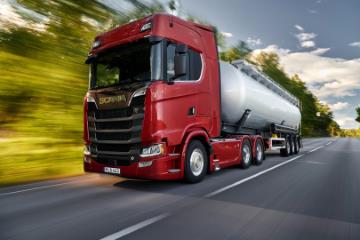
Last year, after a closely contested fight, the sought-after trophy went to Kenworth for its K220. This year, we also have exceptionally strong contenders for the award. First, there is the Scania Super – which was launched globally back in 2021. The truck, which could come to South Africa late in 2025 or early in 2026, features Scania’s most advanced and efficient combustion-engine powertrain ever. More about that later.

Then, there is the Volvo Electric Heavy-Duty Range, which is quite well known to South Africans – because it’s been available here since the middle of last year. It’s also the current holder of the International Truck of the Year title. Volvo – the first global manufacturer to start serial production of electric trucks (that happened back in 2019) – is doing a stunning job of launching and selling electric trucks. It now has a broad electric line-up with a total of six electric trucks that can handle a wide variety of transport assignments, including city distribution and refuse handling, regional transport and construction work. The company is aiming for 50% of global sales of new Volvo trucks to be electric in 2030.

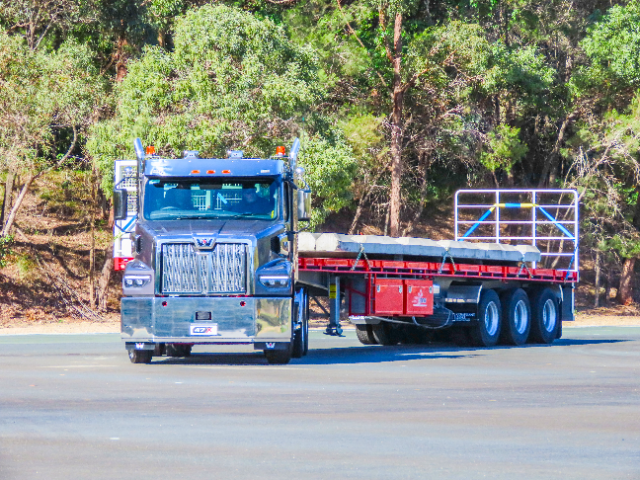
Finally, there is the Western Star X-Series, which we first saw at the Brisbane Truck Show last year. It represents a radical transformation for a traditionally conservative truck brand. If there was a beauty competition for trucks, the X-Series would nail it; this is One Good-Looking Truck. But, of course, no one buys a truck because it’s pretty. There are a whole bunch of logical reasons why transport operators like it too – from driver comfort and acceptance to the advanced drivetrain. Lest you wondered, there are currently no plans to launch the Western Star X-Series in South Africa (what a pity)!

Exterior
The big news with the two Swedish contenders is not their exteriors; their drivelines are way more important. The same cannot be said of the beauty queen in our competition. As already stated, the X-Series is a beast of a truck. It’s a beautifully blinged-up creation that’s utterly impossible to ignore. When you drive it, people stare (but it’s not the “oh gosh, that’s weird” stare; it’s one of sheer admiration). It makes any trucker’s chest puff out with pride.
Interior
This is going to feel a bit like Groundhog Day. Once again, the Scandinavian rivals have sensational interiors. But, in the case of the Scania, it feels like a regular Scania truck – meaning it is ergonomically excellent, quiet and super (no pun intended) comfortable. Ditto with the Volvo. Yes, the interior is obviously quiet. But drivers feel right at home behind the wheel – because it feels like a Volvo and not something else. The cab and its controls are comforting and all-familiar, with just the obvious difference around what’s being fed back – regeneration, battery life, etc.

And then there is the X-Series. It was designed from the ground up – and that also applies to the cab. The range consists of the 47X, 49X, and Australian-exclusive 48X – and the cabs of the 48X and 49X are especially impressive. The former has a bumper-to-back-of-cab measurement of 113.5 inches while the 49X is available with multiple cabin options, including the largest cab on the Australian market, the 72” Stratosphere sleeper. This one is a real goodie, offering a 65-litre fridge, generous storage solutions with microwave prep, and either a Murphy-style bed – with a foldaway dinette/worktable – or a double bunk option.

The roomy and modern cab is a lovely place to be. There is an immense amount of room in and around your legs, and it really is incredibly relaxing. Swinging around to access the bunk is a doddle, and even in the 36-in mid-roof, you can stand straight up from the cockpit.
Drivetrain
Now, onto the heart of the three trucks, namely the drivetrains.
The Scania Super is huge news in this department; that’s what the new truck is all about. It boasts a sensational 13-litre engine, which reduces fuel consumption by an impressive 8%. Behind the Super’s unrivalled performance level lies significant improvements to the engine’s combustion and aspiration performance, lubrication and cooling, and turbocharging efficiency. It also features a range of industry-leading engine technologies, such as the Scania Twin SCR system and a new, powerful engine management system to ensure the engine’s superior total operating economy under all conditions.

The key to the Super is down speeding, and to facilitate that, engineers have reset the bar on the 13-litre engine torque output with 2,800Nm (2065lb/ft) between 900 and 1,400rpm from the 418kW (560hp) unit at the top of the range. The new Opticruise transmission (models G33 and G25) is up to 75kg lighter, and shifts are simply undetectable.
The engine doesn’t just excel in the efficiency stakes, it is also supremely robust. The engine will have a 30% longer operational life, Scania claims.
Then there is the Volvo’s drivetrain – which is equally big news but for completely different reasons. It is, of course, an electric truck. Three synchronous 163kW (222hp) electric motors take power from up to six 90kWh batteries, and deliver 2400Nm (1991lb/ft) of continuous torque. Like so many other electric trucks, the Volvo is a blast to drive. It delivers instant torque, swift acceleration and smooth handling, ensuring a quiet, comfortable and efficient driving experience.

Finally, there’s the drivetrain of the Western Star X-Series. The 47X offers a choice of power with the Cummins L9 or the Detroit DD13 Gen 5, either the Detroit DT12, Allison fully automatic, or Eaton Fuller manual transmission. The 48X is powered by the 450-525 hp Detroit DD13 Gen 5 or 500-600 hp DD16 engine. The toughest of the tough, the 49X is powered by the 500-600 hp DD16, and it has up to 200+ tonnes GCM capability. It’s the big boy of the range.

The pick of the bunch is obviously the DD16 (yes, we agree that bigger is indeed better), and my fellow judge Dave McCoid reports that it’s not too thirsty either. “All things considered; I didn’t do too badly on the consumption front during my test drive. It was a new truck, driven on an unknown road, programmed for performance (the economy parameters were off) at 60 tonnes, and I got it to 52.5L/100 – 1.9kpl. Two should be child’s play with familiarity,” he told me.
Safety
Scania and Volvo have always produced exceptionally safe vehicles and with their two finalists, you get more of the same. On the other hand, the X-Series is the first Western Star truck to feature the most advanced suite of active safety systems ever offered to the vocational market. Safety features include Active Brake Assist 5, lane departure warning, adaptive cruise control, side guard assist, tailgate warning, brake hold mode, an improved visibility package, and a RollTek driver’s seat with rollover restraint and a seat-mounted airbag. It’s a huge leap forward for the brand.
Verdict
Okay, so this is a tough one. First, there’s the Super, a brilliant truck that proves the potential for the internal combustion engine. In launching the Super, Scania has replaced an efficient, powerful and comfortable range of trucks equipped with all modern safety attributes with one that lifted the bar in each department. The Super is a strong contender for the award.
Then there is the Volvo. The company has done an astounding job of bringing e-mobility to truckers around the world. The FH is sublime in that a driver can just hop into it, drive the truck and save the planet at the same time (yes, we know that’s a slight exaggeration). The ground-breaking FH has an excellent chance of replicating its International Truck of the Year success down under.

Finally, there is the Western Star X-Series. Featuring a powerful integrated driveline, an advanced safety package, and terrific comfort, the X-Series is underpinned by Western Star’s renowned durability. This all-new truck must be in with a shot.
So, which one will win? Well, when I finish writing this article, I’m meeting with the other judges, and we will decide on the winner (no doubt after much debate). Let’s hope we get it right!
- The winner will be announced at the New Zealand Trucking Association and National Road Carriers, Transport Maintenance and Safety event in Christchurch, New Zealand, on 13 March 2024.