
Toyota GR Supra 3.0T Review
Of all the (fairly) modern cars which have attained cult status, the Toyota Supra is possibly one of the most iconic. So it was understandable that enthusiasts rejoiced when Toyota announced the rebirth of this sports car, and it was also understandable when they cried about the new Supra using a BMW platform as a starting point. But maybe they just need to drive one to realise that the new Supra is so much more than just a badge-engineered Z4. Allow us to explain why.


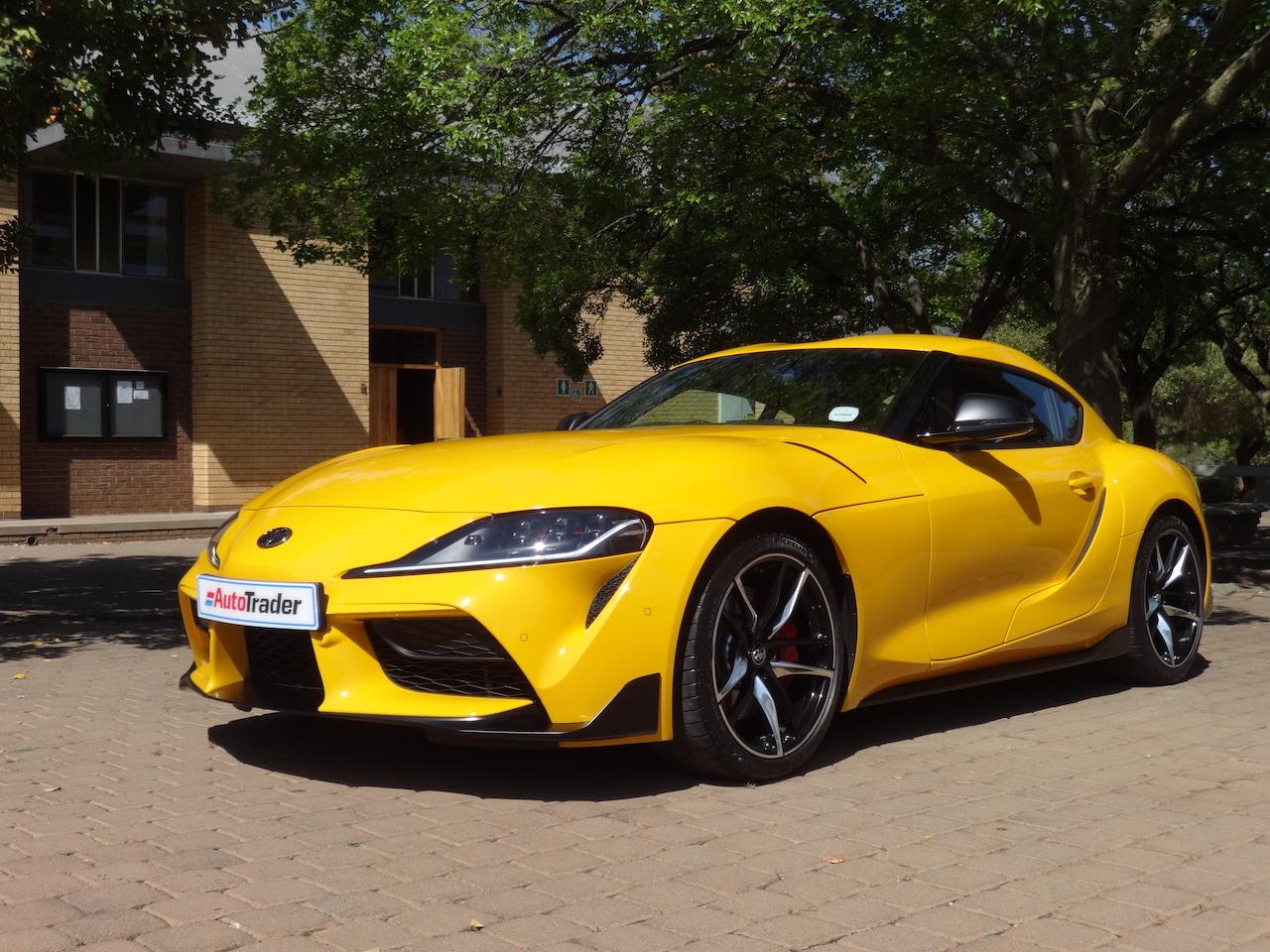
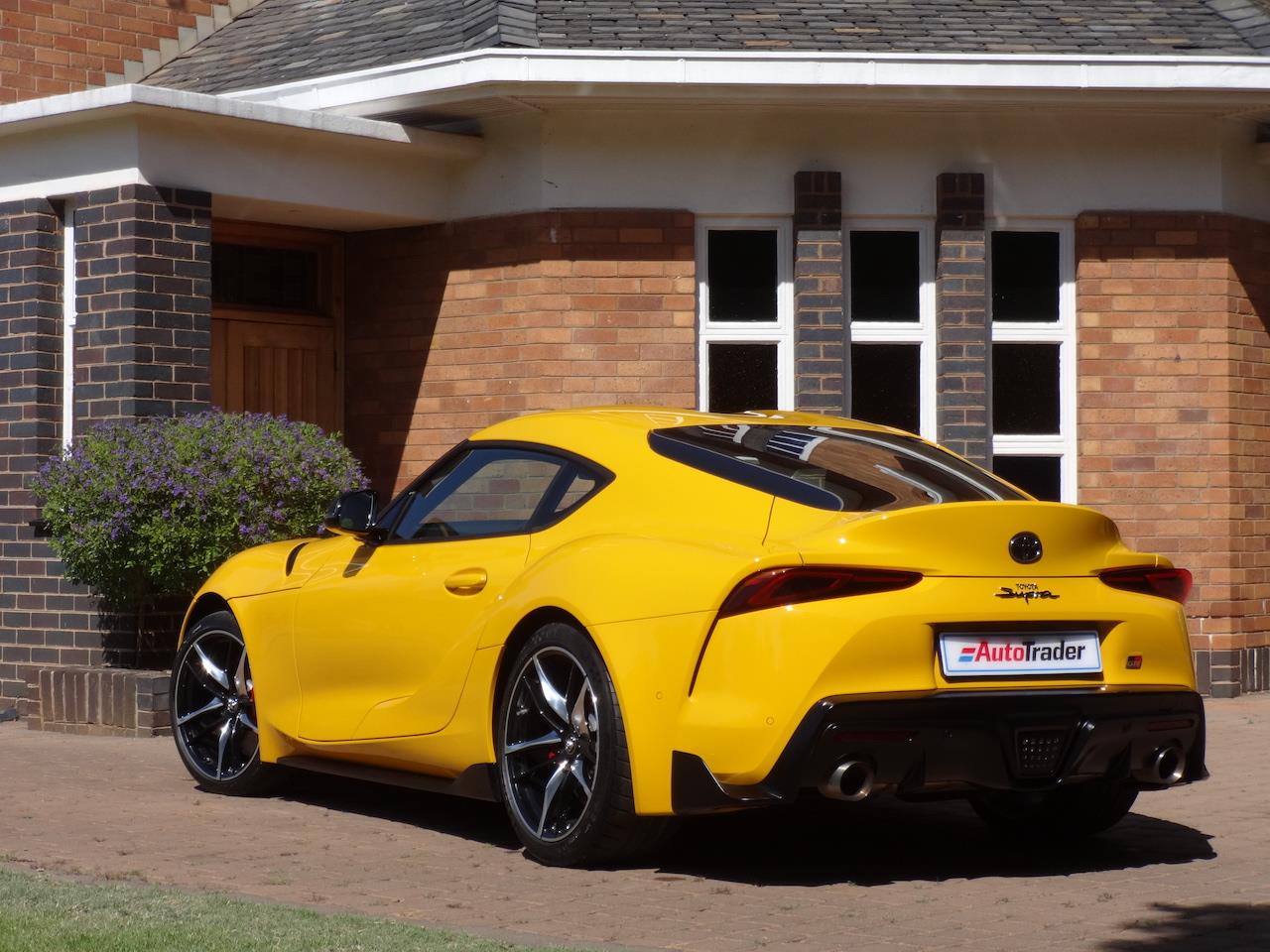
Yellow? Yes. Mellow? Not so much...
It was probably unavoidable that Toyota would team up with another manufacturer to develop their latest sports car. Like its predecessors, the Supra is bound to remain a low-volume niche model, and seeing as Toyota doesn’t have a suitable RWD platform (or an in-line 6-cylinder engine) in their home-baked arsenal anymore, they either had to call in help from the outside, or simply not build a new Supra at all. Going it alone would have simply made no sense, and any product resulting from such an effort would have been bound to be far too expensive for its market segment.
“But....”, I hear you say: “What about the Lexus RC? Why didn’t they use that platform instead of a German one?” The answer is simple: the Lexus RC is designed to be a luxury car, and its footprint wouldn’t match the criteria the Supra’s engineers laid down: the new car had to be relatively lightweight, have a wide track and a short wheelbase... and a straight-6 engine. See, the engineers understood one thing about the Supra’s ethos: its character revolved around a hulking inline 6-cylinder engine, and for it to be a real Supra, it had to have that straight-6. Just imagine the outcry if the Supra arrived with a V6 – even though the Lexus twin-turbo V6 is a masterpiece in itself, it wouldn’t be a “real Supra” with that engine.
So, some compromises had to be made: it was either collaborate, or don’t bother at all. Fortunately, there’s a company with a very long history of great (even legendary) straight-6 engines, and they also happened to be developing a new 2-seater sports car when Toyota decided to give us a new Supra. Thus was the relationship between the Toyota Supra and the BMW Z4 formed. Don’t like the idea? Then don’t buy one... but just understand that you’ll be missing out on something brilliant. This isn’t just a re-skinned BMW, this is something completely different. Something much, much better.
Styling
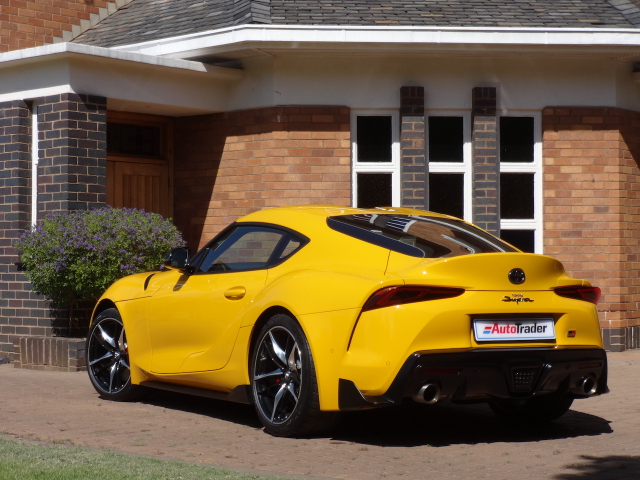
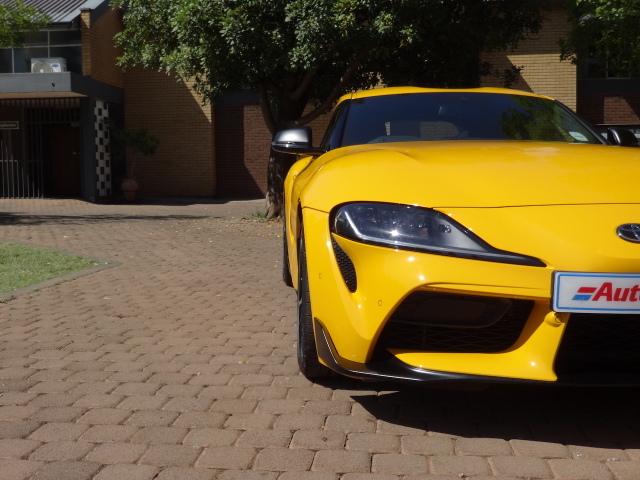
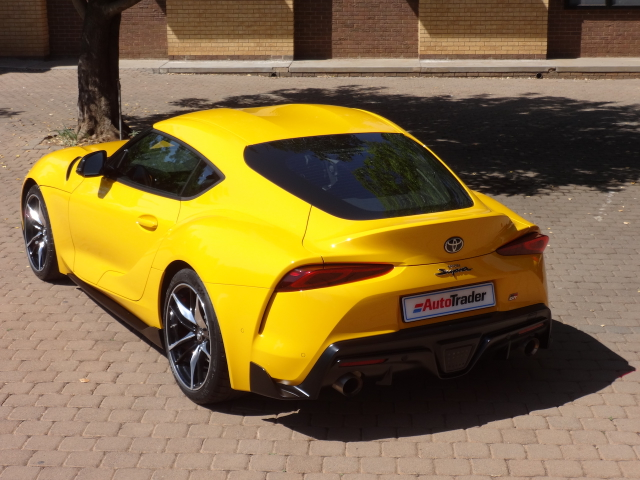
Aesthetic considerations are always highly subjective, but it should be enough to know that our bright yellow test car received near-universal approval from onlookers. Yes, if you look closely, you can recognise the BMW skeleton lurking underneath (especially in the rear three-quarter view, where the body’s outline has strong echoes of the first Z4 Coupé), but there are also plenty of Supra-specific styling cues to keep the purists happy.
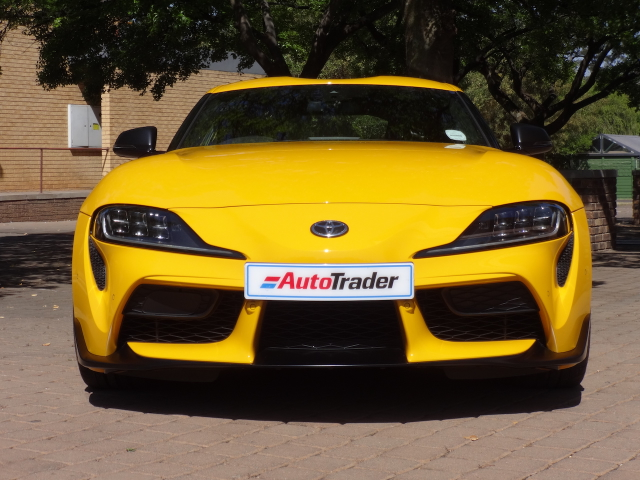
Up front, the full-LED headlights’ shape recalls those of the previous (Mark IV) Supra, and the general curvature of the bonnet also harks back to that model. Underneath, there are a brace of air intakes, most of them functional, to feed and cool the beast within. Two body-coloured inserts sprout downwards from the middle of the bumper before flowing to the sides, to create a race-car front splitter kind of vibe.
In profile, the proportions leave no doubt that this is a front-engined, rear-wheel drive sports car, thanks to its very low roofline, while the long nose and short tail moves the visual balance further towards the rear. The only bugbears are those black plastic inserts scattered all over the car, which are styled to emulate air vents but actually do nothing at all.
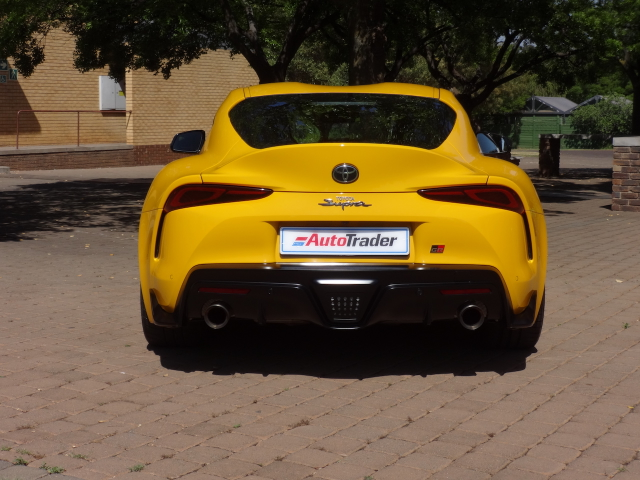
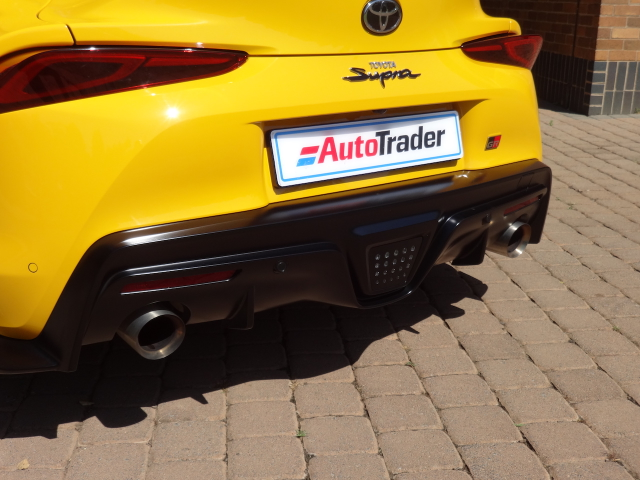
At the rear, sliver-like LED tail lights, a black diffuser assembly in the rear bumper, and two fat exhaust tailpieces dominate the view. If you look closely, you’ll also see two humps in the roof panel (to help boost headroom inside), while the whole thing is a mass of swoops and creases in the current Toyota styling idiom. It’s perhaps not classically pretty, but there’s also no chance that anyone would mistake the Supra for anything else.
Related: Find our first drive impressions about the Supra's German cousin here.
The Drive
This is where the new Supra makes its strongest case, because it’s an absolute joy to drive. It’s actually strange that such an overtly sporty car could ride with such fluency when desired, but that just proves how well-calibrated the suspension tuning really is. Adaptive dampers obviously play their part here, but the basic setup strikes a near-perfect balance between comfort and composure anyway.
We won’t belabour the point about ride quality too much, because this is a sports car after all. However, the fact that the suspension manages to be either as compliant as you want for normal driving, or as firmly controlled as you need for sporty driving, proves that there’s someone at Toyota who really put a lot of care and attention into the chassis setup.
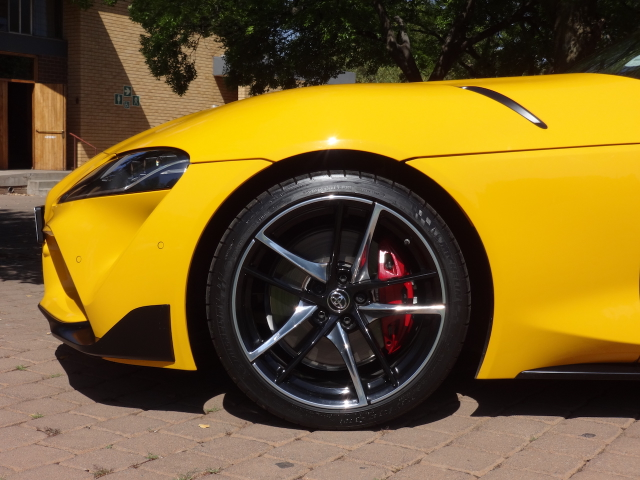
This care and attention really shows when the road gets twisty, because the Supra simply scythes around corners with no hint of understeer. It’s usually resolutely neutral, but a determined driver can always kick out the rear end with a bootful of accelerator pedal (provided the electronic nannies are switched off). Any resulting sideways hijinks are clearly telegraphed to the driver, and it’s genuinely preposterously easy for a capable pilot to throw it around like a Japanese touge hero.
The super-quick steering rack also plays its part: with less than 2 turns lock to lock, the front-end is always alert and ready to counter any waywardness from the rear, and also sends a fair amount of feedback to the driver regarding the level of grip available under the front tyres. We definitely don’t recommend driving in this anti-social manner on public roads, though, and would prefer it if drivers saved their drifting ambitions for the race track.
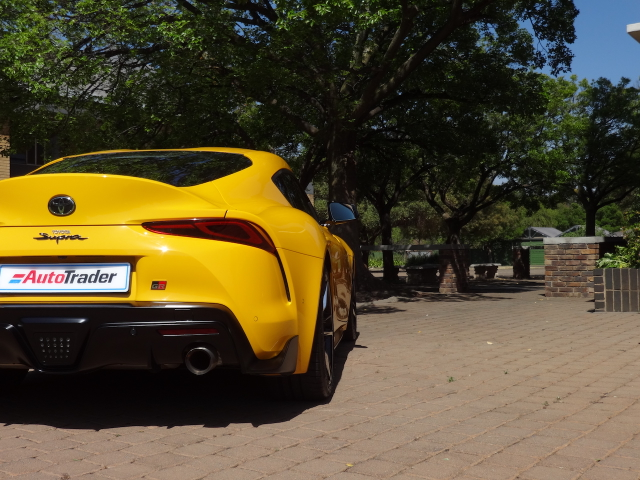
But, even in the confines of the city and driving to the shops, the Supra feels alive to the driver. Most importantly, the new Supra doesn’t feel like a Z4 at all – this is a hard-core sports machine and the Z4 is more of a boulevard cruiser. We’re not saying that the one is better than the other, but there’s little doubt that keen drivers will choose the Supra over its German cousin.
Performance
Seeing as a straight-6 engine is a key part of a Supra’s emotional appeal, it’s a very good thing that the turbocharged mill up front is one of the best ever. BMW knows a thing or two about this engine configuration, and the Supra benefits from all of the German know-how built up over many, many decades. In short, the engine (and the drivetrain behind it) is brilliant. There’s a ZF 8-speed torque converter automatic hooked up to the engine (the only available transmission), which does an excellent job of keeping the engine in its optimal operating range.
Rated outputs are the same as you’d get in most BMWs using this engine, and a fair lick more than the old Supra’s engine pumped out ex-factory. 250 kW and 500 Nm is enough for some very useable acceleration, and Toyota claims that it will sprint from a rest to 100 km/h in 4.3 seconds (that’s a lot quicker than any factory-spec “classic” Supra, ever), with a governed top speed of 250 km/h. It’s also a really great engine to use, with a free-revving nature and a very wide torque spread.
On-road performance support these claims, with the potential for smoking burnouts from standstill and explosive in-gear acceleration just a twitch of the right ankle away. Most importantly, the Supra never feels unstable or nervous when you set all those ponies free, and it makes very high point-to-point average speeds really easy to achieve.
Space and Comfort
This is a sports car, so it should be taken as read that space and comfort aren’t prime considerations. That said, the ride comfort (with the suspension in its relaxed mode) is actually exemplary, and the seats (there are only two) are nicely contoured and supportive.
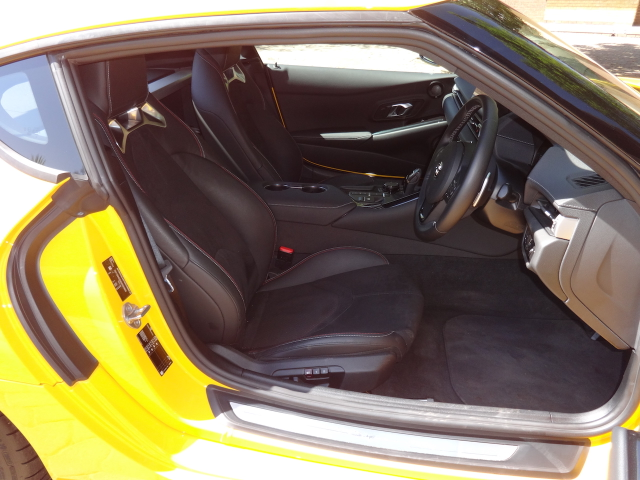
There are some rather major issues, however. For one, outward visibility is very poor, especially for tall drivers, as a result of those gun-slit side windows and large blind spots. Beanpoles will find the top edge of the side windows level with their eyes, and the very curvaceous body makes it difficult to gauge where the car’s extremities end. It’s not an easy car to get into and out of, either, because of that very shallow door aperture, and the door is very long, so it requires a lot of lateral room to open.
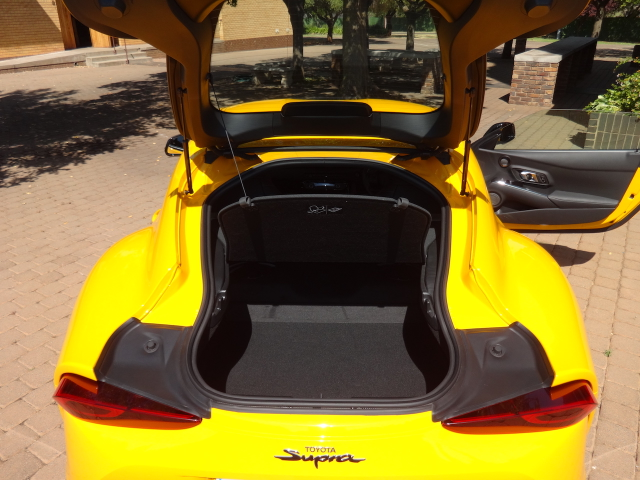
And there's more. As with the BMW Z4, the cabin is rather cramped, with a long and narrow footwell, which provides adequate legroom but not a lot of space for feet. Stowage space is also rather poor, with a small glove box, two cup holders, very shallow door bins, and a small receptacle in the centre console making up the sum total of oddments space. As a touring car, the Supra misses the mark by quite a margin as a result of this lack of cabin space – and that’s largely as a result of its German ancestry, because it’s a weakness in the Z4 as well. At least the boot is usefully large, even if its opening is very narrow.
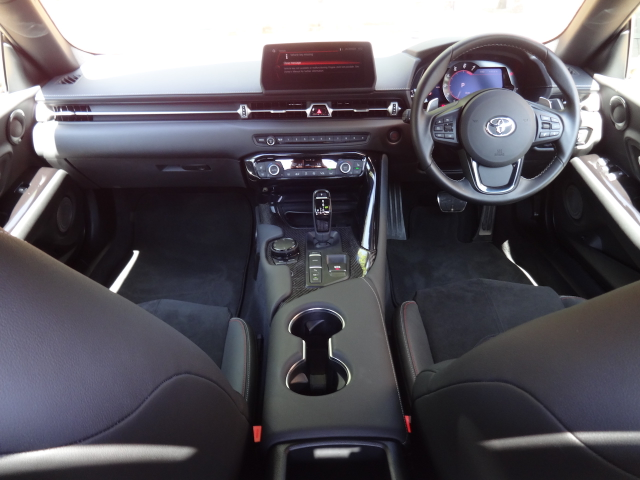
The Supra is very well-equipped, though – and it’s quite amusing to see the amalgamation of German gadgets and Japanese sensibility. Take the adaptive cruise control as an example: the BMW system is entirely capable of handling traffic jams on your behalf, but Toyota’s policy is that such systems must disengage below 70 km/h. In this way, from essentially identical hardware, there are definite and unique flavours of each brand shining through.
Being related to a BMW does bring access to some of the latest tech items, however. Lane departure warning, lane-keeping assistance, blind-spot monitoring, LED headlights, a head-up display, and the aforementioned adaptive cruise control are all standard in our top-spec GR Supra 3.0T test car, as well as a fully digital dashboard.
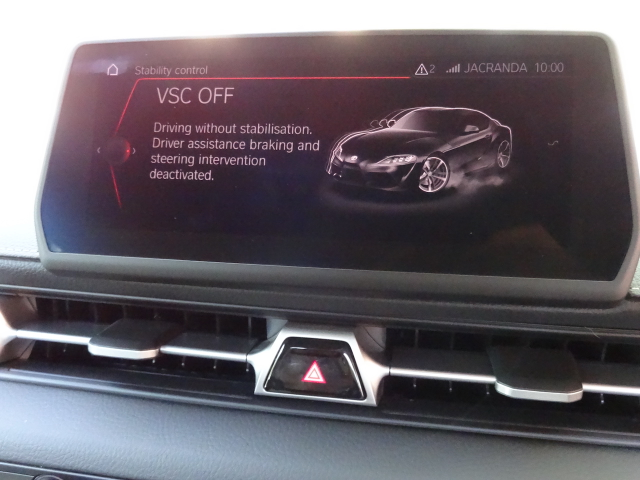
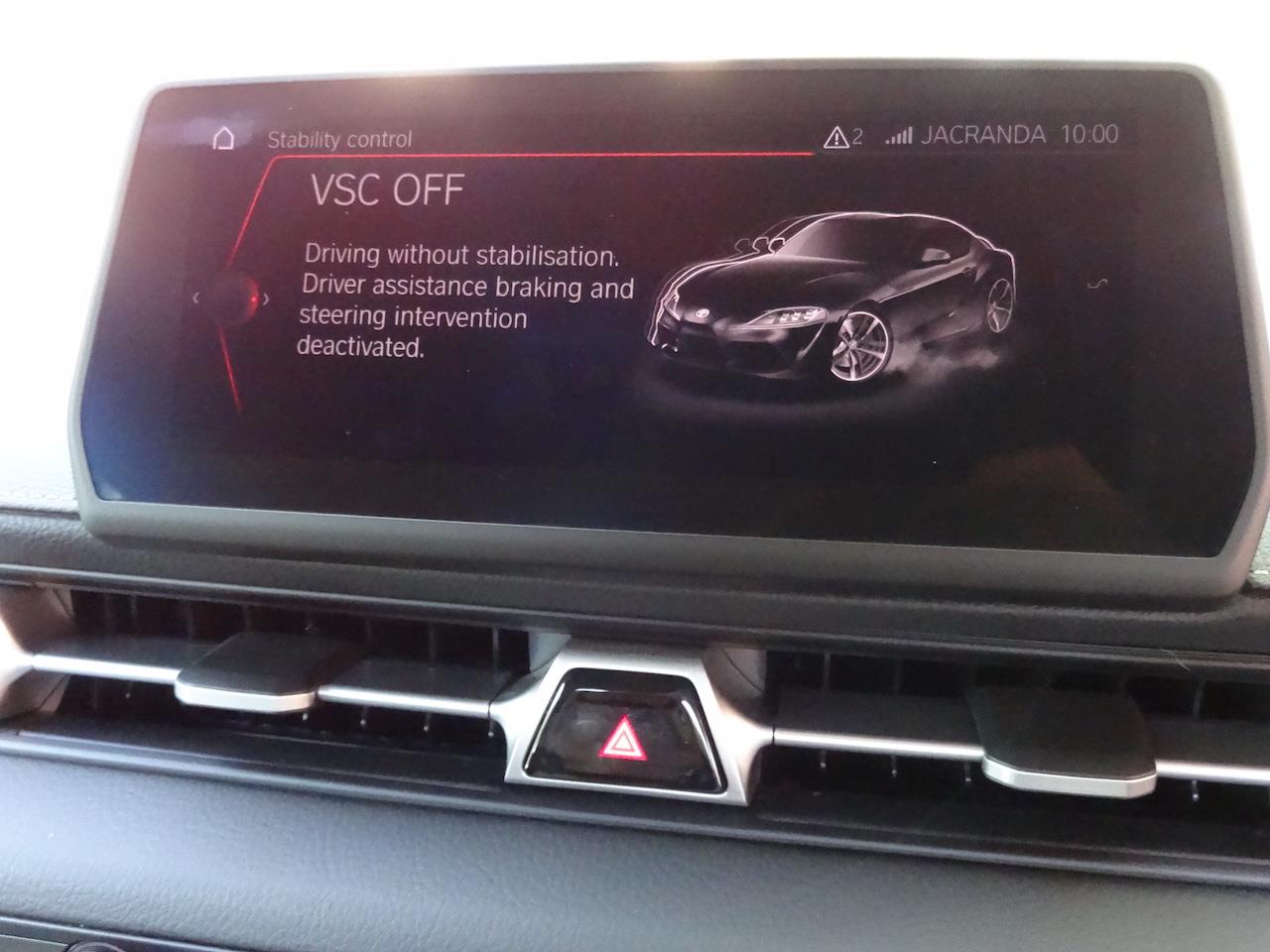
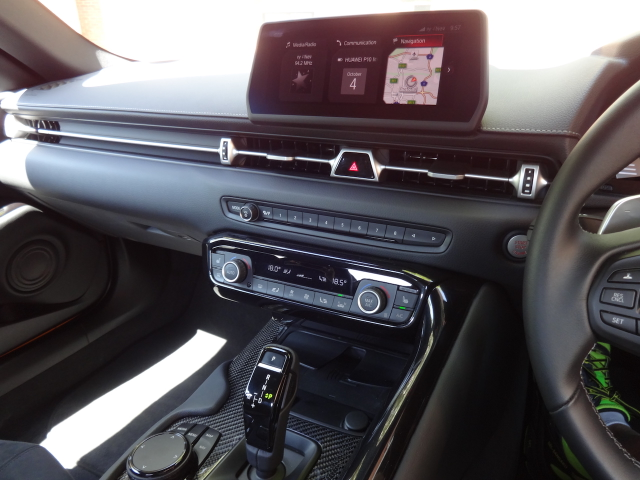
Thankfully, the infotainment (with smartphone mirroring and navigation) also comes from the BMW parts bin, so there’s no sign of Toyota’s usual infuriating user interface. The one neat Supra-specific touch is on that infotainment display, and comes up when you turn the stability control off (either completely or partially): the animated Supra depicted on the display suddenly sprouts little smoke trails coming from its skidding tyres when you select a sportier driving mode. Cute and unique, and very Japanese. The essence of a Supra, really.
Related: Just how much BMW Z4 is there in the new Toyota GR Supra?
Safety
Toyota and BMW both have very good reputations for safety, and this reflects in the Supra’s comprehensive protection package. Crash test data is still to be obtained (none of the NCAP organisations and none of the American safety regulators have hurled one at an obstacle yet), but it certainly looks very promising on paper.
In addition to the slew of driver aids listed above, the Supra is also blessed with ABS, stability control (switchable in various stages), 7 airbags (maybe that’s where the cabin space went?) and even ISOFIX child seat anchors on the passenger side. By all accounts, this should be a good car in which to survive a crash.
Fuel Consumption
Who really cares about fuel consumption in a hedonistic car like this? Well, for those who are interested in the Supra’s green credentials, the claimed average fuel consumption is 7.7 ℓ/100 km. That’s nowhere near what we registered on test, though, because the loud pedal was smashed into the carpet quite frequently...
That said, our test average of 9.9 ℓ/100 km isn’t shabby for a car of this nature (and with this much easily accessible speed), and highway cruising sees the trip computer dip below the 7 ℓ/100 km mark. Thank the 8-speed gearbox’s long legs and the engine’s broad torque spread for that last figure. However, frequent hard driving will see the consumption shoot past the 12 ℓ/100 km mark, so be prepared to feed those horses if you want to ride them hard!
Price
The entry-level GR Supra 3.0T “Track” slips in below the R1-million mark, with a list price of R 953 000. In this trim, niceties such as the head-up display, part-leather upholstery, adaptive cruise control, navigation, most of the driver aids, and the electric seat adjustment fly out of the window. So, if you want a Supra with all the modern conveniences (like our test car), you’ll have to shell out a fair bit more.
Stretching your budget to R1 072 300 will get you everything the Supra has to offer, and, given the magnitude of the specification difference, that price premium appears to be well worth it. It also helps that the Supra has most of its market segment to itself, with only the Porsche 718 Cayman S offering a similar package at this price point, albeit in a mid-engined configuration.
The Verdict
It’s very difficult to cast an objective verdict on a car of this nature – you’ll either adore it, or you’ll hate it. We would however hazard a guess that the only people who could possibly hate the Supra are the ones who haven’t driven it yet. Putting it mildly, it’s a grin- and giggle-inducing packet of fun.
The GR Supra is enjoyable to the extent where its quirks and irritants (of which are many) fade into insignificance when seen alongside the sheer fun to be had behind the wheel. And, best of all, it’s so different to its German-badged sibling that its “impure bloodline” doesn’t even matter. This car encapsulates the essence of the classic Supra, wraps it in modern sheetmetal over a cutting-edge drivetrain, and brings the spirit of its predecessors back to life. We should be thanking Toyota for this gift, really.
Expert rating:
4.5/5
Pricing is accurate at the time of writing, but may change without prior notice.
Related:
If you're sold on the latest Supra, this is where you can find a new or used one in our listings.