
The All-New Toyota Supra – Global First Drive Impression
The All-New Toyota Supra – Global First Drive Impression


By Chad Lückhoff
Toyota invited the media to drive the all-new Supra ahead of its official 2019 launch. As a BMW joint-venture, Chad Luckhoff explores the contributions from each brand, and delves into what Toyota has created.
The Supra Story.
The Toyota Supra story starts back in 1978 with a car known as the Celica. The car that started out as the larger, more brutish version of the Celica, the Celica Supra, eventually split off and became its own model range. The Celica later departed rather significantly from the original formula by adopting a compact front-wheel-drive layout, while the Supra carried the front-engine, rear-wheel-drive flag forward.
This recipe remained largely the same for several decades and the second, third and fourth generation Toyota Supra enjoyed much success in the motorsport arena across a variety of disciplines including rally, drag racing, drifting and especially touring car formulas across the globe.
Much of its success lay in the approach Toyota took in producing the car. They ensured that the weight distribution, centre of gravity and overall chassis dynamics were dialled-in, and then they threw as much power as they were allowed to, at it. In the 90s, with the MkIV (or A80 chassis), this figure was capped by the Japanese “Gentleman's Agreement” that saw sports car producers placing a 206 kW limit on the final power output. It mattered not if it was a straight-six or a flat four, the peak power was restricted by this agreement.
The MkIV Supra saw the introduction of the venerable 2JZ-GTE engine, an engine that was destined to become something of a legend, capable of making in excess of 400 kW on the standard, twin-turbo arrangement, and even as much as 600 kW with stock standard Toyota internals (albeit with a few ancillary changes). In standard turbo trim, this engine could propel the Supra to 100km/h in under 5-seconds and onwards to a limited top speed of 250km/h. You have to remember that this was nearly 30 years ago, and with such storming performance, it was stepping into genuine supercar territory.
Its predictable, sure-footed handling and near 50/50 weight distribution secured it numerous victories on the racetrack and praise from the motoring press, heralding it as one of the best driver's cars for the money.
Planning on the MkIV started in 1989, with the fourth generation seeing the light of day in 1993, before enjoying a nine-year run until it was discontinued in 2002 – much to the disappointment of its sizeable fan base. With no confirmation of a successor, the public was led to believe that this was the end of the mighty Toyota Supra: another victim of emissions regulations.
The rumour mill about the possible continuation of the nameplate started up in the years that followed, with many desperately wanting to see a return. Their excitement escalated when a copyright on the Supra name was applied for in Europe, and again later in the USA. This confirmed the suspicions that Toyota was indeed working on a new version.
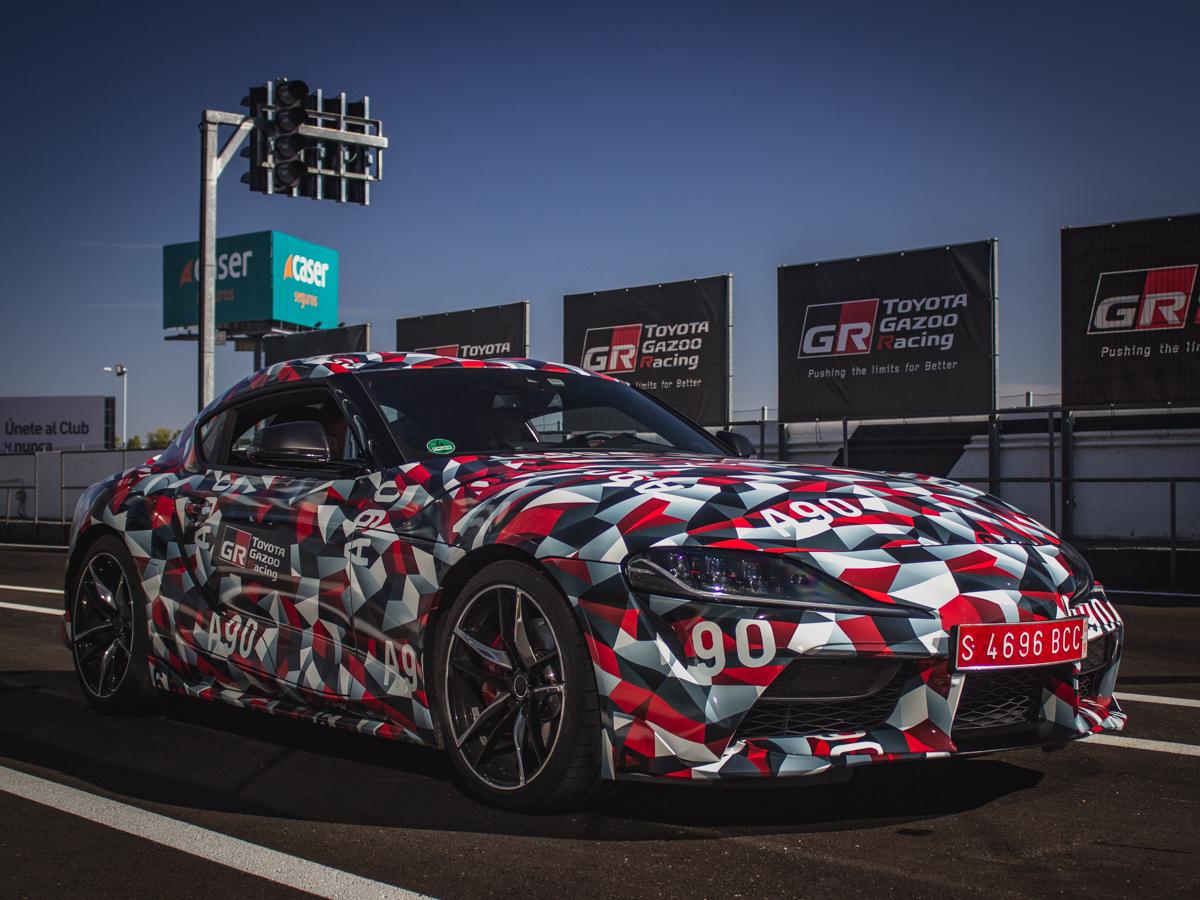
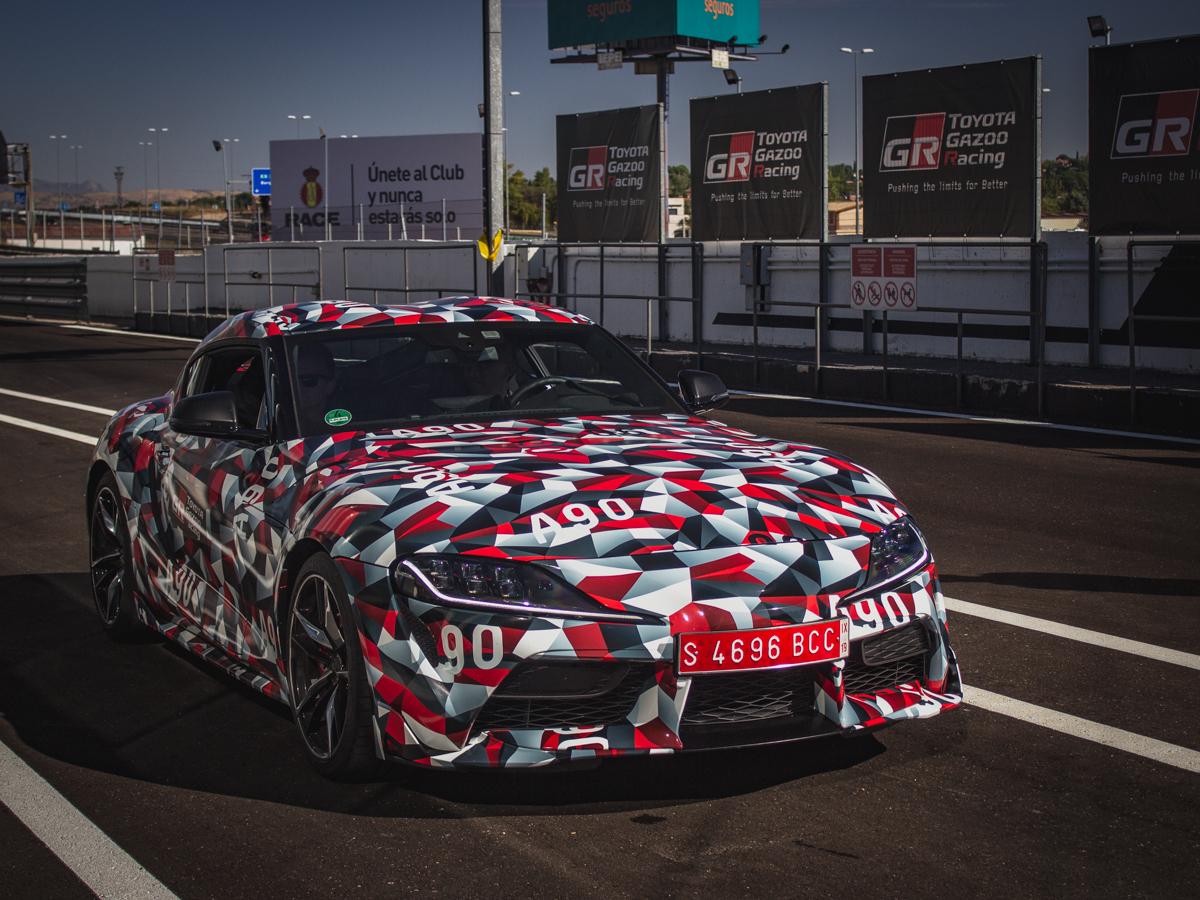
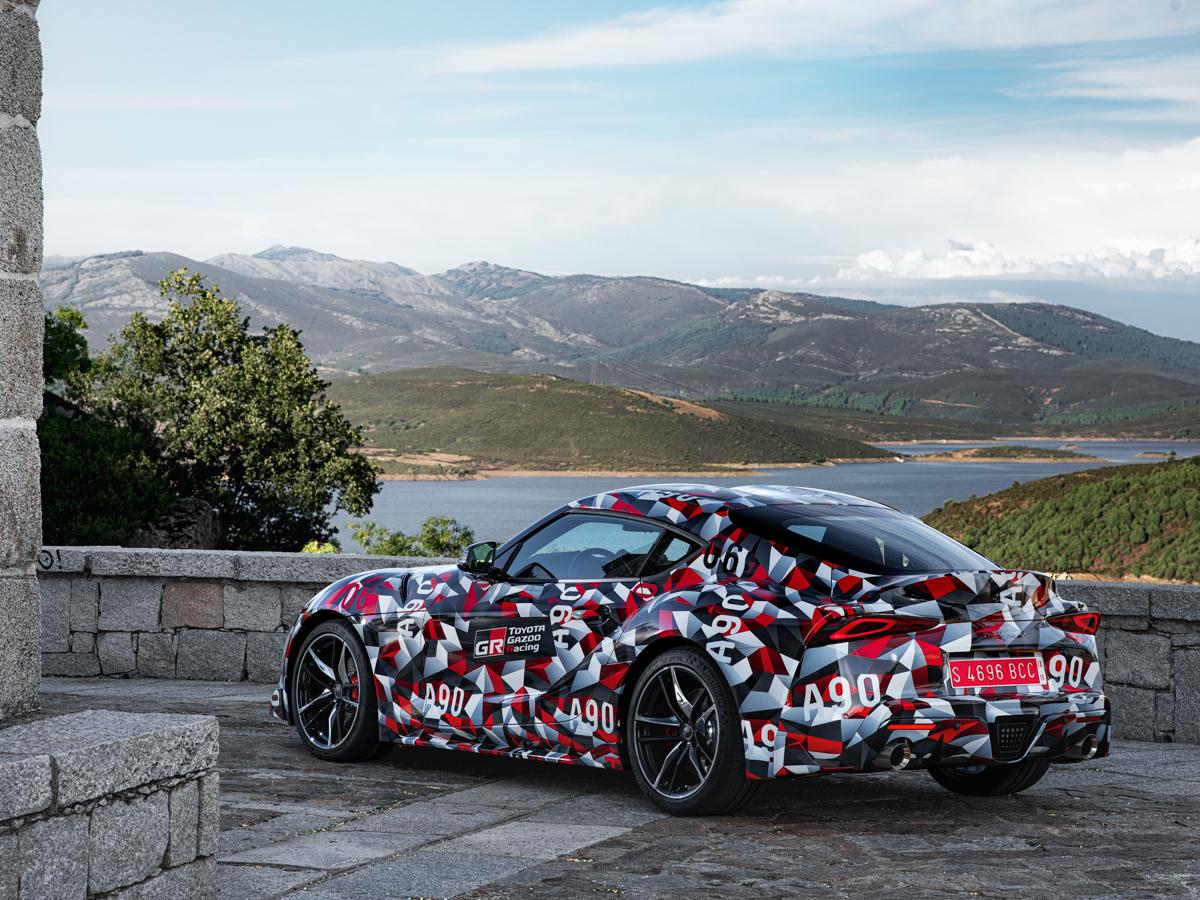
Thankfully, the wait is nearly over. On a recent sojourn in Spain, I was afforded the opportunity to sample the all-new, MkV, A90 Toyota Supra.
Much has been speculated about the latest offering to come from Toyota, and, while we were unable to speak directly to Chief Engineer Tetsuya Tada (the man responsible for the Toyota 86/GT86), we managed to enter into lengthy discussions with Assistant Chief Engineers on the Supra project, Masayuki Kai and Keisuke Fukutomo.
The All-New Toyota Supra.
The new Supra is a joint venture with BMW, a project that started back in 2012, ten years after the last MkIV Supra rolled off of the production line. As such, the new Supra and upcoming BMW Z4 use similar components, with BMW supplying the engine and drivetrain, as well as the modular chassis architecture, known by BMW as CLAR.
It's not the first time that we've seen this approach, and Tetsuya Tada drew on his experience with the Subaru joint-venture for the BRZ/GT86 in order to make the Supra project come to life. With Kai based in Cologne, Germany, and being versed in German, his responsibility was to act as the bridge between the German manufacturer and the team over in Japan.
Development of the Supra was taken care of by the Toyota Gazoo Racing department, to ensure that a thoroughbred sports car was created. They drew on their experience in a variety of motorsport disciplines and the knowledge gained over many years of successful competition, to inject the Supra with a DNA that is unmistakably performance orientated.
Their core philosophy was to concentrate on three primary aspects, to ensure that the new Supra is deserving of the legendary name. They believe that the creation of a pure sports car lies with Track Width, Wheelbase, and Center of Gravity. Power and speed is a by-product and to quote Gazoo Racing directly, “Numbers are one thing, feeling is what matters.”.
Is the new Supra a rebranded BMW Z4?
While the A90 Supra shares a large amount of mechanical componentry with the next Z4, the development of the Supra was primarily done by the Toyota Gazoo Racing team. Once a package was decided upon (the engine type, gearbox, chassis length, width, A-pillar and passenger compartment positioning), the teams split up and continued to develop their individual cars as they saw fit. Toyota is unable to tell you what the final specs of the Z4 are, and vice versa. This is not badge engineering as we know it, instead, it's a cost-effective dip into the knowledge pool.
The new Supra Engine.
Emissions regulations are the bugbear of the performance industry – it's what killed off the 2JZ-GTE. Toyota knew that they had to give the Supra a straight-six engine and, ideally, a turbocharger. For this, they would need BMW's assistance, as BMW is one of the only manufacturers still producing a high-performance straight-six.
The A90 will be using a BMW-derived B58B30, 3.0-litre, turbocharged, straight-six engine and this is mated to an 8-speed ZF automatic gearbox. Power output is expected to be in excess of 300 hp with reports suggesting that the final number will be approximately 335 hp (250 kW). These numbers are approximate and not even the engineers can confirm final output numbers as Toyota is still working on the final tune for both the engine and the gearbox.
The current tune of the engine sees it pull well from low in its RPM range, and come onto song in a progressive and linear fashion with only a small amount of drop-off higher up in the rev range, where the turbo spools out and excess boost is vented. The low-end torque delivery makes light work of the slower corners and eliminates the need to shift down to a lower gear to get the engine energised.
Automatic only – for now.
Many may be disappointed to hear that there are no immediate plans to introduce a manual derivative, but Kai-san also expressed that this may again be looked at in the future, depending on market demand. With that said, the 8-speed ZF is rather good, with well-timed, purposeful shifts in Sport mode and silky changes in Comfort setting. Around the Spanish Jarama circuit, the Sport setting had the Supra reading the inputs from the driver and adjusting the shift points accordingly, anticipating the required down changes and holding gears longer when need be.
Combining electronics and mechanics.
It plumbs the power to the rear wheels, and features a 2-way, electronically activated clutch-type limited slip differential, that uses multiple signals, from steering input, throttle input, wheels speed and ABS sensors as well as yaw sensors to dial in variable amount of lock – anything from completely open to 100% lock in mere milliseconds.
This, combined with the suspension tuning (which I will get to shortly), gives the Supra a sharp turn-in and neutral balance when diving into a corner and then provides great amounts of traction on the exit. Toyota will still refine the electronic driver aids as well as the engine and gearbox programming over the coming months, ahead of the anticipated, official, 2019 launch.
A Pure Sports Car.
Discussions with Herwig Daenens, Toyota Gazoo Racing Master Driver, the man responsible for a large amount of the chassis setup, highlighted the core philosophy. Toyota aimed for a “Golden Ratio” when it came to the chassis development, aiming for a wheelbase-to-track ratio of less than 1.6 – a figure that they managed to achieve. The A80 Supra, the MkIV, had a ratio of 1.67 while the GT86 stepped in with a 1.68. For those without engineering degrees, this means that the Supra is shorter but wider than the GT86. This secured two of their objectives with the A90.
Their next challenge was to drop the centre of gravity, and through the use of high-tech bonding and construction methods, they managed to achieve this. As a result, the A90 Supra has a centre of gravity that comes in lower than even the Boxer-engined GT86.
Rock-solid chassis.
These high-tech construction methods, consisting of spot-welding, seam sealing and chemical bonding, have resulted in a chassis that is more rigid than that of the Lexus LFA – and this without using carbon fibre composites in the construction.
The suspension is comprised of active dampers, which allows for a supple and compliant ride in Comfort mode as well as pin-sharp handling prowess in Sport mode. The Sport mode allows for up to 7mm reduction in the ride height and, as is the norm these days, sharpens up the throttle response, gearbox shifts and steering response.
Despite being fitted with electric power steering, a system that is often criticised for lacking in feedback and response, the Supra transmits a rather surprising amount of information through to the driver, particularly in the aforementioned Sport mode. The anti-roll bar was redesigned with traditional drop links utilised in order to provide a better initial feel on turn-in and counter understeer at higher lateral G's.
The new Supra is beautifully balanced and confidence inspiring. After a mere three laps around the technical Jarama circuit, I was confident enough to lean on the suspension and climb in the power progressively earlier. With the car rotating around a centre-point that could be identified as being near your hip, the balance is neutral and both understeer, or oversteer, can be provoked with the right inputs.
I would have liked to see a better brake feel and indeed, better braking performance as well. While much of this could be down to the cabin insulation and notable composure of the chassis detracting from the actual speed, the feel from the brakes was neither as progressive nor as responsive as I was expecting. This saw me out-brake myself more than once, leaving me to rely heavily on the front end grip of the car.
Conclusion.
Most of my experience with the new Supra was performance orientated, and this is to do with the fact that what I sampled is still a work-in-progress, a teaser before the final product. There's still trimmings, programming and a handful of final touches to come before we can quote hard and fast facts and figures. We still have no idea what its final form will be, either inside or out. Toyota is just about ready with the mechanicals, and they seem quite proud of their achievements. And rightly so.
It's not a rebranded BMW Z4. It's a car that feels Japanese more than I thought it would. It's a car that brings some of the analogue driving experiences of the 90s into the modern age. It reminds you that driving can be an enjoyable, exciting experience. It's a Toyota and it feels like one – and a rather good one, at that.
Admittedly, as I consider the new Toyota Supra, I am left a little torn. The old-school Supra fan in me is a little saddened that it has become as digital as it is, but, on the other hand, the side of me that spends time with modern performance cars revels in its traditional upbringing and analogue feel, especially in this day and age.
It's a wonderful thing to pilot through twisty switchbacks and hairpin turns. It rewards the driver that engages with it and encourages spirited driving. It does the GT thing rather well too. There will always be detractors, but I don't doubt that you will find scores of fans, both new and old, defending its honour.
The Supra is back. The new album may sound a little different from the last, but the band is still rocking out, harder than ever.