
Suzuki Vitara 1,4T GLX (2020) Review
I’ve long had a soft spot for the current-generation Suzuki Vitara. When it was launched some years ago, I spent some time hooning it up and down a twisty gravel road, channelling my inner rally driver and achieving faintly absurd point-to-point speeds in spite of its modest performance. Make no mistake, the Vitara has always been a sporty drive, it just needed the right engine to liberate those built-in (but hitherto hidden) driving thrills.


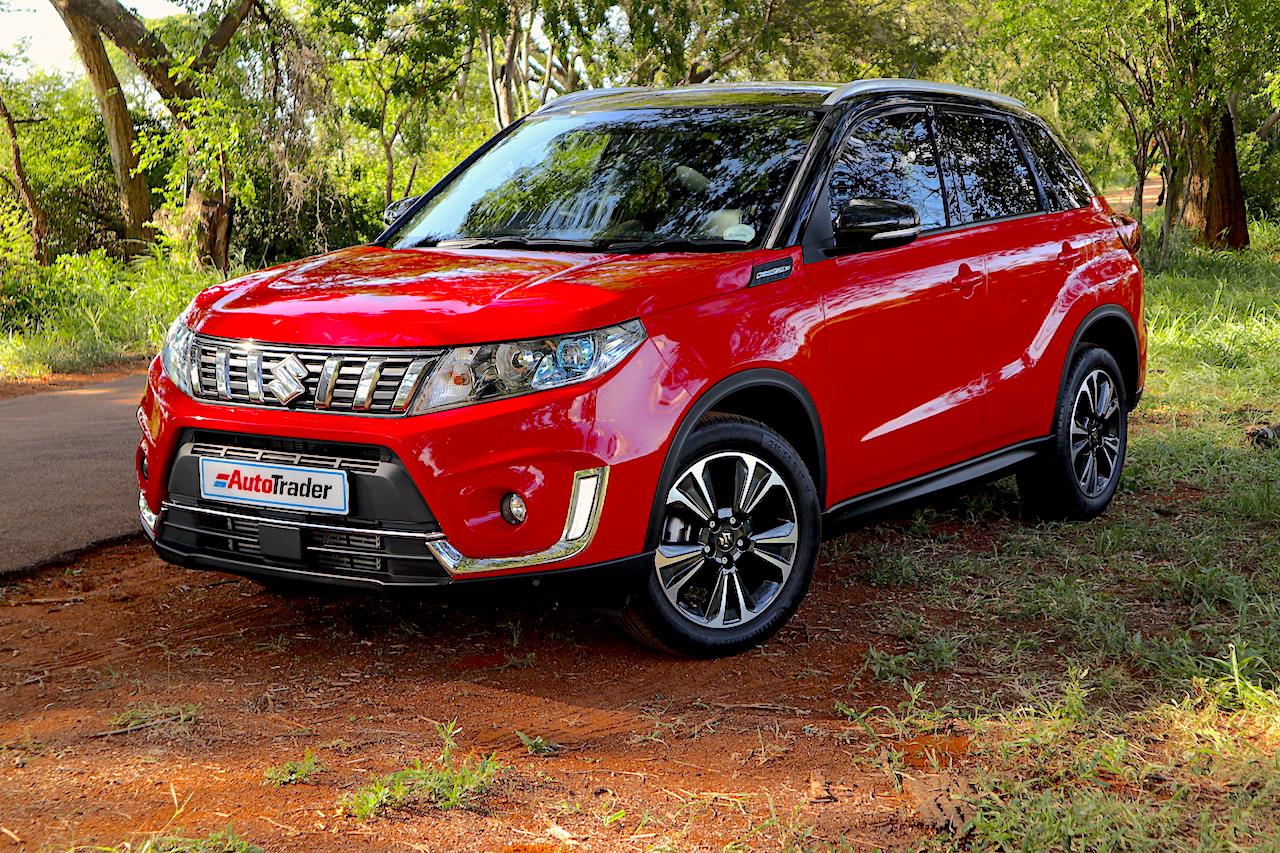


Adding some Sport into "Sport Utility Vehicle"
When I reviewed a Vitara 1.6 GLX in 2019, almost everything was to my liking in the context of a compact SUV-crossover, with the main exception being the rather frenetic combination of a high-revving naturally-aspirated engine and a rather hyper-active gearbox. The somewhat raucous engine combined with the 6-speed automatic to deliver adequate performance and good fuel efficiency, but the combined driving experience was more like decaf latte than double espresso. This was quite frustrating, because I knew just how good the Vitara’s underpinnings were, and how much fun it could be to drive...
Enter mid-2019, and the arrival of the latest Swift Sport – this time, with a new, downsized turbo-petrol engine instead of a non-turbo, 7000 r/min screamer. And, while the new engine might lack the old Sport’s exuberant character, it certainly added a whole lot of refinement and extra oomph to the package. At the same time, Suzuki also released the Swift Sport’s new BoosterJet engine for the Vitara. Only available in top-level GLX trim, the new engine can, as in the Swift, be mated to a choice of 6-speed gearboxes in either manual- or torque converter automatic flavours.

So, it was with great anticipation that I awaited the arrival of a Vitara 1.4T GLX, for closer evaluation over a whole month. And, I’m pleased to announce, the treat that was delivered to my driveway was certainly worth the wait: this is just about peak Vitara, and it was a joy to spend an extended period with the red-and black firecracker.
Styling
Visually, there’s absolutely nothing to set a Vitara 1.4T apart from a normal 1.6-litre GLX variant – not even a badge on the tailgate. Keen-eyed observers will notice the lack of the 1.6 GLX’s panoramic sunroof (not available with the turbo engine), but apart from that, the only way to tell them apart would be by looking under the bonnet.

Conversely, the 1.4T GLX still isn’t the most overly-stylish compact crossover around. It benefits from all the enhancements applied to the Vitara model range during its 2019 refresh, but it’s still on the understated side of stylish. Discreet brightwork-detailing and flared wheelarches attempt to add a dash of glitz, and manages to avoid looking over-done or undignified.
The boxy proportions and upright glasshouse makes it clear that this vehicle is meant to be utilitarian, but in the small-ish format presented by the Vitara, it looks handsome but conservative, rather than striking or attention-grabbing. Squared-off corners recall past Suzuki SUVs, as does the clamshell bonnet design, but the overall effect is still a bit subdued when compared to similar-sized crossovers such as the Mazda CX-3 or Volkswagen T-Cross.

Related: Read more about the tweaks applied to the Suzuki Vitara early in 2019.
The Drive
Fortunately, those understated looks don’t reflect in the Vitara Turbo’s driving experience. Subjectively, it feels like the suspension is a little bit more controlled, with less body roll than in lesser-powered variants and a greater resistance to understeer. Or maybe the new engine’s vigour just manages to bring as-yet undiscovered Vitara handling traits to the fore. Either way, the Vitara 1.4T is a lot more exciting to drive than it is to look at.
This test car was equipped with a slick-shifting manual gearbox, although the automatic transmission would probably have better suited the 1.4T’s more-civilised power delivery characteristics and the Vitara’s generally grown-up demeanour. Nonetheless, the suspension tuning is well-matched to the questions asked from its more-potent engine, and manages to remain comfortable over poor road surfaces without sacrificing handling prowess on the altar of comfort.

As a result, the driving experience strikes a near-perfect balance between road-holding, ride comfort and body control, making for sporty driving dynamics which somewhat belie the Vitara’s conservative appearance. Buyers who want a “sleeper” (a car that looks ordinary, but handles and performs far above its apparent station in life) really should go out and try one for size and smiles.
Performance
This is a critical part of the Vitara 1.4T’s reason for existence, and I’m pleased to report that this aspect has been resolved in a most satisfactory manner. To be honest, 103 kW and 220 Nm in a car with a kerb weight of 1140 kg won’t ever make for a scorching all-out performer, but that solid slug of low- and mid-range torque (65 Nm more than the peakier 1.6-litre) makes for effortless acceleration and stress-free overtaking.
Suzuki claims a top speed of a round 200 km/h, and a 0 – 100 km/h sprint in 9.5 seconds for both the manual- and automatic Vitara 1.4Ts, but subjective impressions on the road suggest that these figures might be a bit on the conservative side. The only downside is a set of surprisingly closely-stacked gear ratios, which are slightly at odds with the engine’s wide torque spread (that 220 Nm is available all the way from 1 500 – 4 000 r/min), and results in more-frequent gear changes in enthusiastic driving than might be otherwise expected.

On the road, there’s a moment of take-off lag (mitigated by employing a little bit of clutch slip), followed by a smooth and linear surge of power all the way up to the (disappointingly low) limiter at 6 000 r/min. That said, the power curve does drop off quite noticeably after its 5 500 r/min peak, making the restricted rev range a bit of a moot point, anyway.
Far better to short-shift, keep the engine running between 2 000- and 5 500 r/min, and get rewarded by a rich stream of fuss-free torque. The improved in-gear acceleration is especially useful, making the Vitara turbo capable of keeping up with much more-exotic machinery over short distances. Pairing this engine with the 6-speed automatic will sort all this out on the driver’s behalf, though, which probably makes the self-shifter a more-desirable match for the little turbo mill. Either way, refinement and driveability are both vastly improved over the 1.6-litre Vitara derivatives.
Space and Comfort
Space and practicality has always been a Vitara strong suit, with plenty of room in the cabin for 4 large adults (or 5 average-sized ones) and a 375-litre luggage compartment. The boot space can be further expanded by lifting out the false floor, the rear seats fold down in a 60/40 ratio, and there are useful dividers in the boot, behind the rear wheels, to store small objects which might otherwise roll around in the back.


Standard equipment is up to the normal (top-level) GLX specification, with seats trimmed in an Alcantara/synthetic leather combination, a leather trimmed steering wheel with audio-, phone- and cruise control remote controls, the new Suzuki colour touchscreen infotainment system with smartphone mirroring and USB/Bluetooth compatibility, a rear-view camera, front- and rear parking sensors, keyless entry with an engine start button, and climate control all included in the standard spec sheet.

Related: Is the new Suzuki Vitara good for families?
Safety
Standard safety features are well-sorted to give the Vitara some very solid safety credentials. The usual electronic safeguards are all present, with ABS and traction- and stability control included, along with ISOFIX child seat anchors on the outer rear seats, 7 airbags, and a 5-star Euro NCAP crash safety rating.

In common with the 1.6-litre GLX variant, very effective LED headlights are standard, with a clearly-defined beam spread and very good reach on dark roads. Fancier safety add-ons such as blind-spot monitoring, lane-departure warning and automatic emergency braking are still conspicuous by their absence, but that’s mostly forgivable at this price point.
Fuel Consumption
This is traditionally a Suzuki strong suit, so it comes as no surprise that the Vitara 1.4T also has very frugal drinking habits. Open-road cruising sees consumption drop below the 6.0 ℓ/100 km mark, with mixed-cycle driving (including frequent servings of delicious turbo torque) still returning a highly commendable 6.8 ℓ/100 km.
While this number is quite a way off from Suzuki’s claimed average figure of 5.8 ℓ/100 km, it must be borne in mind that a lot of the review period’s driving entailed heavy traffic, the air-con going full-blast, and a driver who didn’t even try to save fuel. Not bad at all, considering the performance on offer and the prevailing driving conditions. Conservative drivers will definitely see (at worst) low-6 ℓ/100 km figures in normal use.
Related: Suzuki Vitara vs Honda HR-V vs Ford EcoSport - which one has the lowest running costs?
Price

In 1.4T GLX trim with a manual gearbox, the Vitara retails at R 386 900, undercutting all other similarly-powered crossovers (except, strangely, the Fiat 500X) on price. Mazda’s CX-3 has a higher power output (but less torque), but neither it nor the 500X can even come close to the Vitara on available space. This gives the Vitara 1.4T GLX a decisive advantage in the marketplace, with a unique combination of performance and practicality in its market segment. Combined with the Vitara GLX’s comprehensive features list and good service plan (4 years or 60 000 km), these attributes makes the turbo Vitara a solid value proposition.
Pricing is accurate at the time of writing, but may change without prior notice.
Included in the list price is a warranty for 3 years or 100 000 km, and a service plan for 4 years or 60 000 km.
The Verdict
Whether for zipping around town, ferrying a bunch of people around over the festive season, or long cross-country trips, the test Vitara kept on coming up with all the right answers for the entire month it spent with me. It neatly addressed my concerns with the lesser 1.6-litre variants (relaxed performance and lacking refinement), without penalising me too badly at the pumps.
But, most significantly, the new turbo engine transforms the Vitara from a slightly asthmatic but user-friendly family hold-all into an SUV-crossover that actually manages to put some “Sport” into Sport Utility Vehicle. And, without compromising on its other innate virtues, it still maintains a reasonable pricetag.

This is almost the most complete package in the entire Vitara range: the only way it could be made even better was through the addition of an automatic gearbox. Either way, the new BoosterJet engine does a great job of turning the Vitara into a stand-out product in an over-crowded market.
Expert rating:
4.0/5
Recommended Next:
Shop for new and used Suzuki Vitara cars for sale here.